
Italian pot roast-known in Italy as stracotto (or brasato)-is a slow-braised beef dish that takes everything you love about pot roast and makes it deeper, richer, and more aromatic. If cozy American pot roast is your comfort zone, this Italian version is the next step: beef gently braised in red wine, tomatoes, and herbs until it's fall apart tender and full of flavor. I'll show you how to make stracotto step by step. It's also an excellent make-ahead dinner for weekends or company.
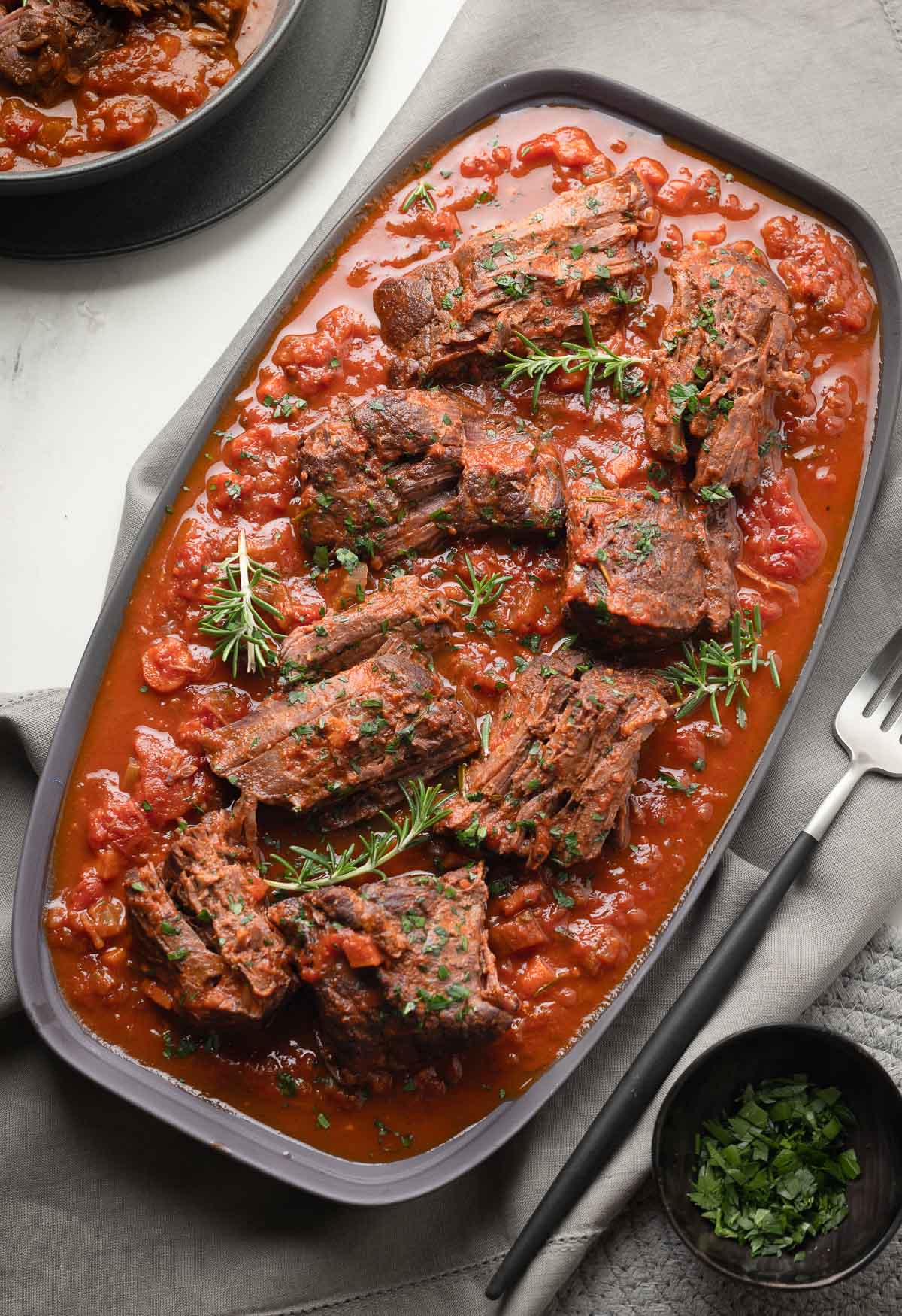
Serve stracotto over creamy polenta, mashed potatoes, buttered fettuccine, or with crusty bread to catch every drop of sauce-Italian comfort food at its best. Stracotto means "overcooked," in the best possible way: slow-braised until melt-in-your-mouth tender. This Italian pot roast gently simmers in red wine, tomatoes, and aromatics, becoming deeply flavored-and even better the next day.
Jump to:
Why Make Italian Pot Roast
- Big flavor, low effort - Quick prep, then the Dutch oven and low heat do the work.
- Melt-in-your-mouth beef - Long, slow braising turns a tough cut tender and juicy.
- Comfort food with Italian flair - A pot roast recipe with red wine, tomatoes, garlic, and herbs.
- Great for make-ahead - Stracotto tastes even better the next day and freezes well.
For another long-braised meaty dish, try my red-wine braised short ribs.
What is Stracotto?
Stracotto is a traditional Italian braised beef recipe cooked slowly at a low temperature until tender and richly flavored. While similar in technique to American pot roast, stracotto is defined by Italian ingredients like red wine, tomatoes, garlic, and herbs, which give it a more aromatic, savory profile. American pot roast often leans toward a gravy-and-vegetable braise with potatoes. It's a rustic, comforting dish designed to be cooked patiently, tasting even better the next day.
Ingredients You'll Need
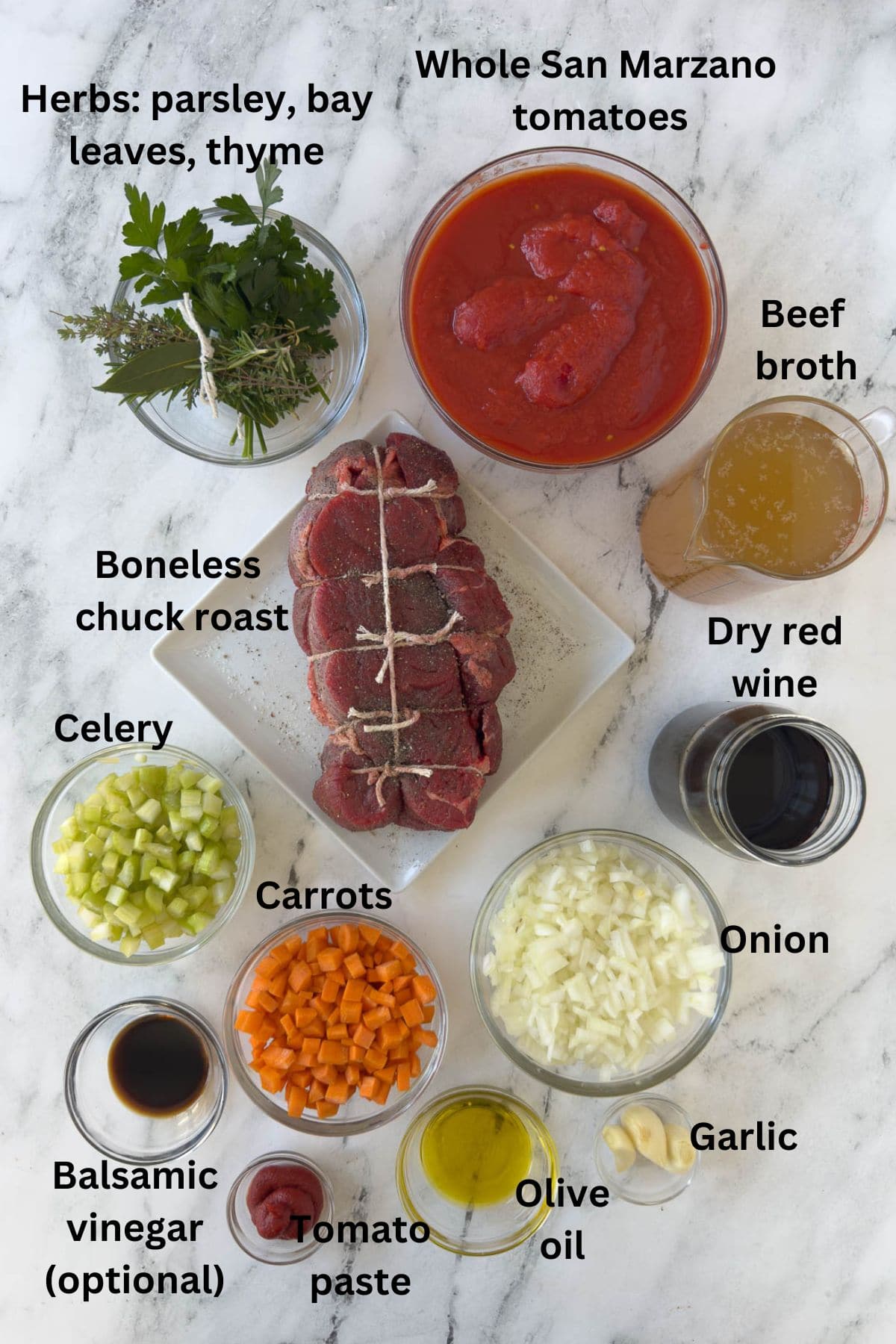
- Beef - Boneless chuck roast is my first choice for stracotto because it becomes tender and flavorful with slow braising. (See options below.)
- Carrots - Add natural sweetness and tender texture.
- Onions - A key aromatic that builds a deep, savory base for the braise.
- Celery - Rounds out the soffritto (veggie base) and adds earthy flavor.
- Herbs - Rosemary, thyme, and bay leaves are classic in Italian braises.
- Tomatoes - Use good-quality canned Italian tomatoes, preferably San Marzano, for bright flavor and gentle acidity to balance the richness of the beef.
- Tomato paste - Deepens the color, flavor, and adds umami richness.
- Wine - A dry Italian red such as Chianti, Sangiovese, or Barolo gives the braising liquid its signature depth. Buy a decent bottle you can drink, and freeze the rest for making it again or with red wine braised short ribs. Freezing works great.
- Broth - Choose a good beef broth (refrigerated or frozen) for clean, rich flavor. Avoid overly salty bouillon cubes and pastes with poor quality ingredients.
- Garlic - Essential in Italian cooking and adds deep, aromatic flavor to the braise.
- Olive oil - For searing the beef and sautéing the vegetables.
- Red pepper (optional) - A pinch of crushed red pepper flakes adds subtle warmth.
- Parsley - Fresh chopped parsley to sprinkle on before serving.
- Balsamic vinegar - A splash of the good stuff adds richness and depth at the end.
Please see recipe card for measurement, salt and pepper.
For a fast and easy Italian dinner, try this one-pan Italian chicken thighs recipes.
Chef's Tip - Best cuts of beef for Stracotto
Pot roast can be made with several cuts of beef. For a leaner pot roast, choose brisket or round, including rump roast, bottom round, or eye-of-round. Some may not shred and will be better sliced. But the classic-and my favorite choice-is a well-marbled chuck roast. It has just the right balance of fat and connective tissue to become incredibly tender with long, slow braising.
Substitutions and Variations
- No wine version - Use the same amount of beef broth plus 1 to 2 tablespoons of balsamic vinegar or red wine vinegar per cup of wine, and a little worcestershire sauce. This helps mimic the richness of wine without alcohol.
- Mushroom - For extra depth, add sautéed cremini mushrooms for meaty texture, or a small handful of rehydrated dried porcini for woodsy richness.
- Parmesan rind trick - Toss a used Parmesan rind into the pot while braising for an extra layer of umami. Freeze rinds and save for dishes like stracotto, soups, and sauces.
For a rich, meaty ragu for pasta, make this braised beef short rib ragu recipe, fantastic over pasta. Leftovers freeze great.
Chef's Tip - Why You Should Tie a Pot Roast: If your chuck roast is uneven or has loose flaps, tie it with kitchen twine before searing. A neatly shaped roast browns more evenly, turns easily in the pot, and braises more uniformly. It also helps the meat stay intact for slicing-even though it will still be fall-apart tender when finished.
How to Make Italian Pot Roast
Pre-heat the oven to 325°F.
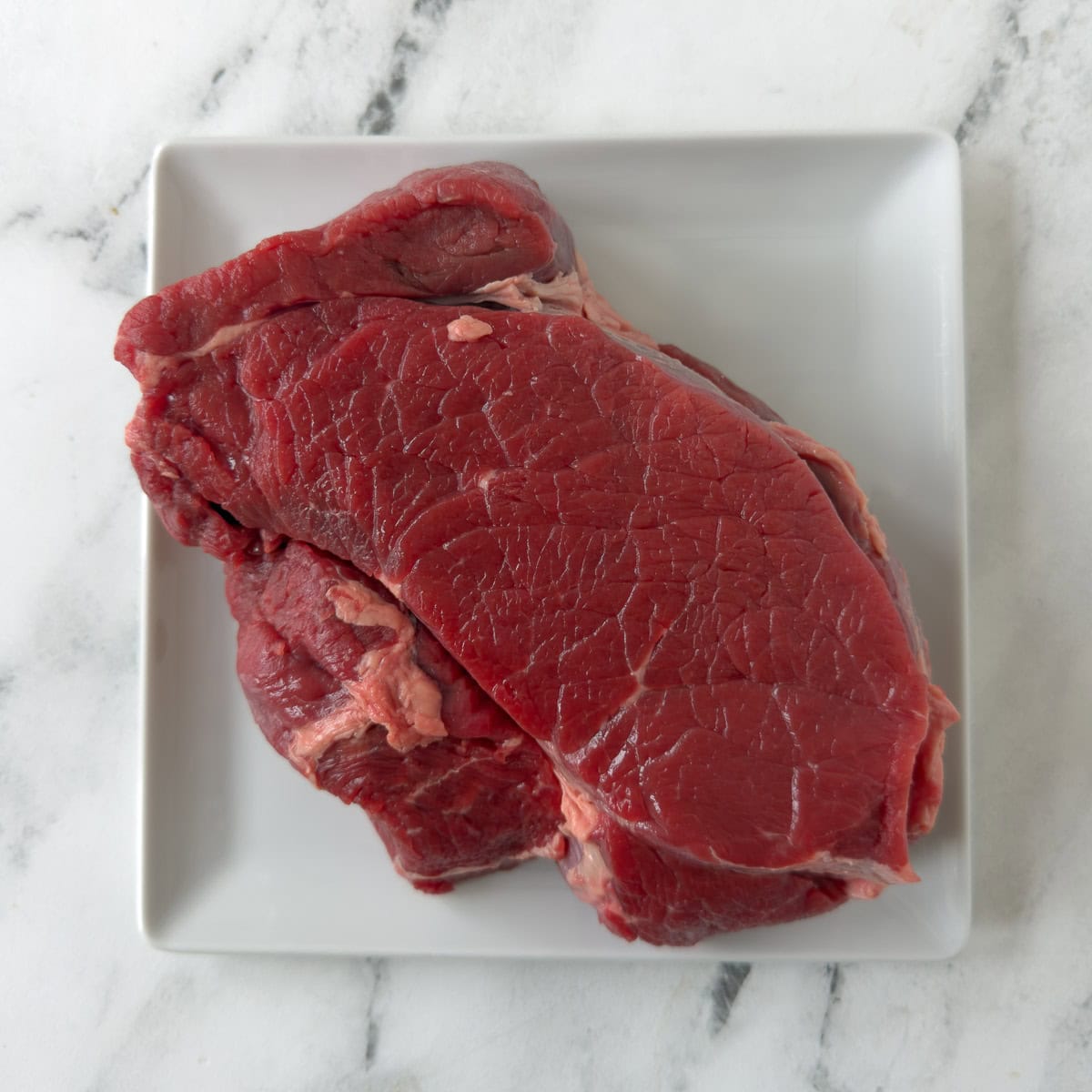
- After unwrapping the roast, take a good look at it and assess if it needs tying. This one does, most do.
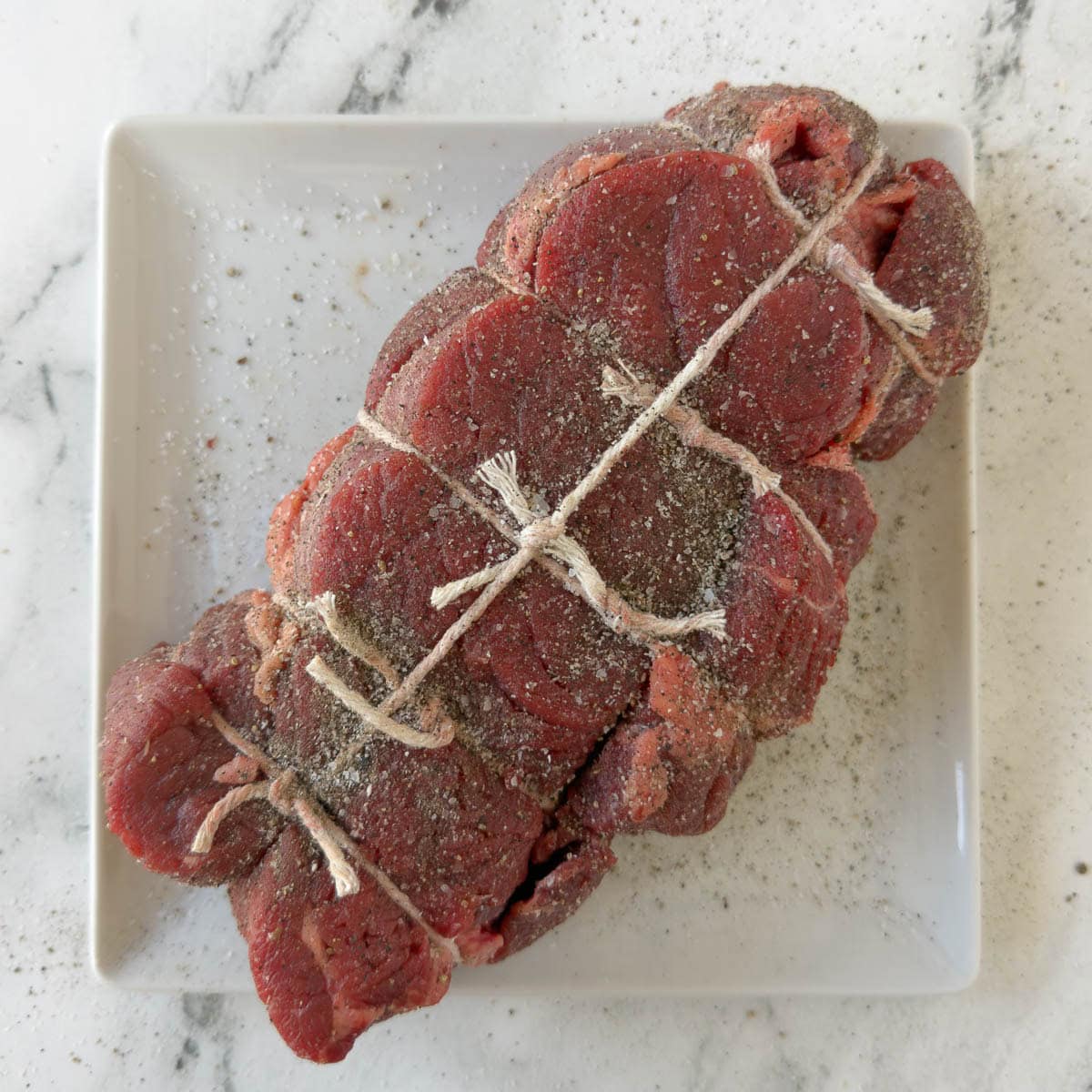
- Tie the roast with kitchen twine to main shape during cooking and season wel with salt and pepper on all sides.
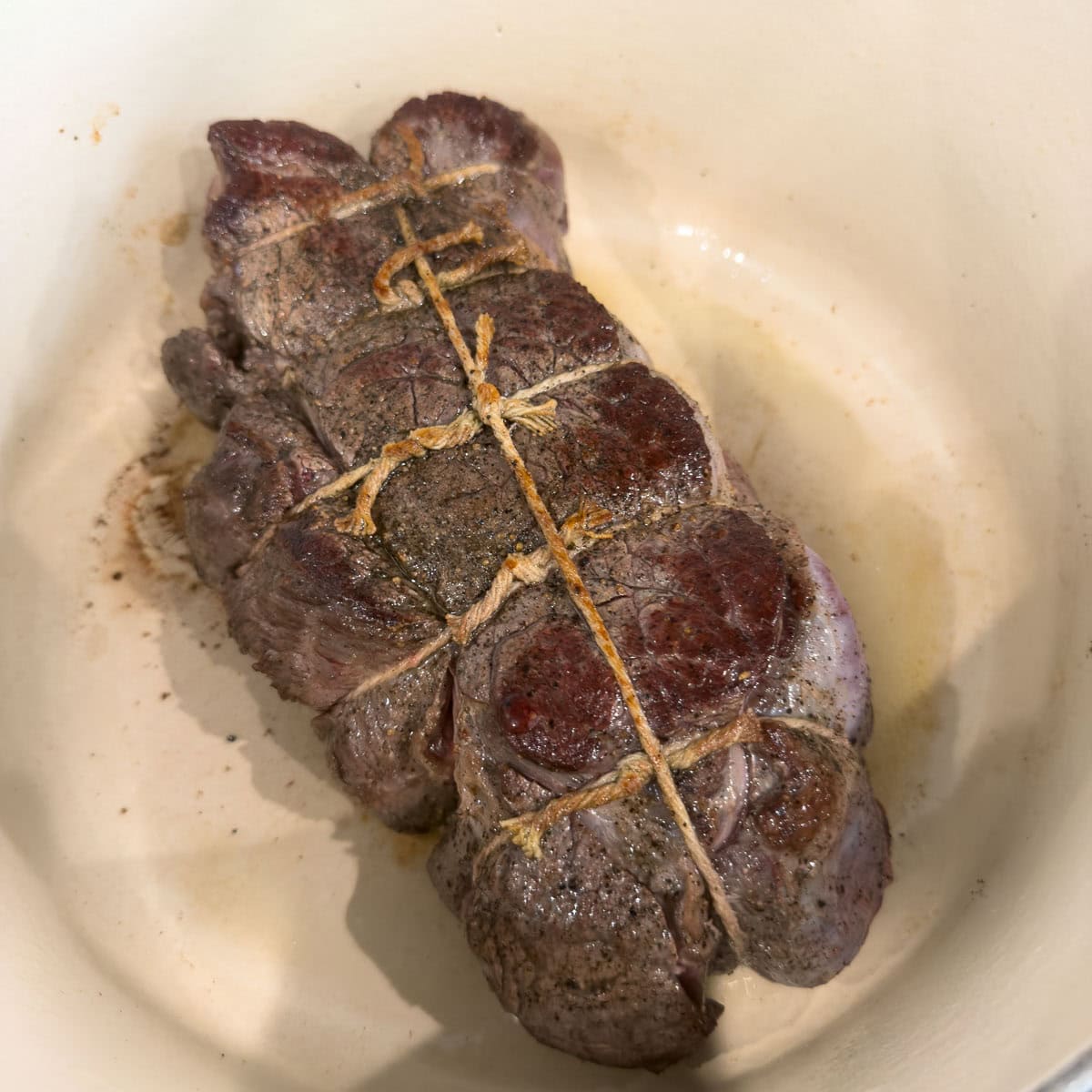
- In A dutch oven or other heavy pot, sear the pot roast until nicely browned on all sides.
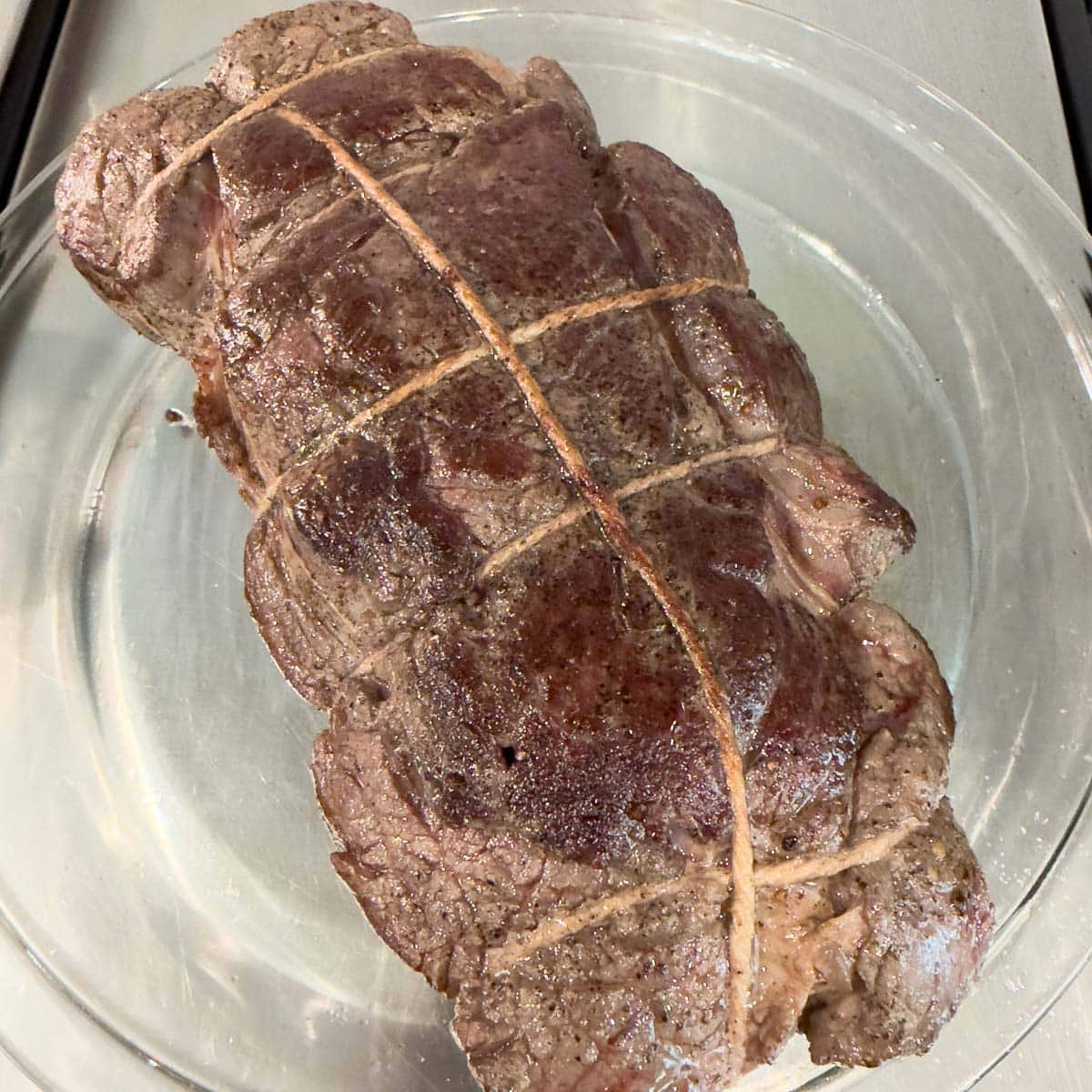
- Remove the seared roast to a plate, and continue the recipe.
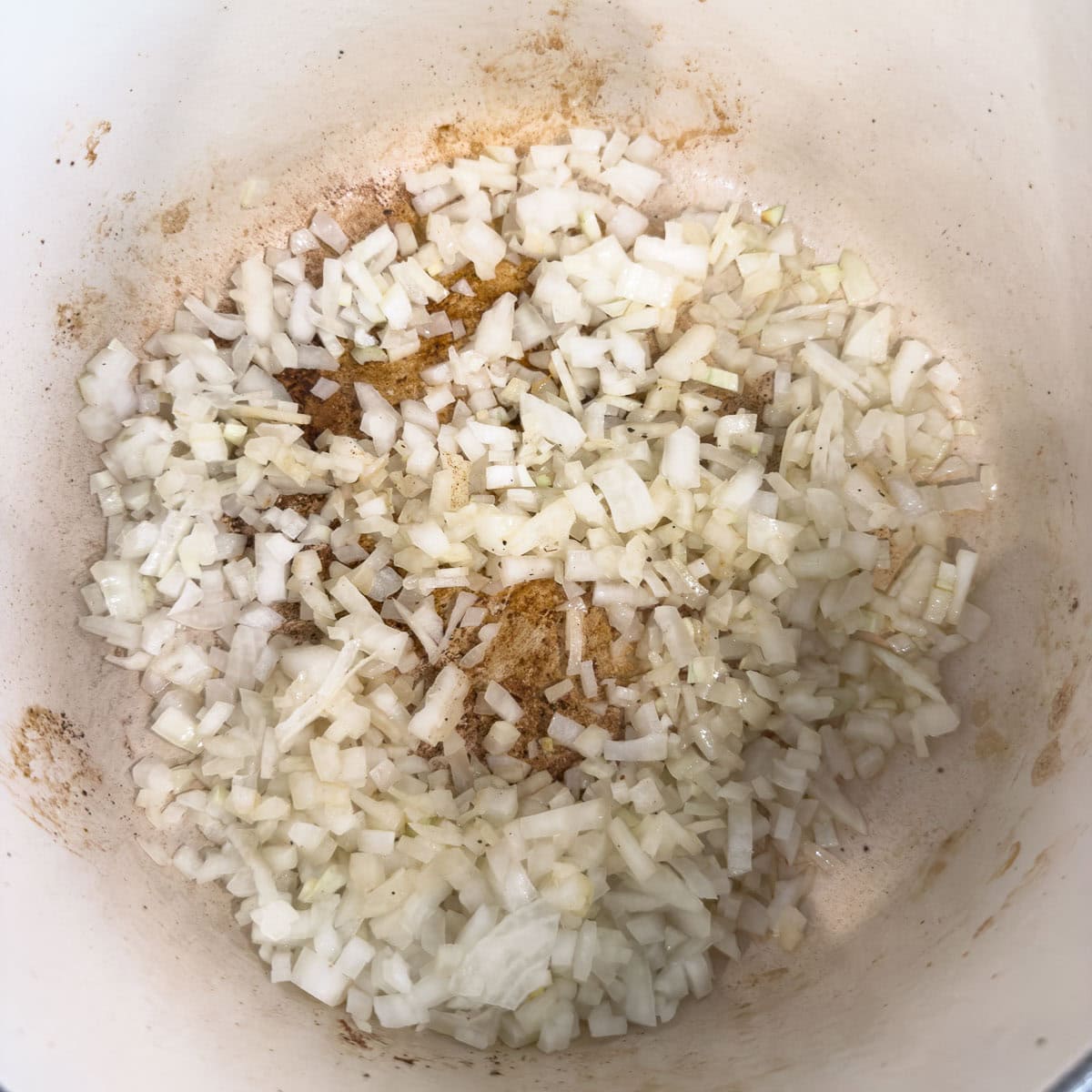
- Saute the onion in olive oil until soft about 3 minutes on medium low heat. Then add garlic and cook 1 minute longer.
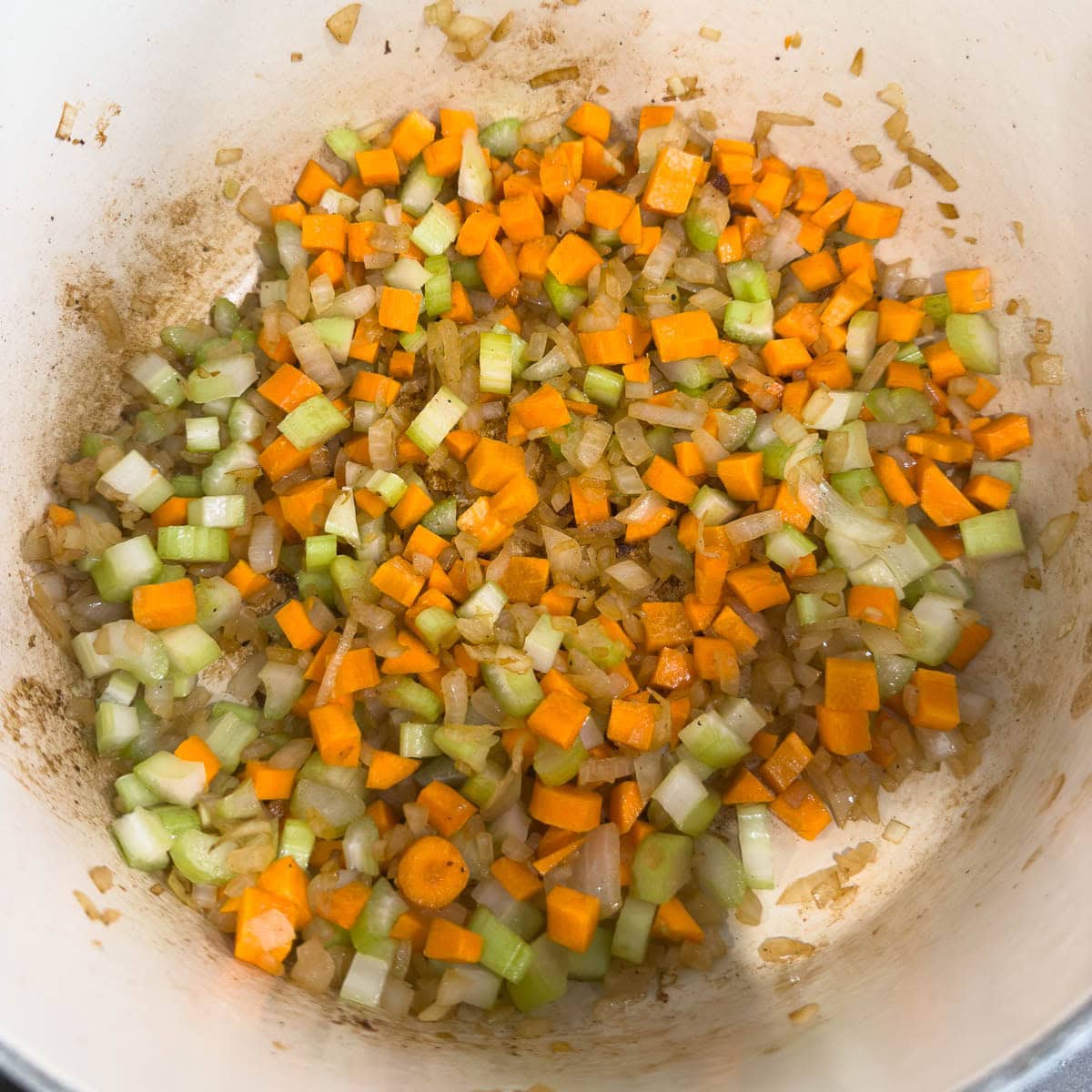
- Add the carrot and celery and cook until softened, another 3-4 minutes, stirring.
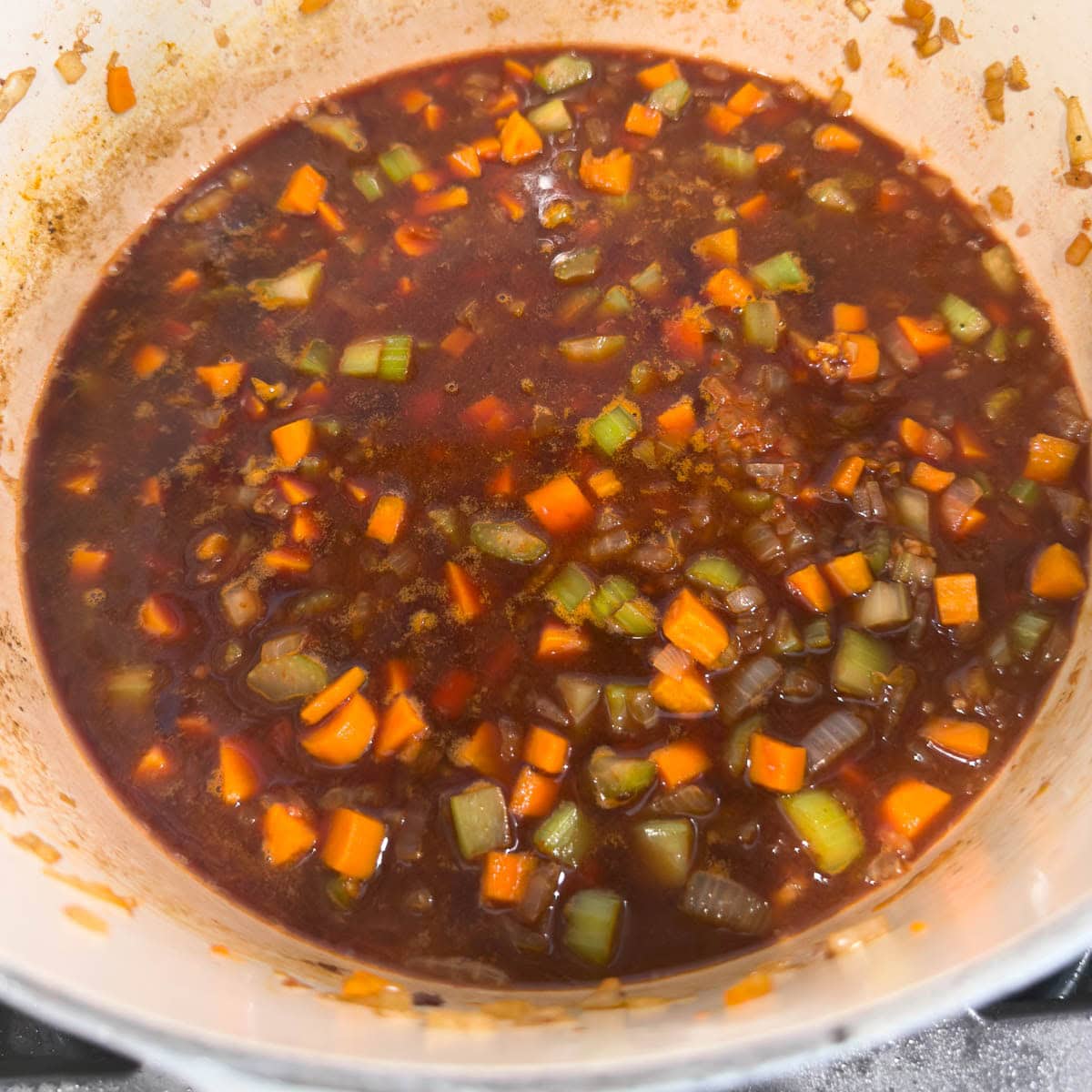
- Add the red wine and cook until reduced by half the volume.
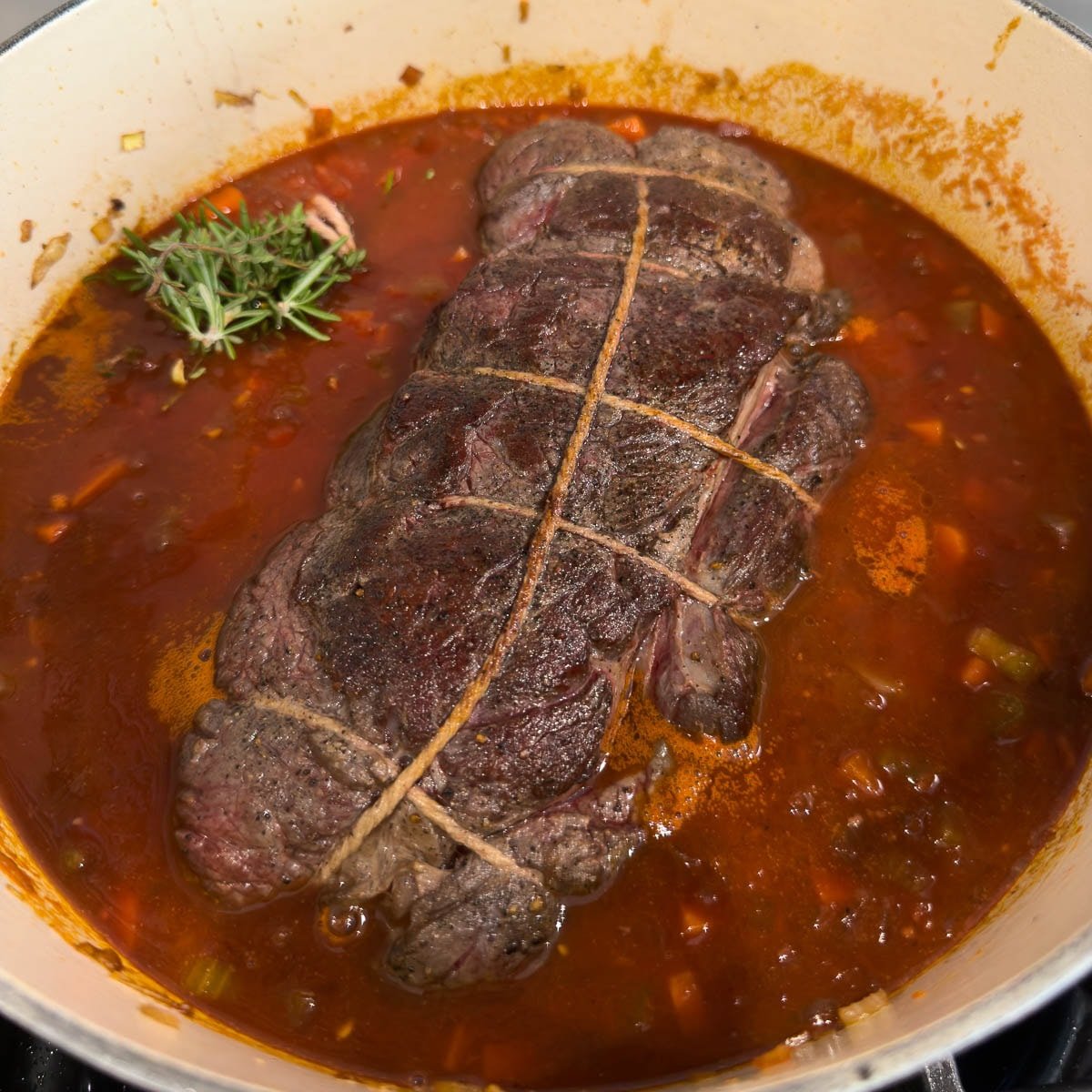
- Add the pot roast back to the pot and add enough beef broth to come up ½ way to ⅔ the way up the roast. Add the herbs and cover with a lid. Braise the roast for 2 ½ - 3 hours turning over at the halfway point. When done a fork will easily go into the roast. Taste and season with salt and pepper if needed.
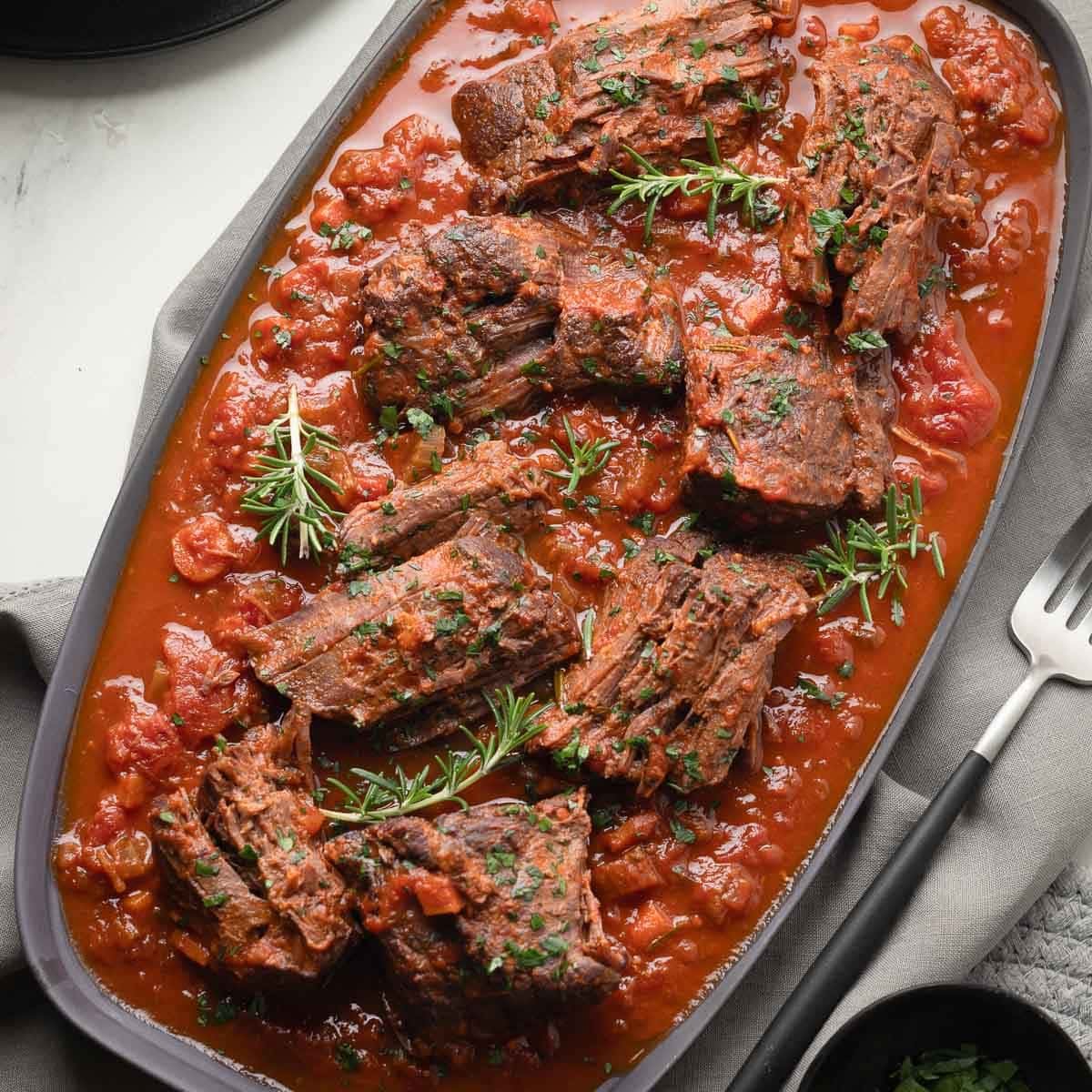
When the Italian pot roast is done, remove to a plate, cut the strings, then pull the meat apart into chunks (for chuck roast). Remove any bits of connective tissue. If using another cut of beef, you might be able to slice it. Arrange on a platter and cover with sauce. Discard herb stems.
Serving and Storing Stracotto
Every chuck roast cooks a little differently depending on its shape and marbling. Some will yield very clean chunks of meat, while others have natural seams of connective tissue that you simply remove as you go. All are delicious.
To serve, spoon the sauce into shallow, wide bowls, add chunks or slices of the beef, and finish with a sprinkle of chopped fresh parsley for color and fresh, garden flavor.
Italian pot roast is wonderful over wide pasta noodles, creamy Parmesan polenta, or riced mashed potatoes, with extra sauce spooned over the top. A side of simply cooked greens or a crisp salad balances the richness nicely.
- To refrigerate - Cool completely, then store the meat and sauce together in an airtight container for up to 4 days.
- For freezing - Freeze in portions with plenty of sauce for up to 3 months. I like to freeze in individual or dinner-sized portions for easier reheating.
- For reheating - Warm gently on the stovetop over low heat in a Dutch oven or other heavy pot, or in a 325°F oven, until heated through to 165°F. Add a splash of broth or water if needed to loosen the sauce.
About the Extra Sauce (It's a Bonus!)
This recipe makes more sauce than you'll need for four servings of meat, as that is part of braising. Italian braises are known for their deeply flavored, abundant sauces. Save every drop. The leftover sauce is incredible:
- Tossed with pappardelle or rigatoni for a next-day pasta.
- Used as a base to braise chicken thighs.
- Blended smooth for a rustic, rich tomato-wine pasta sauce.
Don't think of it as "extra." Think of it as your next meal already made.
Recipe FAQs
The best cut is chuck roast because it has great marbling and becomes tender after slow braising. Brisket, short ribs, or bottom round also work, but chuck roast is the most traditional and foolproof option.
Stracotto (Italian pot roast) is best when braised low and slow for 2 ½ - 3/12 hours depending on the size of the piece, until the beef is fall-apart tender.
No, for the best texture, sear the whole chuck roast first (tie if needed to maintain shape), then braise it whole. Once it's fall-apart tender, pull it into large chunks for serving instead of shredding. This keeps the meat juicy and satisfying while soaking up the rich sauce.
Yes. Sear the beef first as usual, then cook on low for 8-10 hours or high for 5-6 hours until the beef is fall apart tender.
Did You Make This Recipe?
If you try this Italian pot roast recipe, I'd love to hear from you! Leave a comment below and let me know how it turned out. If you enjoyed it, a 5-star rating helps others find and love this recipe too. Your feedback is always appreciated!
📖 Recipe
Italian Pot Roast (Stracotto) Recipe
Equipment
- Large dutch oven I use a 5 ½ quart
Ingredients
- 2 ½ pounds boneless chuck roast
- 1 teaspoon sea salt
- ¾ teaspoon ground black pepper
- 1 ½ tablespoons extra virgin olive oil
- 1 ½ cup chopped onion 1 medium onion
- ¾ cup chopped celery 2-3 ribs
- ¾ cup chopped carrots 2-3
- 1 28-ounce can whole peeled San Marzano tomatoes crushed with your hands
- 1 ½ cups dry red wine preferably Italian such as Barolo, Chianti, or Sangiovese.
- 1 cup beef broth
- 3 large fresh garlic cloves
- 2 bay leaves fresh or dried
- 3 sprigs fresh thyme
- 3 sprigs fresh rosemary
Optional ingredients
- 2 teaspoon balsamic vinegar
- 1 small parmesan rind
- 1 tablespoon fresh chopped Italian parsley
Instructions
Season and sear the beef
- If your chuck roast has loose flaps or an irregular shape (very common with this cut), tie it with kitchen twine in 3-5 places to create a more uniform shape This helps the meat sear evenly, hold together during the long braise, and cook at the same rate. Don't worry about making it perfect - just a few snug loops are enough to keep the roast compact.
- Pat the beef dry with paper towels. Season generously on all sides with salt and pepper. Heat a large Dutch oven over medium-high heat and add olive oil to lightly coat the bottom. When hot, add the roast and sear until deeply browned on all sides, 3-4 minutes per side. Transfer the beef to a plate.
Sauté the aromatics
- Reduce the heat to medium. Add a little more olive oil if the pot looks dry. Add the onions and sauté until softened and starting to turn golden, 5-7 minutes, scraping up any browned bits. Add the carrots and celery and cook a few more minutes until slightly tender. Stir in the garlic and cook just until fragrant, about 30 seconds.
Caramelize the tomato paste
- Stir in the tomato paste, coating the vegetables. Cook 2-3 minutes, stirring often, until the paste darkens slightly and smells sweet and caramelized. This builds depth of flavor in the sauce.
Deglaze with wine
- Pour in the red wine and stir, scraping up all the browned bits from the bottom of the pot. Let the wine simmer and reduce by half, 3-5 minutes.
Add tomatoes, broth, and herbs
- Add the crushed tomatoes, beef broth, rosemary, thyme, and bay leaves. Tie the herbs together with a string if you'd like for easier removal. Stir to combine and bring the mixture just up to a simmer. Taste the liquid and adjust the seasoning with a little more salt and pepper if needed-it should be well seasoned but not too salty.
Return the beef to the pot
- Nestle the seared beef (and any juices on the plate) back into the pot, turning it once so it's coated in the sauce. The liquid should come half way or two thirds up the sides of the roast.
Braise in the oven
- Cover the Dutch oven with a tight-fitting lid and transfer to a 325°F oven. Braise for 2½ to 3 hours, turning the roast once halfway through, until the meat is very tender and a fork slides in easily. Start checking around the 2½-hour mark.
Reduce the sauce if needed
- Transfer the beef to a plate and tent with foil. Remove the herb stems and bay leaves. If your sauce looks thin, place the pot over medium heat and gently simmer 5-10 minutes to reduce. If it's already glossy and thick enough, no reduction is needed. Taste and adjust seasoning, and add a splash of good balsamic vinegar if you'd like to brighten the sauce and sprinkle with fresh chopped Italian parsley.
Slice and serve
- Once the meat is tender, it naturally separates into sections. You may see a few thin, stringy seams of connective tissue-simply pull them out as you chunk the roast. This is normal with chuck and ensures the meat stays beautifully tender.Return pieces to the pot or arrange on a warm platter and spoon the sauce and vegetables over the top.
- Serve with creamy polenta, mashed potatoes, buttered fettuccine, or with crusty bread for soaking up the sauce.
Comments
No Comments