
This easy turkey rub recipe is my go-to for adding big flavor without fuss. Perfect for Thanksgiving turkey, smoked turkey breast, or even a simple roasted chicken, this homemade turkey seasoning blend is earthy, herby, and just a little sweet. Rubbed sage, thyme, garlic, and brown sugar create a delicious balance of flavors, whether you're roasting, smoking, or grilling.
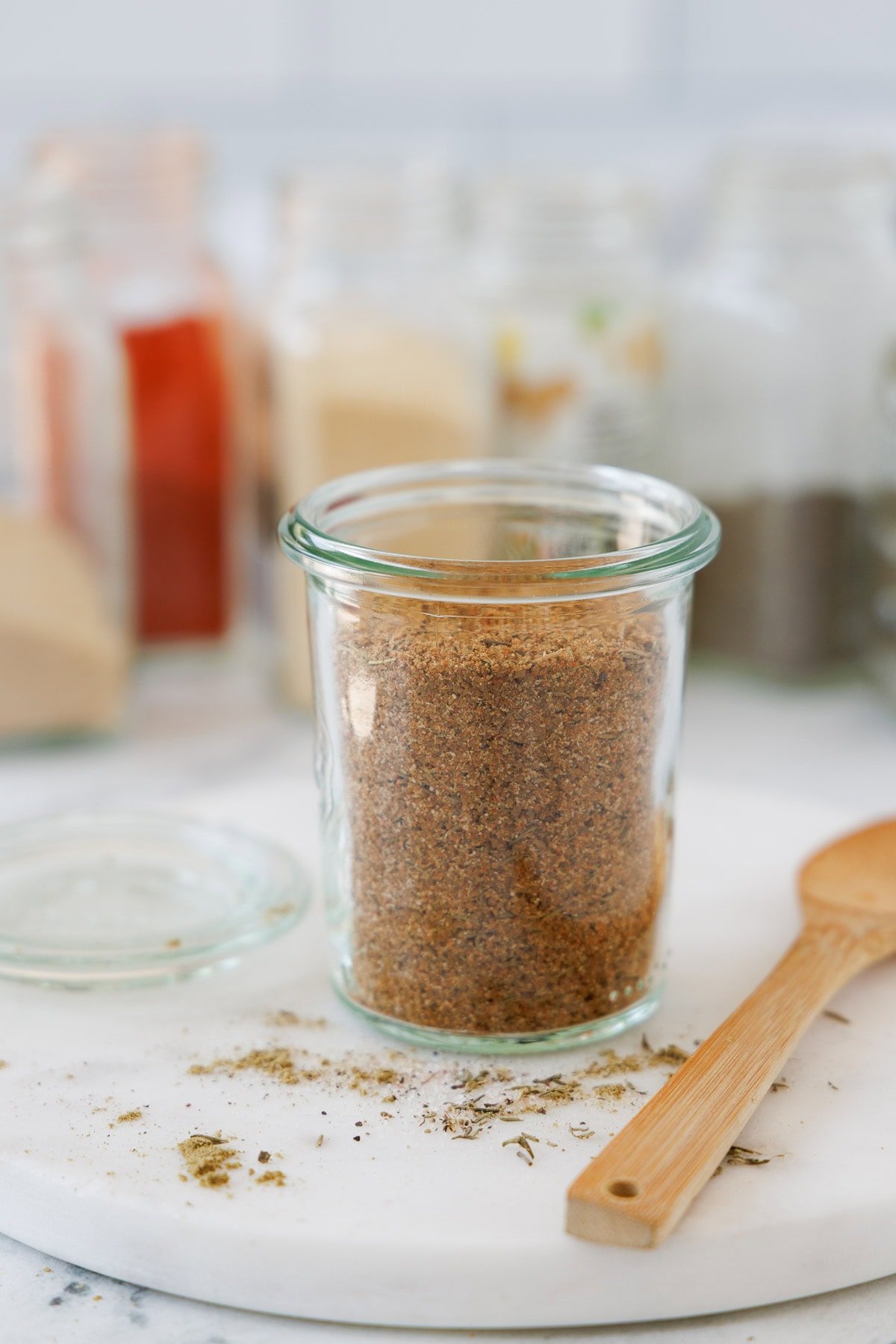
I originally developed this turkey rub for my Thanksgiving turkey, and now use it for my smoked turkey breast too. It's a flavorful alternative to my BBQ-style rub and works beautifully for both roasted and smoked poultry. Making your own turkey seasoning means no unnecessary fillers, preservatives, or mystery ingredients-just a fresh, flavorful blend you can customize.
Turkey Rub Recipe Snapshot
- Quick and easy - Mix a handful of pantry spices together in minutes.
- Classic poultry flavor - Rubbed sage, thyme, garlic, and a touch of brown sugar create a savory, slightly sweet blend.
- Salt optional - Leave it out for a dry-brined turkey or add it to suit your needs.
- Versatile - Perfect for roasted or smoked turkey, chicken, Cornish hens, and more.
Ingredients You'll Need
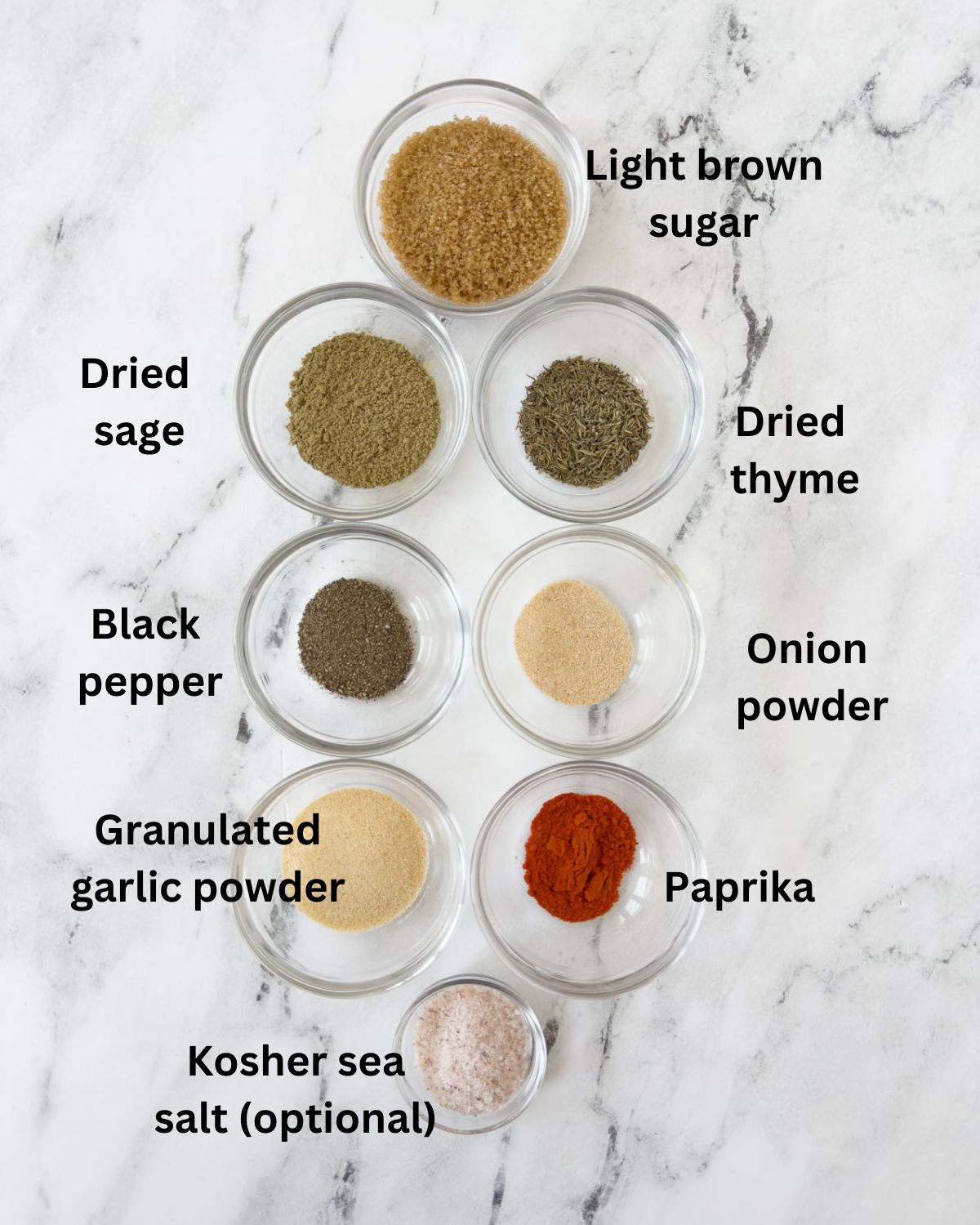
- Brown sugar - Adds a touch of sweetness to balance the savory herbs and helps develop a beautifully browned crust when roasting or grilling.
- Rubbed sage - Adds classic poultry flavor with a lighter texture and gentler taste than ground sage. If using ground sage, substitute 1 teaspoon for 1 tablespoon rubbed sage.
- Garlic - Granulated garlic or garlic powder adds savory depth and aroma.
- Thyme - Dried thyme contributes a woodsy, earthy flavor that complements sage.
- Paprika - Choose regular paprika for mild warmth and color, or smoked paprika for a subtle smoky note.
- Black pepper - Adds a little warmth and gentle bite to balance the sweetness.
- Onion powder - Rounds out the blend with mild, savory-sweet flavor.
Please see the recipe card for measurements, salt, and black pepper.
Substitutions and Variations
Here are a few ways to adapt this turkey seasoning to fit your preferences or dietary needs:
- Salt - Add kosher sea salt to the blend if desired, or leave it out if your turkey is already dry-brined or salted.
- Fennel - Add a little ground fennel for a subtle licorice note. Fennel pollen is another delicious option, but use less because its flavor is more concentrated.
- Paprika - Choose regular paprika for mild flavor and color, or smoked paprika for an extra smoky note.
- Sugar-free option - Omit the brown sugar for a savory, herb-forward turkey rub.
- Herb variations - Try rosemary, marjoram, oregano, or parsley to create your own seasoning blend.
Chef's Tip: Salt in Your Turkey Rub
I leave salt out of my turkey rub because I prefer to season poultry separately for better control, especially when dry brining. If you'd rather include salt in the blend, add 1-1½ tablespoons kosher sea salt per batch, depending on your preference. I like Real Salt, La Baleine, and Diamond Crystal kosher salts. Crystal size varies by brand, so measurements aren't always interchangeable. Avoid regular iodized table salt, which often contains anti-caking agents and other additives.
How to Make Turkey Rub Seasoning
How to Make Turkey Rub Seasoning
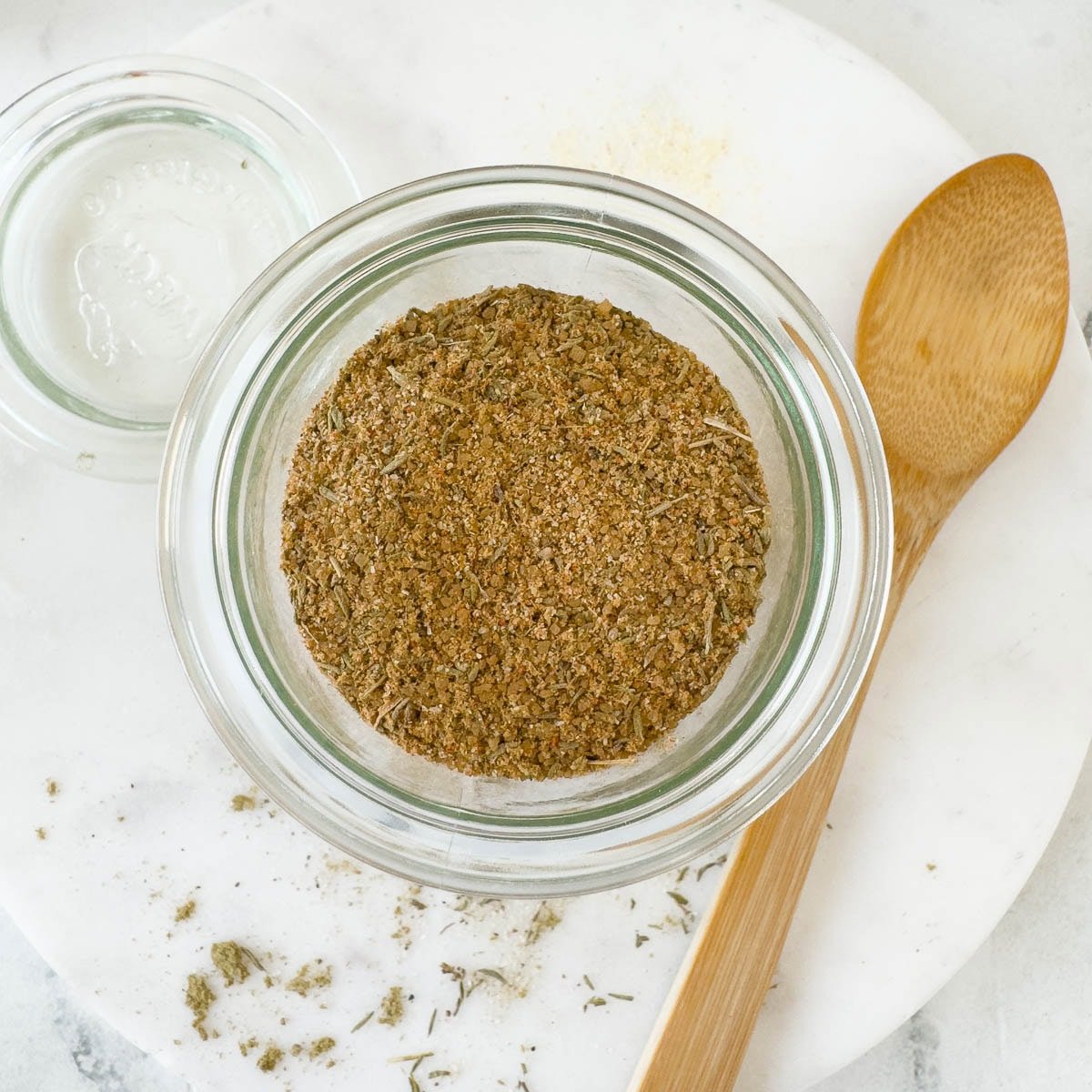
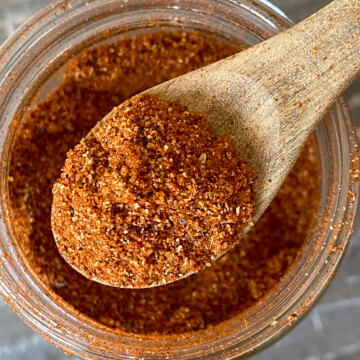
Combine all of the ingredients in a jar and shake well to mix. For a finer, more uniform texture, I like to grind the blend briefly with a mortar and pestle. This helps distribute the herbs and spices evenly and creates a seasoning that clings beautifully to poultry skin.
This recipe makes approximately ½ cup (4 ounces) of seasoning, enough for two whole bone-in turkey breasts or one whole turkey, depending on size and how generously you season.
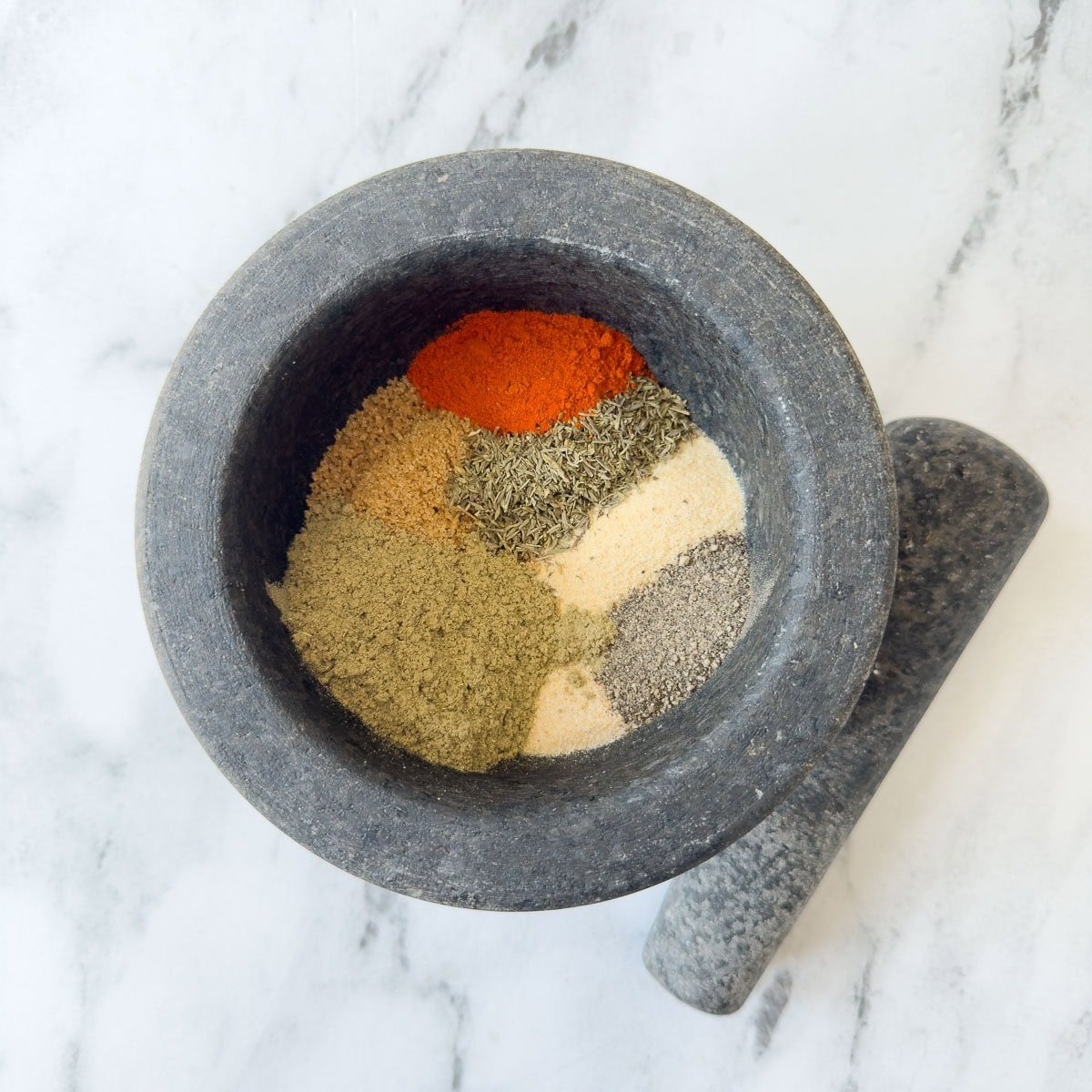
- Add all of the turkey seasoning ingredients to a mortar and pestle, or add to a jar to shake.
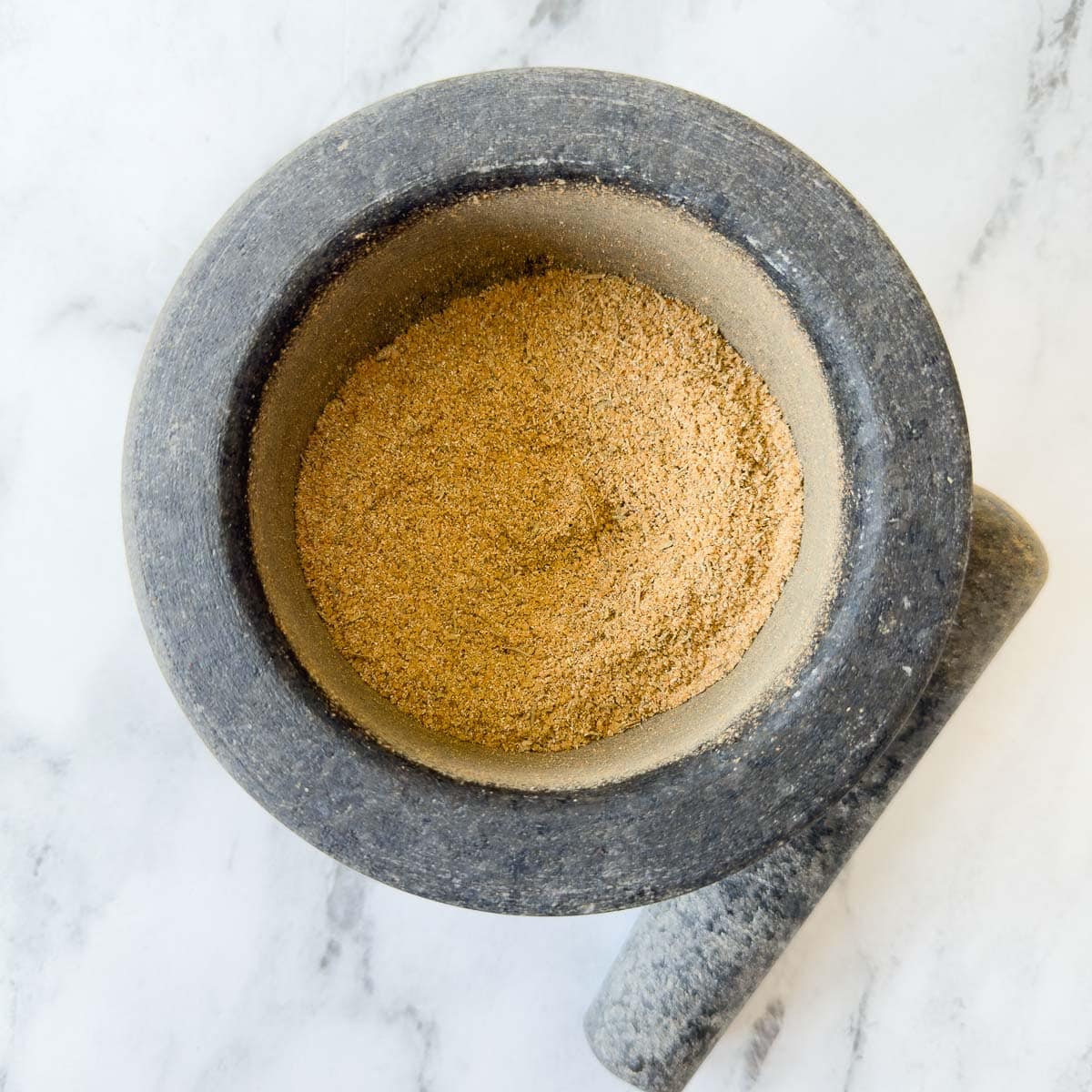
- Grind the spices briefly with a mortar and pestle for a finer, more uniform texture.
Using This Rub for Roasting vs. Smoking
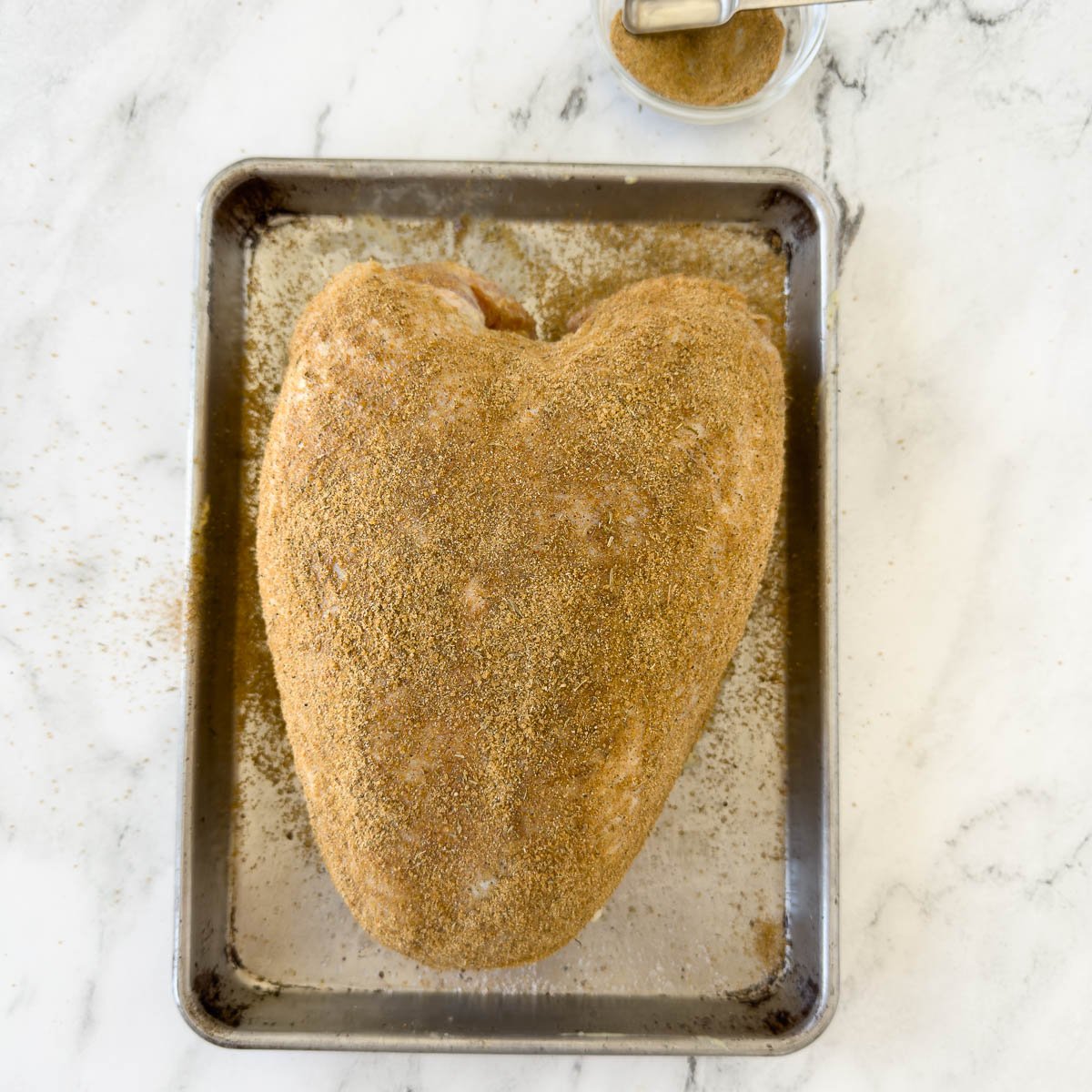
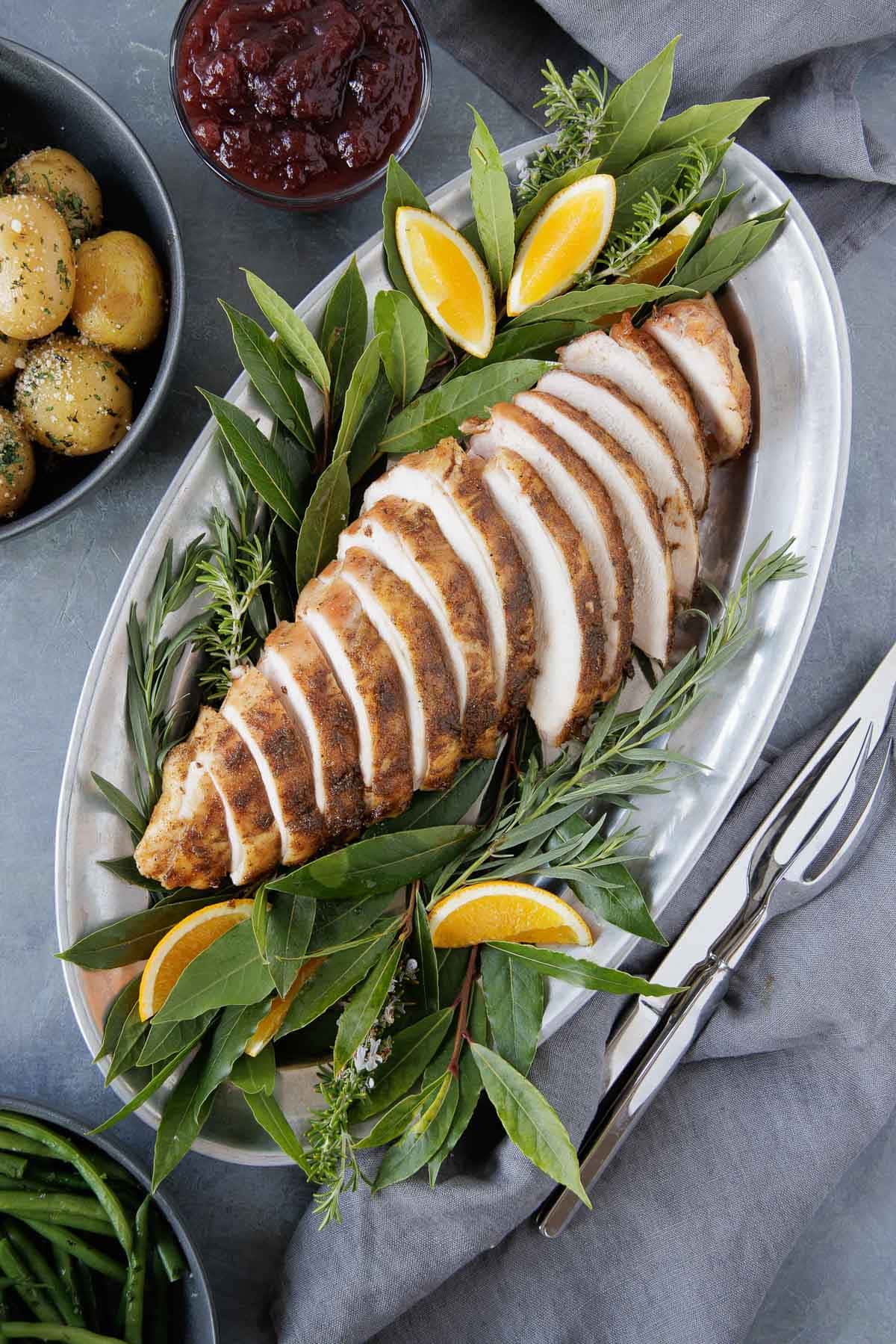
This turkey rub works beautifully for smoked turkey breast, rotisserie turkey, or a traditional oven-roasted bird. It's a flavorful alternative to using compound butter, and you can adjust the seasoning to suit your cooking method.
The brown sugar adds a touch of sweetness and helps develop a flavorful crust, but it can darken more quickly at higher temperatures.
If you're oven-roasting a turkey at 325°F or higher, here are a few tips:
- Reduce the sugar - Use 2 tablespoons instead of ¼ cup, or omit it for a more savory rub.
- Tent with foil - If the skin browns too quickly, cover loosely with foil toward the end of roasting.
- Season under and over the skin - Mix some of the rub with softened butter and spread it beneath the skin, then sprinkle a little more rub over the outside for a flavorful, beautifully seasoned crust.
Gift Idea: This turkey rub is easy to make in larger batches. Spoon it into decorative jars, add a label with the name and date, and finish with ribbon or rustic twine. It makes a thoughtful homemade holiday gift for anyone who loves to cook.
Storage
Store turkey seasoning in an airtight container in a cool, dark place for up to 6 months for the best flavor. Label and date the container.
More Homemade Seasoning Recipes
Making your own seasoning blends at home means better flavor, no unnecessary additives, and full control over what goes into your food.


Did You Make This Recipe?
If you make this turkey rub, please leave me a comment and let me know how you used it. I love hearing from you and your comments help other readers as well. Thank you!
📖 Recipe
Equipment
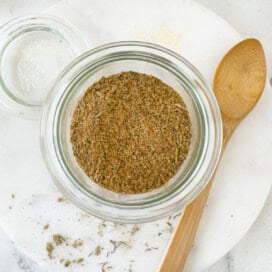
- Jar with a tight fitting lid
Ingredients
- ¼ cup light brown sugar
- 1 tablespoon granulated powdered garlic
- 1 tablespoon sage
- 2 teaspoons dried thyme
- 1 teaspoon paprika regular or smoked
- 1 teaspoon ground black pepper
- 1 teaspoon onion powder
Optional
- 1 - 1 ½ tablespoons kosher sea salt if you prefer it in the blend
- ½ teaspoons ground fennel
Would you like to save this recipe?
Instructions
- Add all ingredients (and salt if using) and grind together in a mortar and pestle or shake well in a jar with a tight lid. Store turkey rub for up to 6 months in a cool dark place, labeled and dated.
Notes
- Reduce the sugar - Use 2 tablespoons instead of ¼ cup, or omit it.
- Watch the browning - Tent loosely with foil if the skin gets too dark.
- Season under and over the skin - Mix some rub with softened butter and spread it beneath the skin, then sprinkle a little more rub over the outside.
Comments
No Comments