
How to skin salmon at home? It's not difficult. With the right technique and the right knife, you can remove the skin before cooking quickly and cleanly-no advanced skills required. Whether you're preparing salmon for steaming, roasting, or flaking into a salad, this step-by-step guide will walk you through the process with clear photos and chef-tested tips.
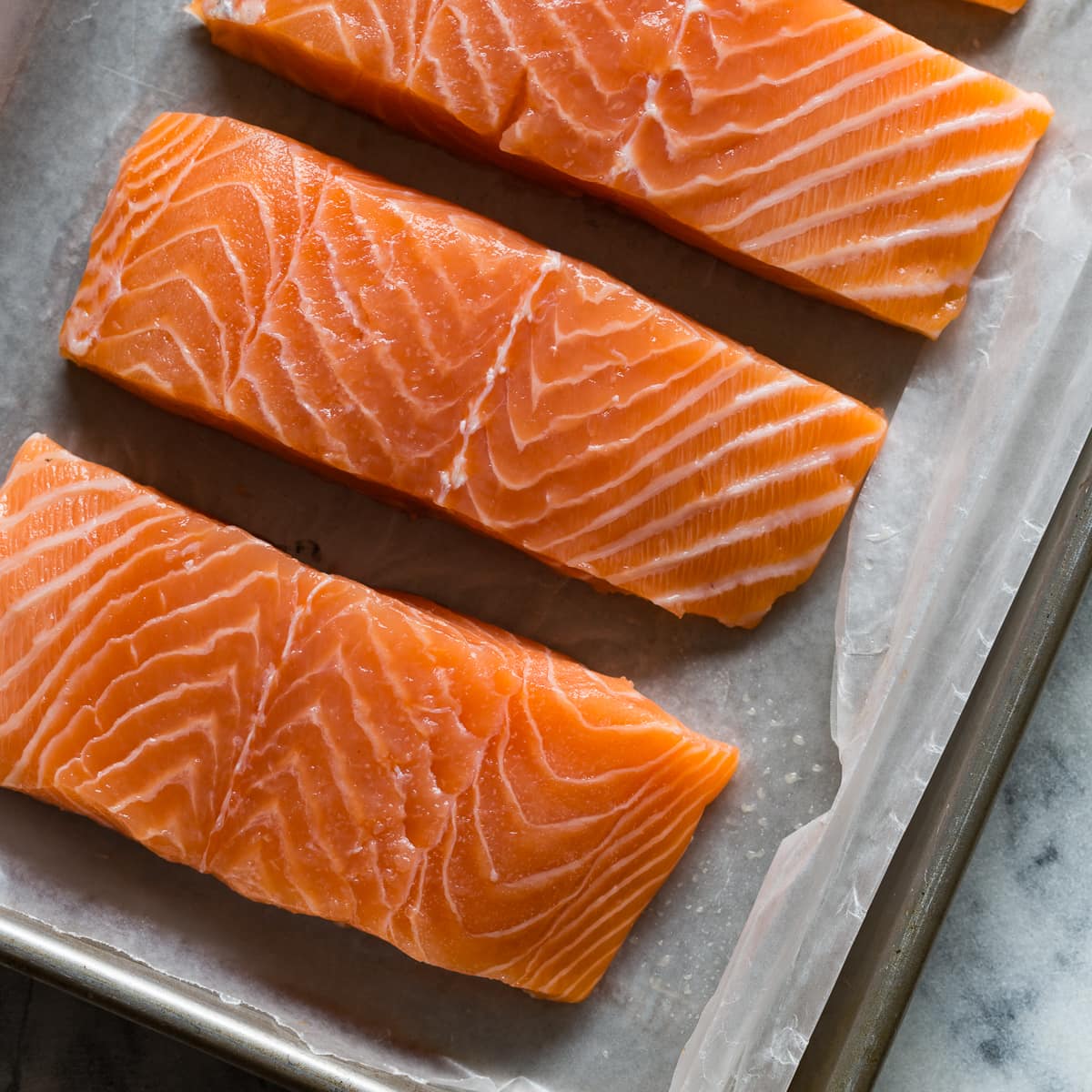
I've cooked salmon many ways (we love it)-steamed, air fried, grilled, roasted, and pan-seared. Over the years, I've prefer to skin salmon fillet. But since salmon is sold with the skin on, you either need to ask the fishmonger to remove it (if the store has one), or learn how to remove salmon skin yourself.
It's not hard to do, and you might find you like the results better for many salmon dishes. So if you've never learned how to skin salmon, let me show you-it's a simple technique that makes a big difference.
Jump to:
Why Skin Salmon
Why skin salmon fillet? While you can certainly cook salmon with the skin on, I often remove it-mainly to get rid of the bloodline, that darker purple area between the skin and flesh. It can have a stronger, more "fishy" flavor, and I've found it's one of the reasons many people think they don't like salmon.
Yes, crispy skin can be delicious when done right-but that's a different technique entirely. When I'm steaming, roasting, pan-searing, or air frying salmon, I prefer to skip the skin altogether. It's cleaner, more flavorful, and no surprises. So let's talk about how to get salmon skin off.
Chef's Tip: Talk to your fishmonger. When buying salmon, don't be afraid to speak up and ask for what you want. I always ask for center-cut fillets-they're thicker, more even, and easier to portion and cook than tail pieces. If the salmon in the case doesn't looks tired and not so fresh, ask if they have more in the back (they may or may not). A good resource for buying salmon is the Seafood Watch salmon guide for the most sustainable options.
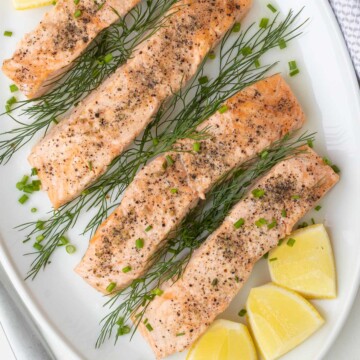
Here's a simple steamed salmon recipe that's easy to make with skinned salmon.
What You'll Need
The only special tool you really need for skinning salmon is a sharp, flexible fillet knife. That's it.
A chef's knife won't work well here-the blade is too thick and stiff to glide cleanly between the flesh and the skin. A proper fillet knife gives you the control and precision you need to make quick, clean cuts without tearing the fish.
I keep a few different fillet knives in my kitchen:
- A classic, flexible fillet knife.
- A longer, flexible Japanese-style blade with a razor-sharp edge.
- And my sentimental favorite-my father-in-law's old fishing fillet knife.
Now, you don't need to have three (I'm a bit of a knife nut!), but a fillet knife is the best knife to skin salmon-hands down.
Chef's Tip: Your fillet knife doesn't have to be expensive, but it does need to be sharp and flexible. That's what makes all the difference. And since you will likely only buy one in your life, get a good one if you can, and have it sharpened occasionally.
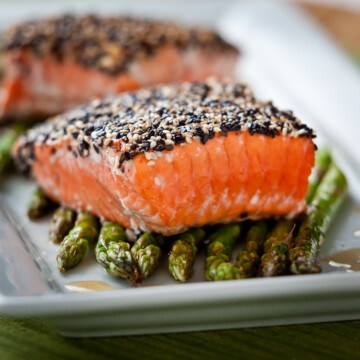
Crisp sesame crusted salmon is another delicious, easy salmon recipe.
How to Skin Salmon (Step-by-Step)
Note: Some of these step-by-step photos are from an earlier post and in a different format-but they still show the technique clearly!
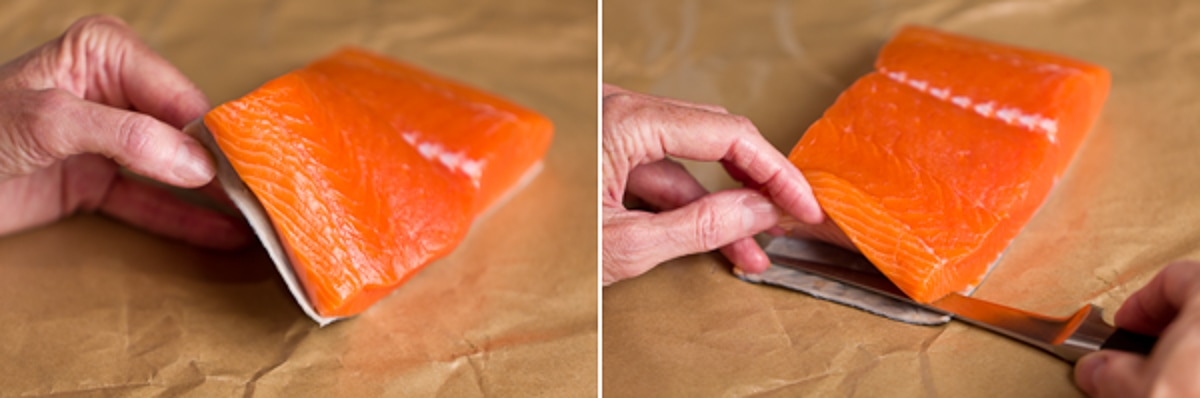
Step 1: Start at the tail end
Place the salmon skin-side down on your cutting board. Slip the knife between the skin and the flesh at the tail end, creating a small "notch" to hold onto.
Step 2: Position your knife
Hold the knife parallel to the cutting board, with the blade angled just slightly upward. Grip the skin with your non-cutting hand-if it's too slippery, use a paper towel for better grip.
Step 3: Glide the knife forward
With gentle pressure, push the knife forward while pulling the skin taut. Let the knife do the work as you slice along the length of the fillet, separating the skin from the flesh in one smooth motion. And if an area sticks, flip the fillet over and remove it.
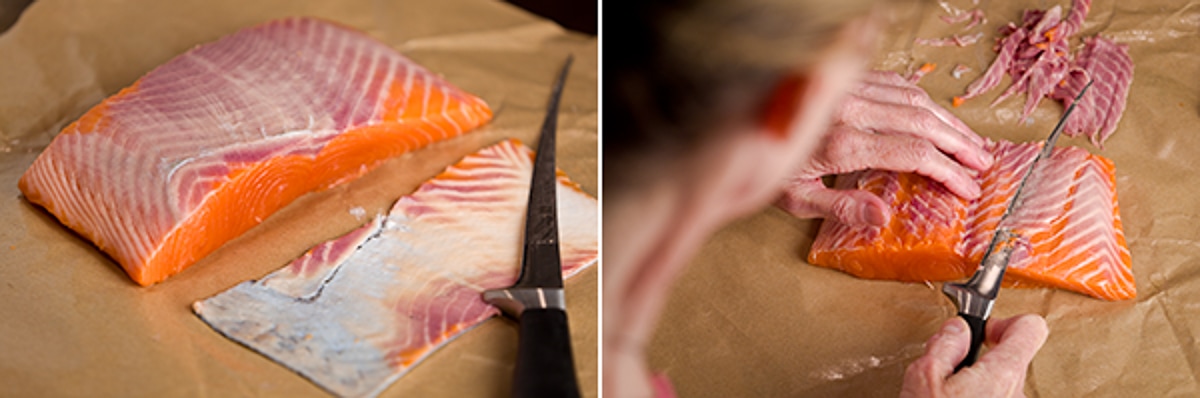
Step 4: Trimming bloodline from salmon (optional)
The bloodline is the darker purple-red strip on the skinned side of the salmon. Sometimes it is wide and sometimes it is more narrow. It varies by the fish. Most importantly, the bloodline can have a strong, assertive flavor. For a milder taste, you can trim it away by slicing along either side and lifting it out. Leave it or remove it-totally your call.
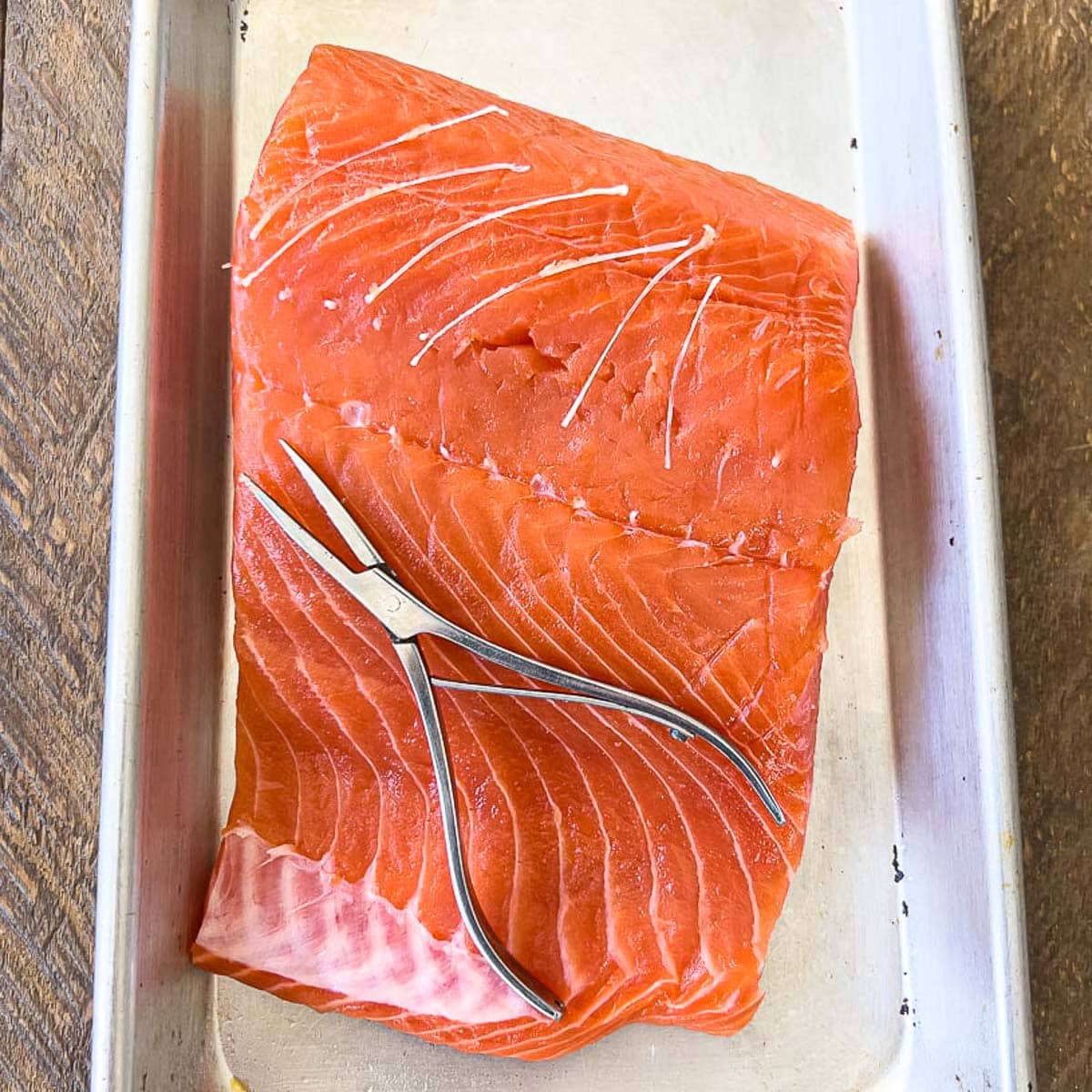
Step 5: Check for pin bones
Run your fingers gently along the fillet to feel for any remaining pin bones in salmon. If you find any, use tweezers or needle-nose pliers to remove them. Damp fingers help detect them more easily.
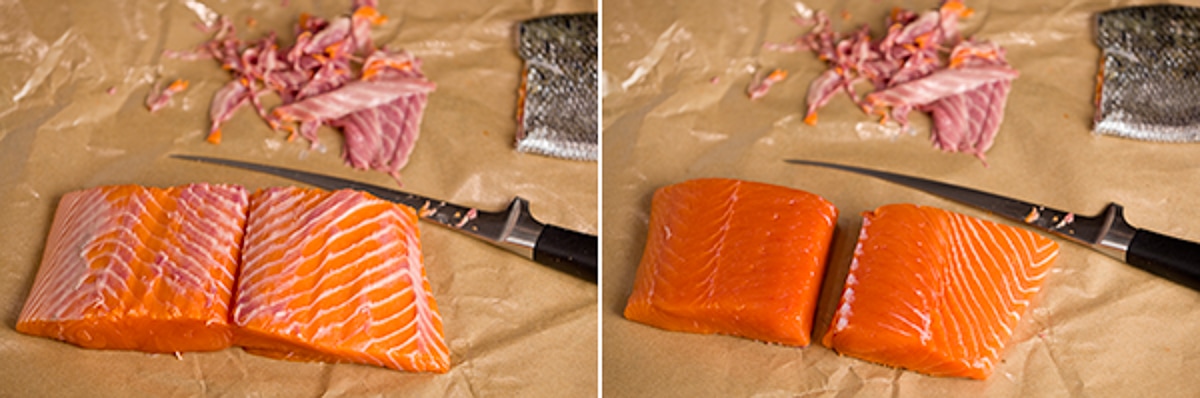
Step 6: Portion the salmon
Cut the salmon into portions if needed. A standard serving is typically 4-6 ounces, depending on the meal.
Chef's tip on skinning salmon: It's easier to start with individual fillets or small portions of salmon. A full side of salmon is doable but can be a bit unwieldy until you've practiced.
For another terrific salmon recipe, try this homemade smoked salmon on a pellet grill.
How to Skin Salmon FAQs
Nope-it depends on how you're cooking it and what you prefer. If you're grilling or pan-searing, leaving the skin on can help protect the flesh and crisp up nicely. But for techniques like steaming, roasting, or flaking into salads, removing the skin gives you a cleaner result and lets you trim away the bloodline if desired. And like me, you might just prefer it skinned.
Yes-especially if the fish was steamed or poached. Once it's cooked, the skin often peels off easily. That said, it's harder to trim the bloodline or get clean portions after cooking, which is why I usually remove it first.
You can try using a very sharp, flexible utility knife. Just avoid thick, heavy blades like chef's knives-they don't offer the precision you need and can tear the fish. If you enjoy salmon, it's worth investing in a filet knife, and you'll probably end up using it for other things too.
Yes, it's safe-it just has a stronger flavor. Some people like it, others don't. I usually trim it out for a milder taste.
You can if you like to! Salmon skin is safe to eat, and when it's crisped up (like pan-seared or grilled), it can be tasty. It also offers a bit of omega-3 fat and some nutrients. That said, the texture really depends on how it's cooked.
When salmon is steamed or poached, the skin turns rubbery-not exactly appealing. I usually remove it for those cooking methods. Whether you eat the skin really comes down to personal preference.
Comments
No Comments