
This creamy butternut squash pasta sauce is smooth, savory, and filled with the flavors of fall. Roasted butternut squash, shallot, garlic, sage, and Parmesan create a silky sauce with gorgeous golden color that's easy enough for a weeknight dinner and works over many different pasta dishes and noodle shapes.
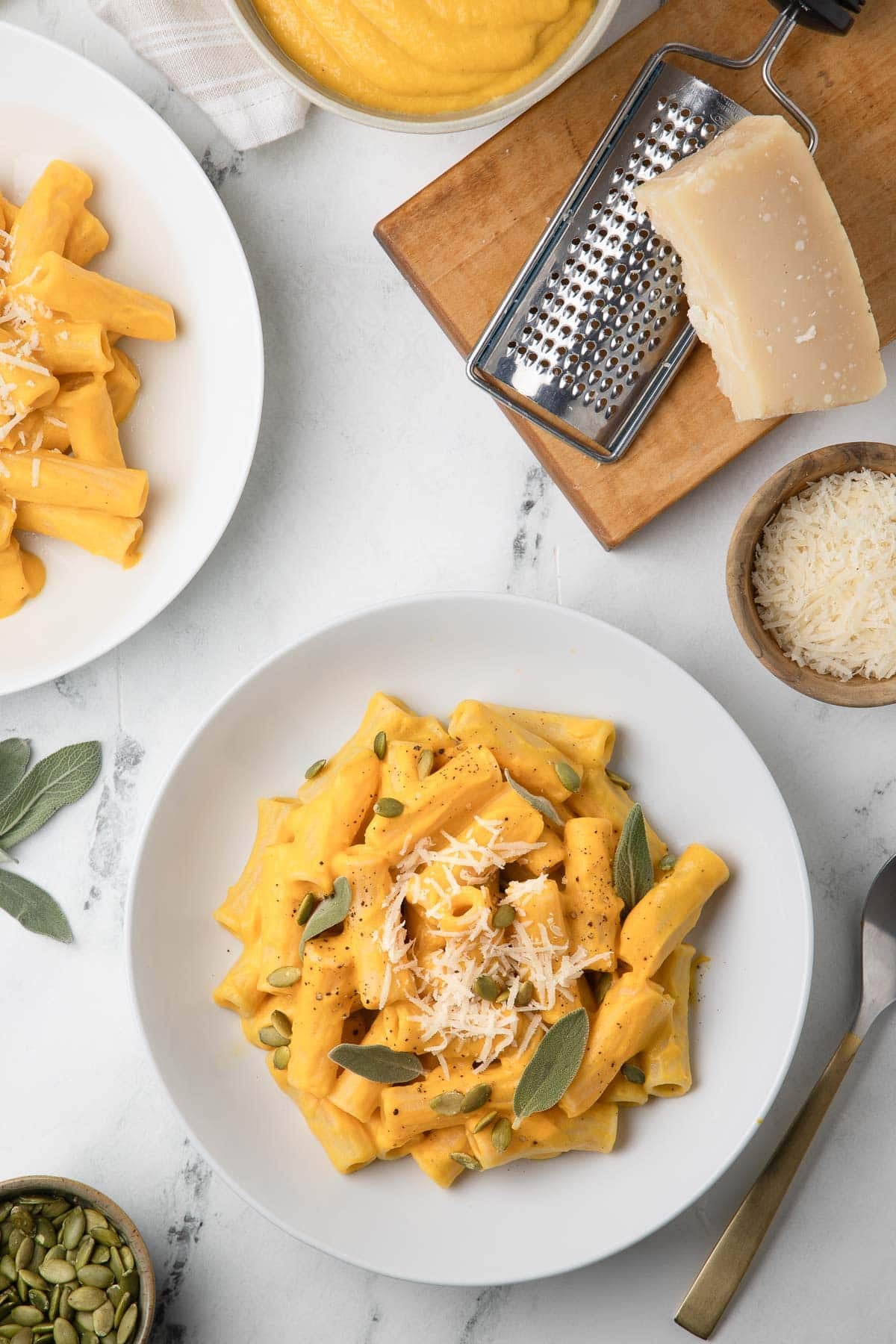
Butternut squash pasta sauce is a delicious way to make the most of winter squash and an easy sauce to have in your fall dinner rotation. Pair it with everything from rigatoni and fettuccine to ravioli, tortellini, or gnocchi, and freeze a batch for an easy dinner during busy weeks. Add browned chicken sausage when you want a heartier meal, or keep it simple and let the creamy squash sauce be the star.
Recipe Snapshot
- Fall flavor - Roasted butternut squash, sage, garlic, and Parmesan make a savory, creamy sauce.
- Easy - Roast the vegetables, then blend everything into a silky sauce.
- Versatile - Toss with your favorite pasta or serve with ravioli, tortellini, or gnocchi.
- Freezer-friendly - Make it ahead and freeze the extra for an easy future dinner.
Ingredients You'll Need
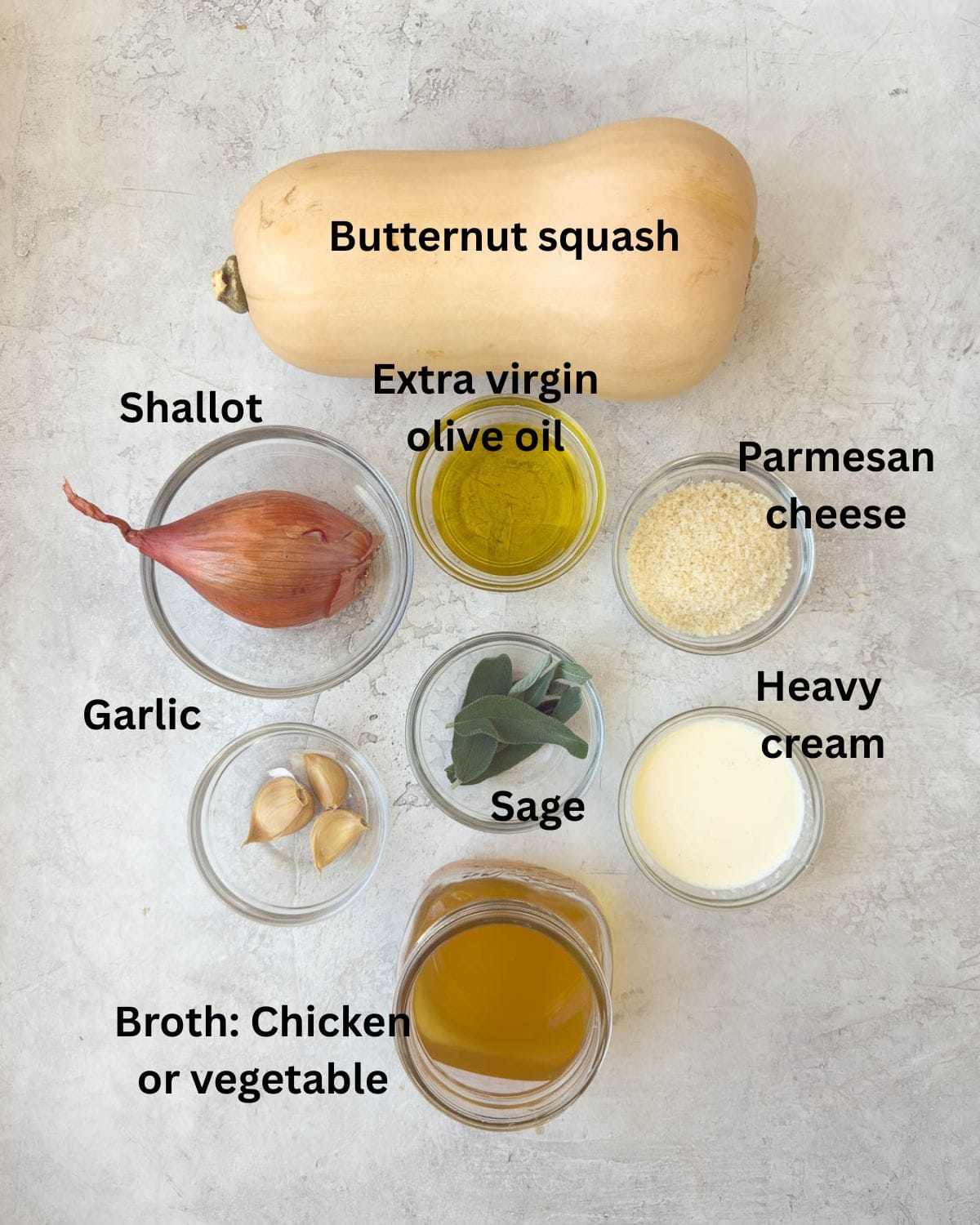
- Butternut squash - Choose a medium butternut squash (about 3 pounds), or 2 pounds pre-cut butternut squash.
- Shallot - Roasting mellows its flavor and adds savory sweetness.
- Garlic - Roasts alongside the squash for a mellow, savory flavor.
- Extra-virgin olive oil - Helps the squash and aromatics brown and caramelize.
- Fresh sage - A classic partner for winter squash that adds an earthy, savory note.
- Broth - Chicken broth for thinning the squash into a spoonable sauce. Turkey broth works well too.
- Parmesan cheese - Just a little adds savory, salty depth and richness.
- Heavy cream - For an extra touch of richness if desired.
Substitutions
- Onion - Use a small yellow onion in place of the shallot.
- Vegetarian - Use vegetable broth instead of chicken broth. Homemade broth gives the sauce the best flavor.
- Dairy-free - Omit the Parmesan and cream. Add a little extra olive oil for richness and adjust the seasoning to taste, or use a vegan cheese and non-dairy cream replacement or canned coconut milk.
Chef's Tip: The Best Pasta - A thick, creamy butternut squash sauce pairs well with pasta shapes that give the sauce plenty to cling to. Try short shapes such as rigatoni, penne, rotini, or other spirals, or use fettuccine and other ribbon pastas. It's also a delicious sauce for filled pastas such as ravioli or tortellini, as well as gnocchi or gnudi (ricotta gnocchi). And of course choose gluten-free pastas if needed.
For another delicious fall-flavored dinner made another squash (canned pumpkin), try my pumpkin risotto.
How to Make Butternut Squash Pasta Sauce
If you're starting with a whole squash, see my step-by-step photos for how to prep a butternut squash safely and easily. Pre-heat the oven to 425°F.
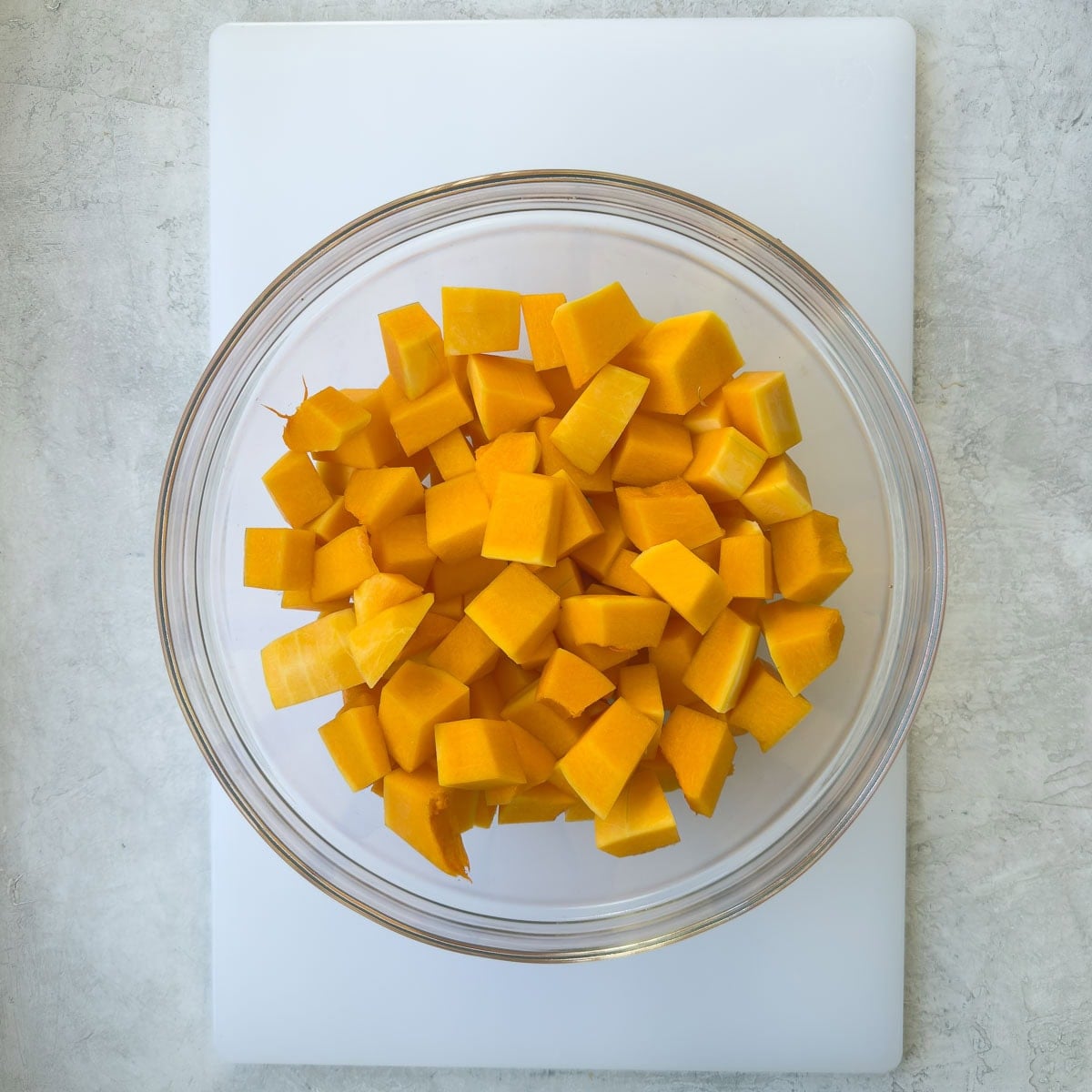
- Peel and cube the butternut squash into approximately 1" pieces.
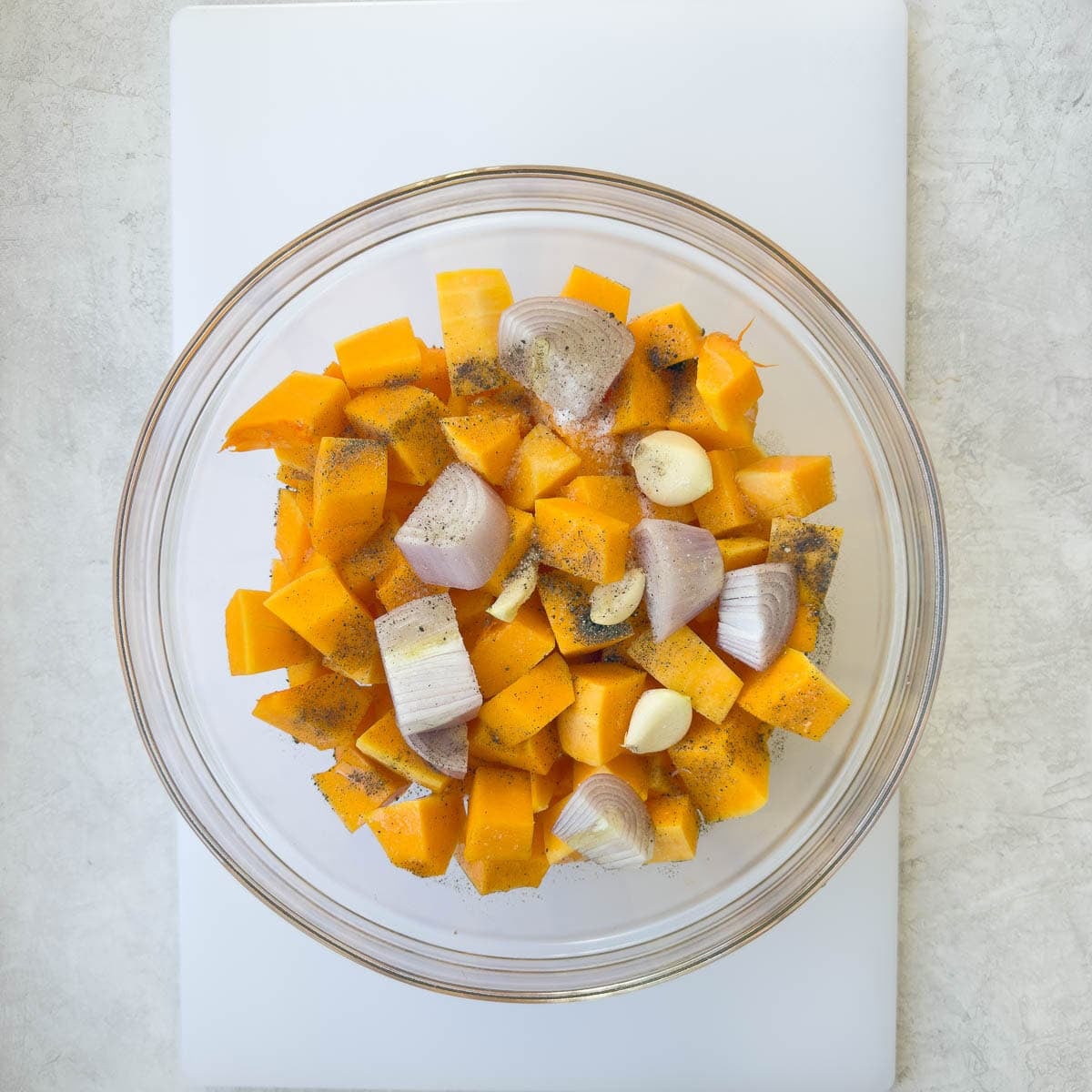
- Chop the shallot, peel the garlic and leave whole, add to the bowl of squash and toss with olive oil, salt, and pepper.
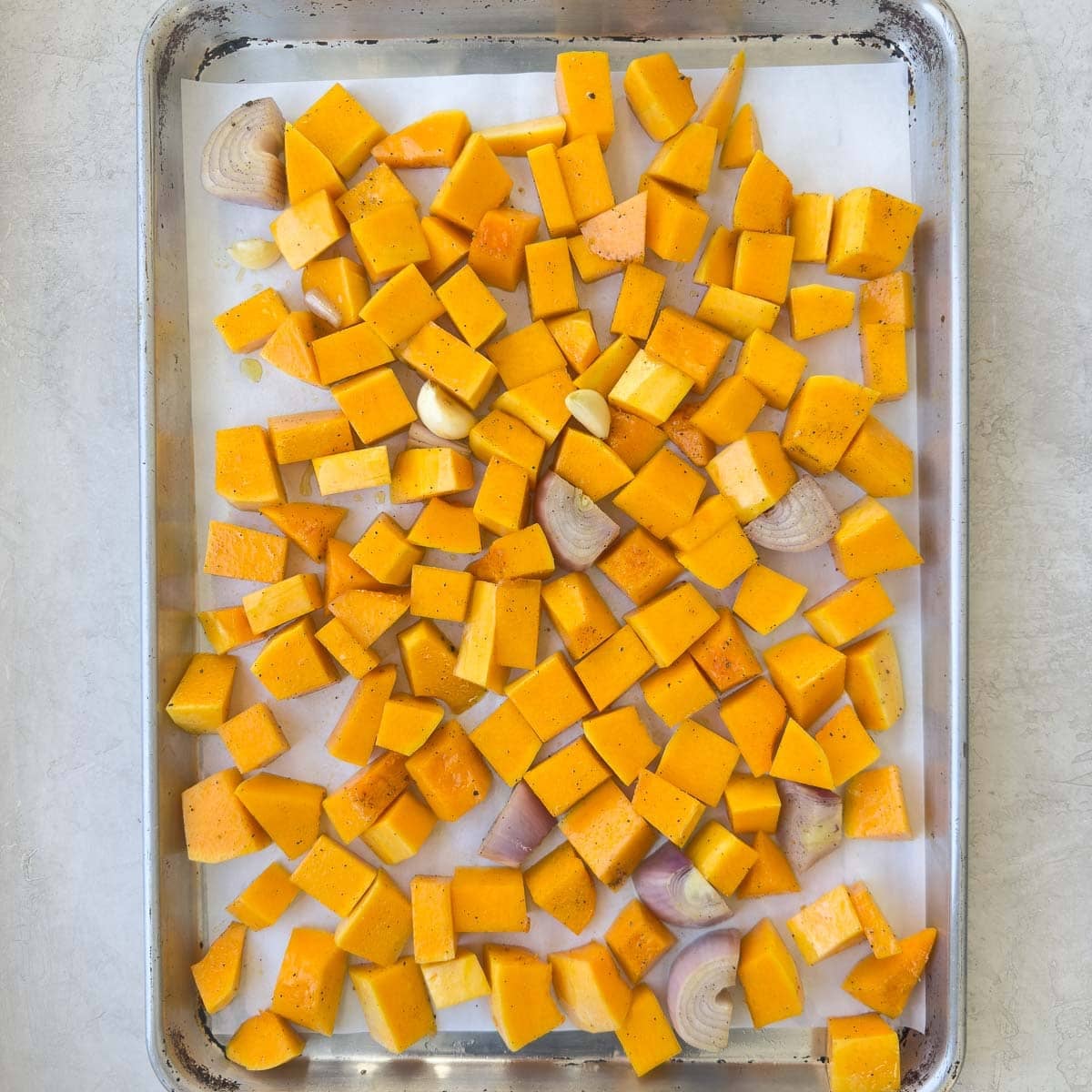
- Distribute the butternut and vegetables onto a parchment lined baking sheet.
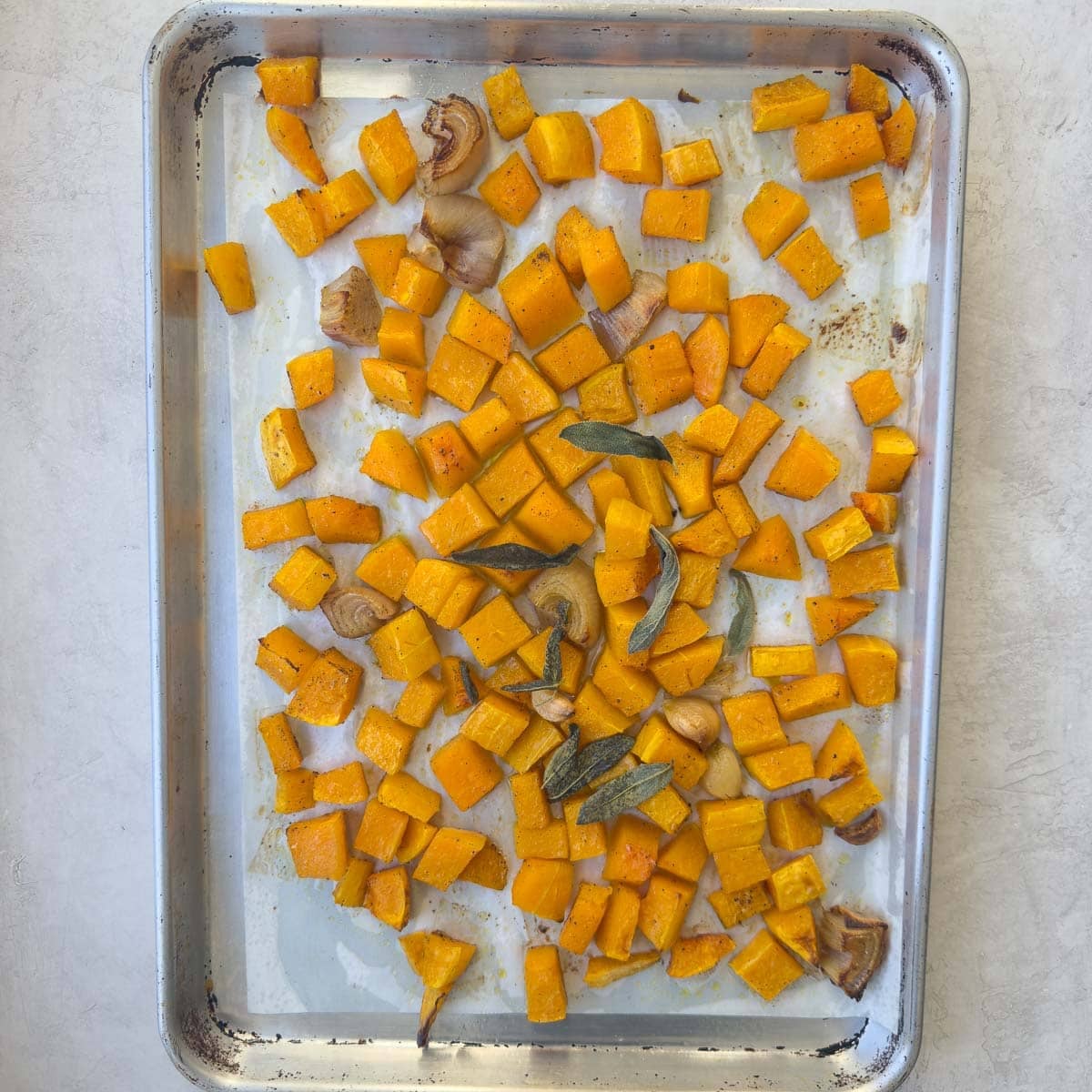
- Roast until vegetables are tender when pierced with the tip of a paring knife, 50-60 minutes. Add the sage leaves 10 minutes before finishing.
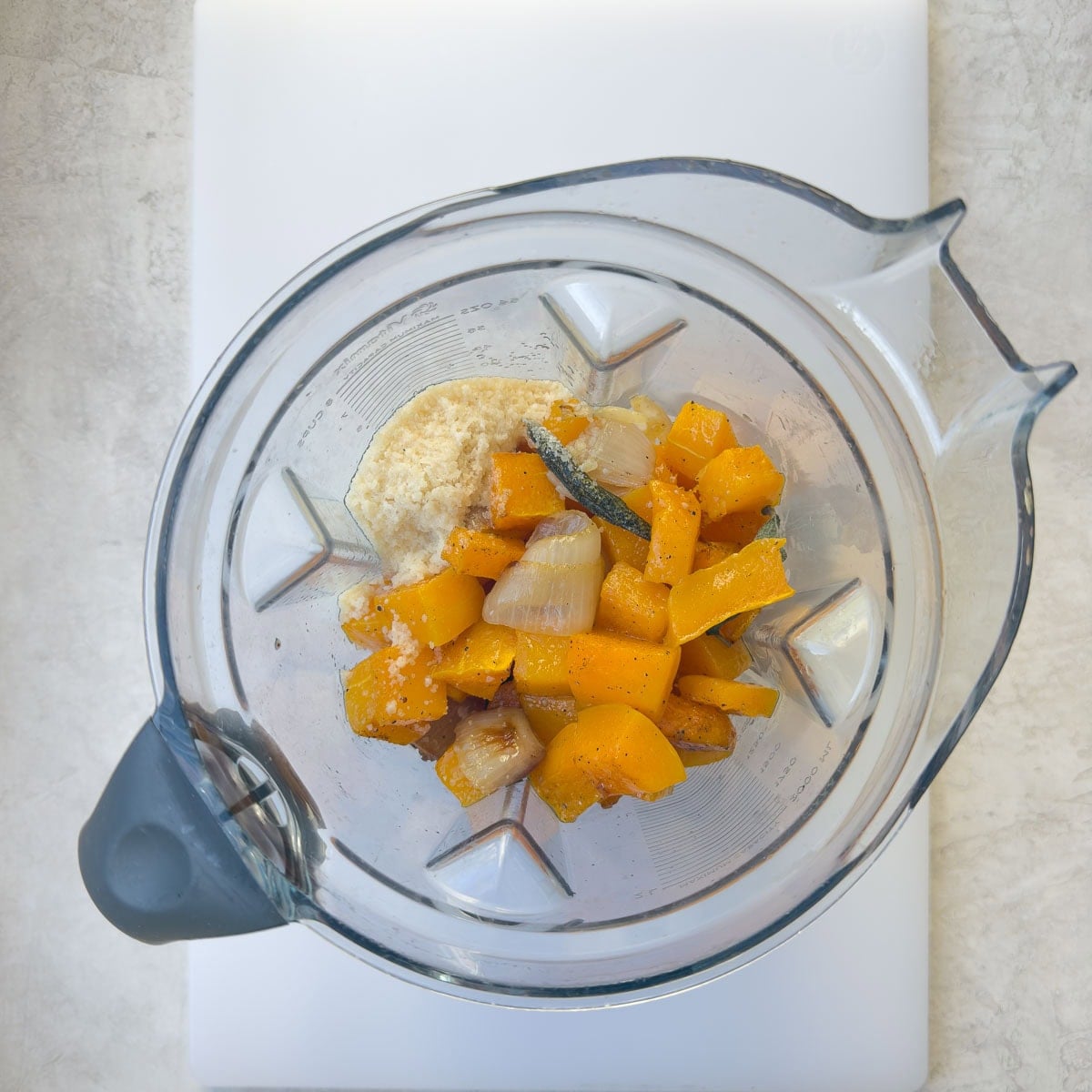
7. Add everything to a high-speed blender except the parmesan, and puree. This will be very thick; stop, scrape, work it until the blades move easily. Add the Parmesan.
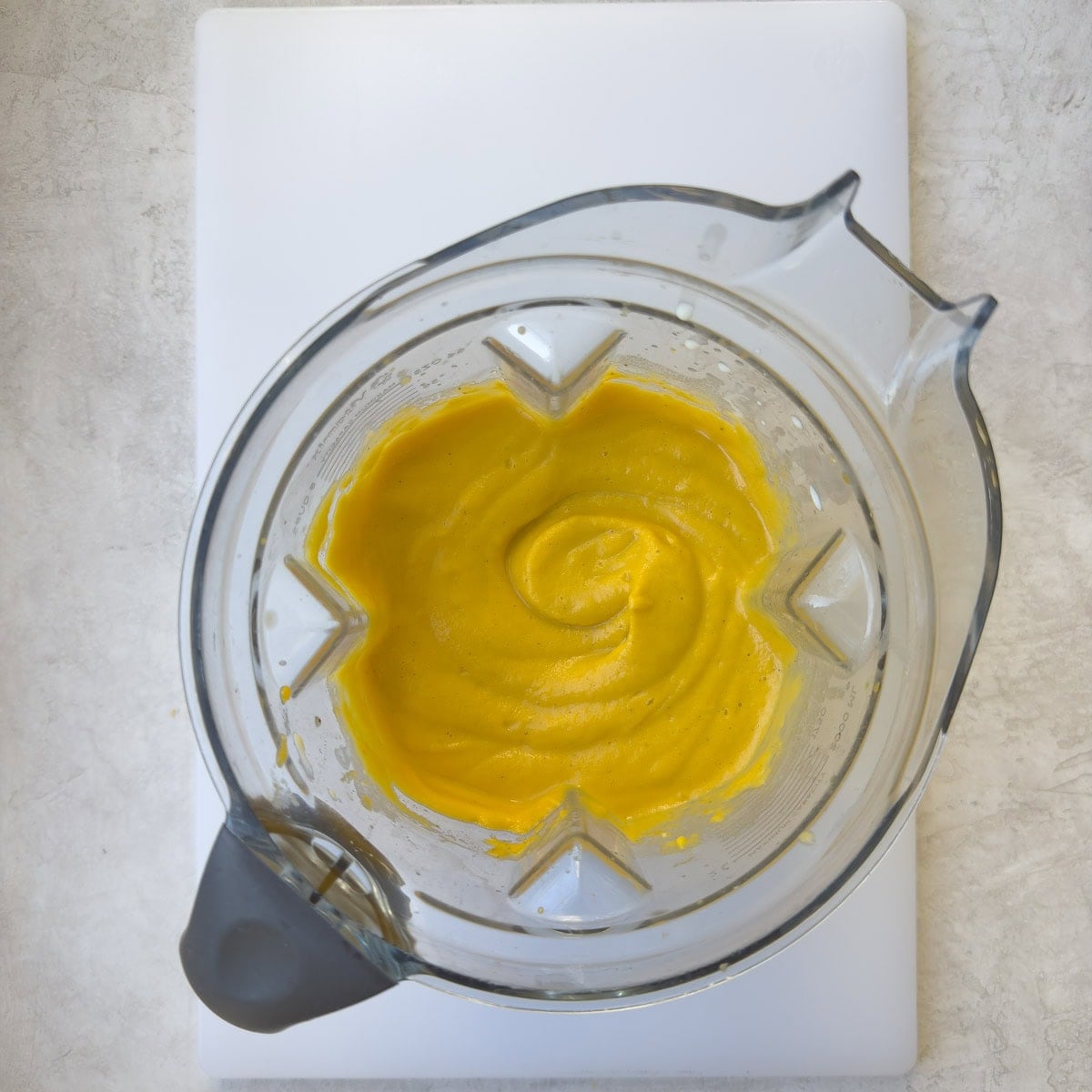
8. Taste and adjust with additional salt and pepper if needed. Thin with reserved hot pasta water (stir or blend in) as needed when serving.
Chef's Tip: Adjust the Sauce Consistency - This sauce is intentionally thick, giving you flexibility depending on how you serve it. For pasta, reserve some hot pasta water and add it a little at a time until the sauce is silky and coats the pasta easily. In testing, ¾ - 1 cup sauce needed about 3 tablespoons of pasta water for our rigatoni. For ravioli, tortellini, or gnocchi, you may prefer it thicker.
Serving Suggestions
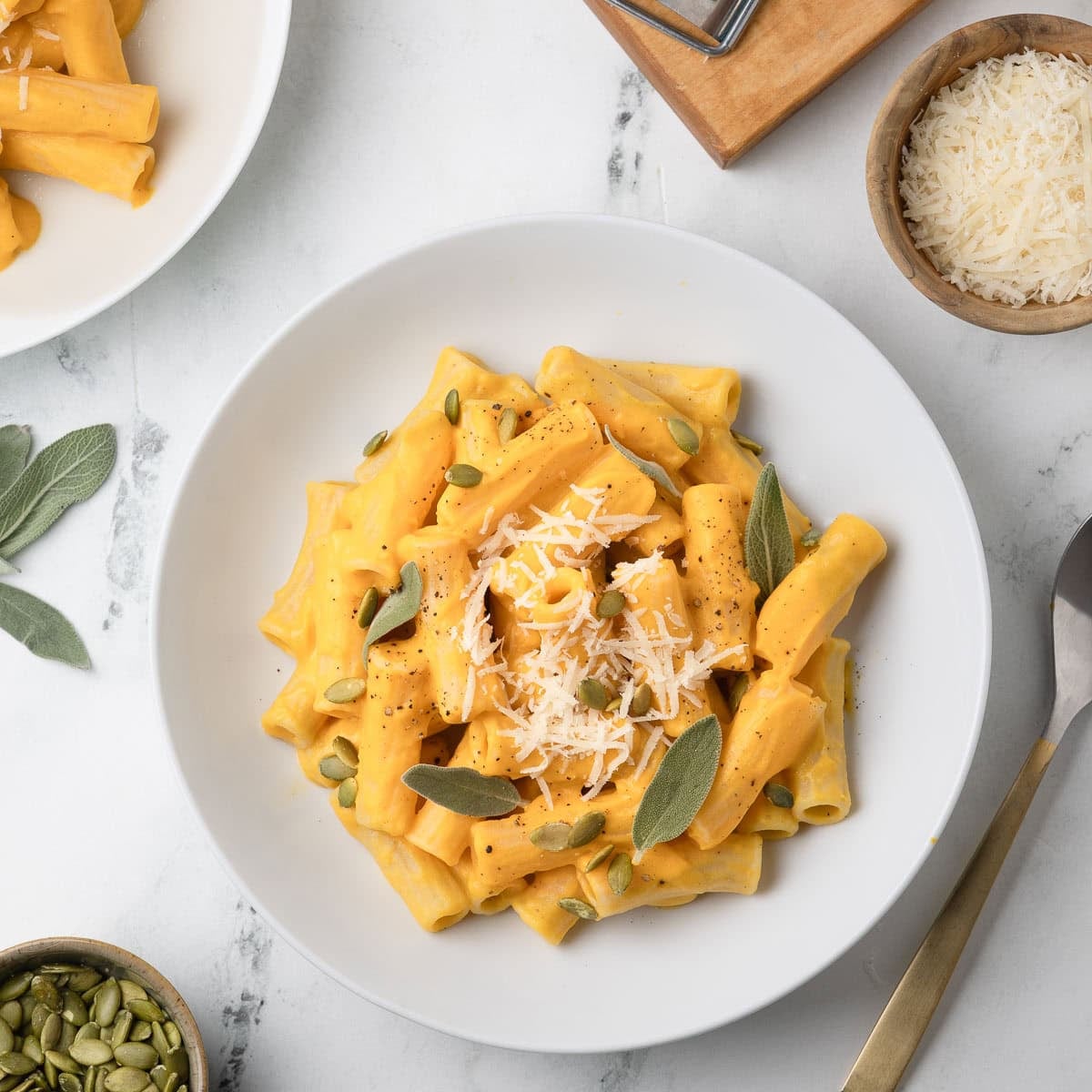
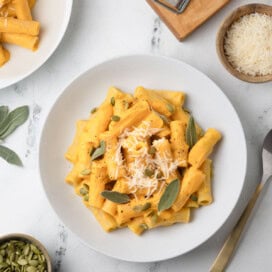
Serve butternut squash pasta sauce tossed with rigatoni or another favorite pasta, finished with freshly grated Parmesan and a few toasted pepitas for crunch. For a heartier dinner, add browned chicken sausage; chicken-apple sausage is especially good with the squash and sage (how we eat it).
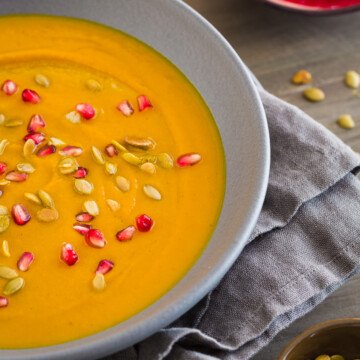
The sauce is also delicious with ravioli, tortellini, gnocchi, or gnudi. And if you have extra sauce, thin it with broth for an easy butternut squash soup.
Storage and Freezing
Cool the butternut squash pasta sauce completely, then refrigerate in an airtight container for up to 4 days.
For longer storage, portion the sauce into airtight freezer containers and freeze for up to 3 months. Thaw overnight in the refrigerator, then reheat gently on the stovetop, stirring until smooth.
Because the sauce is intentionally thick, it stores and freezes well without being thinned first. When ready to serve, adjust the consistency with hot pasta water if tossing with pasta, or a splash of broth for other uses.
Recipe FAQs
Yes. For a smooth, silky pasta sauce, peel the butternut squash and remove the seeds before cutting it into cubes and roasting. For a shortcut, use pre-cut butternut squash from the produce section.
Butternut squash naturally makes a thick, creamy puree, especially after roasting. This sauce is intentionally made thick so you can adjust the consistency for different uses. When serving with pasta, gradually add reserved hot pasta water until the sauce is as silky and loose as you like.
Yes. For a dairy-free version, omit the heavy cream and Parmesan (or try vegan parm) and use vegetable broth as needed for consistency. A little extra-virgin olive oil can add richness. The flavor and texture will be different from the original recipe. Also try a non-dairy cream replacement or canned coconut milk.
I don't recommend frozen butternut squash for this recipe. Frozen squash contains more moisture, so it won't roast and concentrate the same way as fresh squash, which can make the finished pasta sauce thinner and less flavorful. For the best results, use a whole fresh butternut squash or packaged fresh pre-cut squash.
If you have frozen butternut squash to use, try my creamy butternut apple soup instead. Frozen squash is better suited to a soup where the extra moisture isn't a problem.
More Squash Recipes to Try
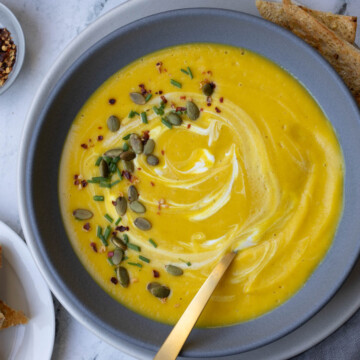
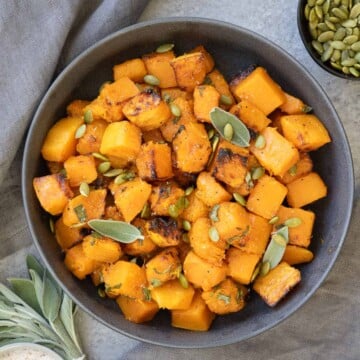
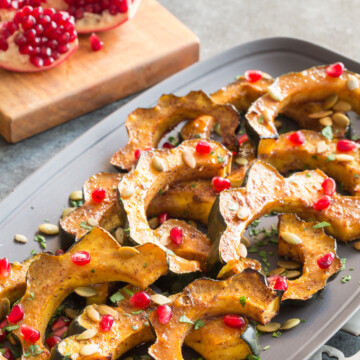
If you love cooking with squash, here are a few more easy recipes to enjoy throughout fall and winter.
If You Make This Pasta Sauce
If yu make this butternut squash pasta sauce, please leave me a comment and let me know who you served it.
📖 Recipe
Butternut Squash Pasta Sauce
Ingredients
- 3 pounds whole butternut squash or 2 pounds prepared/cubed raw
- 1 large shallot 4 ounces
- 3 large garlic cloves peeled, left whole
- 2 tablespoons extra virgin olive oil or avocado oil
- ¾ teaspoon sea salt or kosher salt
- ¼ teaspoon ground black pepper
- 6 fresh sage leaves
- 1 ¼ cups chicken broth vegetable broth or turkey broth
- ¼ cup fine grated Parmesan cheese
- ⅓ cup heavy cream see notes for dairy-free below
Would you like to save this recipe?
Instructions
Prep the squash and vegetables
- Preheat the oven to 425°F and line a rimmed baking sheet with parchment paper. Peel and seed the butternut squash and cut it into 1-inch cubes. Peel the shallot and cut into quarters. Peel the garlic cloves. Toss in a bowl with the oil, salt, and pepper.
Roast
- Add the vegetables to the baking sheet. Toss with olive oil, salt, and pepper and spread into a single layer. Roast until tender with lightly browned edges, about 1 hour, adding the sage leaves in the last 10 minutes. Squash should be completely tender when pierced with the tip of a paring knife, and just starting to brown at the edges.
Blend the sauce
- Transfer the roasted squash, shallot, garlic, and sage to a high-speed blender. Add ¾ cup of the broth and begin blending. The mixture will be very thick at first. Stop the blender, scrape down the sides, and continue blending, adding more of the broth gradually to help get the blades moving. You may need to stop and scrape the container down several times. Keep working the mixture until it begins to puree, then add the Parmesan and cream and continue blending until the sauce is smooth and silky.
Taste and finish the sauce
- Taste and adjust with additional salt and pepper if needed. Add a little more cream or broth as needed for flavor and consistency. The sauce is intentionally thick and can be thinned with hot pasta cooking water when serving.
Comments
No Comments