
Skip the store-bought brands and make your own homemade almond milk. Free from unwanted additives, this clean, wholesome, and nutritious plant-based milk is perfect for all your non-dairy needs. We love using it daily in protein smoothies for a healthy start to the day or a post-workout refuel. It's so simple-soak the almonds, blend in a high-speed blender, and enjoy. Homemade really is better.
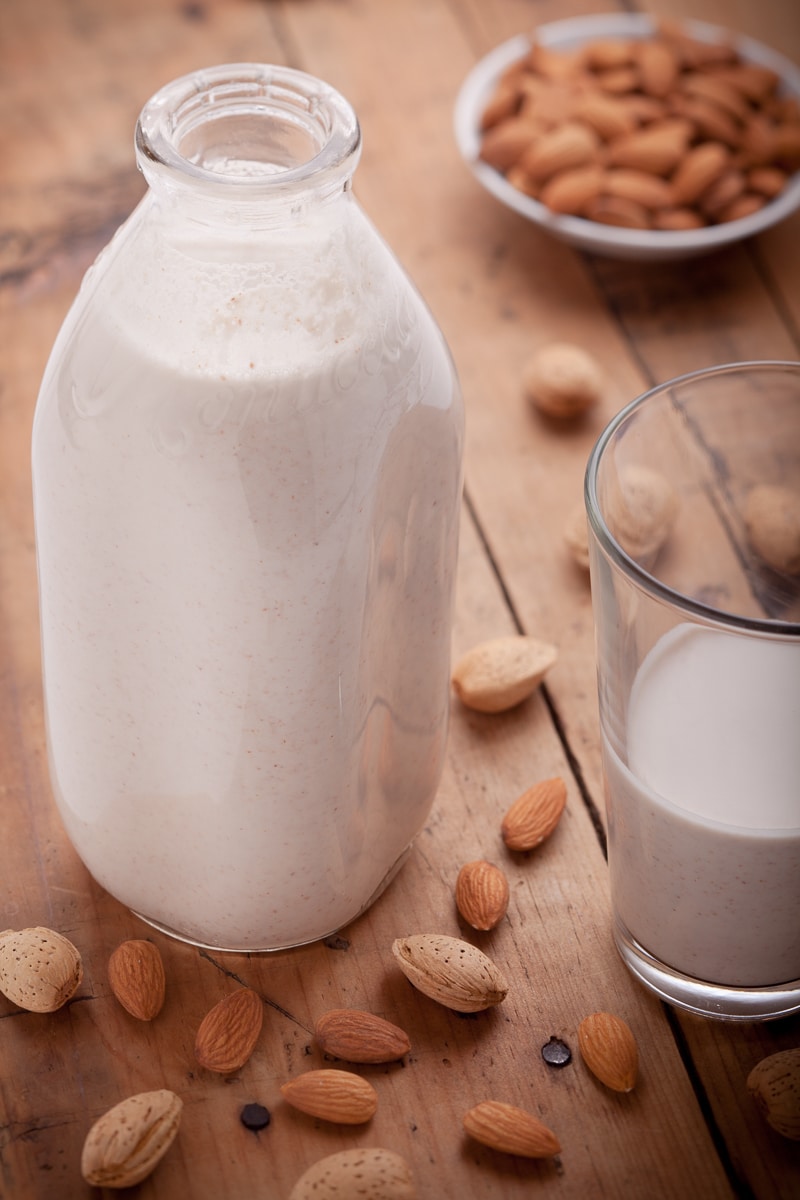
I started making homemade almond milk when I read the ingredients labels of many store brands. It's so simple to make, so why not make your own? I stock raw almonds in my pantry, buying them in bulk, and we always have almond milk for our morning smoothies. Homemade beats the stuff in a box or carton, which can be processed with additives you don't want.
Recipe
Why You'll Like This Recipe
- Homemade almond milk is super easy to make.
- Never run out of almond milk.
- Stock raw almonds in the pantry.
- Buy almonds in bulk to save.
- Strain or not, I usually don't.
- Flavor and sweetening options.
For creative ideas on making healthy protein smoothies, read my Ultimate Guide to Making Healthy Smoothies.
Recipe Ingredients
- Almonds: Be sure you buy plain raw almonds, not roasted, salted, or flavored. Buy in bulk at warehouse stores to save money.
- Water: Pure, clean, filtered water is best, not tap water unless you have very good water (not where I live).
If you've heard the critics that growing almonds wastes water, read this article on growing almonds first. It will help you understand the true facts about almonds.
Chef's tip: With all alternative milks, buy unsweetened and unflavored and add what you want for quality and control.
Substitutions and Variations
- Vanilla: If you love vanilla almond milk, add a little vanilla extract or ground vanilla bean to the almond milk. Optional.
- Sweetened almond milk: If you want sweetened almond milk, use a natural sweetener such as brown rice syrup, liquid stevia, maple or honey, or a zero-sugar sweetener such as a monk fruit/allulose blend or a monk fruit simple syrup. Another good option is zero-sugar maple syrup or honey. Some people like to add soft pitted dates but they don't blend really easily due to their chewy texture.
- Flavored almond milk: Try cocoa powder, add a little cinnamon, pumpkin spice blend, or Japanese matcha powder for variety. Adding maca powder gives it a sort of butterscotch-earthy flavor and studies say maca may have health benefits.
Chef's tip on flavored almond milk: While you can flavor almond milk many ways, my recommendation is to leave it plain and simple, and add the flavor to whatever you are making, such as a protein smoothie. It's easier to flavor and get the right flavor level and concentration.
Recipe Instructions
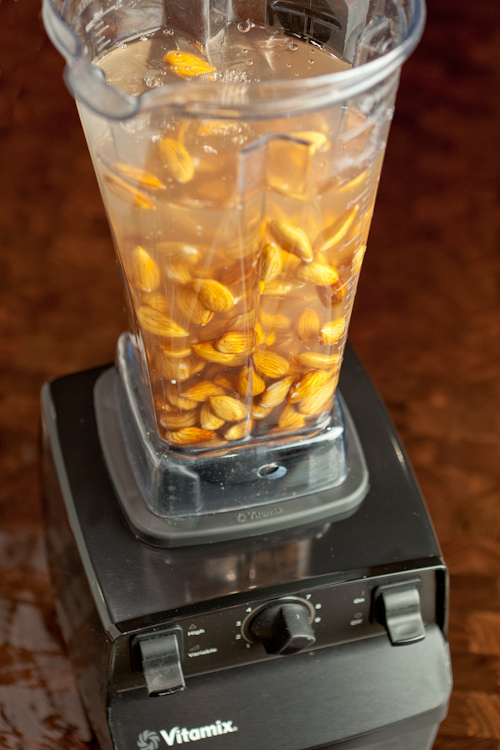
Step 1: Soak almonds overnight or for 8 hours in cold filtered water.
Step 2: Drain off soaking water, add fresh filtered water to the blender container, pur on high speed for about 1 minute. Allow the foamy top to subside or scoop it off for more accurate almond milk measuring. It's ready to use right away, strained or not.
To Strain or Not
Some recipes strain the almond milk through a nut milk bag for a smoother texture. I do not. Why toss all of those healthy little bits of almonds? Do what suits you best. We like the texture of un-strained almond milk. It's thick and rich. It will keep for 3-4 days in the refrigerator. Stir or whisk before using. If you let it sit too long and it smells sour, toss it.
The only time I strain my homemade almond milk is if I need a thin, fluid milk for using in a recipe.
Almond to Water Ratios
Depending on the capacity of your blender and your volume needs, try these ratios. The water listed is not the soaking water, but the final water used to make the milk.
- 9 ounces almonds to 6 cups water.
- 7 ½ ounces almonds to 5 cups water.
- 6 ounces almonds to 4 cups water (1 quart).
- 4 ½ ounces water to 3 cups water.
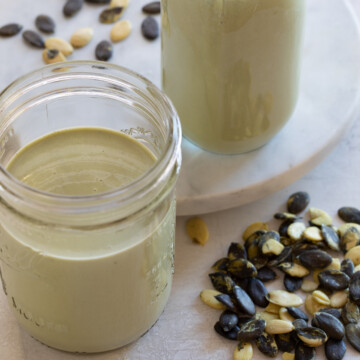
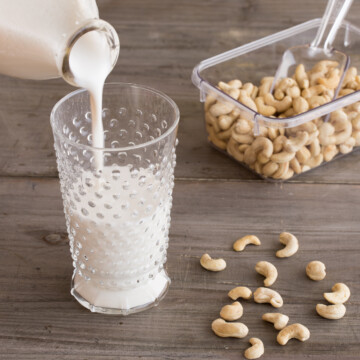
For more plant-based milk options try my pumpkin seed milk, cashew milk, or quick homemade coconut milk.
Why Almonds?
Almonds are considered the most nutritious of nuts. From a nutrition standpoint, almonds are a rich source of protein containing fiber, omega-3 and 6 fatty acids, vitamin E, magnesium, calcium, and zinc. That, and they taste great.
Why Soak?
Almonds contain enzyme inhibitors that can interfere with digestion and nutrient absorption, so toss the soaking water and use fresh filtered water to puree your almonds into milk in a high-speed blender. Soaked almonds also puree into a smoother milk.
Tips For Buying Raw Almonds
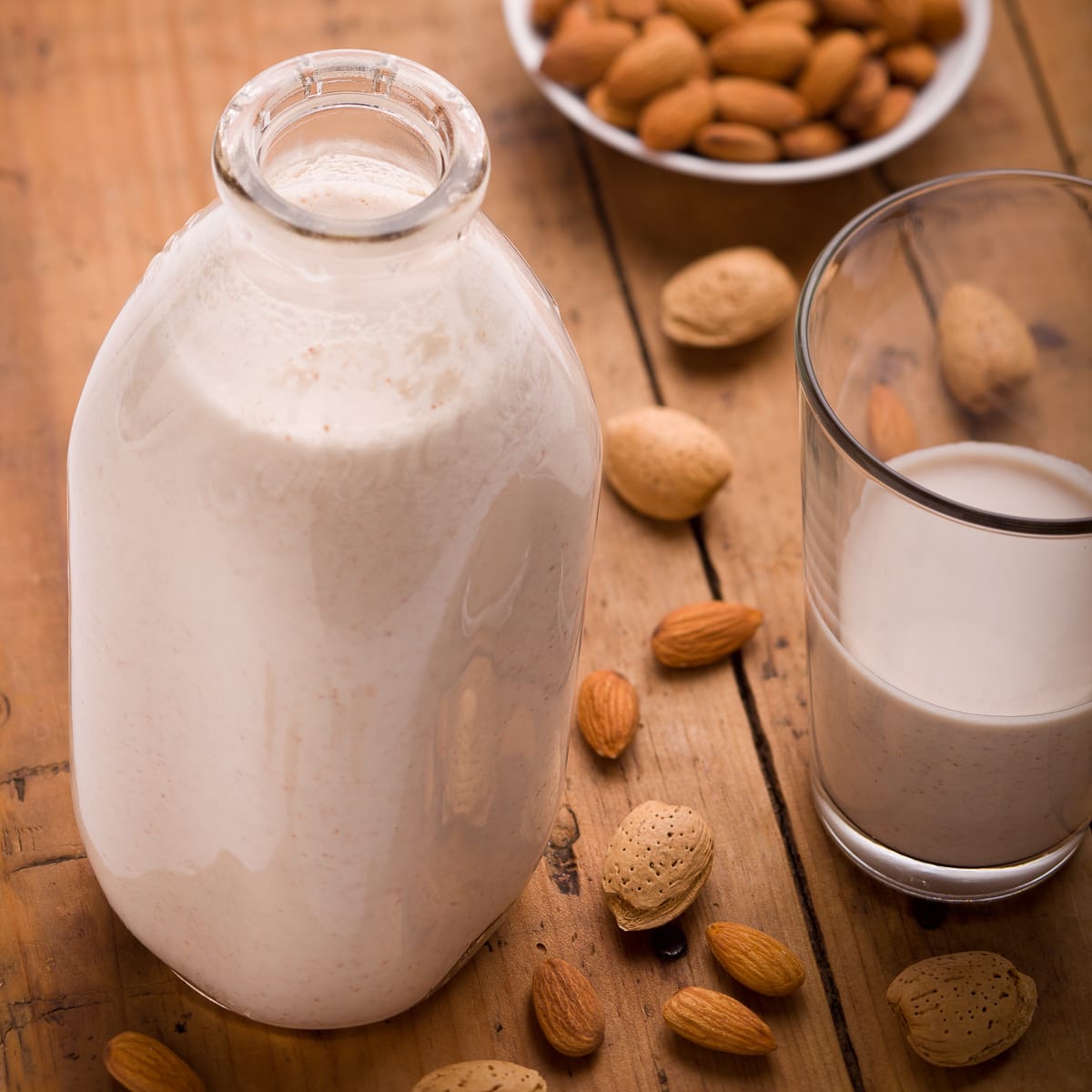
While a 2007 USDA law requires all almonds grown in the United States or Mexico to be sanitized or pasteurized, there are two methods used: steam pasteurization and Propylene gas (PPO). You want steam pasteurized.
Steam pasteurization is non-toxic and does not kill the nut. It's done with a short burst of steam that sanitizes the surface of the nut only. Steam pasteurized almonds will sprout, so they are still alive. Look for the words steam pasteurized somewhere on the package. If nothing is listed, call the producer and ask.
The other method using Propylene Oxide (PPO) gas is industry standard because it is cheaper. PPO gas is classified by the U.S. Environmental Protection Agency (EPA) as a probable human carcinogen. Not too appetizing or healthy for your family. Here are the almonds I buy off Amazon or at Costco. Plus I buy only organic.
Serving Suggestions
We use homemade almond milk daily in our protein smoothies for breakfast and for post-workout smoothies. Use it almost anywhere that calls for milk. Enjoy a cold glass with a cookie, use it in breakfast recipes such as overnight oats with chia seeds or Bircher muesli.
Recipe FAQs
Yes, soaking softens the almonds for easier blending and smoother milk. It also helps remove phytic acid for better digestion and nutrient absorption.
It depends on how creamy of an almond milk you want. For a quart of almond milk, soak 6 ounces of raw almonds to 4 cups water (1 quart).
You can freeze almond milk in ice cube trays or portioned silicone trays. I find that the texture changes a bit different, so prefer making it fresh since it's so easy, but if freezing is a necessity, then freeze it.
Skip the straining process and use your almond milk as is. This is what we do, Why toss the nutrition in the almonds? If you want to strain or need to for a specific recipe and have pulp, it can be used in energy balls or stirred into porridge. It's also great for composting.
More Homemade Plant Milk Recipes
If you love almond milk, try these other easy nut and seed milks as alternatives. They are delicious and different in their own right. For delicious and healthy smoothies, check out the protein smoothie recipe page.
Did You Make This Recipe?
If you make homemade almond milk, please add your comment. I appreciate your feedback and enjoy hearing from you. If you loved it, please give it a 5-star rating! They really help other readers.
📖 Recipe

Homemade Almond Milk
Equipment
Ingredients
- 6 ounces raw almonds
- Filtered water to cover the almonds for soaking
- 4 cups fresh filtered water for pureeing
Options
- A splash of vanilla or almond extract optional for flavoring
Would you like to save this recipe?
Instructions
- Place almonds in container and cover with water. Cover and refrigerate for 8-24 hours. Strain off soaking water. Pour soaked almonds and fresh filtered water into a high-speed blender with a tight fitting lid and process for 60 seconds on high. Start slow and build up the speed. Refrigerate and use within 3-4 days. Stir each time you use as it settles.
Notes
- 9 ounces almonds to 6 cups water.
- 7 ½ ounces almonds to 5 cups water.
- 6 ounces almonds to 4 cups water (1 quart).
- 4 ½ ounces water to 3 cups water.
DramaQueen says
I love almond milk, but never thought about making my own, I am soo going to try this!!
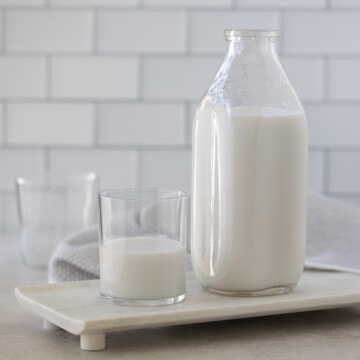
I'm curious though - where do you get the glass milk bottles?
Even though, I know I could store it in any bottle, I love the one shown in the picture.
Sally says
Hi, glad you found the post helpful. I use this almond milk in my smoothies almost every morning. Sure better than the stuff in a box, which is actually pretty processed. I found that bottle in an antique store, just for the photo. I store my almond milk in a BPA-free plastic container with a tight-fitting lid. I try to avoid glass in kitchens. It breaks!
DramaQueen says
Hi Sally,
Thanks for the response. This is a great recipe, I'm using it in my smoothies from now on; it is soo good! I store most of my stuff in BPA-Free plastic as well...but it is still a great shot and a cool bottle.
Aimee Clark says
I just made almond milk for the first time today. I used muslin cloth to strain and have almond 'mush' leftover. Since I have a dehydrator I'm going to attempt to dehydrate it and use as I would almond meal, and even try making some raw biccies in the dehydrator! Hopefully it works. I used stevia to sweeten the milk and it tastes delicious! However it curdles in my tea and coffee, so I've been googling how to avoid this and it seems that warming the milk slightly can help prevent it curdling in the hot beverages. I don't want to change the fat by heating it too much so will experiment with low temperature and see how it goes. Cross fingers!
Jaclyn Evans says
Ooh, I forgot to fridgerate while soaking.. Still ok? I'm in the habit of not putting things in the fridge.. Like eggs..
Sally says
Jaclyn, it should be fine, but refrigerate once you've pureed it.
Mary says
Great recipe! Thank you! I didn't like the thickness of it though, so I used my Boldtbags filter bags to strain it.
lousie says
hi this is nice site amzing i like it...Thank you so much for the info on almonds and for the link to the D&S Ranch. So very helpful!!! I’ve just been being the ones in the store that say raw. That will change from now on. I just ordered some from the website. Thanks again!
Ulrike says
what can I do with the mash? uli
Sally says
Hi Ulrike. If you are referring to what is leftover after straining, I'm not sure what you can do with it. I do not strain my almond milk so I do not have anything leftover. I like the thickness of it after pureeing at high speed for 90 seconds. Just be sure to stir before use after it sits in the refrigerator. If you compost you might research if it's a good addition.
Jeff says
Fascinating! I didn't know that about almond regulations! Or about the fact that it's pasteurized with toxic material.... Interesting stuff! And perhaps worth trying to make instead of purchasing!
RB says
Thank you so much for the info on almonds and for the link to the D&S Ranch. So very helpful!!! I've just been being the ones in the store that say raw. That will change from now on. I just ordered some from the website. Thanks again!
Jill says
Hi Sally - can you do the same thing with cashews?
Sally says
Hi Jill, I've not made cashew milk but yes you should be able to. I'm sure it would be good. Do you like cashews better? Have you tried almond milk? If you make it please report back in comments so other people know. Thanks!
susan says
p.s. where do I get a nut bag?
Sally says
Susan, you don't need a nut milk bag. I don't strain mine, prefer it whole. We love the thicker, richer, unstrained milk. I got a bag at Mothers Market and never used it for almond milk. You can order off the internet too, but I'm sure you can find one at a health food store. Let me know how it comes out!
susan says
YUM! That is all my kids drink (started when I stopped nursing them). I am so into this and it is on my bucket list this year. Yours looks perfect!!!
Sally says
I think it will be hard to buy almonds from a farm in the northeast, but I guess "steam pasteurized" is better than PPO, or is it the same thing? This sounds like a great healthy snack (especially whirred in the blender with strawberries.) Maybe I'll just have to find them on the internet! Happy, healthy new year.
Sally says
Hi Sally. Steam pasteurized is not toxic like the PPO gas, but it still kills the enzymes because due to the heat process and the temp the steam gets too. At least that's my understanding with all of the reading I've done. TO get really live, raw almonds, no pasteurization is best. You may need to order them off of the internet for your area. And yes, it's good with strawberries!
Julie says
Thanks for this recipe, I am eager to make my own almond milk. However, I'd like to know about how many days does it stay good to drink? We use a lot of milk here, so that is important for me to know. Thanks again!
Sally says
Hi Julie. Its stays good for about 3-4 days. We go through 2 quarts (2 liters) in about 3 days and it's good. Once we were away over a weekend and when we got home it smelled a bit sour. Over the edge, so I tossed it. Maybe a half batch would be better for you?
Lisa says
Thanks Sal. Looking forward to the smoothie recipe! Should help with the New Year's Resolution. 🙂