
Roast beef tenderloin (center-cut chateaubriand) is the ultimate special-occasion centerpiece-buttery-tender, elegant, and surprisingly simple when you know the method. Choose one of two reliable approaches: a classic sear-then-roast for a steakhouse crust, or an easy slow-roast for an even rosy interior. Either way, you'll get clear pull temperatures, timing cues, and beautifully juicy slices-no guesswork required.

A friend recently asked how to make roast beef tenderloin, and my answer surprised her: it's more of a method than a recipe. Start with the right cut (a center cut, often labeled chateaubriand), season simply, and cook to temperature. Once you do it this way, you'll feel confident making tenderloin for holidays and dinner parties with glowing praise from your guests and no stress.
Recipe
- Why You'll Love Roast Beef Tenderloin
- Ingredients You'll Need
- Choosing the Best Beef Tenderloin
- How to Roast Beef Tenderloin (Choose Your Method)
- Internal Temperatures for Beef Tenderloin
- Optional Sauces for Roast Beef Tenderloin
- Serving Suggestions
- Beef Tenderloin FAQs
- More Elegant Recipes
- Did You Make This Recipe?
- 📖 Recipe
- 💬 Comments
Why You'll Love Roast Beef Tenderloin
- Two methods, both great results- classic seared exterior or slow-roasted for even doneness.
- No guesswork - you'll nail rare-to-medium every time, chart included.
- Holiday-worthy, not complicated - looks fancy, cooks like a dream.
- Sauce options if you want them - cognac-Dijon and horseradish cream are easy upgrades.
For another fantastic and flavorful beef dish, make these red wine braised beef short ribs.
Chef's Tip - What is Chateaubriand?
Chateaubriand is the center cut of the beef tenderloin. It's the most evenly shaped, tender portion, making it perfect for roasting and slicing into beautiful, uniform pieces. When you ask your butcher for a center cut, you're essentially asking for a chateaubriand.
Ingredients You'll Need
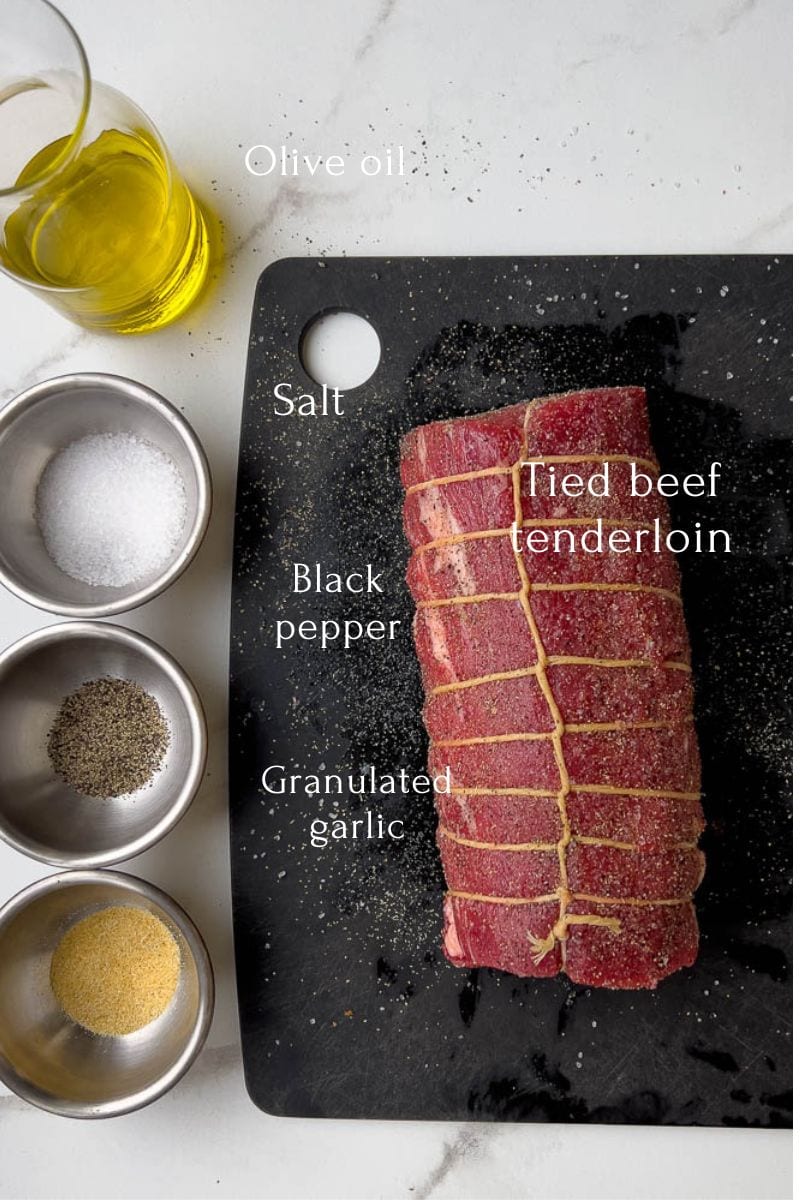
- Center-cut beef tenderloin (chateaubriand) - the evenly shaped middle section for uniform roasting and pretty slices.
- Kosher salt + black pepper - essential seasoning; simple is best on a premium cut.
- Olive oil - helps seasoning adhere and supports browning for the seared method.
- Granulated garlic (slow-roast option) - adds savory depth when you're not building flavor through a hard sear.
- Herb sprigs (optional) - Fresh sprigs of herbs such as tarragon, rosemary, and thyme are nice slipped under the ties of the slow-roasted beef tenderloin for added flavor.
See the recipe card for exact amounts. Optional sauce ingredients (Cognac-Dijon or Horseradish Cream) are listed there as well.
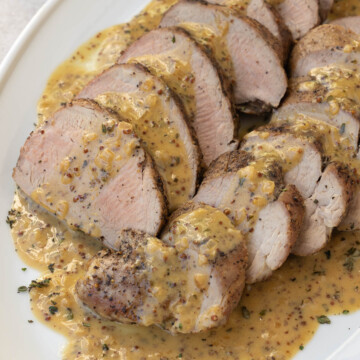
For another terrific tenderloin recipe (that's more budget friendly), try this roast pork tenderloin with a creamy Dijon mustard sauce.
Choosing the Best Beef Tenderloin
For a special occasion dinner, start with the best beef you can find. I buy mine from a trusted butcher or reputable market and am never disappointed with the quality. A good butcher will trim the roast (saving you work) and cut exactly the piece you want.
- Ask for a center cut (chateaubriand) for even cooking and beautiful slices.
- Plan on about 8 ounces of uncooked meat per person.
- If any silver skin (the tough tendon) remains, have your butcher trim it, or remove it yourself at home with a sharp knife. It is not good to eat.
- If you buy your meat at a warehouse store, look for an already trimmed center-cut beef tenderloin. Buying a whole tenderloin in cryovac packaging makes it hard to see the cut clearly, and breaking it down yourself takes time, skill, and results in quite a bit of waste (18%-30%). Unless you're comfortable working with a whole tenderloin, it's best to choose the trimmed version for ease and consistency.
How to Roast Beef Tenderloin (Choose Your Method)
You need kitchen twine, a heavy pan like a cast iron skillet, a rimmed baking sheet, wire rack, instant-read digital thermometer, and either aluminum foil or parchment.
- Get the chill off - For either method, get the chill off that beautiful piece of beef for more even roasting and better results. Let it sit out on the counter for about an hour. Don't worry, it's a food safe practice.
- Tie the beef - Tying helps the roast beef keep its shape and roast evenly. Tie it with individual pieces of butchers string or tie it with one long piece, whichever is easiest for you. After tying, rub sparingly with a little olive oil then season liberally with sea salt and freshly ground black pepper. Add a little granulated garlic powder for the slow-roasting method only.
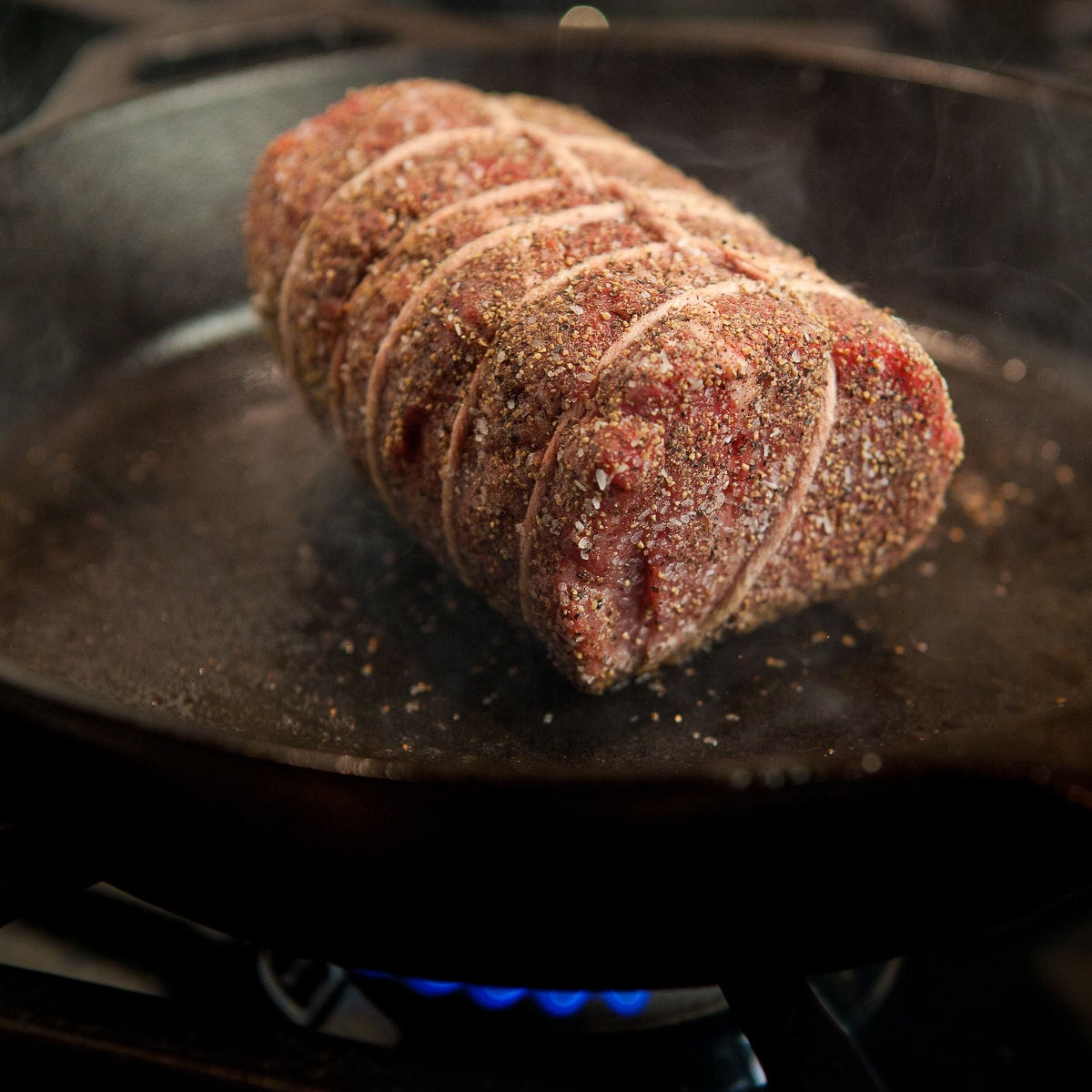
Method #1: Sear First, Oven Finish (Steakhouse Style)
Pre-heat the oven to 400 degrees. In preparation for roasting your tenderloin, cover a rimmed baking sheet with foil or parchment. Place a wire rack on top. Next, heat a pan like a cast iron skillet or other heavy pan over medium-high heat.
Sear the Roast
Sear the beef tenderloin by placing the beef in the hot pan, searing on all sides and briefly both ends, turning as a rich brown crust is achieved. Turn your ventilation system on as searing can create a lot of smoke and steam.
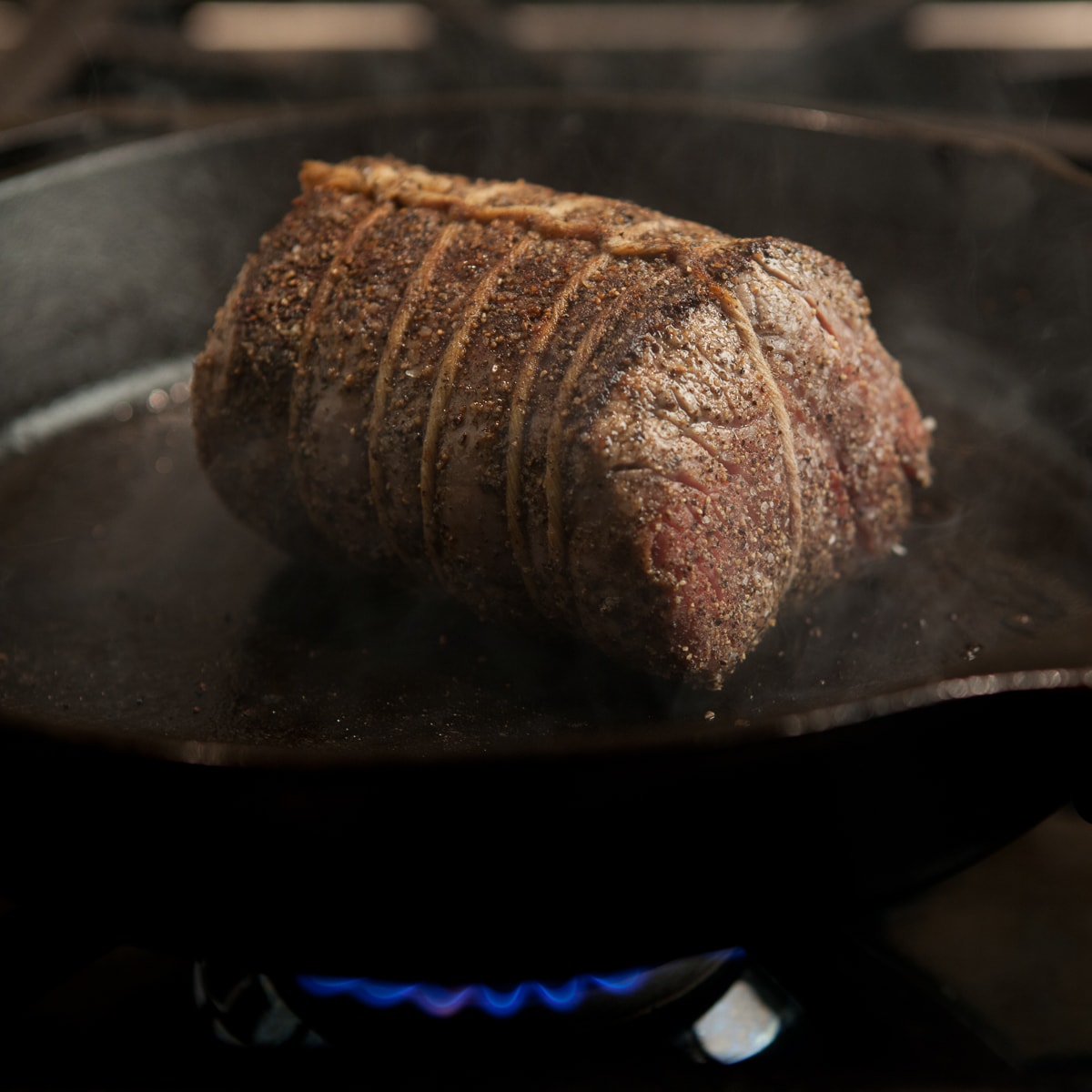
Roasting and Finishing
After the roast is seared, transfer the beef to the wire rack on the baking sheet and finish in the oven. This helps for fast, even roasting. If you don't have a wire rack, just place the beef on the pan.
Roast to the temperature that you want, checking the chart below. Use a digital thermometer to cook to temperature. Wireless thermometers like a Meater work great, or if your oven comes with an internal probe use that.
Method #2: Slow-Roasted Beef Tenderloin Only (No Sear)
Pre-heat the oven to 325°F. The lower temperature is a gentler way of roasting. You get that even pink color all of the way through the beef tenderloin with no gray edge from searing. It takes longer, and timing can vary significantly depending on the size and shape of the tenderloin. For best results, cook by internal temperature, not time, and begin checking early.
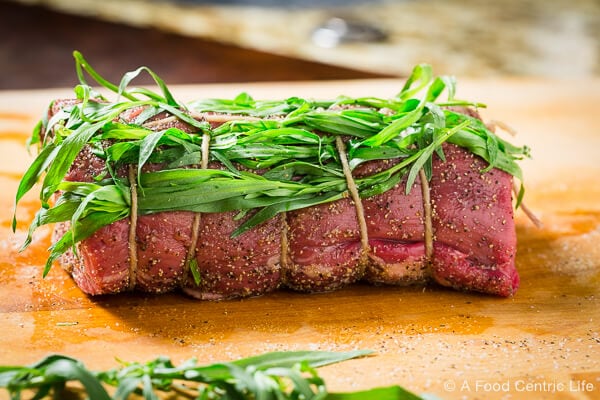
After tying the tenderloin, place fresh herb springs under the ties, then place the tied roast beef on the baking sheet and roast to temperature. With the lower temperature, figure it will rise 5°F while resting.

Internal Temperatures for Beef Tenderloin
There are many factors involved in roasting timing, such as temperature, how long the meat was seared, and the thickness of the piece. Just watch it as you don't want to over cook this beautiful piece of meat.
Beef tenderloin is very lean, with little marbling or fat to protect it from overcooking - which is why it's best served rare to medium and why careful temperature monitoring is so important.
| Doneness | Pull from Oven at… | Final Temp After Resting |
|---|---|---|
| Rare | 115–120°F | 125–130°F |
| Medium-Rare | 120–125°F | 130–135°F |
| Medium | 130–135°F | 135–145°F |
| Medium-Well | 140–145°F | 145–150°F |
| Well Done | 150°F+ | 155°F+ (not recommended) |
Because of something called carry over cooking, your roast beef will continue to warm and the temperature rise a few more degrees after removing it from the oven. Here's a great article on steak temperatures.
If you're going to make the cognac Dijon pan sauce, don't wash the pan! Set it aside until you're ready to make the sauce.
Chef's Tip - Rest Beef Tenderloin Before Slicing
The temperature of beef tenderloin continues to rise 5-10°F after you remove it from the oven. For best results, rest loosely covered with aluminum foil before slicing. This keeps the meat warm and helps redistribute juices for a more tender result, while the loose tent prevents the crust from getting soggy. If you slice without resting the juice may drain away leaving you with dry roast beef. Lastly, remove the twine, slice and enjoy.
Optional Sauces for Roast Beef Tenderloin
Cognac Dijon Sauce
For a quick and easy pan sauce, start with cognac and creme fraiche or cream. The inspiration for the sauce recipe is from Chef Dorie Greenspan. I add a little fresh chopped tarragon and a little good Dijon mustard for my version of classic French bistro flavors. Use the pan in which you seared the beef tenderloin. Directions are in the recipe card.
Creamy Horseradish Sauce
Make a creamy horseradish sauce by whipping heavy cream and creme fraiche together and adding a however much horseradish you like. Season with salt and white pepper.
- Combine ½ cup creme fraiche and ½ cup heavy whipping cream in a bowl and whip with a hand mixer on medium-low until it is thick and creamy.
- Stir in 2-4 tablespoons horseradish, to your taste (drained if juicy before adding).
- Add a little fresh lemon juice (½ teaspoon or so), salt, white pepper and either chopped chives or chopped fresh tarragon (optional).
You know what else this sauce is terrific for? Salmon: steamed salmon, grilled, or pan seared salmon.
Serving Suggestions
Roast beef tenderloin is beautiful and impressive served on a platter with the slices slightly overlapping, allowing guests to choose their own pieces. Of course you can serve several slices on individual plates with side dishes if preferred.
Leftovers work for breakfast with eggs or in a sandwich for lunch and will keep up to 4 days covered in an airtight container.
Side Dishes
What sides go well with beef tenderloin? Glad you asked. Try these easy side dishes for your beef masterpiece:
- Riced mashed potatoes.
- Cauliflower puree (low carb option).
- Scalloped potatoes (aka potato gratin).
- Green beans almandine.
- Broccolini.
- A terrific salad.
- Steamed Brussels sprouts (with flavor options!)
Beef Tenderloin FAQs
It depends on the style of the recipe. You can sear then roast, as in this recipe, or you can do a slow-roasted beef tenderloin with or without the sear. step. Both are terrific, just a bit different.
Beef tenderloin is best served rare to medium for maximum tenderness and flavor. Pull it from the oven between 115-135°F, depending on your preferred doneness, then let it rest for 15-20 minutes. The temperature will rise another 5-10°F as it rests. See the doneness chart above for exact pull and final temperatures.
Not exactly. Beef tenderloin is the whole cut, while chateaubriand refers to the center cut portion - the most tender, evenly shaped part, perfect for roasting. For this recipe, I recommend using chateaubriand for the best presentation and even cooking.
More Elegant Recipes
When you want to switch it up and still serve a special main dish, try these delicious recipes.


Did You Make This Recipe?
If you make this center-cut roast beef tenderloin please add your comment. I appreciate your feedback and enjoy hearing from you. If you loved it, please give it a 5-star rating! They really help other readers.
📖 Recipe

Center-Cut Beef Tenderloin (Chateaubriand)
Equipment
- Cast iron skillet or other heavy similar pan large enough to comfortably fit the roast
Ingredients
Beef
- 1 ½ pounds beef tenderloin preferably center cut, trimmed of all silverskin
- ½ teaspoon Kosher or sea salt
- ½ teaspoon Ground black pepper
- 1 tablespoon Olive oil ghee, or avocado oil
Cognac-Dijon Cream Sauce (optional)
- ⅓ cup cognac or brandy
- ½ cup creme fraiche
- 1 tablespoon Dijon mustard
- 2 teaspoons fresh chopped thyme or tarragon
Would you like to save this recipe?
Instructions
Pre-heat oven and prep
- Remove the beef from the refrigerator and allow to stand on the counter for 45-60 minutes to get the chill off. You will get better roasting results. Tie the tenderloin with kitchen twine at about 1″ intervals to help maintain it's shape and roast evenly. Liberally sprinkle all sides with kosher salt and pepper. Rub with olive oil. Pre-heat oven to 400 degrees.
Sear the beef
- Cover a rimmed baking sheet with foil, top with a wire rack and set aside. Place a heavy skillet or fry pan over medium-high heat. When the pan is very hot, place the beef in the pan and sear on all sides, turning when a nice brown crust forms. After sides are seared, turn briefly on the ends to sear them as well. Place beef on the wire rack and set the pan aside. DO NOT WASH IT.
Roast the beef
- Place seared beef on the wire rack in the oven and roast until the beef reaches an internal temperature of 125 degrees for rare or 130-135 for medium-rare and 140-145 for medium with a digital thermometer. Test at about 18-20 minutes and roast longer if needed. When I do a 1 ½ pound piece in my convection oven it takes about 18 minutes. Timing will depend on how long you sear the meat and your oven.
Resting time
- Remove beef from the oven and allow to rest in a warm place for 15-20 minutes. This gives you time to make a sauce or finish up your side dishes. Remove the twine, slice and enjoy.
Cognac-Dijon Cream Sauce (optional)
- Using the pan in which you seared the beef tenderloin, return the pan to medium heat. Pour off any fat, leaving the browned bits of meat.
- Off the heat, add the cognac then return pan to the heat and stir, scraping up the browned bits stuck to the bottom. This is called deglazing the pan. Allow the cognac to cook down for a minute or two, then whisk in creme fraiche. When it is smooth, add the Dijon and tarragon. Taste and adjust the flavors with salt and pepper if needed, but it may not need a thing.
Notes
- Combine ½ cup creme fraiche and ½ cup heavy whipping cream in a bowl and whip with a hand mixer on medium-low until it is thick and creamy.
- Stir in 2-4 tablespoons horseradish, to your taste.
- Add a little fresh lemon juice (½ teaspoon or so), salt, white pepper and either chopped chives or chopped fresh tarragon (optional).
Christine W says
Hi Sally - This looks so delicious! I will give this a try. What brand of cognac or brandy do you recommend?
Sally Cameron says
Hi Christine. I usually get something mid-priced in cognac, like a VS or maybe a VSOP (which some people might say is too good to cook with). You will have more options if you shop a store like Total Wine or BevMO. I had a good bottle of Remy in the pantry for awhile, and since I don't drink cognac, I cooked with it. That was good!
Juicee34 says
Omgomg, this looks very very succulent!
GastroStu says
That first picture looks beyond delicious, few things beat a nicely cooked piece of beef. Great post!
Quan says
Love the recipe! Going to be making this for vday!
Is the first photo medium or medium rare?
Thanks!
Chef Sally says
Probably in between Quan, maybe more medium. Enjoy preparing it! Please let me know how it comes out.
Chef Sally says
Maggie - Good! It is easy and elegant. Get top quality beef and you can't go wrong. If he hates mustard I would first ask, all mustard? If it's the bite of Dijon, use less or make sure you are using a mild style. You could skip it, although it is a natural emulsifier. You will still have a great sauce, without the mustard. Any questions call me! Would love to help you make a great dinner for your hubby.