
Ever make garlic confit? It's one of the simplest, most useful culinary techniques you can learn. Let me show you how to make it on the stovetop or in the oven, plus a dozen ways to use it. Garlic confit is whole garlic cloves gently cooked in olive oil until soft, sweet, and spreadable-and you also get a jar of fragrant garlic-infused oil that instantly upgrades everyday dishes.
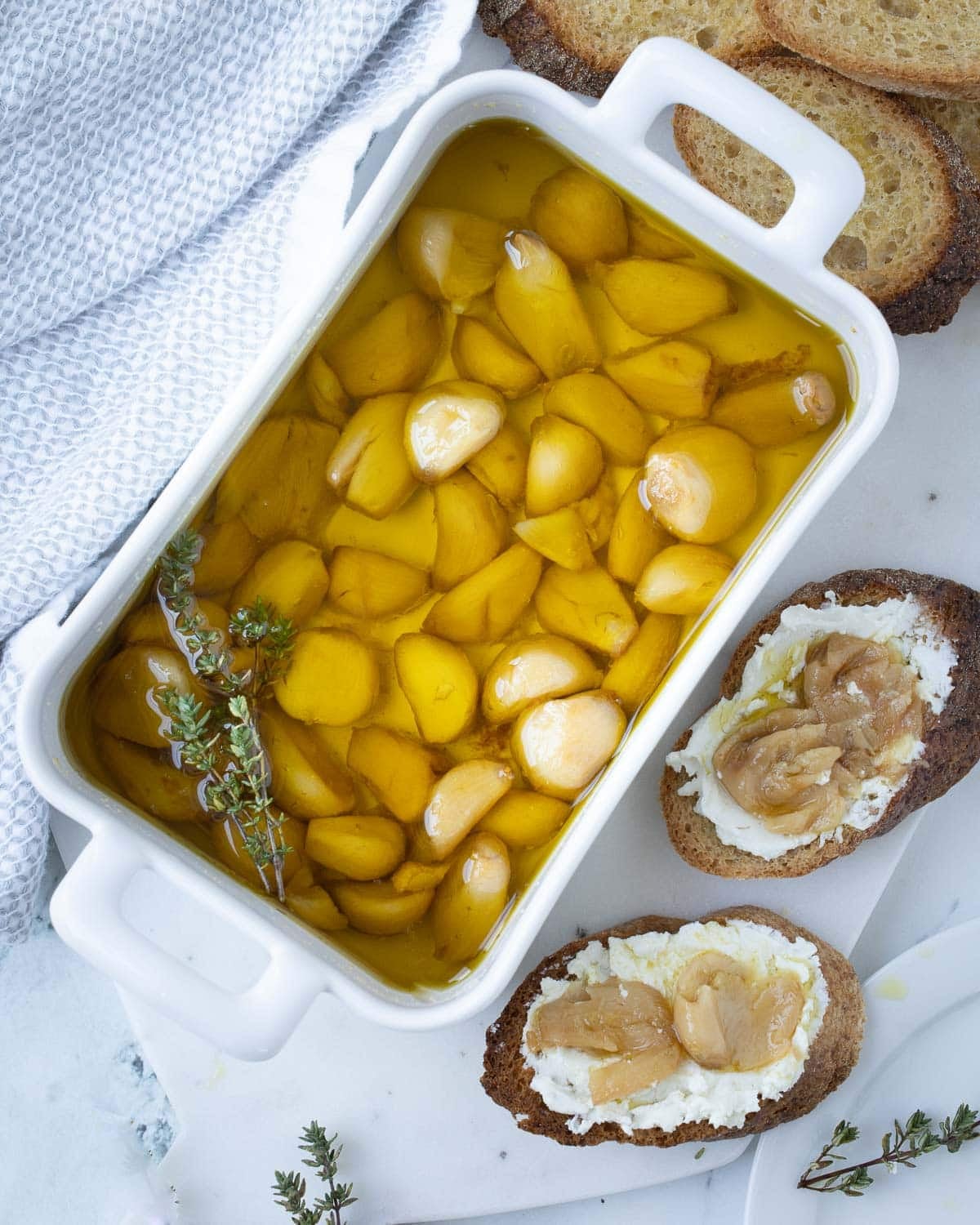
Before culinary school, I worked in a catering kitchen where I learned to make garlic confit. It felt like magic-taming the dragon of raw, pungent garlic into something creamy and almost sweet. Garlic confit is whole garlic cloves gently cooked in olive oil until soft, sweet, and spreadable. It's a classic French technique-confit means "preserved"-made by gently cooking an ingredient in fat. Simple, unfussy, and endlessly useful.
Recipe
Why You'll Love Garlic Confit
- Easy, foundational technique - A simple, classic method.
- Two-for-one payoff - Tender, sweet garlic cloves and garlic-infused oil.
- Big flavor, mellow garlic - Turns sharp garlic into something buttery and delicious.
- Stovetop or oven - Make it hands-on or hands-off-both methods work beautifully.
- Endlessly useful - Stir into sauces, mash into potatoes, add to vegetables, or use the garlic oil for many dishes.
Use garlic confit cloves and the garlic oil when making pumpkin risotto, it's fantastic.
Ingredients You'll Need
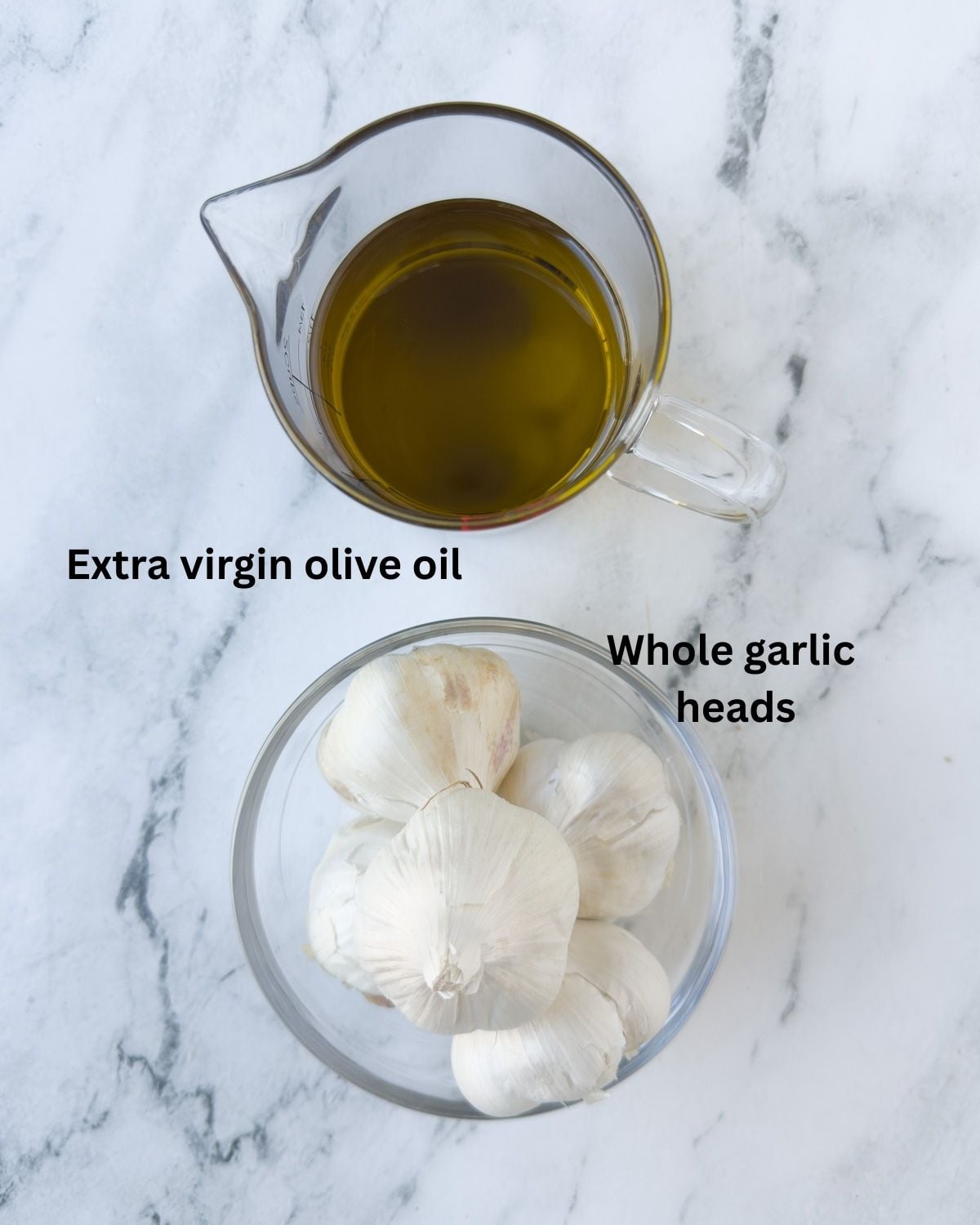
- Garlic cloves - Use whole, peeled cloves. Fresh heads give the best flavor, but refrigerated pre-peeled cloves are a great time-saver and work well for confit-just choose cloves that are firm and smell fresh (avoid jarred garlic in water/brine).
- Extra-virgin olive oil - Use enough to fully submerge the cloves. It becomes fragrant garlic oil you can cook with or drizzle as a finishing touch. (If you need an alternative, use avocado oil or a mild neutral oil, but the flavor will be different).
- Herbs (optional) - Garlic confit is traditionally just garlic + oil, but you can add a small sprig of thyme or rosemary, or a bay leaf for a subtle herbal note. Keep it minimal so the garlic stays the star.
Chef's Tip: Getting Garlic Smell Off Your Hands
After peeling lots of garlic, your fingers can feel sticky and the smell lingers. Rub your hands with lemon juice and a pinch of salt, then rinse well and wash with soap. The salt acts like a gentle scrub while the acid helps cut the odor. You can also rub your hands on stainless steel under running water (spoon, sink) to help neutralize the smell.
Mash a few cloves of garlic confit into the sauce for this roast pork tenderloin with Dijon sauce.
How to Make Garlic Confit Stovetop Method
Chef's tool tip: For a cool little tool to monitor the oil temperature, I'm using this digital thermometer that clips on the pan side. Pretty handy and inexpensive. If using one, do not allow it to touch the bottom of the pan as you will not get an accurate reading. Let it hold suspended in the oil.
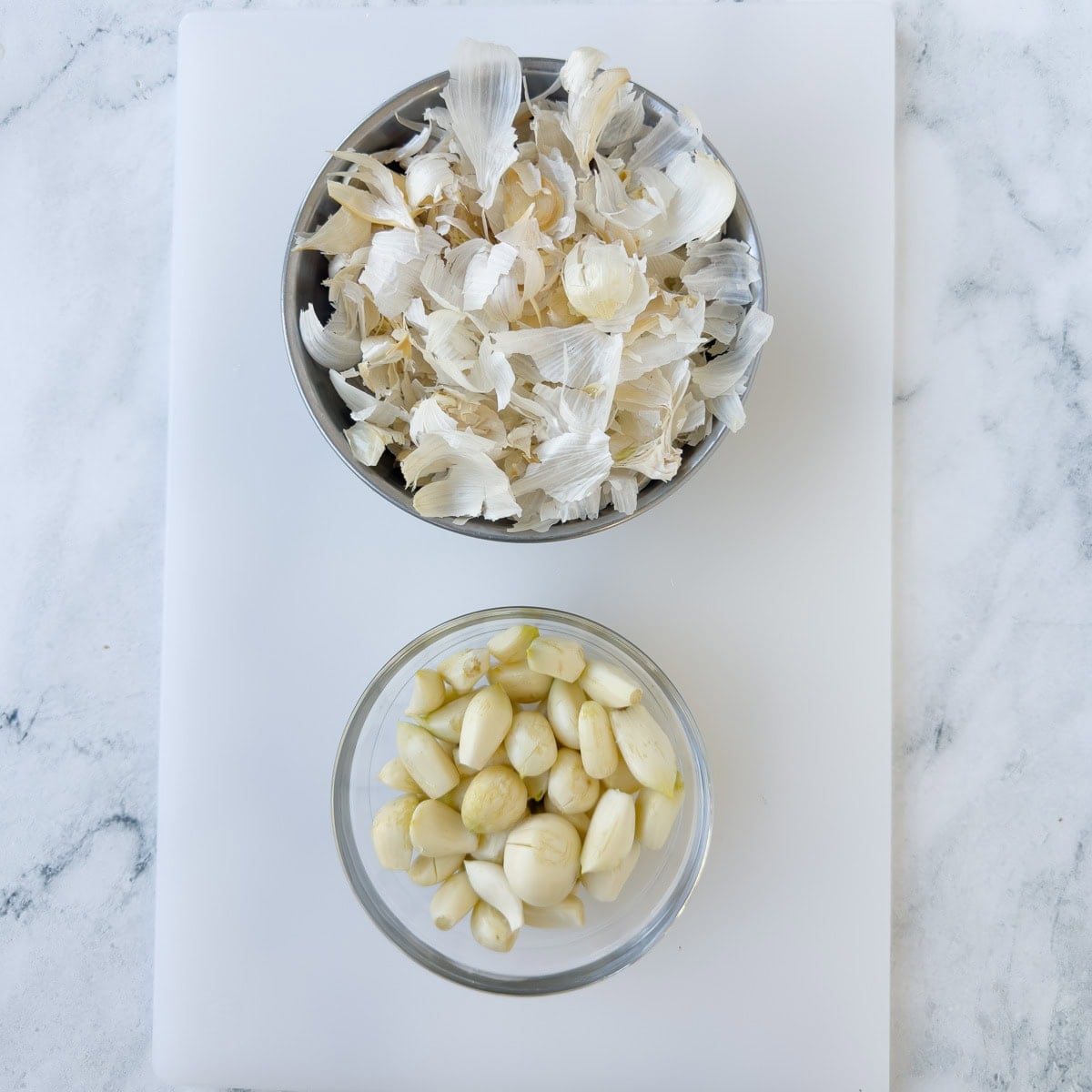
- Peel 3-4 heads of garlic, saving about 45 garlic cloves. Start by trimming a tiny bit off the root end. Keep the garlic cloves whole and pretty.
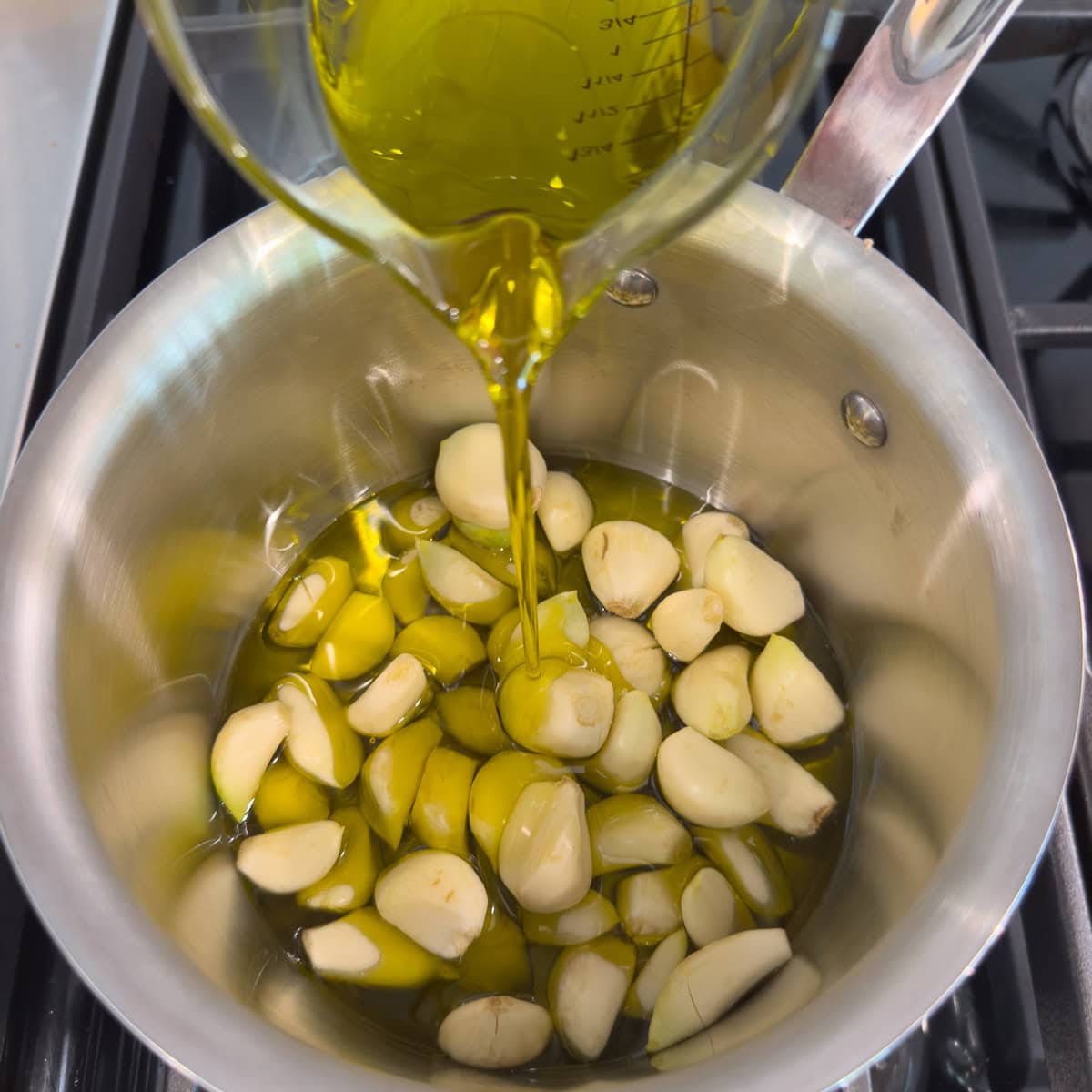
- Add the garlic to a small, 2 quart pot, and pour olive oil over the top to submerge by ½".
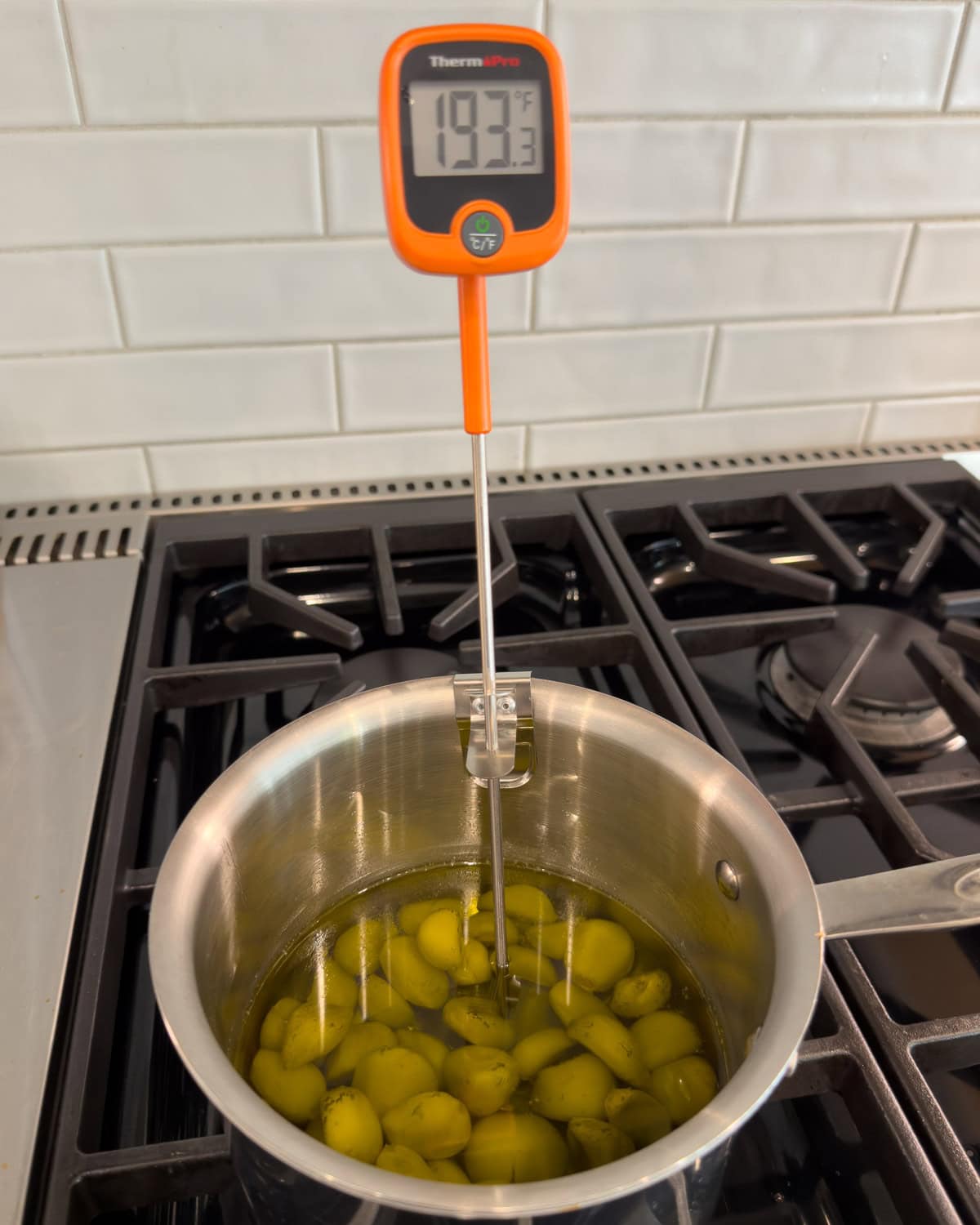
- Bring the oil temperature up to between 180°F - 200°F and keep it there for 60-75 minutes, until the garlic cloves are easily squishable between your fingers. Allow them to cool in the oil off the heat. Cool to 70°. Transfer to a clean jar with a lid and refrigerate promptly. See below.
Garlic Confit Oven Method
The oven method is the easiest, hands-off way to make garlic confit. Add peeled garlic cloves to a small baking dish or oven-safe ramekin and cover completely with olive oil (the cloves should be fully submerged). Bake at 250°F until the cloves are soft, lightly golden, and spreadable, about 60-90 minutes depending on clove size. Cool completely, then transfer cloves and oil to a clean jar and refrigerate promptly.
Chef's Tip - Garlic Confit Safety (Botulism) & Storage
Food safety matters because garlic confit botulism risk exists when garlic is improperly stored in oil. Garlic stored in oil creates a low-oxygen environment where Clostridium botulinum can produce toxin without obvious smell or taste-so storage matters.
- Never store garlic confit (or garlic-in-oil) at room temperature. Refrigerate promptly.
- Use within 1-2 weeks (label the jar with the date), or freeze up to 3 months for longer storage.
- Store in a clean container with the cloves fully submerged in oil. If anything seems off (bubbling, odd odor, or mold), discard it.
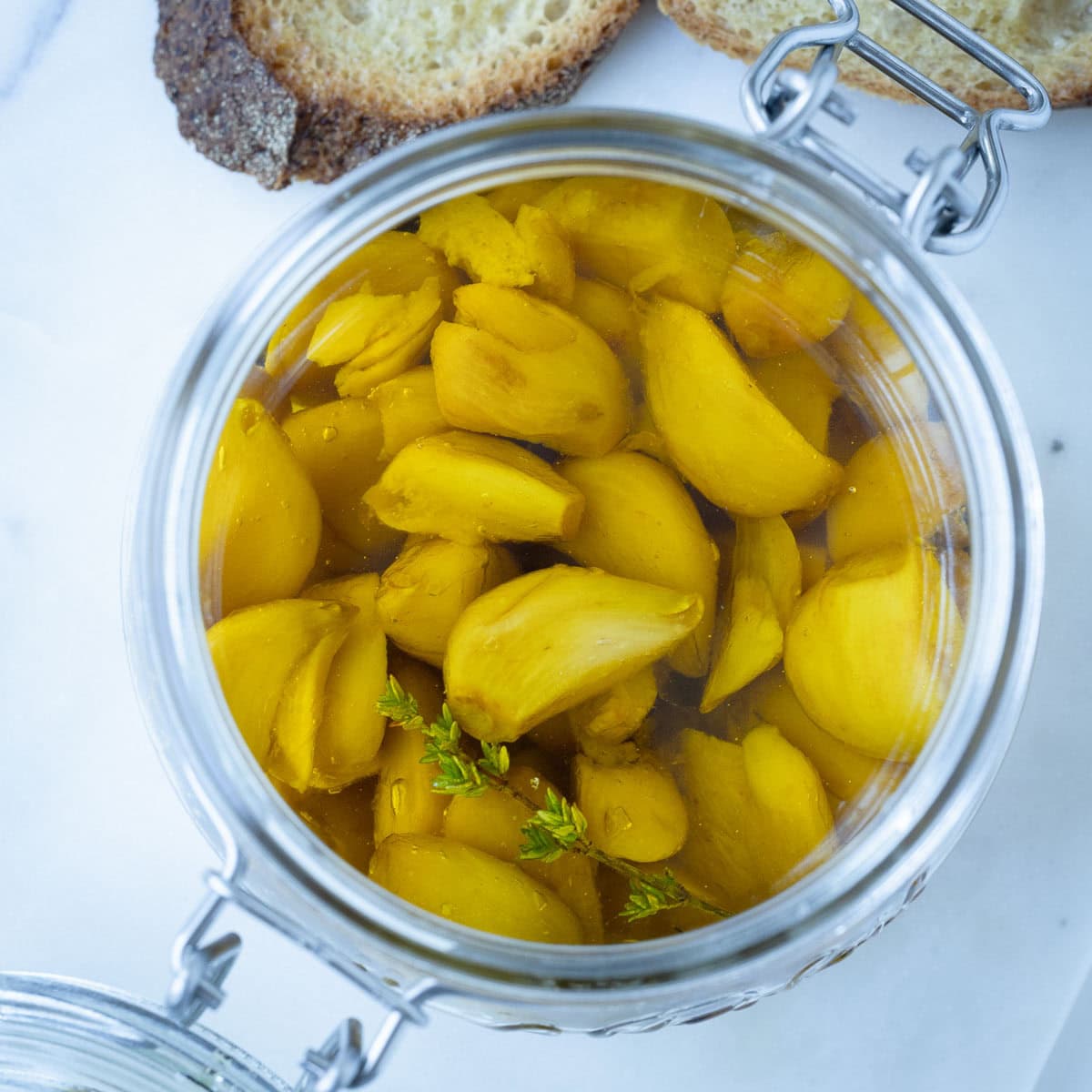
Ways to Use Garlic Confit
Use the oil for cooking or finishing, and use the cloves mainly for finishing (or gentle warming) so they don't burn.
- Crostini upgrade: Toast baguette slices, smear with whipped ricotta or soft goat cheese, then top with a few cloves of garlic confit and a pinch of flaky salt (or thyme). Simple, fast, and very irresistible.
- Build flavor: Start soups, sauces, and sautéed dishes by warming a spoonful of garlic oil with onions or shallots, then stir in a mashed clove or two at the end for mellow depth.
- Finish meats & fish: Drizzle garlic oil over grilled or roasted steak, chicken, or fish while it rests; add a few sliced cloves for an instant "sauce."
- Vegetables: Roast vegetables with the oil, then toss in sliced cloves after roasting (confit garlic can burn if cooked at high heat).
- Eggs & breakfast: Cook eggs over low to medium heat with a little garlic oil, or finish scrambled eggs and avocado toast with a drizzle of the oil and a mashed clove.
- Pasta & grains: Toss hot pasta with mashed confit, a splash of pasta water, chili flakes, and Parmesan; stir a spoonful into rice, creamy polenta, or risotto.
- Bread & sandwiches: Blend cloves into butter for garlic bread, or spread a thin layer inside grilled cheese/panini and cook in the garlic oil.
- Dressings & dips: Blend cloves and oil into a vinaigrette, creamy dressings, aioli, or yogurt sauces.
- Lentils & beans: Finish warm lentils or beans with a drizzle of garlic confit oil and a few sliced cloves for an easy, flavorful upgrade.
Chef's Tip: Add the cloves at the end of cooking-because they're already soft and cooked, they can burn over high heat.
Recipe FAQs
Yes. Freezing is a great option for longer storage-portion cloves (and a little oil) so you can thaw only what you need. Try it in silicone ice cube trays.
Refrigerate promptly in a clean container with the cloves submerged in the oil. Do not store at room temperature. For safety, use refrigerated garlic and oil within 1-2 weeks or freeze for longer storage.
While fresh cloves you peel yourself are best, you can use refrigerated pre-peeled cloves. They are a good time-saver and work well. Just choose cloves that are firm and smell fresh (avoid jarred garlic in water/brine).
More Homemade Condiments to Keep in Your Fridge
Keeping a few homemade condiments in the fridge makes everyday cooking easier and more flavorful. Here are some of my favorite sauces and condiments to have on hand. And for more inspiration check out the sauces, seasonings, and condiments page.


If you Make This Recipe
If you make garlic confit, please tell me about it with a comment. I love hearing from you and your comments also help other readers. Thanks for supporting my site.
📖 Recipe
Garlic Confit
Equipment
- 2 quart pot
Ingredients
- 45 cloves fresh raw garlic 3-4 large heads, or one medium bag pre-peeled
- 1 ½ cups extra virgin olive oil enough to fully submerge cloves by about ½ inch
Would you like to save this recipe?
Instructions
Prep garlic
- Gently break the heads apart keeping the whole cloves in tact. With a sharp knife, trim a tiny bit of the root end off, then peel the cloves. You need 45.
Confit the garlic
- Add peeled garlic cloves to a small saucepan. Pour in olive oil to fully submerge the cloves. Set over low heat and warm the oil to 180-200°F (gentle, barely shimmering-no sizzling). Cook 60-75 minutes, adjusting heat as needed to keep it very gentle. Stir occasionally. The confit is done when cloves are buttery soft and mash easily, and are pale golden at most (not browned).
Cooling and storing
- Cool garlic confit completely in the pan, then transfer cloves and oil to a clean jar. Keep cloves submerged and refrigerated. DO NOT STORE AT ROOM TEMPERATURE.
Notes
- Heat oven to 225°F (or 250°F if you want it slightly faster).
- Place garlic cloves in a small baking dish or oven safe ramekin. Add olive oil to fully submerge. Cover with a lid or foil.
- Bake 60-90 minutes, until cloves are very soft and lightly golden. Check earlier if cloves are small.
- Cool completely, then transfer to a clean jar with cloves submerged.
Comments
No Comments