
Cozy, creamy, and ready in about 30 minutes, parmesan polenta is Italian comfort in its purest form. No cream needed-the creaminess comes from slow simmering and just the right amount of liquid. Off the heat, a little sweet butter and a shower of Parmigiano-Reggiano cheese turn it glossy, savory, and ready for whatever you want on top. It's your easiest cheesy crowd-pleaser.
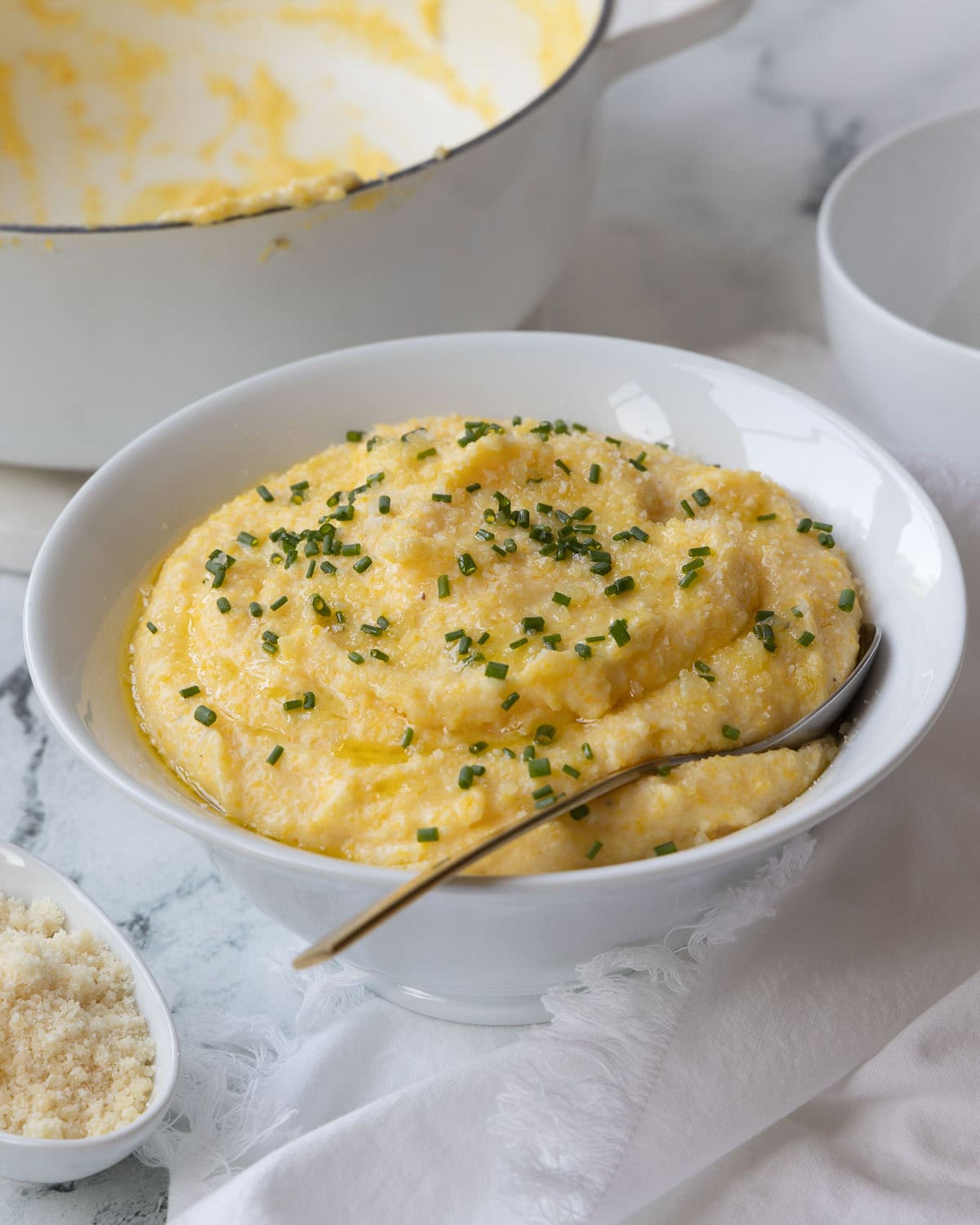
What's not to love about the Italian cousin of Southern grits? If it's a good vehicle for Parmesan, I'm in-and this Parmesan polenta is the version I've dialed in over the years that my family loves. I serve it under my red-wine-braised short ribs, but it's just as welcome at breakfast with a poached egg or alongside simply browned chicken sausage. Best part? It's so simple to make this creamy polenta recipe.
Jump to:
Parmesan Polenta at a Glance
- Creamy Italian comfort - Easy to make on the stovetop with a heavy pot.
- Simple ingredients - Just polenta, liquid, cheese, and butter.
- Versatile base: For braised short ribs, poached eggs, browned sausage, roasted veggies.
- Make-ahead friendly - This cheesy polenta reheats well with extra broth.
With polenta in the pantry, make this lemon polenta cake (aka lemon olive oil cake) for dessert.
Chef's Tip - Grits vs. Polenta
Grits and polenta are culinary cousins, both made from ground corn, but they start with different varieties. Polenta is made from flint corn, which has a firm texture and a deeper, slightly nutty flavor. Grits are usually made from dent corn, which is softer and produces a creamier, milder porridge. Polenta = coarser and more rustic than grits.
Ingredients for Polenta

- Cornmeal - Choose coarse-ground cornmeal labeled polenta for a rustic, textured bite. Medium grind cornmeal gives a smoother, creamier result. Not all cornmeal cooks the same. I use Bob's Red Mill polenta (coarse grind) with delicious results.
- Simmering liquid - A combination of water and milk, or broth, provides balanced flavor and gentle richness. See chef's tip below.
- Parmesan cheese - Use real Parmigiano-Reggiano for its nutty, savory depth and smooth melt.
- Butter - Unsalted sweet butter adds gloss and subtle richness to finish the dish.
Please see the recipe card for measurements, salt, and pepper.
Chef's Tip - Choosing Your Cooking Liquid
For the best flavor and texture, use a mix of liquids. I generally use half water and half milk for a clean, creamy result that lets the corn shine. For a deeper, savory note, try a blend of 2 cups water, 1 cup milk, and 1 cup chicken broth, for a beautiful balance that adds just enough richness without weighing it down.
Substitutions and Variations
- Fall flavor - Stir in canned pumpkin at the end for a cozy, savory pumpkin polenta.
- Cheese options - Parmigiano-Reggiano is classic; Grana Padano is milder and Pecorino adds a sharper, saltier edge. Fresh goat cheese is another option!
- Herb finish - Fold in thyme, chives, or parsley off heat.
- Dairy-free - Finish with good olive oil; nutritional yeast adds a savory note.
- Set & slice - Make a firmer batch, chill in a pan, then slice and pan-sear in olive oil until golden.
Chef's Tip - Choosing the Right Pan for Polenta
A 3½-quart Dutch oven or 3-4 quart saucier (often sold as a sautéuse), is ideal for a standard batch of polenta-deep enough to prevent splatter yet compact enough for even heat and easy stirring. A 5½-quart pot works too, especially for larger batches; its wider base gives more surface area for steady evaporation, just keep the heat low and stir often to avoid scorching.
How to Make Creamy Polenta With Parmesan

- Add water and milk (or broth) to a 3 ½ quart pot and bring to a simmer over medium heat.

- Rain in the cornmeal whisking as you pour until fully incorporated.

- Allow the polenta to simmer and bubble until al dente to the bite and creamy. Keep stirring so the bottom doesn't stick. Watch the heat level.

- Cook polenta, stirring, until rich and creamy texture is achieved, 25-30 minutes (or a bit longer), go by texture not time.

- When polenta is about ready, stir in the butter.

- Then stir in the grated Parmesan cheese. It's ready to serve.

How to Enjoy Parmesan Polenta
- With Braised Meats: Spoon this cheesy polenta under my braised short ribs for a cozy, elegant dinner. The polenta soaks up the sauce beautifully.
- For Breakfast or Brunch: Reheat leftovers and top with a poached or fried egg and wilted greens for a hearty start to the day.
- With Roasted Vegetables: Serve it as a creamy base for roasted mushrooms, caramelized red onions, or fall vegetables like squash and Brussels sprouts.
- Under Grilled or Seared Protein: Pair with grilled shrimp, stovetop salmon, or simply browned chicken sausage.
- As Appetizer Cakes Chill leftovers flat in a sheet pan, slice, and pan-fry or grill for crisp-edged polenta cakes-great topped with marinara or tapenade.
Storage & Reheating
Refrigerate: Store leftover polenta covered in the refrigerator for up to 4 days. It will firm up as it chills, that's normal.
Reheat: Add the cold polenta to a pan and break it up with a wooden spoon. Over low heat, add a tablespoon or two of water, milk, or broth, at a time, stirring, until it has regained it's creamy consistency, then heat through until hot.
Freezing: Polenta made with milk doesn't freeze well. Dairy tends to leave a crumbly, drier texture once thawed. If you'd like to freeze it, make the recipe using water and broth, then portion and freeze in airtight containers for up to 2 months. Thaw overnight in the fridge before reheating with a bit of liquid to restore creaminess.
Recipe FAQs
Usually it's from too little liquid or cooking it too quickly. Keep the heat low and stir often so the cornmeal fully hydrates. If it feels too thick, just whisk in a bit more hot water, broth, or milk until silky.
Absolutely. Use a mix of water and broth instead. It will still be creamy from the slow cooking and butter, though slightly less rich.
Yes, but results vary by grind. Look for medium or coarse-ground cornmeal labeled "polenta" for the best creamy-yet-textured consistency. Fine cornmeal tends to cook up too soft and mushy.
Yes, but the flavor and texture will be different. Use olive oil instead of butter or a plant-butter, and a good-quality vegan Parmesan if you prefer a dairy-free version. It won't melt quite the same way, but still gives a nice savory note. Vegetable broth works beautifully as the liquid base for vegans.
Complementary Recipes to Serve with Polenta
Creamy Parmesan Polenta pairs perfectly with rich, savory mains - the kind that beg for something soft and buttery underneath. Try it with slow-cooked meats or a simple roast for a comforting, restaurant-quality meal at home.


Did You Make This Recipe?
If you make Parmesan Polenta, please drop me a comment and let me know how you enjoyed it. And please leave a star. Both help readers and I enjoy hearing from you!
📖 Recipe

Parmesan Polenta
Equipment
- 1 3-3 ½ quart saucier or sauteuse this Le Creuset pan is terrific for making polenta and other dishes but use what you have that is similar.
Ingredients
- 2 cups filtered water
- 2 cups low fat milk or whole milk
- 1 cup polenta grind cornmeal coarse grind, or medium grind for a softer polenta
- 2 tablespoons unsalted butter
- ½ cup finely grated parmesan cheese Parmigiano-Reggiano
Instructions
- Bring liquids and salt to a simmer. Slowly rain in the cornmeal while whisking. Reduce heat to low and cook gently (no lid needed), stirring often, until thick and creamy (25-40 min, depending on grind).
- Off heat, stir in butter and Parmesan. Taste and adjust salt and add pepper if desired. For serving add a splash of hot water or broth at the end to loosen slightly and increase creaminess if it has been sitting and stiffens.

Comments
No Comments