
Rice can be part of a healthy diet, but it can also contain arsenic, a naturally occurring toxic heavy metal found in soil and water. The good news is there's a simple cooking method that can help reduce arsenic in rice: cook it like pasta in plenty of water, then drain it well. This is how I've cooked and batch-prepped brown rice for years, and it's an easy technique worth knowing.
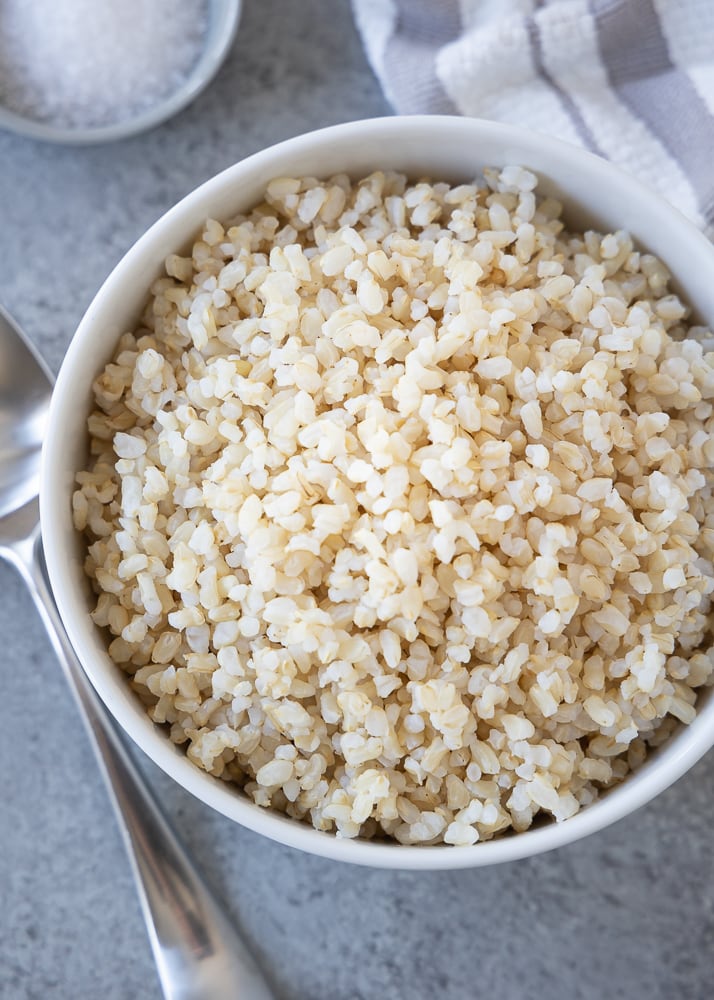
Cooking Rice Quick Summary
- Rice can contain arsenic.
- Brown rice generally contains more arsenic than white rice.
- Rinsing helps remove dust and excess starch but does little to reduce arsenic.
- Cooking rice in excess water and draining it can reduce arsenic levels.
- California-grown basmati and sushi rice are often lower in arsenic.
Why is There Arsenic in Rice?
Arsenic is a naturally occurring element found in soil and water, and rice can absorb it as it grows. Because rice is often grown in flooded fields, it can take up more arsenic than some other grains.
Arsenic levels vary depending on the type of rice and where it is grown. Some contamination comes from natural soil conditions, while past agricultural and industrial practices have also contributed.
Because arsenic presents a long term health risk, it's best to reduce exposure whenever possible. And it's not just in rice, but in rice products.
Does Rinsing Rice Help?
Rinsing rice before cooking is still a good idea. It helps remove dust, debris, and some surface starch, especially if you buy rice from bulk bins. I rinse rice well under cold running water before cooking.
Rinsing alone does not significantly reduce arsenic levels. The cooking method matters more. To reduce arsenic, cook rice in a large amount of water, like pasta, then drain it well.
Soaking rice is optional. It may shorten the cooking time, but I usually skip that step.
Why Cook Rice Like Pasta
Cooking rice like pasta helps reduce arsenic because arsenic is water-soluble. As the rice cooks in a large pot of water, some of the arsenic releases into the cooking water, then drains away.
With the traditional absorption method, where rice is cooked with just enough water to absorb, more of the arsenic stays in the rice. The pasta method is also easy: no precise measuring, and the rice cooks evenly. This method is especially useful for brown rice, which generally contains more arsenic than white rice.
Brown Rice vs White Rice
Arsenic concentrates in the outer bran layer of the rice grain. That bran is what makes brown rice higher in fiber and nutrients, but it's also why brown rice generally contains more arsenic than white rice.
White rice has the bran and germ removed (it's polished off), leaving the starchy endosperm. Because of that, it usually has lower arsenic levels, cooks faster, and is easier to digest, though it also has less fiber and a higher glycemic impact than brown rice.
I usually cook white rice the standard way on the package, but use the pasta method as well.
How to Cook Brown Rice Like Pasta
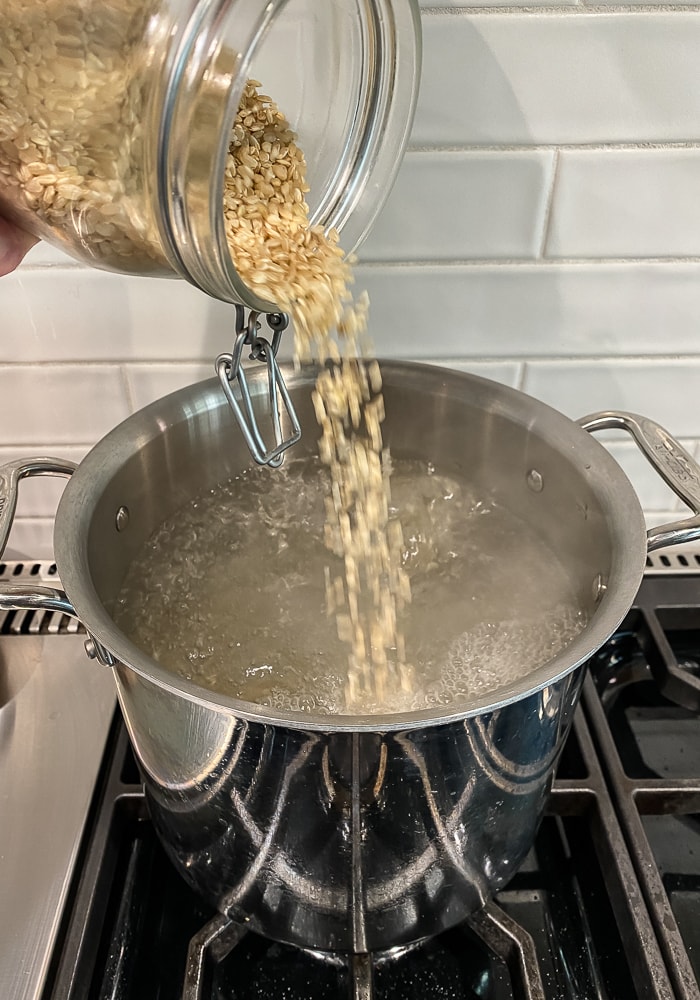
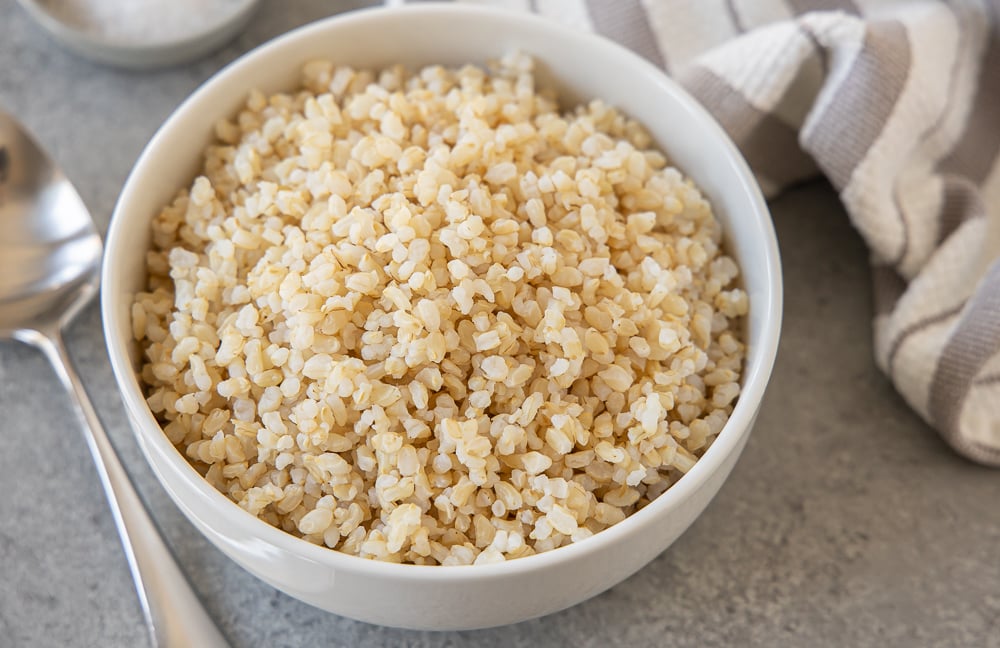
Bring a large pot of water to a boil, about 7-8 quarts. Add a little salt, then stir in 1 pound of rinsed brown rice. A pound of rice yields about 10 standard servings.
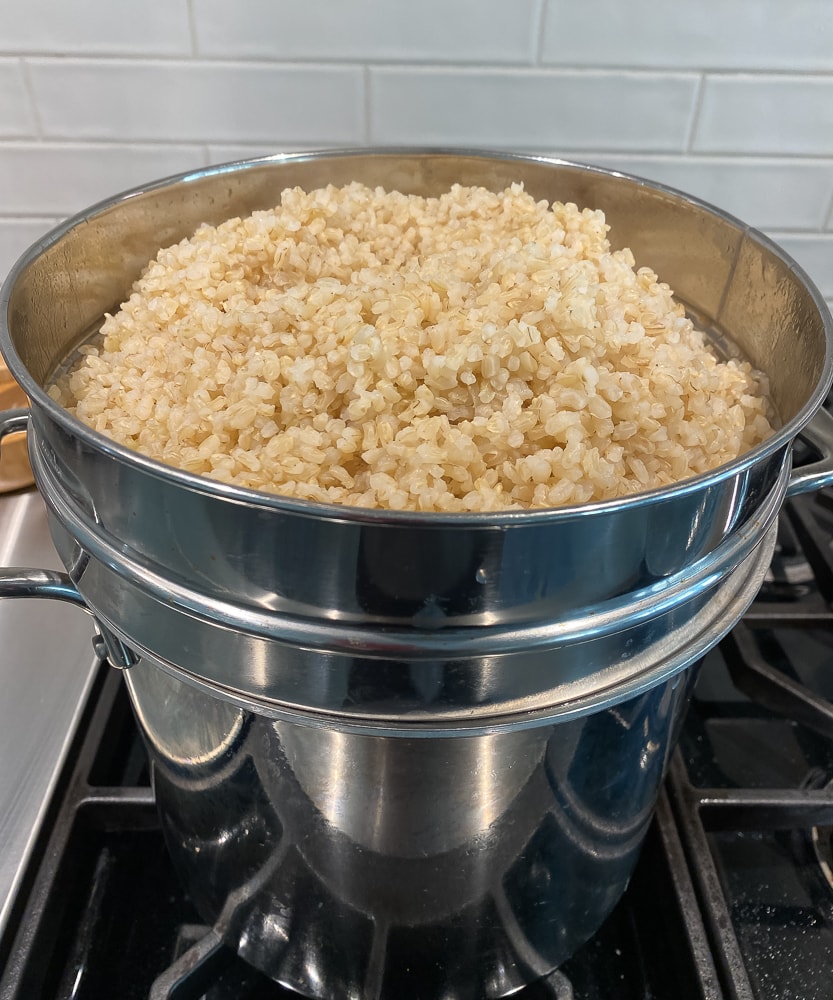
Cook according to the package directions, then drain well. Drain the rice through a large fine-mesh sieve, shaking off excess water. For drier, fluffier rice, set the sieve over the warm pot for a few minutes so the rice can steam dry before serving, cooling, or freezing.
Cool and Freeze
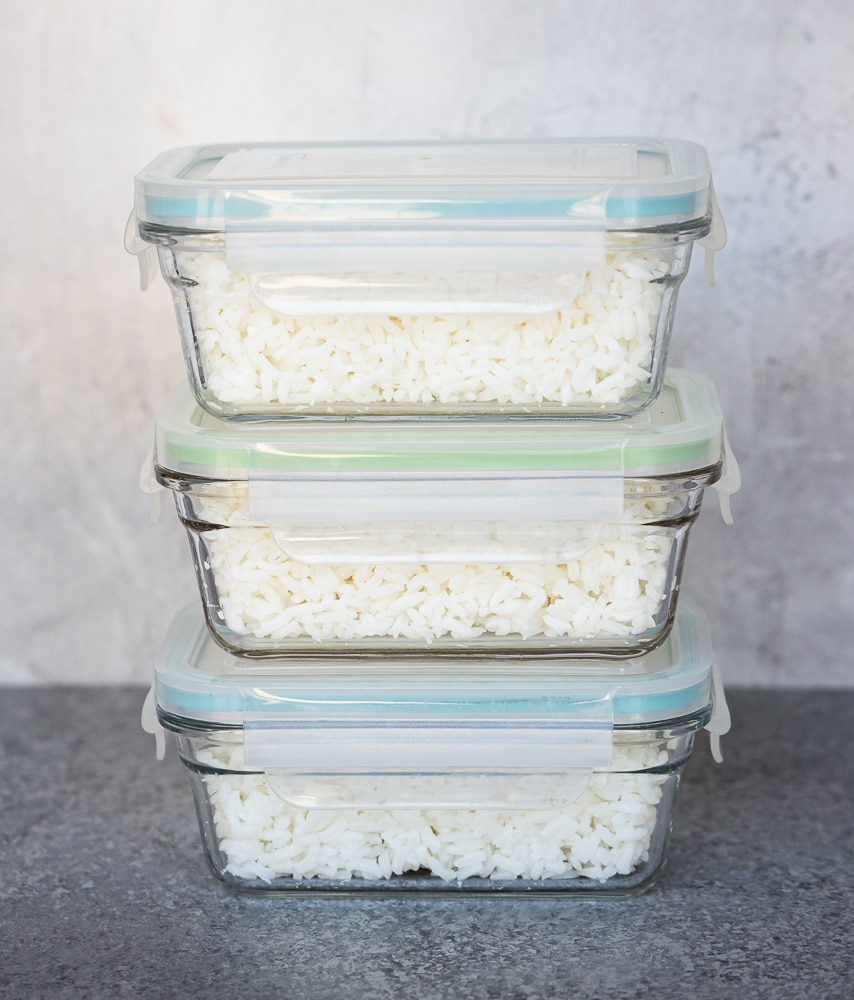
Serve the rice hot, or spread the drained rice on a rimmed baking sheet to cool quickly. Once cool, portion and freeze for easy meal prep. I like freezing rice in 1-cup portions for two for quick meals or a full serving at ¾ cup.
If you love rice like we do, ever make risotto? Try this risotto Milanese. And here is the best rice to use.
Learn More/Sources
- The Consumer Reports report on Arsenic in Your Food (original) and followup a few years later
- The World Health Report on Arsenic
- Arsenic in Food FAQ by WebMD
- Here's another method to reduce arsenic
- 2020 info on brands with lowest levels
- Dartmouth College article
- Should You Be Worried About Arsenic in Rice? (Cleveland Clinic)
📖 Recipe
How to Cook Rice Like Pasta to Reduce Arsenic
Equipment
- Large pot, 7-8 quarts
- Large fine sieve for rinsing and draining
Ingredients
- 1 pound rice well rinsed
- enough water to fill a large pot
Would you like to save this recipe?
Instructions
- Wash the rice well in cold water through a sieve. Fill a large pot, 7-8 quarts, ¾ full of water and bring to a boil over high heat. Add a sprinkle of salt and carefully add the rice. Turn the heat down to a low boil and cook rice according to the time on the package. When rice is done, strain off water through a fine sieve or colander.
- If eating right away, add a little butter, ghee, olive or coconut oil as preferred plus salt. If meal prepping ahead, spread the rice on a rimmed half sheet baking pan and allow to cool. Once cool, portion and freeze. Rice will keep in the refrigerator up to 5 days.
Cheryl says
I rinse my organic brown sprouted rice then soak it over night then rinse twice more before pressure cooking it in the insta pot turns out get and I Hope it’s helping with the toxins 🤷♀️
Sally Cameron says
I'm sure it is Cheryl! Good job! Any steps we can take help.
Guidonna says
Thank you for all the information and great suggestions, Sally! I'm curious to know if you've been following Anthony William (Medical Medium)? He has a Heavy Metal Detox Smoothie listed in both his "Liver Rescue" and "Cleanse to Heal" books. I make the smoothie every morning and have found that it has definitely cleared up my neural dermatitis! Although I don't know how to test for the presence of toxic heavy metals in the body, I'm sure that the ingredients in the smoothie have probably eliminated a lot of those as well. Thank you.
Sally Cameron says
Hi Guidonna. I have read a few of his books, they are very interesting. I've battled a great deal wtih heavy metals in my past and am now finally much better. It's something I've wanted to write about for my site to help others. Through it I learned I am not a good detoxer genetically and thus had problems. Testing is usually done one of two ways (I've been through both multiple times). One is called a "provoked" test where you get an IV drip of a specific drug then do a urine collection for x hours then send the sample off to a lab. The other is a hair test. It is important to work with an experienced doctor. There are now a few home tests you can do that are inexpensive. I have not tried them. It could be a good start if you are curious about your levels. As contaminated as our environment and many foods are today I think everyone should be tested to know what their levels are. It's that important. Heavy metals have been linked to brain disease later in like such as demential, Parkinsons, etc. and many current health issues. Depending on your results a doctor might recommend chelation. I've done both oral and IV multiple times. After all I've been through I do not think I would recommend IV. Too hard on your body and very expensive. Low and slow with oral easier in my opinion. I am very careful about what I eat (no swordfish, no tuna, etc) and I use an infrared sauna at home which is a great detoxifier for heavy metals (something else I need to write about). I could go on and on, but I think you get the point! Any questions please let me know. Happy to help on this journey.
Randall says
In paraboiling the rice, I think adding alpha lipoic acid to the rice,
should chealate the arsenic out of the rice.
This should reduce the arsenic in the rice by 100%
Sally Cameron says
Hi Randall, that is an interesting thought. I think that adding it to cooking water would not do as as good of a job as taking ALA in capsule form after cooking rice this way (pasta method) and eating it. I take ALA every day, along with other supplements to support my body's natural detox process because I've tested very high for levels of arsenic and have been through extreme detoxification. It seems the water would dilute the purpose and you don't really know if it works. Personally, I will stay with cooking rice this way and taking my supplements for more support. Thanks for your comment.
Michelle Kissel says
Hi Sal, I love using the IP, as I can put it in, walk away and come back up to 45 min later and my rice has always been perfect. Also, I always cook with chicken broth, but of course don't want to use that much and toss down drain, so I guess I'll rethink that part too. I do rinse my rice, but have not been soaking it.
My question is, are there any rice varieties (aside from Aborio you mentioned above) that this method does not work well with? My MIL loves basmati, so I tend to use that often, or at least when she is here. Thanks!
Sally Cameron says
Hi Michelle. Yep, the walk away part is so great, right? This should work with any rice except something like Arborio or Carnaroli which is risotto rice.
Rhonda says
Nice article. Wish there was a way to reduce the levels in a rice cooker.
Sally Cameron says
Hi Rhonda. I know. All you can do is rinse real well, that will help. Thinking out loud...maybe if you par boil the rice for 5 minutes in boiling water then add to the rice cooker and cook as normal. That should reduce, but it's really an extra step. Although I've tried making rice in rice cookers, pressure cookers, Instant Pots, I prefer the stovetop. It's so easy like this (pasta method). I cook a pound at once and cool, portion and freeze so I don't make it very often.
Terry Brown says
Great recipe. I've cooked rice for years and years years. Did NOT realize there was arsenic in it. Is there any issue with nutrients in the unhulled rice my family prefers?
Sally Cameron says
I know, right? I was shocked. My understanding is that all rice is hulled because the hull is inedible. Are you talking about brown rice? That is a whole grain because the bran, germ and endosperm are all intact, but no hull. (and for other colored rices such as black, purple, red) and it's the most nutritious. Not true for white rice, which we rarely eat.Our favorite brown rice is from Lundberg Farms. It's brown so lower glycemic, lovely short plump grain, organic, and it's sprouted so easier to digest and you absorb more nutrition due to the sprouting. Plus take a look at those links at the bottom for more reading and info. There is one more I want to add but can't find it!
Deborah Wright says
Hi Sally... great article! Whenever I cook white rice, I soak it in cold water for 20 minutes, then rinse. Then soak again for another 20 minutes in cold water and then rinse with cold water until the water runs clear. Does that help eliminate the arsenic as well?
Sally Cameron says
Hi Deb. Nice to hear from you. That probably helps a lot. Rinsing is a good idea. Forgot to add that so thanks, will note. Rinse well and cook like pasta. To me that saves time versus two rinse and soaks. If you don't mind the extra step do as you are, but try the pasta method as well. Let me know what you think. By some studies I've read that should reduce the arsenic by 50%-80%.