A Foodcentric Life

  • Memorial Day
  • Meet Chef Sally
  • Recipe Index
  • Subscribe
menu icon
go to homepage
  • Memorial Day
  • Meet Chef Sally
  • Recipe Index
  • Subscribe
    • Facebook
    • Instagram
    • LinkedIn
    • Pinterest
  • search icon
    Homepage link
    • Memorial Day
    • Meet Chef Sally
    • Recipe Index
    • Subscribe
    • Facebook
    • Instagram
    • LinkedIn
    • Pinterest
  • ×
    Home » Recipes

    Red Wine-Braised Short Ribs Recipe

    01/10/2025 by Sally Cameron 2 Comments

    Wine braised beef short ribs with sauce and vegetables in a pan.

    Red wine-braised short ribs are richly flavored and fall-off-the-bone tender-the ultimate rustic comfort food. They take time, but most of it is hands-off: the ribs gently braise in red wine, aromatics, broth, and herbs until the sauce turns glossy and deep. Never made them? I'll walk you through it step-by-step for restaurant-quality results your friends and family will swoon over.

    A white round casserole filled with red wine braised short ribs and rich creamy sauce.

    When I make these oven-braised short ribs, my husband can't stop raving. Braising is my favorite slow-cooking method for transforming a tough cut into melt-in-your-mouth comfort food. Beef short ribs in red wine soak up a deep, savory sauce infused with vegetables and herbs, making this a terrific dish for a special occasion or cozy dinner party.

    [feast_advanced_jump_to]

    Why You'll Love These Red Wine-Braised Short Ribs

    • Meltingly tender beef - with deep, red-wine richness.
    • Mostly hands-off - the Dutch oven and oven time do the work.
    • Make-ahead friendly - reheats beautifully; even better next day.
    • Versatile serving - spoon over creamy mashed potatoes, parmesan polenta, or buttered noodles.

    Love ribs? Try these oven baby back ribs with Hoisin sauce.

    Ingredients You'll Need

    Ingredients for red wine braised beef short ribs on the counter.
    • Bone-in beef short ribs - Bones add flavor and help keep the meat juicy during a long braise. (See tips below.)
    • Dry red wine - A medium-bodied dry, not-sweet, red (Cabernet, Merlot, blends) for depth and a glossy sauce.
    • Beef broth - Good-quality broth (try refrigerated or frozen brands) for clean, rich flavor. Skip bouillon pastes/cubes.
    • Onion - Yellow, brown, or sweet; builds the aromatic base.
    • Shallots - Adds subtle sweetness and a refined, classic French aromatic flavor (or use all onion).
    • Carrots - Add gentle sweetness; classic to the mirepoix.
    • Celery - Savory backbone; completes the mirepoix trio.
    • Fresh herbs - Thyme sprigs and a bay leaf (fresh or dried) for warmth and balance.
    • Garlic - Fresh cloves for round, savory depth.
    • Tomato paste - Concentrated umami and a touch of acidity to round the sauce.
    • Olive oil - For searing; avocado oil also works for high-heat stability.
    • Butter - Unsalted; finishes and silkens the sauce.
    • Flour - To lightly thicken the sauce; use all-purpose or a gluten-free blend.

    Please see the recipe card for measurements, salt and pepper.

    Short on time? Grab your Instant Pot and make this Instant Pot beef stew in a little over an hour.

    Chef's tips for buying beef short ribs: Get the right cut of short rib and really look at what you are getting. You want English-cut beef short ribs, not flanken cut. Try to get beef ribs close to the same size and be sure you're getting 4-6 good, meaty, thick ribs and no funny end pieces that have nothing on them (it's happened to me in packages). There should be a good 1 ½" of meat on the bone and a thin fat cap (not excessive). Short ribs should be well marbled so they are super tender and flavorful after cooking. Buy 3 ½ - 4 pounds of short ribs for 4 people.

    Substitutions and Variations

    • Thyme - Swap dried thyme for fresh; ⅓ - ½ as much as it is stronger.
    • Balsamic finish - Stir in a little good balsamic at the end to brighten and balance the richness.
    • Port accent - A splash of tawny port adds nutty, caramel notes. Use it to replace part of the red wine, not all, so the sauce stays balanced.
    • Fennel - A small chopped fennel bulb melts into the braise and adds subtle sweetness and anise-beautiful with beef.
    • Mushrooms - Sautéed cremini or porcini deepen the umami and stretch the sauce.
    • Gluten-free thickening - Use a 1:1 gluten-free flour blend or reduce the sauce a little longer instead of flour for a naturally glossy finish.

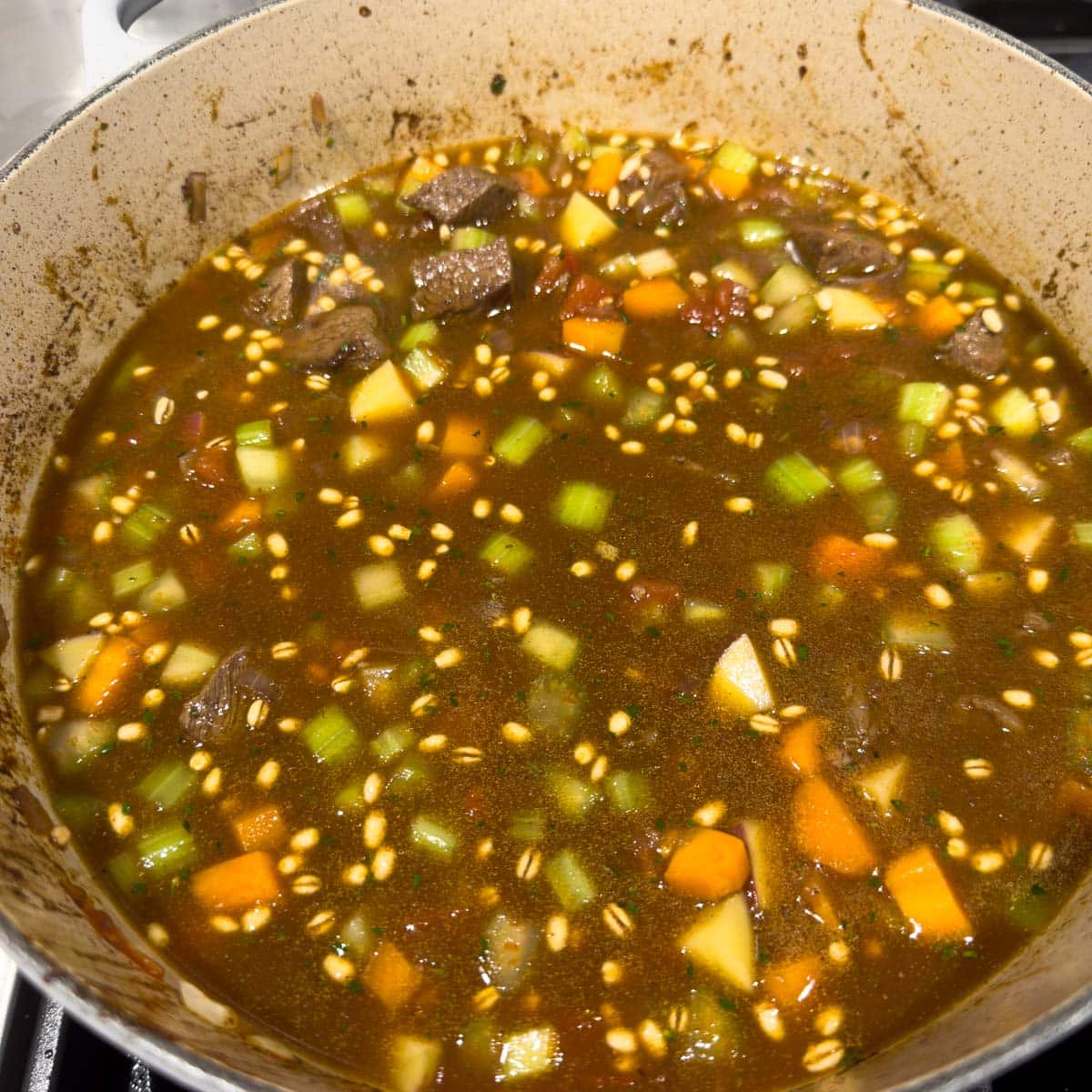
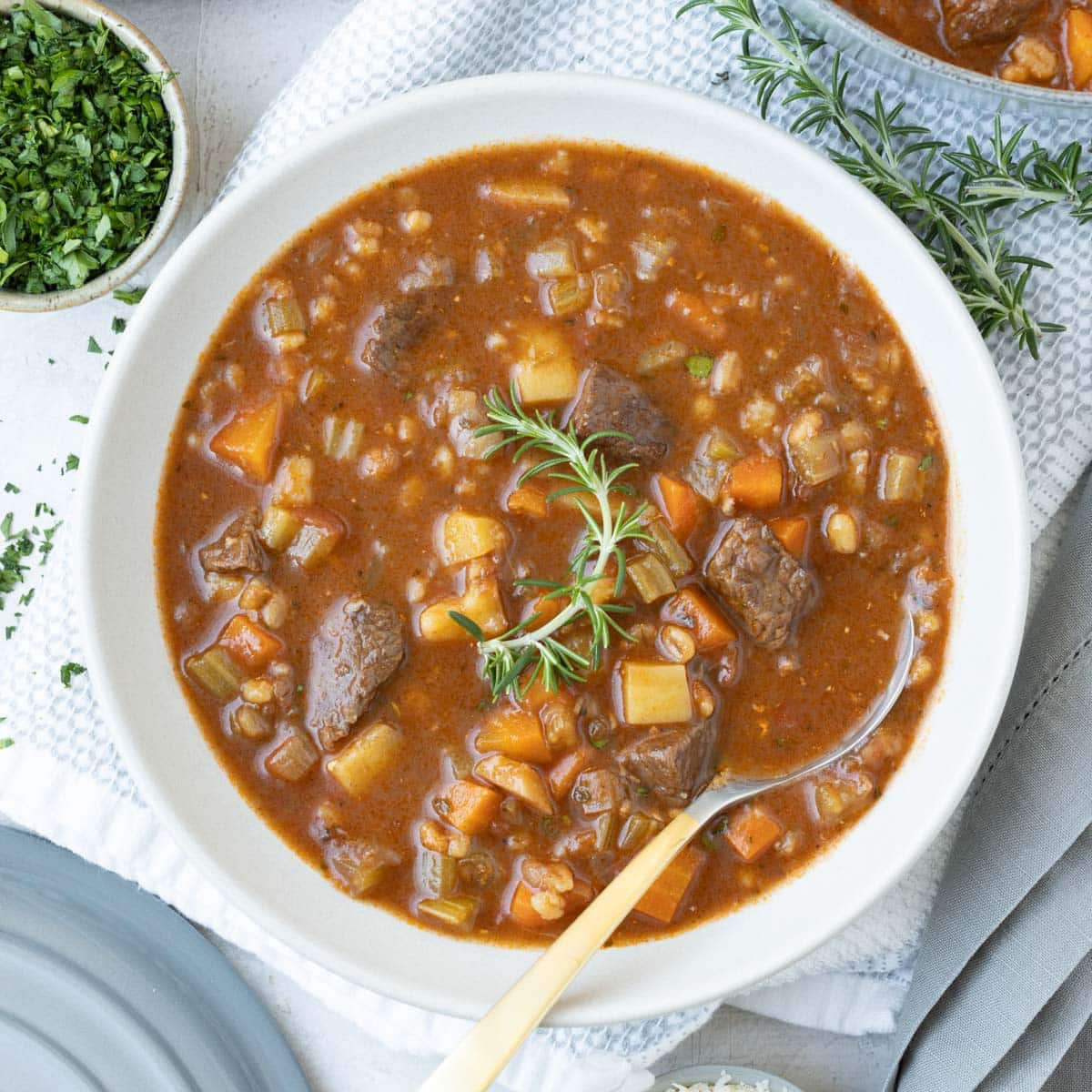
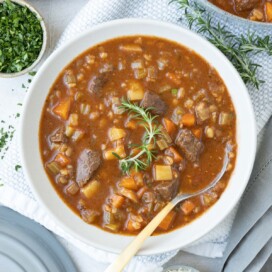
    Beef lovers love this hearty beef barley vegetable soup on a cold day.

    Chef's tip on buying red wine for braised short ribs: When choosing a wine for red wine braised short ribs, go for a dry, full-bodied red wine that complements the richness of the meat and sauce. Opt for a Cabernet Sauvignon, Merlot, Syrah, Malbec, or a red blend. In terms of price, it doesn't need to be expensive. Use a wine you'd enjoy drinking, as its flavors will intensify during cooking (as you'll use just half a bottle). See an optional wine reduction tip in the recipe card.

    How to Braise Beef Short Ribs

    Best Pot for Braising

    A large, heavy 5½-quart Dutch oven with a lid is the best pot for braised short ribs. The higher sides and smaller surface area help the ribs stay mostly submerged and give you plenty of sauce without needing extra broth.

    Cooking Braised Short Ribs

    Pre-heat the oven to 325°F. Be sure your pot fits in with the lid on. You may need to remove the top rack.

    Raw beef short ribs being browned in a wide casserole called a braiser.
    Step 1: Season short ribs well with sea salt and ground black pepper on all sides. Brown in hot olive oil over medium heat.
    Browning beef short ribs in a white pan with olive oil.
    Step 2: Brown short ribs on all sides until deep golden brown, 12-13 minutes. Remove to a large plate until needed. Pour out all but 1 tablespoon of fat.
    Sautéing chopped onions  in a white pan with garlic.
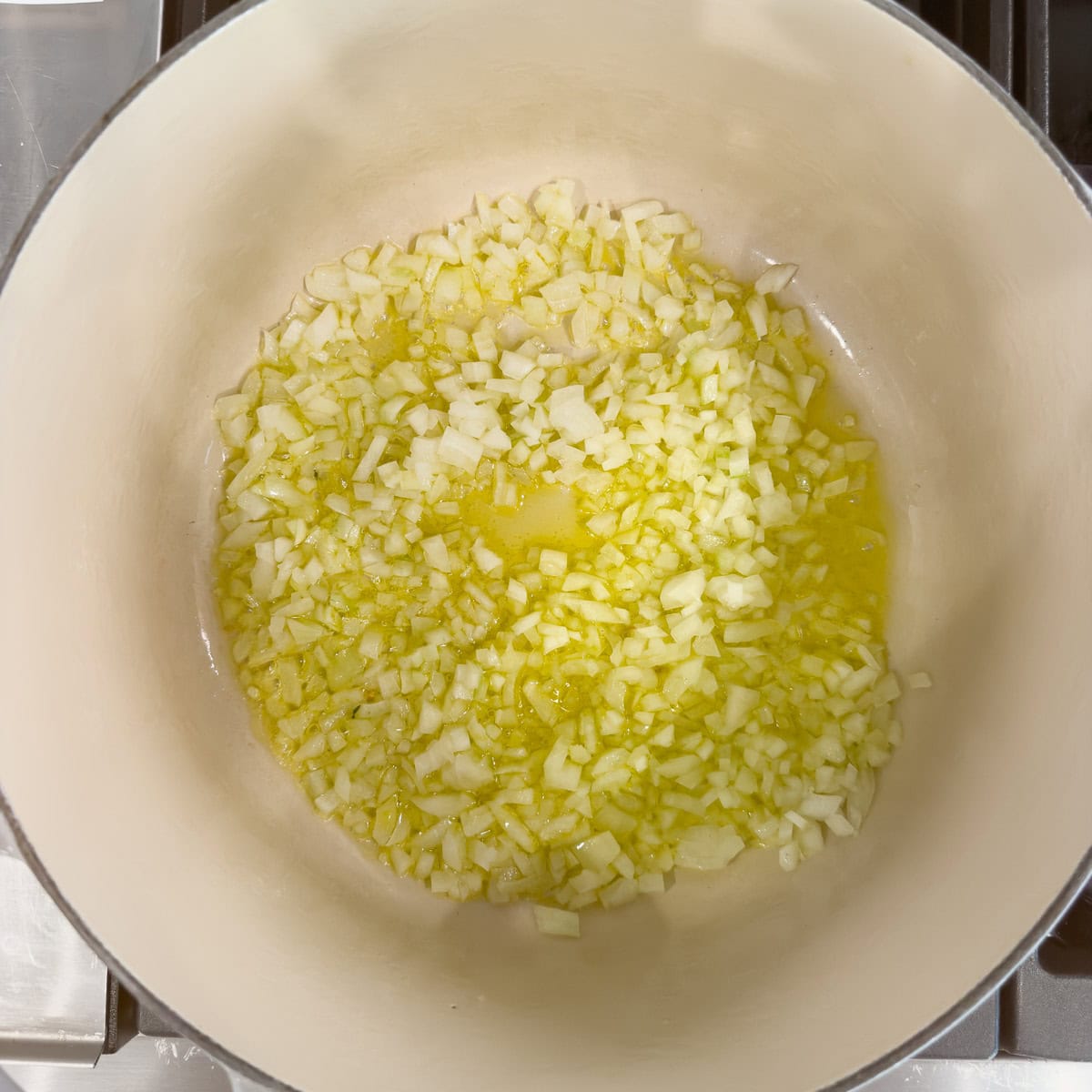
    Step 3: Over medium to medium-low heat, cook onions until soft. 3-4 minutes. Add garlic and cook 1 minute longer.
    Cooking chopped onion, carrots, and celery in a white wide shallow pan.
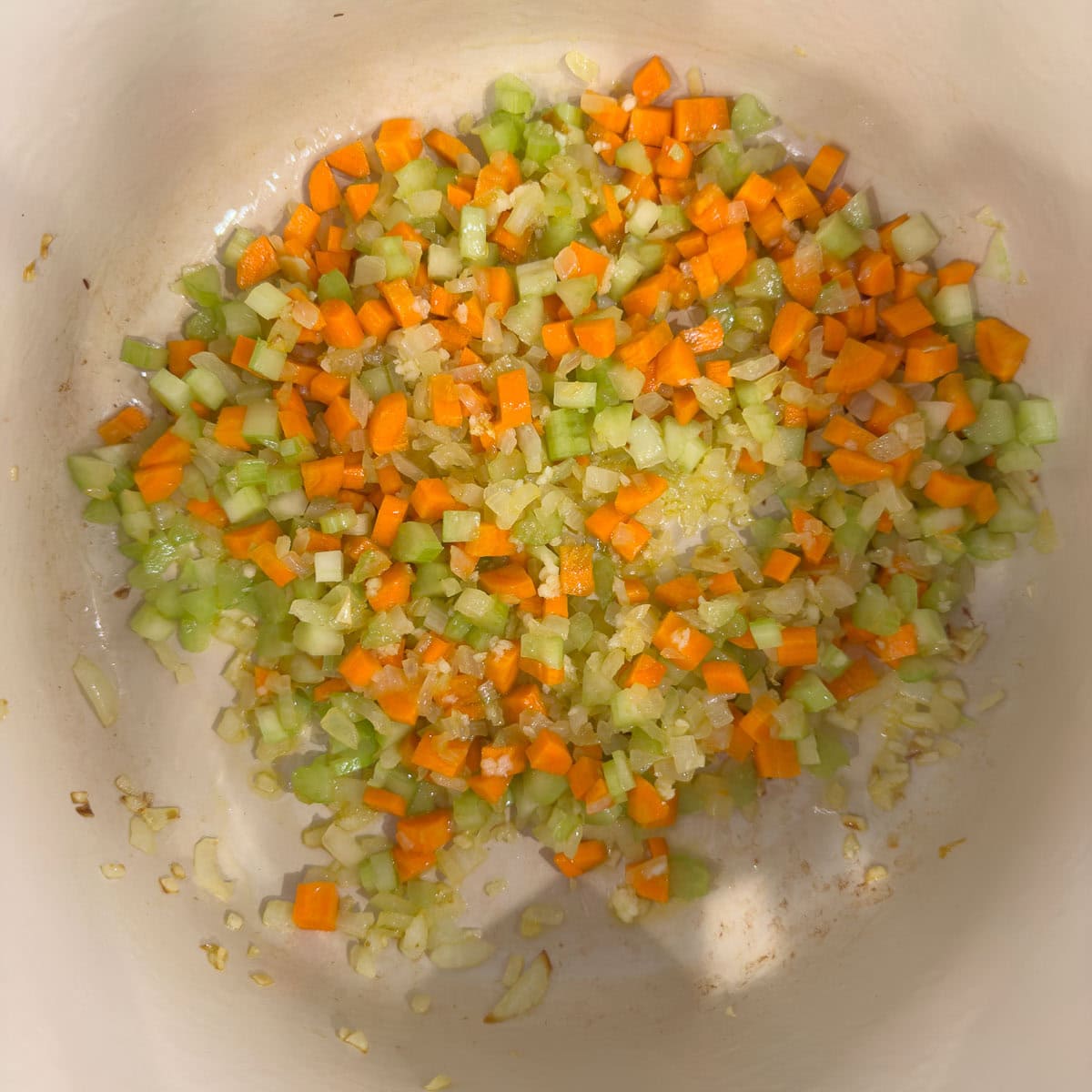
    Step 4: Add carrot and celery to the onions, cook until softened, 3-4 minutes.
    Cooking carrot, onion, and celery with tomato paste in a wide pan.
    Step 5: Add the tomato paste and cook 2 minutes, stirring the bottom of the pan.
    Pouring dark red wine into a pan with cooking vegetables for a reduction sauce.
    Step 6: Add dry red wine to the pan and cook until reduced by half over medium heat, 5-7 minutes.
    pouring broth into a pan of vegetables and wine with bay leaves and thyme.
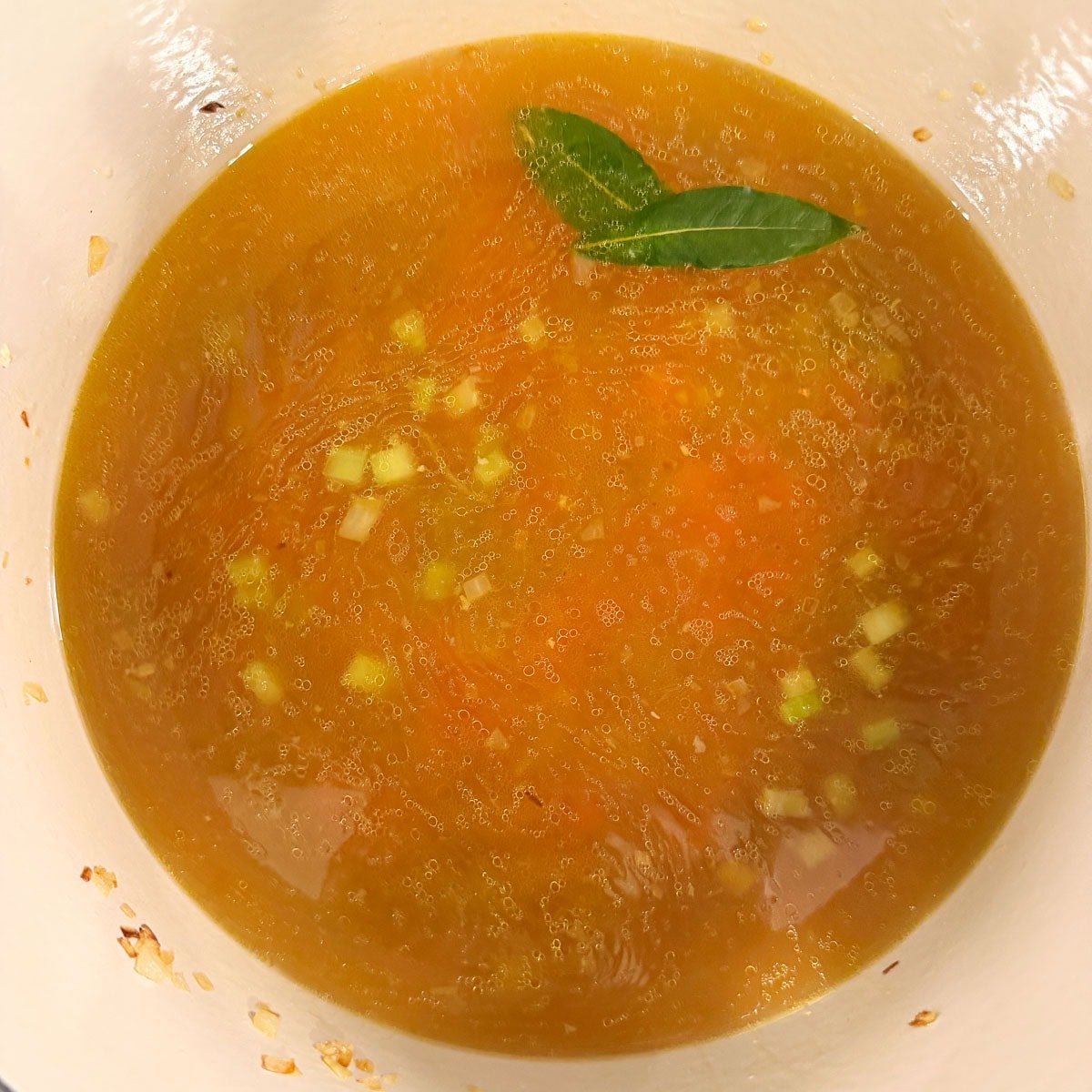
    Step 7: Add the broth, thyme tied together, and bay leaves.
    Browned bone-in beef short ribs in a pan of sauce ready for the oven.
    Step 8: Nestle ribs into the sauce. Sauce should come half way up the ribs but not cover them. Put a lid on the pan and braise in the oven for 2 ½ hours.
    Dark brown braised beef ribs, some bones showing, in rich sauce.
    Step 9: Check the broth level after 1 ½ hours. Add more if needed to keep at half way. When done, remove the pan from the oven, move the ribs to a plate an keep warm. Remove herbs, discard.
    Butter and flour mixture being added to a red wine pan sauce for thickening.
    Step 10: Skim excess fat off the top of the sauce with a spoon. Bring sauce to a simmer, add the flour and butter paste. Cook, stirring, 2 minutes to thicken sauce.
    Finished thickened sauce for red wine braised beef ribs in a round pan.
    The thickened finished sauce. Add ribs and serve.

    Chef's tip for thickening the sauce: Skip cornstarch and use a traditional method called a "beurre manie" (burr man-ay) which means "kneaded butter" in French. Create a paste with an equal amount of room temperature unsalted butter and flour until smooth. Just a tablespoon of each will thicken the ribs sauce. Add it to the simmering pot or pan and stir until thickened and the raw flour taste is gone. Thickening with a beurre manie is a great pro trick.

    Make Braised Short Ribs Ahead

    Braised short ribs are even better the next day. Cool, cover, and refrigerate up to 2 days. Before reheating, lift off any chilled fat (saves you skimming at the stove).

    Reheat (oven): Bring the pot out 30-60 minutes ahead to take off the chill. Cover and warm at 300°F until hot, 165°F in the center (about 25-40 minutes, depending on volume).
    Reheat (stovetop): Gently simmer, covered, over low heat until heated through (15-25 minutes). Don't boil-keep it lazy-bubbling.

    Sauce check: If the sauce tightened in the fridge, loosen with a splash of broth or water, then reduce briefly to glossy. Taste and adjust salt/acid (a touch of balsamic works wonders).

    Plan-ahead tip: If you're serving company, braise a day early. Reheat slowly while you finish sides-zero stress, maximum flavor.

    A gray bowl with creamy polenta topped with braised beef short ribs and sauce.

    Serving Suggestions

    Red wine braised short ribs are delicious served in a shallow bowl over creamy riced mashed potatoes, cauliflower puree, creamy parmesan polenta, risotto, egg noodles, or pasta. They all make a great base for the deliciously rich sauce.

    Add a tossed green side salad and your set for one fantastic dinner. Dress the salad with a simple balsamic vinaigrette as the flavors pair well.

    Another option for serving red wine braised short ribs: shred all of the meat off of the bone and serve it with the sauce over pasta. It's amazing.

    Leftover wine braised beef short ribs are terrific as leftovers. Shred the meat and make tacos (they are terrific!). Toss shredded meat with buttered noddles. Add the meat to a soup.

    Don't toss that extra sauce! Save it and freeze for using over pasta or adding to a pot of homemade marinara sauce.

    Storing and Freezing

    Store braised beef short ribs keep in the refrigerator in an airtight container with any leftover sauce for 3-4 days. Rather than storing whole, shredding the meat for other uses is a terrific option.

    How to Freeze Short Ribs

    • Cool short ribs to room temperature before freezing.
    • Portion into individual servings for easier thawing.
    • Use airtight containers to prevent freezer burn.
    • Label and date with the name of the dish and date.

    For best freezing, be sure the ribs are mostly covered in sauce to keep the meat moist and protected. Thaw overnight in the refrigerator.

    Reheat gently on the stovetop with the lid on or in the oven at 350°F degrees until heated through to 165°F.

    Wine braised beef short ribs with sauce and vegetables in a pan.

    Recipe FAQs

    What is the best cut of meat for braised short ribs?

    Bone-in ribs are the best cut for braised short ribs as the bone adds flavor and moisture to the meat and the overall dish.

    How do I keep the ribs from drying out?

    Make sure there's enough braising liquid in the pot while cooking so ribs don't get dry. The liquid should come about halfway up the sides of the ribs, ensuring they stay moist and tender as they braise. Check the pot periodically, and if the liquid level gets too low, add more broth to maintain the proper level. Follow this simple tip and you'll have juicy tender short ribs.

    How do I balance the acidity of the wine?

    If the wine flavor is too strong, try adding a little butter (preferably unsalted) to round out the flavors, add a little good balsamic vinegar for balance, add a tiny bit of honey or maple syrup to add sweetness, or dilute the sauce by adding more broth, water, or a splash of cream to mellow the wine's intensity.

    Do I need to turn the ribs over while braising?

    Because braising is a moist-heat cooking method where the liquid and steam create an even cooking environment, there is no need to turn the ribs. They will cook evenly and become tender as they braise.

    More Richly Flavored Recipes

    If you love richly flavored sauces, try one of these recipes.

    • Creamy casserole dish of beef stroganoff made with meatballs with herbs on top.
      How to Make Meatball Beef Stroganoff
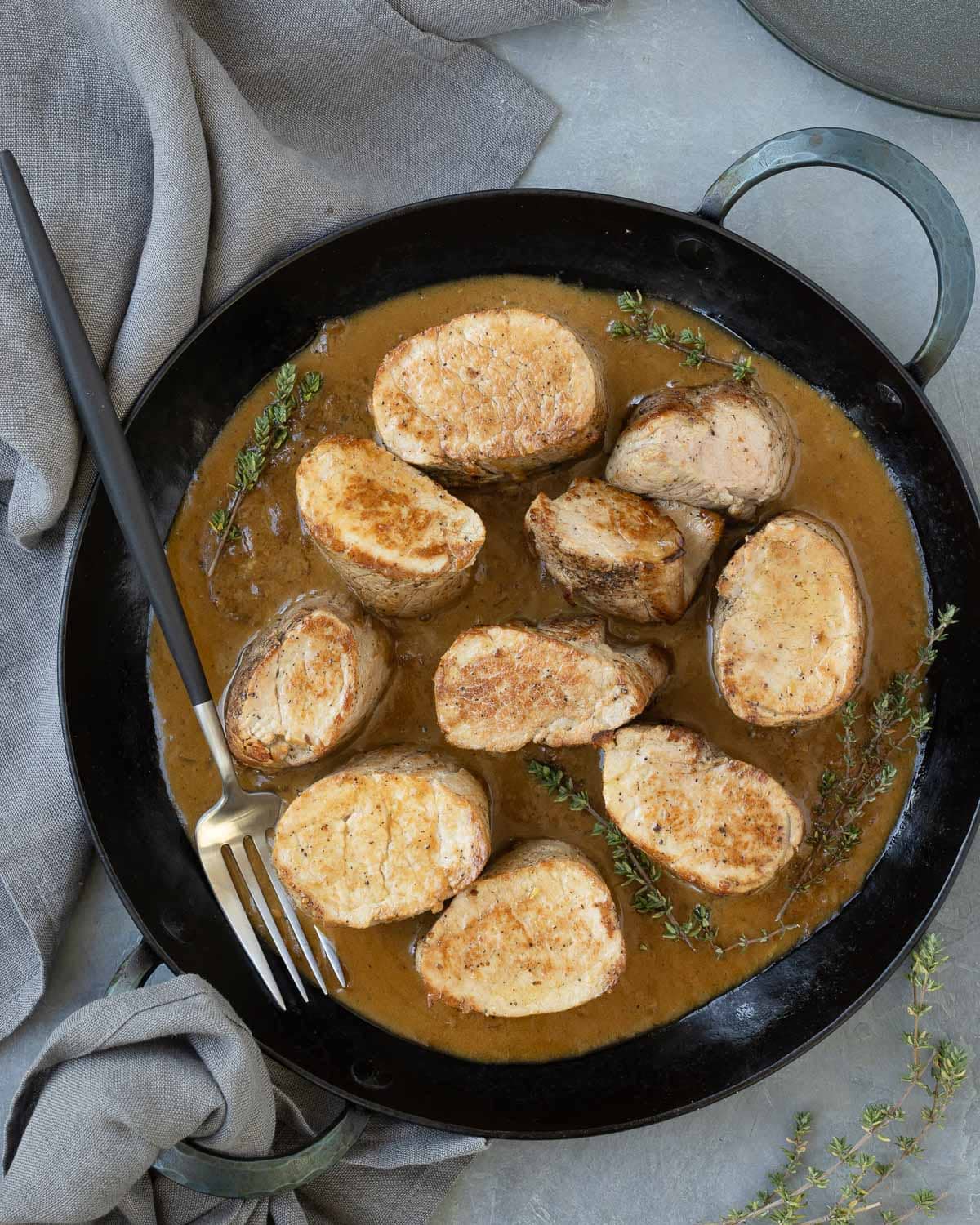
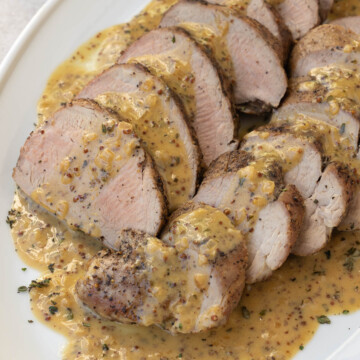
    • Pork tenderloin with creamy mustard sauce close up with a serving fork.
      Roast Pork Tenderloin with Dijon Mustard Sauce
    • A round pan of golden chicken thighs in red sauce with rosemary on the side.
      One Pan Italian Chicken Thighs
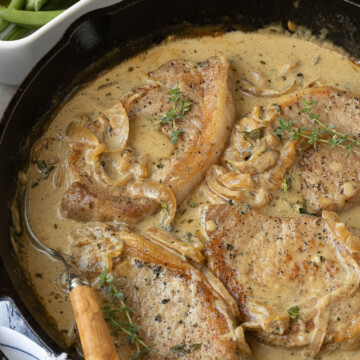
    • Close up of creamy pork chops with sauce.
      Sour Cream Pork Chops Recipe

    Did You Make This Recipe?

    If you make red wine braised short ribs, please add your comment. I appreciate your feedback and enjoy hearing from you. If you loved it, please give it a 5-star rating! They really help other readers.

    📖 Recipe

    Wine braised beef short ribs with sauce and vegetables in a pan.

    Red Wine Braised Short Ribs

    Sally Cameron
    Rich, hearty, classic, incredibly tender and delicious. Braised beef short ribs fall off the bone and melt in your mouth, and the sauce is to die for. Serve over mashed potatoes, risotto, cauliflower puree, egg noodle, or pasta.
    5 from 2 votes
    Prevent your screen from going dark
    Print Recipe Pin Recipe
    Prep Time 30 minutes mins
    Cook Time 2 hours hrs 45 minutes mins
    Total Time 3 hours hrs 15 minutes mins
    Course Dinner, Entree, Main Course
    Cuisine American
    Servings 4
    Calories 693 kcal

    Equipment

    • Large dutch oven with lid 5 ½ quarts (my preferred for short ribs)
    • or a 3 quart braiser with lid alternative pan
    • Parchment paper optional

    Ingredients
      

    • 1 tablespoon olive oil
    • 3 ½-4 pounds bone-in beef short ribs English cut, 5-6 good sized ribs
    • 1 teaspoon sea salt
    • ½ teaspoon ground black pepper
    • 1 cup chopped onion about ½ a medium
    • ½ cup chopped shallot or use all onion
    • ¾ cup chopped carrots 2-3
    • ¾ cup chopped celery 2-3 ribs
    • 3 large garlic cloves chopped fine
    • 2 tablespoons tomato paste
    • 1 ½ cups dry red wine
    • 3-4 sprigs fresh thyme
    • 2 bay leaves fresh or dried
    • 1 ½-2 cups beef bone broth

    Beurre Manie (butter paste to thicken sauce)

    • 3 tablespoons unsalted butter soft at room temperature
    • 3 tablespoons flour gluten-free blend or all purpose

    Instructions
     

    Get butter out

    • Remove the butter from the refrigerator so it is very soft when you need to make the beurre manie (thickening butter paste) for the sauce.

    Brown and sear the ribs

    • Pre-heat the oven to 325°F. You may need to remove a top rack to accommodate the pot with the lid.
      Pat the ribs dry with paper towels, then season well on all sides with salt and black pepper. Heat oil in a 5 ½ quart dutch oven or other heavy pot, then add the beef ribs and brown on all sides, turning as they brown, 12-13 minutes. Transfer the ribs to a plate or bowl.

    Cook the vegetables and aromatics

    • Pour out all but 1 tablespoon of fat and add the onions. Saute until soft, 3-4 minutes. Add the garlic and cook 1 minute more. Add the carrots and celery and stir, cooking until softened, another 3-4 minutes.

    Make the braising liquid

    • Stir in the tomato paste and cook, 2 minutes. Add the red wine and herbs. Turn up the heat a bit and simmer the wine down to half the volume to concentrate flavors, 5-7 minutes. Add 1 ½ - 2 cups of the broth and browned ribs to the pot. The liquid should come about half way up the ribs or a little higher but not cover them.
      Optional: Place a parchment paper round with a hold cut in the center (called a cartouche) directly on the surface of the braising liquid before covering with the lid. It helps keep the meat moist and promotes even braising.

    Braise the ribs

    • Place a lid on the pot then in the oven for 2 ½ hours. Check the broth level about half way through to be sure there is enough. Add a little extra broth if needed to keep them at the halfway level. I do not usually have to add more. If you're out of broth use water.
      Note: There is no need to turn the ribs during braising.

    Finish the ribs

    • Remove the ribs from the pot and keep them warm. Skim off excess fat on the top and discard. To thicken the sauce, mash the butter and flour together until smooth creating a paste (called a beurre manie).
    • Bring the pot to a simmer on the stovetop and drop in half the butter paste to start. Stir and cook for 2 minutes to get rid of any raw flour taste and thicken the sauce. If you want the sauce thicker, repeat and use the rest. Ribs are ready to serve.

    Notes

    Nutritional note: Because of the bone, rendered fat, and other factors, it's hard to accurately calculate the nutrition numbers. Although I use a highly regarded nutrition calculator, I do not think the numbers above are totally accurate. I've researched it from many angles and can't figure out what would be closer, so please keep that in mind (if you track your macros). Protein levels are probably closer to 37 grams. 
    Wine recommendation: Buy a decent priced dry red wine such as a cabernet, merlot, syrah, malbec, or red blend. It does not have to be expensive, something that would be good to drink. Optional: For deeper wine flavor, reduce 1 bottle (750 ml/3 cups) red wine to 1½ cups before adding to the pot for a next level upgrade. You can also do this the day before.
    Pots and pans note: Because of the wider bottom and more shallow depth of the braiser, there may be more reduction of the sauce as the ribs cook. Check the broth level after 1 ½ hours to be sure it comes half way up the sides of the ribs.

    Nutrition

    Calories: 693kcalCarbohydrates: 12gProtein: 61gFat: 36gSaturated Fat: 15gPolyunsaturated Fat: 2gMonounsaturated Fat: 16gTrans Fat: 0.1gCholesterol: 178mgSodium: 917mgPotassium: 1325mgFiber: 2gSugar: 4gVitamin A: 5435IUVitamin C: 8mgCalcium: 61mgIron: 7mg
    Tried this recipe?Let us know how it was with a comment and leave a star rating!

    Creamy Pumpkin Risotto With Sage

    11/04/2025 by Sally Cameron 1 Comment

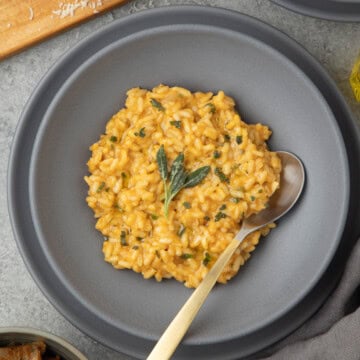
    A gray bowl of pumpkin risotto with a golden spoon and sage leaves.

    Creamy Pumpkin risotto is fall comfort in a bowl and the ultimate rice-lover's dish. With Italian rice, brodo (broth), sautéed onion and garlic, a splash of white wine, plus pumpkin purée, you'll have silky, restaurant-level risotto in about 40 minutes. Serve this savory pumpkin risotto as a cozy side or make it dinner by topping with browned, fully cooked chicken sausage for added protein. Naturally gluten-free and vegan option.

    A gray bowl of creamy orange pumpkin risotto with fried sage leaves.

    Risotto has a reputation for being fussy, but it isn't. I've made this easy pumpkin risotto for decades, and the method is simple: toast the rice with onion and garlic in olive oil, deglaze with a splash of white wine, then add hot broth a ladle at a time, stirring to coax out creaminess, then stir in the pumpkin. With simple ingredients and a little patience, you'll have silky risotto in about 40 minutes for the perfect fall dinner. Serve it as a side, or make it dinner with browned chicken sausage.

    [feast_advanced_jump_to]

    Why Make Pumpkin Risotto

    • Fall comfort, elevated - Creamy, cozy, and just a little luxurious-pumpkin adds warm flavor without being heavy. Perfect as a fall risotto recipe for cozy dinners.
    • Simple ingredients - Onion, garlic, broth, wine, and a spoonful of pumpkin purée-nothing fancy, just technique.
    • Faster than you think - About 40 minutes start to finish for restaurant-level risotto at home.
    • Flexible meal - Serve as a side or make it dinner with browned chicken sausage.

    Chef's Tip - Choosing the Right Rice for Risotto
    To make real risotto, you need authentic Italian risotto rice. Why? Because short-grain varieties like Arborio, Carnaroli, and Vialone Nano are naturally high in a starch called amylopectin. That starch breaks down as the rice cooks, giving risotto its signature creamy, velvety texture-creamy without cream. These rices are also plump and absorb liquid beautifully while holding their shape - creating that perfect "creamy-but-slightly-firm" bite in every spoonful. My favorite risotto rice? This special carnaroli, always in my pantry.

    For a terrific healthy breakfast make a pumpkin smoothie!

    Ingredients You'll Need

    You'll need just a few simple ingredients to make this creamy pumpkin risotto recipe.

    Ingredients for pumpkin risotto in prep bowls on a counter.
    • Rice - Real Italian risotto rice such as Carnaroli (my favorite) or Arborio. These short-grain rices release starch for that creamy finish. Tips below.
    • Pumpkin - 100% canned pumpkin purée (not pumpkin pie mix). Adds gentle sweetness and silky body for a risotto with canned pumpkin.
    • Brodo (broth)- Chicken broth or turkey broth for savory depth. For a vegetarian pumpkin risotto use vegetable broth.
    • Onion - Onion;, yellow, white, or brown for a sweet, aromatic base.
    • Garlic - Fresh cloves, minced, for a warm bite.
    • White wine - A splash of dry white to deglaze and brighten.
    • Butter - A knob of unsalted butter stirred in off heat for gloss and creaminess, or a drizzle of good olive oil.
    • Parmesan - Freshly grated Parmigiano-Reggiano melts in for savory richness.
    • Herbs - Fresh sage is classic; chopped for the risotto and a few leaves crisped in oil or butter for garnish.

    Please see the recipe card for measurements, salt, and pepper.

    Chef's Note: Brodo - What Italians Call Broth
    In Italian, "brodo" simply means broth - the flavorful base used for risotto, soups, and sauces. My homemade chicken bone broth, fast chicken broth, and turkey broth are both versions of brodo, made from slow-simmered bones, meat, aromatics, and herbs for rich flavor and versatility.

    For an easy pumpkin, no-bake dessert, try this luscious pumpkin mousse.

    Substitutions and Variations

    • Pumpkin - Substitute mashed roasted butternut squash.
    • Cheese - Try Pecorino Romano cheese for a sharper edge or Grana Padano for a milder, nutty finish.
    • Protein Add-Ins - Stir in sliced browned chicken sausage, crisp pancetta, or top with seared shrimp or sea scallops to make it a full meal.
    • No alcohol - Skip the wine deglaze and start the next step.
    • For a dairy-free pumpkin risotto - Use plant-based butter and either a vegan parmesan or try nutritional yeast.

    How to Make Pumpkin Risotto

    Sautéing onion in olive oil in a white pan.
    1. Saute onion in hot olive oil until softened, 2-3 minutes over medium heat. Do not brown. Then add garlic and cook 1 minute longer.
    Rice, onions, and oil in a pot to make risotto, with a wooden spoon.
    1. Stir in the rice until it is well coated with the oil, onion, and garlic, cook 2-3 minutes.
    Deglazing a pan of Italian rice for risotto with white wine.
    1. Deglaze the pan with wine, stirring, when almost gone, begin the broth step.
    Broth added to simmering rice in a white pan stirring with wooden spoon.
    1. Start adding broth in ladlefuls, a little at a time, stirring until absorbed before adding more.
    Wooden sppon drawing aline through cooking rice to show it is ready for more broth.
    1. Add more broth when you can draw a line through the rice. Continue until almost all broth is added, taste for texture. it should be tender but have a little bite. You may not use all broth.
    Adding pumpkin and sage to a pot of risotto to make pumpkin risotto.
    1. Stir in the pumpkin and sage, then add Parmesan cheese. Add a nob of unsalted butter for richness if desired and adjust texture with a little more broth for more creaminess.
    A finished pot of pumpkin risotto ready for next step of adding Parmesan.

    Chef's Tip - The Right Pan for Risotto
    A pan called a saucier, or sometimes a sauteuse with curved sides and a wide base makes risotto easier because it facilitates stirring, even starch release, and steady evaporation for a silky texture. Honestly, my saucier is one of my very favorite pans in my huge collection and worth investing in. No saucier or sauteuse? Use a regular 3-3 ½ quart pot and be sure to stir into the edges. A small Dutch oven works too as the bottom is a bit sloped.

    How to Enjoy Creamy Pumpkin Risotto

    • As a cozy main: Serve in warm bowls topped with browned chicken sausage, pancetta, or seared shrimp for added protein.
    • As a side dish: Pairs beautifully with roasted chicken, pork tenderloin, or salmon.
    • Add color: Top with crisp sage leaves, extra Parmesan, or a drizzle of olive oil or brown butter.
    • Next-day twist: Shape chilled leftovers into patties or balls, coat lightly in GF breadcrumbs, and pan-fry for crispy risotto cakes.

    Storage and Reheat

    If you have leftovers, store in an airtight container up to 4 days. Warm gently with a splash of broth or water over medium-low heat until creamy again. Avoid microwaving as risotto tends to dry out.

    For extra canned pumpkin, it will keep up to 4 days refrigerated in an airtight container. For longer storage, freeze, up to 3 months. Remember to label and date the container. Use it in a pumpkin smoothie!

    Recipe FAQs

    Can I make pumpkin risotto without wine?

    Yes. Just substitute extra broth and a squeeze of lemon juice for brightness.

    Can I use fresh pumpkin instead of canned?

    Absolutely. Roast, mash, and measure about ¼ cup per batch. The flavor will be slightly sweeter and more earthy.

    Can I make risotto ahead?

    Pumpkin risotto is best fresh, but restaurants often par-cook it: cook until just shy of al dente, spread on a sheet pan to cool, then reheat with hot broth to finish to creamy texture. Stir in cheese (and butter) right before serving.

    Can I make risotto dairy-free?

    Yes. Use olive oil instead of butter and finish with a drizzle of good extra-virgin olive oil or vegan butter. Nutritional yeast or vegan parmesan can stand in for the cheese.

    More Fall Recipes With Pumpkin

    Pumpkin shines in so many savory and sweet dishes-here are more fall favorites to inspire your table.

    • Pumpkin spice overnight oats in a glass serving bowl with cinnamon, pecans, maple syrup, and spoon.
      5-Minute Pumpkin Overnight Oats
    • black bean pumpkin soup
      Creamy Black Bean Pumpkin Soup
    • Pumpkin snack cake with chocolate chips.
      Pumpkin Chocolate Chip Cake (Snack Cake)
    • Pumpkin tart
      Pumpkin Tart (Gluten-Free Almond Flour Crust)

    Did You Make Pumpkin Risotto?

    If you make this risotto, please comment and let me know. I love to hear from you, and comments help others readers. And please leave a star rating. Much appreciated!

    📖 Recipe

    A gray bowl of pumpkin risotto with a golden spoon and sage leaves.

    Pumpkin Risotto

    Sally Cameron
    This classic, creamy Italian rice dish is perfect for fall with pumpkin and sage. This serves 4 as a main dish or more as a side. You can easily halve it for 2 main dishes.
    5 from 1 vote
    Prevent your screen from going dark
    Print Recipe Pin Recipe
    Prep Time 5 minutes mins
    Cook Time 35 minutes mins
    Total Time 40 minutes mins
    Course Entree, main, Side Dish
    Cuisine Italian
    Servings 4
    Calories 326 kcal

    Equipment

    • 1 3-3 ½ quart saucier or sauteuse or similar pan
    • 1 2 quart pan
    • wooden spoon

    Ingredients
      

    • 2 tablespoons extra virgin olive oil
    • ¾ cup chopped onion
    • 3 large garlic cloves chopped fine or zested
    • 1 cup Italian rice - arborio or carnaroli
    • ½ cup dry white wine
    • 4 cup low sodium broth, chicken or turkey
    • ⅓ cup canned pure pumpkin
    • 1 tablespoon finely chopped fresh sage leaves plus extra for garnish
    • ½ - ¾ teaspoon sea salt
    • ¼ teaspoon ground black pepper

    Optional protein

    • 4-6 links pre-cooked chicken dinner sausage I use Applegate Farms

    Instructions
     

    Warm the broth

    • In a 2 quart pot over medium low heat, add the broth and heat. Don't boil, you don't want to lose the volume.

    Saute aromatics

    • In a 3-3½-quart saucier or wide pan over medium heat, heat the olive oil. Add onion and cook until soft and translucent, 2-3 minutes (don't brown). Stir in garlic; cook 1 minute.

    Toast the rice

    • Add rice; stir to coat and lightly toast until the edges look translucent, 2-3 minutes. Add a little of the salt.

    Deglaze the pan

    • Pour in the wine; stir until mostly absorbed and the pan is nearly dry.

    Add broth gradually

    • Add hot broth a ladle (about ⅓ cup) at a time, stirring often and waiting until you can draw a line through the rice that slowly fills in before the next addition. Keep the risotto at a gentle bubble, adjusting heat as needed. Continue until rice is just tender with a slight bite, 25-30 minutes total. (You may not need all the broth. Lightly season with a little more of the salt.

    Add pumpkin

    • Stir in the pumpkin and heat through for a few minutes.

    Finish risotto

    • Off the heat, stir in Parmesan, butter, and chopped sage. Taste and adjust salt and pepper. Serve immediately; loosen with a splash of hot broth if it thickens.

    If adding sausage

    • Near the finish of the risotto, slice the chicken sausage into pieces, brown and heat through in a separate pan. Serve either atop the risotto or in a side bowl for people to add themselves.

    Notes

    For a crispy sage leaf garnish, fry sage leaves for a few seconds in a little hot oil in a small pan, drain on paper towels, then use as a garnish. 
    For a richer pumpkin flavor and deeper color, you can increase to ½ cup. Add it gradually and loosen with a splash of broth as needed to keep the texture silky.

    Nutrition

    Calories: 326kcalCarbohydrates: 48gProtein: 9gFat: 9gSaturated Fat: 2gPolyunsaturated Fat: 1gMonounsaturated Fat: 6gSodium: 366mgPotassium: 355mgFiber: 3gSugar: 2gVitamin A: 2385IUVitamin C: 4mgCalcium: 39mgIron: 3mg
    Tried this recipe?Let us know how it was with a comment and leave a star rating!

    5-Minute Pumpkin Overnight Oats

    10/28/2025 by Sally Cameron Leave a Comment

    Pumpkin spice overnight oats in a glass serving bowl with cinnamon, pecans, maple syrup, and spoon.

    Pumpkin overnight oats are the easy, make-ahead fall breakfast: creamy oats and chia seeds with warm spices, vanilla, and real canned pumpkin-stirred together in 5 minutes. Mix with your favorite milk (almond or dairy), chill overnight, and wake up to a grab-and-go jar that's lightly sweet, fiber-rich, and truly satisfying. If you're craving pumpkin pie overnight oats-that cozy pumpkin-spice flavor in a jar-this is it.

    Bowls of pumpkin overnight ots with cinnamon stick, pecans, yogurt, and a silver spoon.

    Pumpkin overnight oats start with my basic high-protein overnight oats with chia seeds recipe, adding pumpkin, warm fall spices, and great toppings to make a seasonal, comforting breakfast for home or to grab-and-go. Try them warmed up on chilly mornings for a satisfying start to the day (what I usually do).

    [feast_advanced_jump_to]

    Pumpkin Overnight Oats Fast Facts

    • Creamy, not mushy - oats + chia set up overnight.
    • Pumpkin + spice - cozy flavor without pie filling.
    • 5 minutes tonight - breakfast for days.
    • Serve cold or warm - quick 30-60 sec heat for a cozy bowl.
    • Top it your way - with overnight pumpkin oatmeal try yogurt (garnish), granola, pecans.

    What else to do with canned pumpkin? Make this fantastic black bean pumpkin soup! Super easy and a reader favorite.

    Ingredients You'll Need

    Ingredients for pumpkin overnight oats on a marble counter.
    • Oats - Old-fashioned rolled oats, gluten-free if needed, not instant oats or steel cut.
    • Chia seeds - I prefer the white ones aesthetically but black chia's work as well.
    • Milk - Dairy milk, almond milk, cashew milk, hemp seed milk, or others all work but may need some adjustments based upon your choice.
    • Pumpkin purée - Pure canned pumpkin, skip pumpkin pie filling as it is pre-sweetened and spiced.
    • Sweetening - Use maple syrup, no-sugar maple syrup, date syrup, brown sugar, or golden monk fruit to reduce sugar and carbs.
    • Vanilla extract - Real, good, vanilla extract or vanilla paste.
    • Pumpkin pie spice - Use a pre-made blend or do your own spice blend with cinnamon and nutmeg, ginger, allspice, or clove for pumpkin spice overnight oats.

    For measurements and salt please see the recipe card.

    Chef's tip on canned pumpkin: Cans labeled "100% pumpkin" means it's pure pumpkin purée without spices or sugar, but it can be one or multiple pumpkin-type varieties. Many brands use the Dickinson pumpkin variety (C. moschata) because it's smooth, dense, and naturally flavorful; others blend varieties. Unless the label lists a cultivar, you won't know-and that's okay. Canned is great and a handy pantry staple.

    Pumpkin Overnight Oats Variations

    • Greek yogurt (garnish) - Add a spoonful on top for extra protein and creaminess.
    • Granola - Top with homemade granola for crunch and texture.
    • Nuts and seeds - Finish with maple-glazed pecans or toasted raw pecans for buttery crunch, or try toasted pepitas (deep flavpred) or raw pepitas (clean and green). Use 1-2 tablespoons.
    • Dairy-free - Use a plant milk and either skip any yogurt garnish (or use a plant yogurt).
    • Higher protein - Stir in 1-2 tablespoon protein powder with the milk; add a splash more milk if it thickens too much.

    You can also use canned pumpkin to make a terrific high protein pumpkin pie smoothie.

    How to Make Pumpkin Pie Overnight Oats

    Spices, pumpkin, and  maple syrup in a glass bowl.
    1. Whisk together pumpkin, maple, vanilla, spices, and salt until smooth (blooms the spices).
    Mixing pumpkin, spices, and maple into a paste for overnight oats base.
    1. Mix into a smooth paste.
    Overnight pumpkin oats base with chia seeds in a glass bowl.
    1. Add liquids & seeds - Whisk in milk (start at ¾ cup), then stir in oats and chia until evenly coated and blended.
    Mixed base of pumpkin overnight oats ready to be portioned and chilled.
    1. Chill overnight until thickened. Add a splash of milk if too thick. Top with glazed pecans, granola, a dollop of Greek yogurt or other toppings.
    Pumpkin spice overnight oats in a glass serving bowl with cinnamon, pecans, maple syrup, and spoon.

    Chef's Tip - When to Add Toppings

    • Add crunchy toppings last - Sprinkle granola and pepitas right before eating so they stay crisp.
    • Commuting? Pack toppings in a small side container or a zip bag and add at your desk.
    • Yogurt garnish - Dollop on top at serving (don't stir in ahead) to keep the oats creamy, not pasty.
    • Mix-ins that hold up - Dried fruit or chocolate chips can go in the night before; they won't get soggy.

    Serving Suggestions

    • Straight from the jar - Stir, add a splash of milk to loosen if needed, and dig in.
    • Warm bowl - Microwave 30-60 seconds, stir, and heat in short bursts to your preferred temp (don't cook it).
    • Parfait - Layer oats + Greek yogurt (garnish) + homemade granola.
    • Nutty finish - Top with maple-glazed pecans or toasted pecans.
    • More sweetness - drizzle of maple is lovely, or use the no-sugar version.
    • Add fruit - Sliced banana, chopped dates, or a few dried cranberries for extra fall vibes.
    • Seeds for crunch - Pumpkin seeds (pepitas) or sunflower seeds sprinkled on top.
    • Batch-and-go - Portion into 16 oz jars; they'll keep up to 4 days for grab-and-go breakfasts.

    Storage

    Store pumpkin overnight oats for up to 4 days refrigerated with a good lid. Stir before serving (it thickens as it sits).

    Recipe FAQs

    Can I use quick oats or steel-cut oats?

    Quick oats can work but are much softer, smoother, and will give you a more pudding-like consistency Don't use uncooked steel-cut oats as they stay too chewy. Old fashioned rolled oats are best.

    Can I warm pumpkin overnight oats?

    Yes. Overnight oats are terrific warmed. Heat 30-60 seconds in a microwave using about 70% power, stir, and add a splash of milk to loosen if needed. Warm overnight oats, don't cook! Repeat if needed to get as warm as you like.

    Too thick / too thin?

    If your overnight oats are too thick, stir in 2-4 tablespoon milk. If thin, stir in 1-2 teaspoon chia, then wait 10-15 minutes. And be sure to make notes in the recipe for your preferences so you can duplicate them.

    Are there dairy-free and gluten-free options for overnight oats?

    Absolutely. Use plant milk and skip dairy garnishes (or use plant yogurt). Choose GF-certified rolled oats.

    Did You Make This Recipe?

    If you make pumpkin overnight oats, please comment and let me know. I appreciate hearng from you and comments help other readers. And please leave a star rating!

    📖 Recipe

    Pumpkin spice overnight oats in a glass serving bowl with cinnamon, pecans, maple syrup, and spoon.

    Pumpkin Overnight Oats

    Sally Cameron
    Creamy, lightly sweet pumpkin overnight oats with chia and warm spices. Mix in 5 minutes, chill overnight, enjoy cold or warmed. Make 1 or scale and make 4. Adjust the sweetness, spices, and milk for creaminess to your preference.
    No ratings yet
    Prevent your screen from going dark
    Print Recipe Pin Recipe
    Prep Time 5 minutes mins
    Cook Time 0 minutes mins
    Total Time 5 minutes mins
    Course Breakfast
    Cuisine American
    Servings 1
    Calories 342 kcal

    Equipment

    • 16-ounce container with lid

    Ingredients
      

    • ¼ cup canned pure pumpkin puree
    • 1 tablespoon maple syrup or no-sugar maple syrup more options below
    • 1 teaspoon vanilla extract or ½ teaspoon vanilla paste
    • ¾ teaspoon pumpkin pie spice or equivalent cinnamon with pinches nutmeg, ginger, allspice, clove
    • 1 pinch fine sea salt
    • ¾ - 1 cup milk of choice (dairy or plant) cow, almond, cashew, hemp seed
    • ½ cup old fashioned rolled oats GF if needed
    • 1 ½ tablespoons white chia seeds or black chia

    Optional toppings

    • 2 tablespoons granola
    • 1-2 talespoons raw or glazed pecans
    • 1-2 tablespoons Greek yogurt
    • 1-2 tablespoons pepitas toasted or raw
    • 1 tablespoon maple syrup or no-sugar maple syrup

    Instructions
     

    Whisk the flavor base

    • In a jar or bowl, whisk pumpkin, sweetener, vanilla, spice, and salt until smooth (blooms the spices).

    Add liquids & seeds

    • Whisk in milk, then stir in oats and chia until evenly coated.

    Chill overnight

    • Cover and refrigerate overnight (or at least 4 hours) until it sets and is creamy.

    Adjust & serve

    • Stir overnight oats, add a splash of milk if too thick. Top with optional glazed or raw pecans, granola, or a dollop of Greek yogurt for garnish.
      To heat, cover and microwave for about 60 seconds on 70% power or until as warm as preferred. Stir and repeat as needed.

    Storage

    • Refrigerate up to 4 days. Stir before serving (it thickens as it sits). Loosen with a splash of milk if needed.

    Notes

    Nutritional note - the optional toppings are not figured in the calculation. 
    To increase protein, add the Greek yogurt topping, or try adding 1-2 tablespoons of protein powder. Your milk choice will also impact the protein levels. See the milk chart within my overnight oats post for a milk protein level comparison.
    Homemade Pumpkin Pie Spice Blend
    • 1 ½ tablespoon ground cinnamon
    • 2 teaspoons ground ginger
    • ¼ teaspoon ground allspice
    • ⅛ teaspoon ground nutmeg
    • ⅛ teaspoon ground cloves
     

    Nutrition

    Calories: 342kcalCarbohydrates: 52gProtein: 10gFat: 11gSaturated Fat: 1gPolyunsaturated Fat: 6gMonounsaturated Fat: 2gTrans Fat: 0.03gSodium: 293mgPotassium: 392mgFiber: 13gSugar: 12gVitamin A: 9545IUVitamin C: 3mgCalcium: 398mgIron: 4mg
    Tried this recipe?Let us know how it was with a comment and leave a star rating!

    Thanksgiving Planning Guide for Less Stress

    11/20/2014 by Sally Cameron 8 Comments

    A photo collage of recipe for Thanksgiving and how to get organized.

    Welcome to my Thanksgiving planning guide-a step-by-step plan so you know exactly what to do and when for the year's biggest feast with less stress. I'll help you plan, prep, and cook with confidence. From buying turkey to delicious sides and leftovers, I'm here to help.

    A photo collage of Thanksgiving recipes and how to get organized article.

    Recently I shared a list of tips for how I plan for Thanksgiving at Healthy Holiday Cooking Workshop. As people were busy scribbling notes, I realized I needed to create a Thanksgiving Planning Guide to help everyone and save all the note-taking. Any questions, please comment. I'm happy to help!

    [feast_advanced_jump_to]

    Plan Your Menu

    • From appetizers to dessert and beverages. Write it down. Sounds simple, but writing it down clarifies things. Print it and stick a copy on the fridge.
    • All of my planning, recipes and notes go onto a clipboard so they are in one place for reference. Yes and old fashioned clipboard (but electronic works too).
    • Think about oven space when you menu plan. One oven or two? Warming drawer?
    • Don't overload yourself with complex recipes. Balance simple and easy recipes vs. more time-consuming recipes.
    • Plan dishes that can be prepped or made ahead of time.
    • Keep appetizers simple. There is a big meal coming.
    • Keep any special dietary needs in mind such as gluten-free or dairy-free, but don't let that throw you. If you have questions just ask in comments. My specialty is special diet needs.
    • Check out this link for gluten-free and dairy-free Thanksgiving recipes.

    Let's Talk Turkey

    • Order ahead. Choose fresh and organic. It is worth the price for this extra special meal.
    • If you want leftovers (and who doesn't?), plan for 1 ½ pounds per person raw weight. For few if any leftovers, figure about 1 pound per person.
    • If you are buying a frozen turkey, it will take approximately 24 hours for every 4-5 pounds to defrost a turkey safely in the refrigerator.
    • Having a big crowd? It's easier to roast two smaller birds than one monster if you have oven room.
    • Brine baby brine! For a delicious, golden, glorious turkey, learn how to dry brine a turkey. It's so easy!
    • When not to brine - Do not brine if the turkey has been pre-brined or a salt solution was added. Read the label carefully. It might say "enhanced".
    A raw turkey in a brining bag covered in salt, herbs, and citrus zest from the durb.

    Turkey Tools

    • No roasting pan? Everything is on sale right now at the years best prices. Check around and invest in one. They come at many price points. It will last forever and can be used for more than turkey. I use mine for roasted tomato marinara in the summer. Get stainless steel, not non-stick.
    • Don't want to invest or store a roasting pan? Borrow one from a friend who is not cooking for Thanksgiving. One of mine is out on loan now.
    • What about disposable aluminum roasting pans? If aluminum is your only option, buy a heavy one with sturdy, thicker edges and an embossed bottom. If they are the thinner kind, double up on them for safety. Wobbly pans are difficult, even dangerous, to handle when filled with a heavy bird. When roasting, place the disposable pan on a rimmed baking sheet for support and easier transferring from the oven.
    • Use a roasting rack to lift your turkey off the bottom of the pan during roasting. It creates airflow and the bird does not sit in the fat and juices.
    • No rack? Create a thick wreath with heavy foil and set the bird on that to elevate it, or try one of the silicone wreaths available at cooking stores.
    • Be sure your knives are sharp beforehand. Find a knife sharpening service at a local knife store, restaurant supply, or mobile knife service.
    • To test your turkey use a digital thermometer.
    • Check out in advance whether you have all of the pots and pans needed for all of your cooking.

    Delegate

    • You don't have to do it all yourself. Many people like to make a contribution to the celebration, so let them.
    • If someone wants to bring a cooked dish, ask (kindly) how they prepare it. If you silently cringe at the description but it's an old family tradition they love and want to share, it's a tough call. Allowing them to bring it will make them happy and feel good. If they are open to something different, ask if they would like your recipe.
    • If someone wants to bring something but doesn't cook, have them bring beverages or something else easy you might need. If there is a quality bakery around, have them bring a pie for dessert.

    Build a Master Grocery List

    • I build mine in an excel spreadsheet. It sounds crazy, but you can use it year after year with a few tweaks as needed. I have a column for the recipe, the ingredients, the quantity needed, then the store to buy it at, and one column to check off. If you want an example I will email you mine. Leave a comment.
    • Not an excel user? No problem. List everything by recipe, then categorize it into market sections like produce, dairy, canned goods, etc.
    • Purchase non-perishables ahead of time and stock in the pantry.
    • Check supplies of dish and dishwasher soap, paper towels, heavy foil, plastic wrap, baggies, trash bags, bathroom supplies, etc.

    Think Ahead, Work Ahead 

    • I pick up my turkey on Sunday and start dry-brining on Sunday or Monday, latest.
    • Great gravy takes homemade turkey broth. Make it ahead and freeze it. Or make it Tuesday. It will last in the refrigerator 4-5 days, so you will have enough for turkey gravy and turkey soup afterwards.
    • Chop vegetables ahead, package and label with a sharpie and masking or painters tape.
    • Start your dressing Tuesday or Wednesday.  I make gluten-free cornbread for my cornbread dressing. You can also dry your own bread cubes ahead for a traditional dressing.
    • Make a pumpkin tart Wednesday (or skip the crust and try the pumpkin mousse recipe)
    • Blanch green beans or prep Brussels sprouts
    • Creamed pearl onions can be done Tuesday or Wednesay and heated on Thursday. Never made them? Try them for a hit side dish (and my recipe is dairy-free).

    Establish Your Timeline

    • Start with the end in mind. Think about everything you have to do for Thanksgiving Day. Start with your desired serving time and work backwards on everything that has to be done and the time it is done. Check off as you go.
    • Example - I serve dinner between 5:00 - 5:30, so I pull the bird from the refrigerator at 11:00, rub it with herb butter around 12:00 and plan to roast it starting around 1:00 for a 12-14 pound bird figuring 2 ¾ hours to 3 ½ hours (and about 30 minutes less if un-stuffed), let it rest covered with foil to reabsorb the juices, then carve. Adjust your timing as needed.

    Prepare Your Kitchen

    • Clean out your refrigerator so you have room for all of the groceries and the turkey
    • Clean your ovens. Most have a self-cleaning cycle. Wipe out any residue afterwards.
    • Short on counter space? If you have a laundry room off the kitchen, use the top of your washer and dryer. Put towels on top, or even a piece of plywood.

    Check Your Tableware

    • Check table linens, runners and napkins (cloth are much nicer than paper). If they need laundering, save yourself the time and take them to the cleaners for laundering and professional pressing.
    • Check glassware, flatware and plates. Do you have enough? If not, borrow, mix and match, or hit a discount place for nice basics.
    • Plan for table decorations such as flowers, candles, votives, napkins rings, etc.
    • Check platters, bowls and serving pieces (like big forks and spoons) for every dish. Get them out and put a sticky note in each one with what it will hold. Again, borrow, mix and match or hit the discount stores to fill in. If you have them, get out those family heirlooms with great memories and polish them up.

    Set Your Table

    • Wednesday is fine. Tuesday is better.

    Take Care of Yourself

    • Plan to shower earlier in the day. You want to  look good and be refreshed when family and friends arrive, not worn out.
    • Eat light and stay hydrated so your energy is high and you can enjoy the day.

    Food Before Thanksgiving

    • You still need to eat before the big day, so plan for it. Keep it easy, and self-service.
    • Think about eggs for breakfast, supplies for smoothies, make a batch of soup or chili that can be warmed up and family or out-of-town guests can help themselves. It's easy to get totally focused on Thanksgiving Day and forget we all still have to eat before then.
    A white pot of turkey and wild rice soup on a gray wooden board with herbs and parmesan cheese on the side.

    Plan for Leftovers

    • Turkey tomatillo soup with either turkey or chicken broth.
    • Turkey and white bean soup.
    • Southwestern Turkey Chili.
    • Turkey and Wild Rice Soup.
    • Casseroles, sandwiches, wraps, and turkey salad are all terrific after Thanksgiving Day.

    Relax, have fun and enjoy. If everything does not go perfectly, it's ok. Let it go. The most important part of Thanksgiving is being thankful for being together, celebrating God's blessings, and the joy of family and friends. Happy Thanksgiving everyone!

    Start a Kitchen Journal

    Go to a bookstore and buy yourself a nice hard bound journal with blank, lined pages. Write your menu and all who came. Ask everyone to sign it and write something they are thankful for. Takes notes on your dishes. It will help you next year, and provide great memories to be thankful for in the years to come.

    Air Fryer Butternut Squash

    10/21/2025 by Sally Cameron 5 Comments

    A gray bowl of air fryer butternut sqhuas with pepitas and sage leaves with gray napkin.

    Air Fryer Butternut Squash delivers roasted flavor in minutes-no oven required. Peel and cube the squash, toss with olive oil, salt, and pepper, then air fry until tender and caramelized. Finish with a sprinkle of fresh sage or a drizzle of balsamic or maple syrup for a sweet-savory fall pop of flavor.

    Gray platter of air fryer butternut squash with sage and pepitas, with serving fork and spoon.

    To make air fryer butternut squash, start with a fresh squash for the best flavor and texture. If you are short on time, buy the store-bought cubed squash. If slicing a whole squash feels intimidating, don't worry-I'll show you exactly how to cut a butternut squash up step-by-step for the best results in your air fryer, and for other recipes.

    [feast_advanced_jump_to]

    Why You'll Love Air Fryer Butternut Squash

    • Fast and easy: Done in about 30 minutes, no oven preheating or sheet pans needed.
    • Perfect texture: The air fryer gives squash tender centers with browned edges.
    • Naturally healthy: Butternut squash is nutrient-dense, gluten-free, and lower in carbs than most starchy sides.
    • Meal-prep friendly: Great hot, at room temp, or reheated.

    If you love butternut squash, try this butternut apple soup, it's easy and delicious.

    Ingredients You'll Need

    Ingredients for making air fryer butternut squash on a marble counter in glass bowls.
    • Butternut squash - Look for a firm, medium-sized squash with smooth skin. You can also use pre-cubed squash for convenience, but freshly cut gives the best texture and caramelization in the air fryer.
    • Oil - Olive oil or avocado oil helps the cubes crisp and brown evenly while enhancing that roasted flavor.
    • Herbs - Sage pairs beautifully with squash.
    • Garlic - Granulated garlic powder adds savory depth without burning, as would fresh garlic.
    • Pepitas (optional) - Toasted pepitas make a terrific garnish for butternut squash, many other dishes, and salads. Make some!

    Please see the recipe card for measurements, salt, and pepper.

    Substitutions and Variations

    • Maple-Glazed - Drizzle a little real maple syrup over the squash in the last 2-3 minutes of cooking for a caramelized finish.
    • Savory Herb - Swap the sage for fresh rosemary, or rubbed sage before air frying.
    • Spices - Add a pinch of cayenne pepper, smoked paprika, or chili flakes to the olive oil for a little heat and color.
    • Parmesan - Toss hot cooked squash with grated Parmesan for a savory edge.
    • No oil added - Use a light mist of olive or avocado oil spray if you prefer to keep the fat content lower.

    Chef's Tip: Whole Butternut Yield

    • Whole vs final yield - A 3 lb. whole butternut squash → 2 lb trimmed raw → 1.6 lb air fried for serving.
    • Rule of thumb - You get about 50% of the raw weight when it comes down to serving.
    • Plan servings - 4 side portions (about 4 cups cooked) → buy 2½-3 lb. whole squash.
    • Why the loss - Peel + seeds + stem reduce weight, then water cooks off in the air fryer.
    • Batch sizing - 2 lb trimmed raw is the comfy max in a 6-qt basket.
    • Buying packaged squash cubes - Buy no more than 2 lbs. for a 6 quart air fryer.

    How to Make Air Fryer Butternut Squash

    If you are starting with a whole butternut squash, here is how to cut one up to air fry.

    Chef's Tip - Soften Squash Before Cutting
    Butternut squash can be tough to slice. Microwave it on high for 1-2 minutes to soften the skin, then use a sharp chef's knife on a stable cutting board. For extra safety, place a damp kitchen towel under the board to keep it from slipping.

    How to Cut Butternut Squash (step-by-step)

    Trimming a thin slice off the top and bottom of the butternut squash.
    1. Trim the ends. Cut a thin slice off both the top and bottom of the squash to create flat, stable surfaces.
    Removing butternut squash seeds with a spoon.
    1. Stand squash on flat end and slice in half. If your squash has a thin neck and bulb bottom, cut it across above the bulb first, then each piece in half.
    Peeled butternut with a vegetable peeler and pieces of the skin.
    1. Peel the skin. Use a sharp Y-peeler or vegetable peeler to remove the tough outer skin.
    Sliced squash ready for cubing and to be roasted.
    1. Lay halves flat and slice into ¾" - 1" slices.
    Cubes of bright orange butternut squash with larger pieces in process of chopping.
    1. Lay slices flat and cut into equal cubes. There will be a little waste from some edges.
    Cubes of squash in a glass bowl with seasoning and oil.
    1. Add butternut squash cubes to a bowl and toss with oil and seasonings.
    Butternut squash cubes in the air fryer basket.
    1. Pre-heat the air fryer to 400°F. Add the squash. Add the sage either at the start or when you shake or stir the first time.
    A basket of air fried butternut squash done and ready to enjoy.
    1. Air fry for 22-25 minutes, shaking the basket 2-3 times.
    A gray bowl of air fryer butternut sqhuas with pepitas and sage leaves with gray napkin.
    Air fryer butternut squash is done when tender and has browned edges.

    Serving Suggestions

    Serve air fryer butternut squash hot from the basket with roast chicken breasts, dry brined roast turkey, roast pork rib roast, or pork tenderloin. Its caramelized edges and lightly sweet flavor complement almost any main dish.

    And those beautiful green seeds I've used as garnish? Those are toasted pepitas! So easy to make and addictively delicious.

    Make Air Fryer Butternut Squash Puree!

    Turn your roasted butternut squash into a silky purée by transferring it to a food processor or blender. Blend until smooth and creamy, adding a splash of olive oil, warm broth, or cream for extra richness. Use it as a beautiful base for soups, risotto, or serve it as a cozy side dish.

    Leftovers & Storage

    Refrigerate leftover air fryer butternut squash in an airtight container for 3-4 days. Serve warmed up with scrambled eggs for breakfast or add cold to a hearty winter salad or grain bowl.

    More Air Fryer Recipes

    The air fryer is such a great kitchen tool! Here are a few more recipes to try in your air fryer and more recipes coming to expand this category on my website.

    • A plate of air fried chicken patties with lettuce, tomatoes, and red onion.
      Air Fryer Chicken Patties (Homemade not Frozen)
    • Crusty topped blackened fish filet on top of coleslaw in a gray bowl.
      Blackened Mahi Mahi (Air Fryer Recipe)
    • Crispy golden air fryer chicken cutlets on a gray serving platter.
      Air Fryer Chicken Cutlets
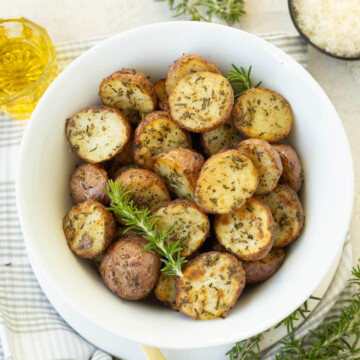
    • White bowl of golden browned air fryer red potatoes with rosemary.
      Air Fryer Red Potatoes (or oven roasted)

    Did You Make This Recipe?

    If you make air fryer butternut squash please let me know by leaving a comment. I appreciate hearing from you, and comments help other readers too! Leave a star rating please if you can.

    Originally published 10-29-2013, updated 10-14-2025

    📖 Recipe

    A gray bowl of air fryer butternut sqhuas with pepitas and sage leaves with gray napkin.

    Air Fryer Butternut Squash

    Sally Cameron
    Air frying butternut squash is easy and brings out the natural sweetness in this healthy fall vegetable. It makes a nice side dish for roast chicken or turkey, or served with quinoa as a vegetarian or vegan dinner. In a hurry, use 2 pounds of pre-cubed packaged butternut squash. If you don't like sage, use rosemary.
    5 from 1 vote
    Prevent your screen from going dark
    Print Recipe Pin Recipe
    Prep Time 10 minutes mins
    Cook Time 25 minutes mins
    Total Time 35 minutes mins
    Course Side Dish, vegetables
    Cuisine American
    Servings 4
    Calories 147 kcal

    Equipment

    • 6 quart air fryer

    Ingredients
      

    • 3 pound butternut squash or 2 pounds of pre-cubed, packaged
    • 1 tablespoon olive oil or avocado oil
    • 1 ½ tablespoons fresh chopped sage leaves or fresh rosemary
    • ¾ teaspoon salt
    • ½ teaspoon  granulated garlic powder
    • ¼ teaspoon black pepper

    Optional Garnish

    • 2 teaspoons Balsamic vinegar or syrup
    • 1-2 tablespoons toasted pepitas

    Instructions
     

    • Pre-heat the air fryer to 400°F.

    Prep the Squash

    • Using a heavy, sharp chefs knife, slice a thin piece from the top and bottom of the squash. Next, if the squash is bulb shaped, cut across the squash where the neck and bulb meet. If the squash is fairly straight, leave it whole.
    • Using a sharp vegetable peeler (Y-peelers are easiest), peel the squash. Stand the neck upright and cut in half. Scoop out the seeds with a spoon. Next, cut ¾"-1″ wide slices. Next dice into ¾"-1″ pieces. See photos in the post if you need help.

    Roast Squash and Finish

    • Place squash cubes in a medium bowl and toss with olive oil, sage, garlic, salt and pepper. Add the squash cubes to the air fryer and roast until cubes are tender when pierced with the tip of a sharp paring knife, 22-25 minutes, shaking the basket 2-3 times throughout the process. Butternut squash should be browned at the edges and tender when done.
      For garnish, sprinkle with the toasted pepitas, a little more coarse salt if desired, or drizzle with Balsamic vinegar glaze when serving if desired.

    Notes

    Save any extra and refrigerate in an airtight container for 3-4 days. Serve the roasted cubed butternut squash warmed up with scrambled eggs for breakfast or add cold to a hearty winter salad. For the puree, warm up and top with poached eggs with a little crisp bacon on the side.
    For a little sweetness, add 1-2 teaspoons of maple syrup to the olive oil before tossing. 
    The original recipe was oven roasted. If you'd like those directions please comment and  I will send them to you. 
     

    Nutrition

    Calories: 147kcalCarbohydrates: 22gProtein: 2gFat: 7gSaturated Fat: 1gSodium: 298mgPotassium: 662mgFiber: 4gSugar: 4gVitamin A: 19932IUVitamin C: 39mgCalcium: 91mgIron: 1mg
    Tried this recipe?Let us know how it was with a comment and leave a star rating!

    Sautéed Brussels Sprouts with Lemon and Thyme

    11/19/2018 by Sally Cameron 3 Comments

    lemon thyme brussels sprouts

    Sautéed Brussels sprouts with lemon and thyme are a light, flavorful side dish that's a great alternative to roasted Brussels sprouts. Cooked in olive oil until browned, then finished with broth, fresh herbs, and lemon zest, they're bright, savory, and topped with grated Parmesan cheese. Perfect for any occasion, from holidays to everyday meals, this dish is sure to become a favorite like it is on our house.

    A bowl of browned Brussels sprouts with herbs, lemon zest, and cheese for garnish in a white bowl.

    I love Brussels sprouts! Roasted, sautéed, shaved thin into salads, just about any way when they are in season. Thanksgiving dinners can be heavy duty with mashed potatoes, sweet potatoes, dressing, turkey and gravy, not to mention dessert. This year I decided on a lighter vegetable side dish. They came out so good, I knew you'd enjoy them. Plus, this is cooked on the stovetop, not in the oven, so if your oven is busy, no problem.

    [feast_advanced_jump_to]

    Recipe Ingredients

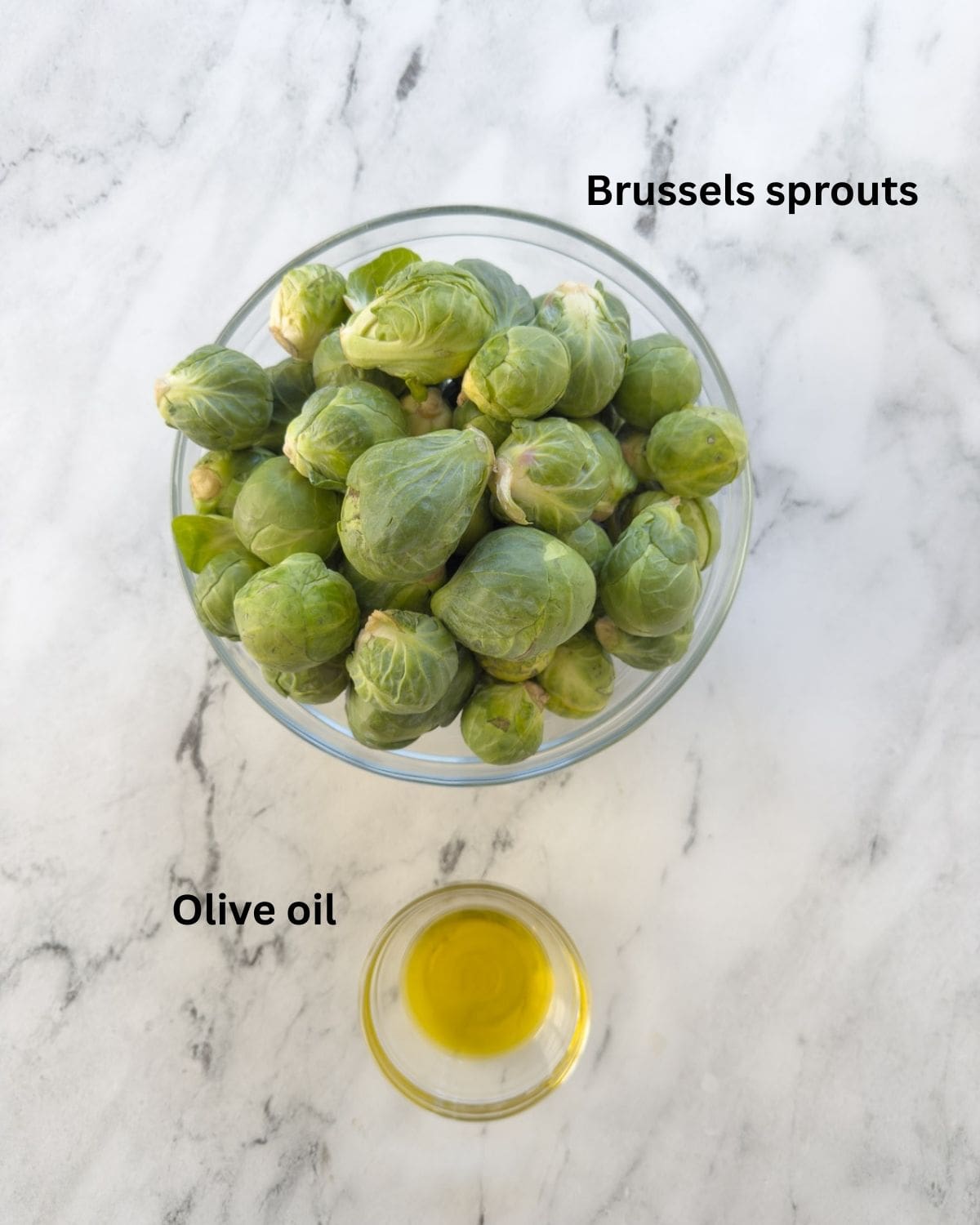
    • Brussels sprouts: Buy fresh, whole Brussels sprouts.
    • Fat: Extra virgin olive oil, avocado oil, or clarified butter.
    • Broth: Chicken broth, vegetables broth, or turkey broth all work.
    • Garlic: Fresh is best.
    • Lemon: For both the juice and the zest.
    • Thyme: Fresh is best but dried thyme works too (use ⅓ as much).
    • Grated Parmesan cheese: Finishes off the dish with a nice salty, savoriness (optional).

    For measurements, salt and pepper, please see the recipe card.

    For another nice fall side, try this maple roasted acorn squash or Brussels sprouts with crispy pancetta.

    Chef's tip: When buying Brussels sprouts, I prefer to pick from loose piles at the store so I get Brussels sprouts that are approximately the same size. If not, bagged are fine and usually close in size. The big stalks are popular but they have tiny to huge sprouts so I generally pass because of the size variations. Skip sprouts with yellow or brown edges or wilted leaves. They should look moist, bright green, and be firm.

    Substitutions and Variations

    • Substitute oregano or rosemary for the thyme.
    • Omit the Parmesan cheese for dairy-free or use a vegan Parmesan replacement.
    • Sprinkle with a little red pepper flakes if you like the heat.
    • Finish with a little Balsamic vinegar or the homemade balsamic glaze in this recipe.

    Chef's tip: Broths that work for sautéed Brussels sprouts include this easy Instant Pot chicken broth, homemade vegetable broth, chicken bone broth, or this roasted turkey broth. I make batches and keep them in the freezer for all my broth needs.

    Recipe Instructions

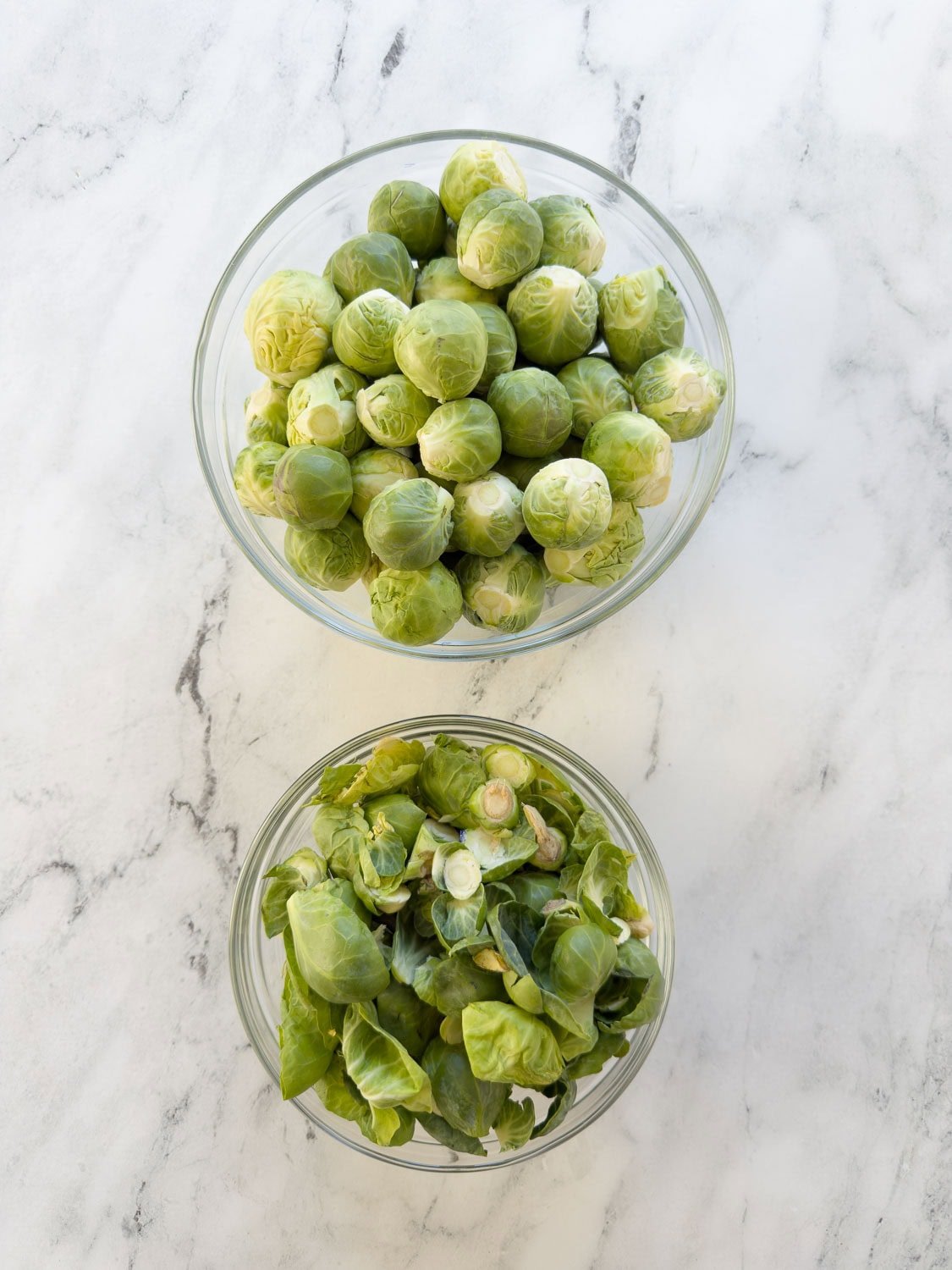
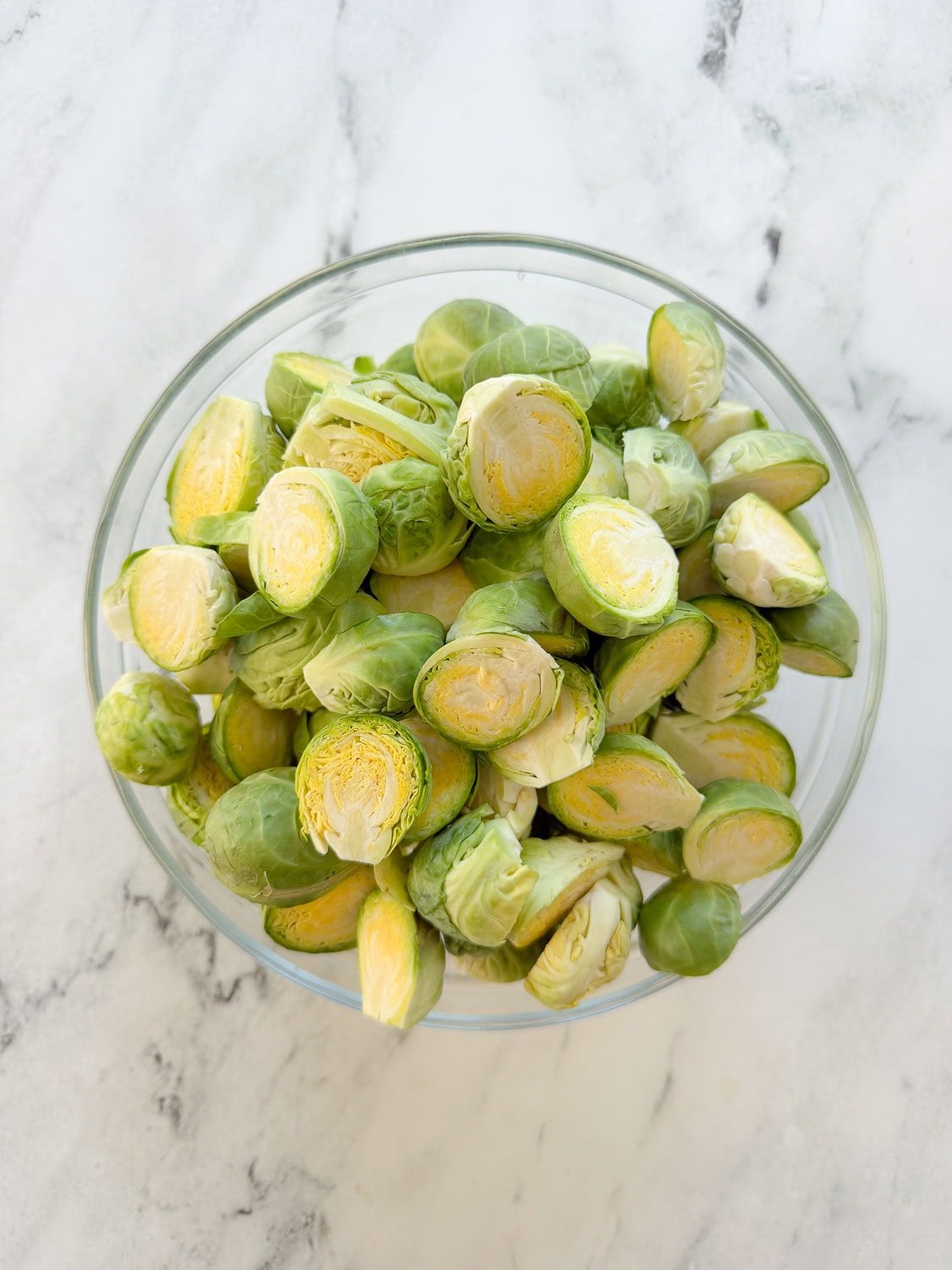
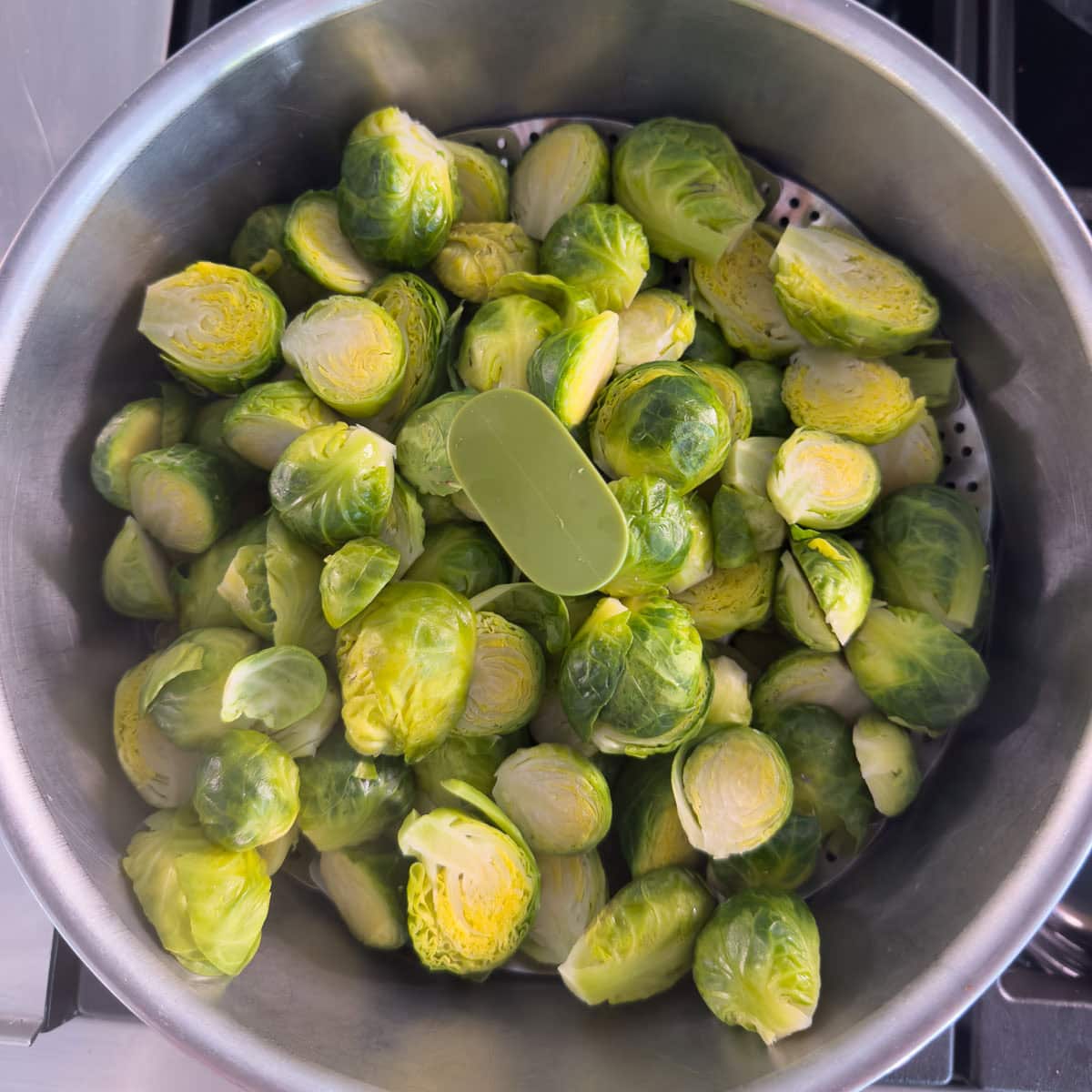
    Step 1: Trim a bit off of the root end of the sprout and peel off any out layers if needed, then cut them in half through the root end. This can be done a day ahead of time, then refrigerate in an airtight container until ready to cook. Chop your thyme, garlic get the broth and Parmesan ready.

    Prepping Brussels sprouts on a black cutting board with knife.

    Step 2: Heat up a large pan with a flat bottom, like a large saute pan. Add a little olive oil and place sprouts in, cut side down in a single layer. If they don't all fit, do them in two batches. Cook until they are lightly browned. If the pan gets dry, add a little more olive oil.

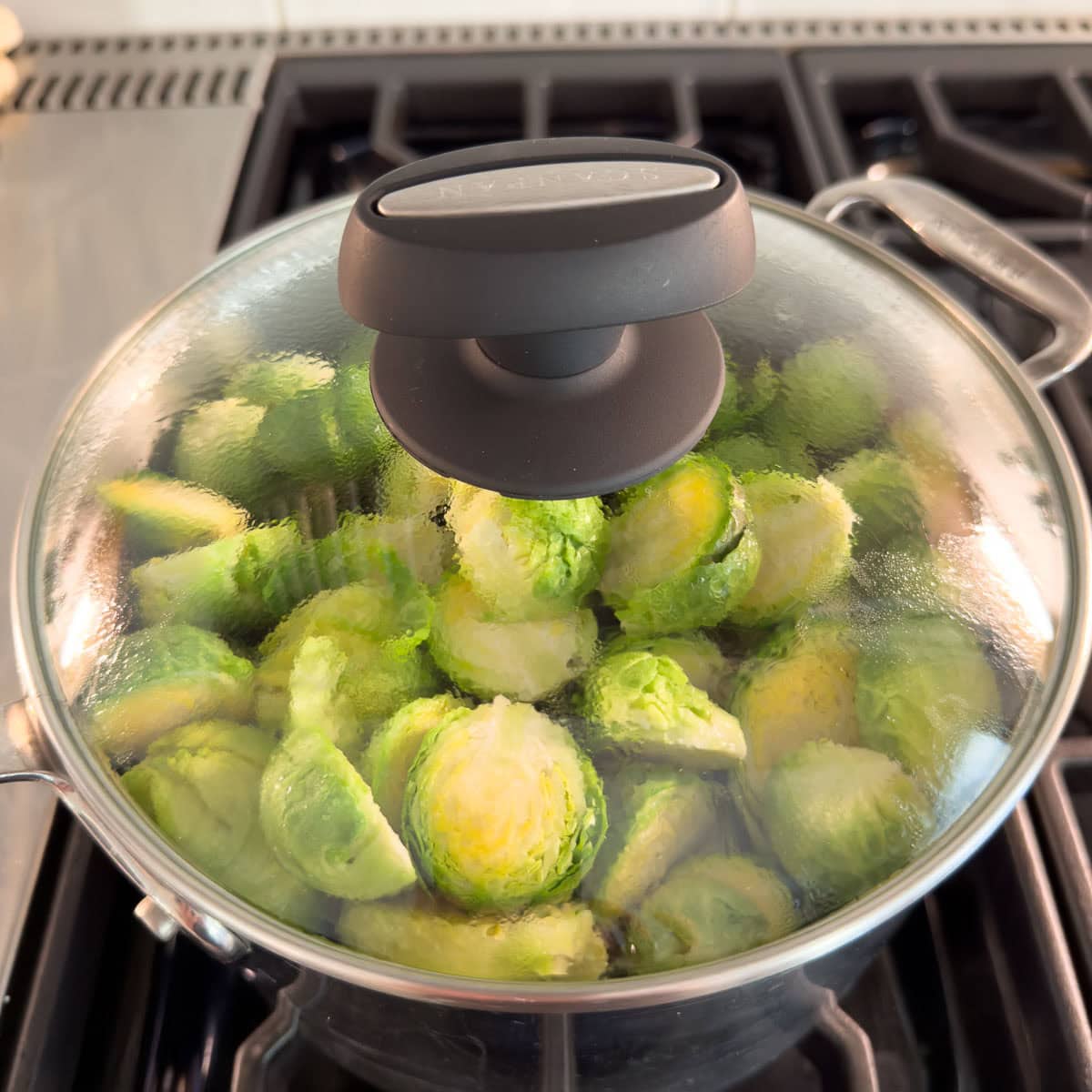
    Step 3: After browning, add garlic and cook briefly, then add broth, lemon zest, thyme, and sea salt, then cover. Brussels sprouts steam finish in just a few minutes. Test for doneness by piercing them with the end of a paring knife. They should be tender.

    Sautéed Brussels sprouts tossed with lemon zest and Parmesan cheese in a white bowl.

    Serving Suggestions

    For serving, sprinkle finely grated Parmesan cheese over the top. Skip the Parmesan for dairy-free. Store leftovers refrigerated in an airtight container for 3-4 days.

    Chef's tool tip: The best tool for creating fine lemon zest, Parmesan cheese zest, and for super fine fresh garlic that melts into recipe, use an inexpensive microplane zester.

    Sauteed Brussels sprouts with browned edges with fresh thyme leaves and shavings of Parmesan cheese.

    Recipe FAQs

    What oil is best for sautéing Brussels sprouts?

    Extra virgin olive oil adds great flavor. Other good options are avocado oil or a healthy neutral oil. A combination of a little butter and oil provides nice flavor too. What to skip? Standard grocery store "vegetable" oil, which while it might seem good for cooking, it's really not healthy at all.

    How do I know when Brussels sprouts are done sautéing?

    When done sautéing, Brussels sprouts will be nicely browned on the outside (the flat cut side), and still tender in the middle when pierced with the tip of a paring knife. Timing depends on the size of the Brussels sprouts.

    Should I cut Brussels sprouts in half before sautéing?

    Before sautéing, cut Brussels sprouts in half through the root end. It helps them to cook more evenly. The flat side provides exposure to the heat of the pan when placed flat side down, caramelizing and adding flavor to the Brussels sprouts.

    More Side Dish Recipes

    For another take on Brussels sprouts, try them shaved into a warm salad or with cranberries and bacon.

    • A bowl of burnished roasted Brussels sprouts glazed with Balsamic.
      Brussels Sprouts with Balsamic Vinegar
    • A bowl of bright green beans almondine with toasted buttered almonds.
      Fresh Green Beans Almondine Recipe
    • roasted broccoli
      Roasted Broccoli with Parmesan and Lemon
    • A platter of roasted cauliflower with golden brown edges and parmesan cheese.
      Roasted Cauliflower With Parmesan Cheese

    ⭐️Did you Make This Recipe?

    If you make these delicious Brussels sprouts, please comment and let me know. I appreciate your feedback and love hearing from you. If you loved it, please give it a 5 star rating! They really help other readers.

    📖 Recipe

    lemon thyme brussels sprouts

    Sauteed Brussels Sprouts with Lemon and Thyme

    Sally Cameron
    Fresh flavored lemon thyme Brussels sprouts are great for Thanksgiving or any time. Made in just minutes on the stovetop, serve with roast turkey, chicken or ham. For a non-dairy option, skip the Parmesan or use my non-dairy cheesy sprinkle.
    5 from 1 vote
    Prevent your screen from going dark
    Print Recipe Pin Recipe
    Prep Time 10 minutes mins
    Cook Time 15 minutes mins
    Total Time 25 minutes mins
    Course Side Dish
    Cuisine American
    Servings 4
    Calories 155 kcal

    Equipment

    • Saute pan or fry pan with lid

    Ingredients
      

    • 1 ½ pounds fresh brussels sprouts
    • 2 tablespoons olive oil or avocado oil divided use
    • ¾ cup broth chicken, vegetable or turkey
    • 2 large garlic cloves finely chopped or zested
    • 1 whole lemon finely zested
    • 2 teaspoons finely chopped thyme leaves or ¾ teaspoon dried
    • ¼ teaspoon sea salt
    • ⅛ teaspoon ground black pepper
    • 2 tablespoons finely grated Parmesan cheese optional

    Instructions
     

    Prep

    • Trim the end of the brussels sprouts and remove any rough outer leaves. Cut the sprouts in half top to bottom.

    Cook

    • Heat a large saute or fry pan over medium heat and add 1 tablespoon of olive oil. Add as many Brussels sprouts as will fit in one layer, flat side down, and cook until golden brown. Don't crowd the pan. If the pan gets dry, add a little more oil.
      Remove first batch to a bowl and finish with the rest of the sprouts. As the pan gets dry, use the other tablespoon of oil. If your sprouts brown too quickly turn heat down to medium low. 

    Finish and Serve

    • Add all brussels sprouts back to the pan, add the garlic and cook 30 seconds, stirring, then and add the broth. Scatter half of the lemon zest and  thyme over the top along with salt and pepper. Cover the pan with a lid and cook until brussels sprouts are tender when pierced with the tip of paring knife, 5-7 minutes.
      To serve pour into a bowl and sprinkle with remaining lemon zest and  Parmesan cheese. 

    Notes

    For sautéing the Brussels sprouts, olive oil and unsalted butter is another delicious combination. 

    Nutrition

    Calories: 155kcalCarbohydrates: 17gProtein: 8gFat: 8gSaturated Fat: 2gPolyunsaturated Fat: 1gMonounsaturated Fat: 5gCholesterol: 2mgSodium: 242mgPotassium: 715mgFiber: 7gSugar: 4gVitamin A: 1350IUVitamin C: 147mgCalcium: 110mgIron: 3mg
    Tried this recipe?Let us know how it was with a comment and leave a star rating!

    How to Make Clarified Butter

    03/11/2016 by Sally Cameron 1 Comment

    A jar of golden clarified butter on a marble counter with a strainer beside.

    Learning how to make clarified butter is one of those simple professional techniques that elevates everyday cooking. Clarified butter is pure golden butterfat - butter that's been gently melted and strained to remove the milk solids and water. The result? A rich, clean-tasting fat with a high smoke point and that unmistakable buttery flavor and fantastic to cook with.

    A jar of golden clarified butter on a marble counter with a strainer beside.

    While I cook mostly with olive oil, there are times only butter will do - for softly scrambled eggs, sautéed mushrooms, or pan-seared steak. Making clarified butter at home means you can enjoy that flavor without the milk solids that burn easily or cause trouble for dairy-sensitive eaters. And while you can buy it, homemade is better.

    Why You'll Love Clarified Butter

    • Pure buttery flavor - All the richness of butter, minus the milk solids and water.
    • High smoke point - Perfect for sautéing, searing, or roasting without burning.
    • Dairy-friendly option - Easier on those sensitive to lactose or casein.
    • Long shelf life - Stays fresh for weeks unrefrigerated, even longer chilled.
    [feast_advanced_jump_to]

    Ingredients You'll Need

    • Unsalted butter - Use the best quality butter you can find. With only one ingredient, the flavor of your clarified butter depends entirely on the butter you start with. Look for grass-fed or European-style butters for a richer, more golden result.
    • If planning for a certain volume of clarified butter, realize that you will lose about 20%-25% of the original weight.
    Cubes of butter on silver butter wrappers on a counter.

    Chef's Tip - Butter isn't 100% fat - it's roughly 80% butterfat, 15% water, and 5% milk solids. When you clarify butter, the water and milk solids are removed, leaving pure golden butterfat that won't burn at high heat and is often tolerated by those sensitive to dairy.

    How to Make Clarified Butter

    A stainless steel pan with chunks of butter ready to melt.
    A pan of golden melted butter with foam on top as it clarifies, and a spoon scooping the foam.
    1. Melt the butter slowly - Melt unsalted butter in a small pan over low heat.
    2. Simmer gently - Turn the heat up just a little and allow it to simmer on low for about 8-10 minutes longer. A creamy white foam will develop on top, which is the milks solids separating from the butter fat. Bubbles will appear on the surface, at first large ones then smaller as the water cooks off. You will hear it too, as the bubbling almost stops.
    clarified butter | AFoodCentricLife.com

    3. Watch for separation - You will also see the clear golden butterfat underneath. The aroma of the melting butter will change a bit, developing a slightly nutty fragrance (think of browned butter).

    4. Strain and store - Carefully pour the melted butter through a fine sieve lined with four layers of cheese cloth into a glass jar. When you get to the bottom of the pan, leave the solids behind if there are any. You should have pure, clear, golden butter fat.

    Chef's Tip - What Is Ghee
    Ghee is clarified butter taken a step further. It's simmered a little longer so the milk solids brown and caramelize, giving it a deeper, nutty flavor and a slightly higher smoke point. It's commonly used in Indian cooking.

    How to Use Clarified Butter

    Use clarified butter anywhere you'd use oil or butter for high-heat cooking. It's excellent for sautéing, searing, roasting vegetables, or whisking into sauces like hollandaise. Its high smoke point (about 450°F) makes it perfect for tasks where butter would normally burn.

    Storage & Freezing

    Clarified butter can be kept at room temperature for several weeks, but refrigeration is best for long-term storage - up to 3 to 6 months or even longer if you use it infrequently. For extended storage, it freezes beautifully; just portion it into small containers or silicone molds for easy use later.

    Recipe FAQs

    Can I use salted butter to make clarified butter?

    Technically yes, but unsalted butter is best. Salted butter tends to foam more and can leave behind a slightly salty or uneven flavor in the final product.

    How do I know when clarified butter it's done?

    You'll know it's ready when the bubbling slows, the top becomes foamy, and the butter underneath turns clear and golden with a mild nutty aroma.

    Can I use clarified butter instead of oil?

    Yes! Clarified butter works beautifully for high-heat cooking - sautéing, searing, roasting, or even frying. It adds rich, buttery flavor without burning.

    Recipes That Use Clarified Butter

    Clarified butter is one of those quiet kitchen upgrades that makes everything taste better. Use it anywhere you want buttery richness and high-heat performance, basically anywhere that you'd use butter.

    • steakhouse roasted mushrooms
      Sauteed Mushrooms and Onions
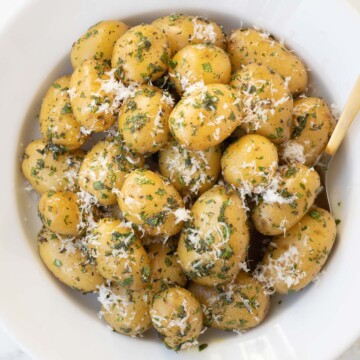
    • Baby dutch yellow potatoes wtih herbs and Parmesan cheese.
      Buttery Baby Dutch Yellow Potatoes
    • lemon thyme brussels sprouts
      Sautéed Brussels Sprouts with Lemon and Thyme
    • Dutch baby oven pancakes
      Gluten-Free Dutch Baby (German Pancakes)

    Did You Make This Recipe?

    If you make clarified butter please let me know! I love to hear from you and appreciate your feedback, plus your comments help other readers.

    📖 Recipe

    A jar of golden clarified butter on a marble counter with a strainer beside.

    How to Make Clarified Butter

    Sally Cameron
    Clarified butter is easy to make at home. A pure fat with no milk solids, clarified butter is like liquid gold. It can be enjoyed by most dairy-sensitive people as what they are sensitive to (casein and whey) are removed. Clarified butter has a high smoke point too, for higher heat cooking needs.
    5 from 1 vote
    Prevent your screen from going dark
    Print Recipe Pin Recipe
    Prep Time 30 minutes mins
    Total Time 30 minutes mins
    Course condiment
    Cuisine American
    Servings 12 Yield: About ¾ cup (12 tablespoons)
    Calories 136 kcal

    Equipment

    • 2 quart pan
    • Cheesecloth
    • Fine sieve

    Ingredients
      

    • 8 ounces unsalted pastured organic butter

    Instructions
     

    • Place butter in a small 2-quart pan over low heat. Melt the butter slowly. When the butter is melted, turn the heat up just a bit and allow the butter to slowly simmer to cook off the water and separate out the milk solids, about another 8-10 minutes. At first the bubbles will be large, then smaller as the water evaporates, and the bubbling gets more quiet.
    • When the bubbles are very small and most of the water has evaporated and a whitish foam has developed on top (the milk solids), carefully pour the clarified butter through a fine sieve lined with 4 layers of cheesecloth. You should have pure clear golden fat.
    • Pour into a small jar and refrigerate for 3-6 months. Use as desired for cooking in place of regular butter or oil.

    Notes

    If you double this and do a pound of butter, it will obviously take longer. I made another batch just this morning, cooked it a bit longer, and it took 30 minutes in a 4 quart pan.

    Nutrition

    Serving: 1tablespoonCalories: 136kcalCarbohydrates: 0.01gProtein: 0.2gFat: 15gSaturated Fat: 10gPolyunsaturated Fat: 1gMonounsaturated Fat: 4gTrans Fat: 1gCholesterol: 41mgSodium: 2mgPotassium: 5mgSugar: 0.01gVitamin A: 472IUCalcium: 5mgIron: 0.004mg
    Tried this recipe?Let us know how it was with a comment and leave a star rating!

    Roasted Acorn Squash Slices

    11/19/2017 by Sally Cameron 3 Comments

    Maple roasted acorn squash slices on a gray platter with pomegranates seeds scattered on top.

    Beautifully caramelized roasted acorn squash slices with a maple glaze, warm spices, and a sprinkle of ruby pomegranate seeds and toasted pumpkin seeds. This easy side dish is both delicious and stunning on your fall or Thanksgiving table. Unlike many acorn squash recipes that take an hour, this one roasts in about 25 minutes - perfect for a quick, festive touch to any meal.

    A gray platter or roast acorn squash with parsley garnish and pomegranate seeds.

    With golden-orange flesh and deep green ridges, acorn squash looks like a giant acorn - and it's one of fall's easiest vegetables to prepare. When roasted, acorn squash slices become tender, caramelized, and slightly sweet. A quick maple and olive oil glaze brings out their earthy flavor and gives a glossy finish. Slip the roasted acorn squash slices into the oven and in about 25 minutes you'll have a beautiful side dish that feels festive enough for the holidays but simple enough for every day.

    [feast_advanced_jump_to]

    Why You'll Love Roasted Acorn Squash Slices

    • Naturally sweet and caramelized - The maple glaze enhances the earthy flavor.
    • Beautiful presentation - Golden slices sprinkled with pomegranate and pumpkin seeds add a festive pop of color.
    • Versatile side dish - Perfect for fall dinners, Thanksgiving, or any cozy meal.
    • Healthy and adaptable - Made with olive oil, maple syrup, dairy-free ingredients.

    Roasted butternut squash? Oh yes please, it's so good and easy!

    Ingredients You'll Need

    • Acorn squash - Choose small to medium squash, about 2½ pounds each. Smaller ones are easier to cut, roast more evenly, and have a slightly sweeter flavor.
    • Maple syrup - Use pure maple syrup (not pancake syrup). For a lower-sugar variation, try a monk-fruit or allulose maple syrup.
    • Warm spices - A fall mix of cinnamon, nutmeg, ginger, allspice, and a touch of clove enhances the squash's natural sweetness.
    • Pomegranate seeds - Jewel-bright pops of flavor that add color and freshness. Buy ready-to-use arils or see my guide on how to cut a pomegranate without the mess.
    • Pumpkin seeds (pepitas) - For crunch and contrast. Toast them lightly in a dry pan or the oven (see my How to Roast Pepitas post). They're so good you'll want extra for snacking.s

    Substitutions and Variations

    • Chinese Five Spice - A wonderful alternative to warm fall spices. A fragrant blend of cinnamon, star anise, fennel seed, cloves, and ginger (sometimes with black pepper). Use it just like cinnamon.
    • Parmesan version - For a savory roasted acorn squash, skip the maple syrup and instead drizzle the slices with olive oil, sprinkle with Parmesan cheese, garlic powder, and thyme, and roast until golden and crisp.

    Butternut apple soup is a simple, easy fall recipe, great for a warm lunch!

    How to Roast Acorn Squash

    Pre-heat oven to 425°F. Ready a half sheet baking tray with parchment paper.

    An acorn squash, split in half on a dark cutting borad, with a chefs knife.
    1. Slice a little off the top and bottom ends, stand on the flat end, then split acorn squash in half top to bottom.
    Halved acorn squash with seeds scopped out with a spoon.

    2. Scoop out the seeds with a spoon.

    Cutting acorn squash rings with round cookie cutters.

    3. Slice squash crosswise into slices about ¾" thick, then with a round cookie cutter, sliced out the fibrous part for a clean edge, or use a paring knife.

    A tray of sliced acorn squash rings on a baking tray glazed with maple syrup.

    4. Lay acorn squash slices on a parchment lined baking tray and brush with olive oil and spices. Roast for 16-18 minutes, until tender when pierced with the tip of a paring knife.

    Maple roasted acorn squash slices on a gray platter with pomegranates seeds scattered on top.

    How to Cut Acorn Squash (Safely and Easily)

    If you've ever wondered how to cut acorn squash without struggling, the key is a sharp knife and a little technique.

    • Use a heavy, sharp chef's knife (8-10 inches) for better control and leverage.
    • Trim a thin slice off the top and bottom so the squash stands flat and steady.
    • Stand it upright and cut straight down through the stem.
    • Scoop out the seeds and stringy pulp with a sturdy spoon.
    • Lay the halves flat and slice into 1-inch crescents so they roast evenly.

    If the squash is especially hard, microwave it whole for 45-60 seconds to soften the skin slightly before cutting - it makes the job much safer and easier.

    Serving Suggestions

    Lay the roasted acorn squash slices on a platter and finish with a sprinkle of pomegranate seeds and toasted pumpkin seeds (pepitas) for color, crunch, and contrast.

    These maple-glazed squash slices pair beautifully with roast chicken breasts, smoked turkey breast, pork tenderloin, or beef tenderloin - perfect for fall dinners or your holiday table. They also make a gorgeous vegetarian side dish served with a hearty salad or quinoa.

    Maple roasted acorn squash on a serving platter.

    Storage and Reheating

    Store any leftover roasted acorn squash slices in an airtight container in the refrigerator for up to 4 days. To reheat, place them on a baking sheet and warm in a 375°F oven for 10-12 minutes, or in an air fryer for 3-4 minutes until heated through and slightly crisp again. Avoid microwaving - it softens the caramelized edges and changes the texture.

    Recipe FAQs

    How do I choose a ripe acorn squash at the store?

    Look for acorn squash that feels heavy for its size with smooth, dull (not shiny) skin. The color should be mostly dark green with a small patch of orange where it rested on the ground. Avoid squash that are completely orange or have soft spots, cracks, or mold - those are signs of overripeness or spoilage.

    Do I need to peel acorn squash before roasting it?

    No - you do not need to peel acorn squash before roasting. The skin is tough but becomes tender enough to eat after roasting. Plus, leaving it on helps the slices hold their shape and gives them beautiful scalloped edges.

    What's the best way to cut and prepare acorn squash for roasting?

    Acorn squash can be tricky to cut because of its ridges and firm texture. Use a heavy, sharp chef's knife. Cut a thin slice off the top and bottom to create a flat base, then stand it upright and cut down through the center. Scoop out the seeds, lay the halves flat, and slice crosswise into 1-inch thick wedges.

    More Fall Side Dish Recipe Ideas

    Looking for more colorful sides to pair with roasted meats or holiday mains? Try these easy fall vegetable recipes. Simple to make, naturally gluten-free, and full of seasonal flavor.

    • roasted carrots with thyme
      Maple Roasted Carrots (Easy Glazed Carrots Recipe)
    • Golden corn souffle in a glass baking dish on a gray plaid kitchen towel.
      Corn Souffle (From Scratch No Jiffy Mix)
    • lemon thyme brussels sprouts
      Sautéed Brussels Sprouts with Lemon and Thyme
    • Classic herbed bread stuffing in white casserole ready to serve.
      Gluten Free Thanksgiving Stuffing Recipe

    ⭐️Did You Make This Recipe?

    If you make this recipe, please comment and let me know, and if you loved it, please give it a 5 star rating! They really help other readers, and I love to hear from you.

    📖 Recipe

    maple roasted acorn squash | AFoodCentricLife.com

    Roasted Acorn Squash with Maple Glaze.

    Sally Cameron
    A sweet, savory, spiced glaze is brushed over acorn squash slices before roasting, then garnished with pomegranate and pumpkin seeds to serve. Beautiful, healthy and tasty. 
    5 from 2 votes
    Prevent your screen from going dark
    Print Recipe Pin Recipe
    Prep Time 10 minutes mins
    Cook Time 16 minutes mins
    Total Time 26 minutes mins
    Course Side Dish
    Cuisine American
    Servings 4 servings
    Calories 84 kcal

    Equipment

    • Baking sheet
    • Baking parchment paper or foil
    • Pastry brush for brushing on the glaze
    • Sharp chef's knife. 9" or 10"
    • large circular cookie cutter or cutting rings optional, but a handy kitchen addition.

    Ingredients
      

    • 2 1 ½ pound acorn squash
    • 1 tablespoon maple syrup or monk fruit maple syrup
    • 1 tablespoon extra virgin olive oil
    • ¼ teaspoons nutmeg
    • ¼ teaspoon allspice
    • ¼ teaspoon ginger
    • ¼ teaspoon sea salt

    Optional garnishes

    • 2-3 tablespoons pomegranate seeds
    • 2-3 tablespoons toasted pumpkin seeds (pepitas)
    • 1 tablespoon fresh chopped parsley

    Instructions
     

    Set-up and make the glaze

    • Pre-heat oven to 425°F. Cover a baking sheet with parchment paper or foil. Make the glaze by combining the maple syrup, oil, spices, and salt.

    Slice acorn squash

    • Place a damp kitchen towel or board mat under a cutting board for stability. With a large, sharp, heavy knife, such as a 8"-10" chefs knife, lay the acorn squash on its side and slice a small piece off the top and bottom. Stand the squash flat on end and cut through the center, splitting it in half. With a spoon, scoop out the seeds and fiber and discard. 

    Trim the squash

    • Lay the squash halves flat and cut the halves into ¾" slices. To clean up the inner edges, use a paring knife or circular cookie cutters.

    Roast the squash

    • Lay slices flat on prepared baking sheet. Brush with the glaze, then sprinkle with sea salt. Roast in the oven for 16-18 minutes or until the squash is tender when pierced with the tip of a sharp knife.
      Plate slices on a platter and sprinkle with pomegranate seeds and pepitas to serve. 

    Notes

    Spice options:
    For another option, try Five Spice (also called Chinese five spice). It's a terrific warm spice blend. 

    Nutrition

    Calories: 84kcalCarbohydrates: 6gProtein: 2gFat: 6gSaturated Fat: 1gPolyunsaturated Fat: 1gMonounsaturated Fat: 4gTrans Fat: 1gSodium: 147mgPotassium: 93mgFiber: 1gSugar: 4gVitamin A: 7IUVitamin C: 1mgCalcium: 18mgIron: 1mg
    Tried this recipe?Let us know how it was with a comment and leave a star rating!

    What to Do with Pomegranate Seeds (Delicious Ways to Use Them)

    11/04/2012 by Sally Cameron 29 Comments

    12 things to do with pomegranates

    Pomegranate seeds - those bright ruby jewels known as arils that add a burst of sweet-tart flavor and gorgeous color to everything from breakfast bowls to holiday salads. If you've ever wondered what to do with pomegranate seeds besides sprinkle them on yogurt, here are delicious and creative ways to use them in your everyday cooking.

    Ruby pomegranates cut open on red and gold plates with small bowl on counter.

    I still remember sitting outside as a kid, cracking open a pomegranate for the first time - the ruby-red juice running down my fingers and leaving pink stains that lasted for days. Back then, pomegranates felt exotic and rare. Thankfully, they're now easy to find and just as wonderful as I remember.

    [feast_advanced_jump_to]

    What Are Pomegranate Seeds?

    Each pomegranate holds hundreds of arils - juicy seeds surrounded by a sweet-tart, ruby-colored pulp. They're rich in vitamin C, antioxidants, and fiber, and they add color and crunch to both savory and sweet dishes.

    An open pomegranate showing the beautiful ruby red seeds with a whole fruit behind it on a gold plate.

    How to Open a Pomegranate Without the Mess

    Pomegranates can look intimidating with their tough red skin and white membranes, but opening them is easier than you think - and there's no need to splatter your kitchen. Skip the wooden spoon trick and try this clean, reliable underwater method:

    How to open a pomegranate, the under water method.
    1. Score the skin. Follow the natural ridges on the outside and make shallow cuts from top to bottom. I do this with a chef's knife.
    2. Trim the ends. Cut a thin slice off the top and bottom with a sharp knife to expose the seeds.
    3. Open under water. Submerge the fruit in a large bowl of cold water and gently pull it apart.
    4. Separate the seeds. Use your fingers to loosen the arils; they'll sink while the white membranes float.
    5. Drain and dry. Skim off the membranes, then strain the seeds and pat dry.

    Chef's Tip: If you refrigerate the pomegranate for 30 minutes before opening, the juice firms slightly and makes the process even cleaner.

    guacamole with pomegranate

    How to Buy, Store, and Freeze Pomegranate Seeds

    Buying:
    Choose pomegranates that feel heavy for their size - weight means juice. The skin should be smooth and firm, ranging from pinkish-red to deep crimson. Avoid any with cracks or soft spots. When buying packaged arils, check the sell-by date and look for bright, glossy seeds with no cloudiness or juice pooling in the container.

    Storing:
    Whole pomegranates keep for about a week at room temperature or up to 3 weeks in the refrigerator. Once seeded, store the arils in an airtight container in the fridge for up to 5 days. Keep them dry - moisture shortens their shelf life.

    Freezing:
    To freeze, spread the seeds in a single layer on a parchment-lined baking sheet. Freeze until firm, then transfer to a freezer bag or container. Label and date. They'll keep 3-4 months and can be used straight from frozen in smoothies, yogurt, or salads.

    Chef's Tip: Frozen pomegranate seeds make beautiful, edible "ice cubes." Add a few to sparkling water or Champagne for a festive touch.

    A leafy green spinach salad with bacon, hard boiled egg, red onion, and pomegranate seeds, white bowl.

    Delicious Ways to Use Pomegranate Seeds

    Pomegranate seeds add a juicy burst of color and flavor to just about everything-from breakfast to salads, sides, and desserts. Here are some of my favorite ways to use them:

    Breakfast & Snacks

    • Top your morning bowl - Sprinkle over yogurt, chia pudding, or overnight oats for sweetness and crunch.
    • Brighten smoothies - Blend them into smoothies or sprinkle on top after blending.
    • Layer parfaits - Alternate Greek yogurt, granola, and pomegranate seeds for quick make-ahead breakfasts.
    • Fruit salad - Add to a fresh fruit salad for even more color.
    Orange, avocado and fennel salad with pomegranate seeds on a light blue linen tablecloth.

    Salads & Sides

    • Toss into green salads - They're beautiful with this spinach salad, fennel and orange salad, or kale salad.
    • Add to grains - Mix into quinoa tabblouleh, farro, or wild rice with herbs and nuts for Mediterranean flair.
    • Garnish roasted veggies - Scatter them over roasted acorn squash slices just before serving.
    • Spoon over soups - A handful adds brightness to butternut and carrot soup, or butternut apple soup.
    • Add color to green beans - Sprinkle them over Thanksgiving green beans with sauteed shallots.
    thanksgiving green beans

    Appetizers

    • Dress up crostini - Sprinkle over goat-cheese crostini, golden hummus for color and contrast, and try them in pomegranate guacamole. Its great!
    • Stir into vinaigrettes - Combine with olive oil, balsamic, and Dijon for a pomegranate vinaigrette (and use pomegranate vinegar).

    Desserts & Drinks

    • Accent sweets - Scatter on chocolate mousse, vanilla panna cotta, or vanilla bean ice cream.
    • Garnish festive drinks - Drop a few seeds into sparkling water, Champagne, or cocktails.
    • Add to sauces - Stir into whole berry cranberry sauce for jewel-toned sparkle.
    • Kids festive drink - Make pomegranate Shirley Temple for the kids with ginger ale.
    Deep red whole berry cranberry sauce in a glass bowl with orange zest garnish.

    However you use them, pomegranate seeds bring color, crunch, and a burst of bright, tart flavor to everything they touch. Keep a bowl on hand during the season and toss them into your favorite dishes for an instant upgrade - it's those little touches that make healthy food feel special.

    Chef's Tip - Storing Pomegranate Seeds
    If you seed your own pomegranates, the arils stay fresh and crisp for up to a week in the refrigerator. The pre-packaged ones you buy in plastic cups tend to go soft and slimy much faster - sometimes in just a few days. For longer storage, freeze the freshly seeded arils on a sheet pan, then transfer to a freezer bag. They keep their color and texture for months.

    Maple Roasted Carrots (Easy Glazed Carrots Recipe)

    09/25/2011 by Sally Cameron 9 Comments

    roasted carrots with thyme

    Maple Roasted Carrots is a side dish that feels simple yet special. Roasting brings out their natural sweetness, giving you tender carrots with concentrated flavor. A quick maple glaze at the end adds a glossy, sweet-savory finish that's perfect for weeknights or holiday tables. Prep them ahead for speed or make them ahead, they reheat great.

    an oval dish of maple roasted carrots with herbs, maple syrup by the side.

    Glazed carrots are one of those sides that go with everything - from simple roast chicken breasts on a weeknight to a holiday turkey feast. Roasting them with garlic and fresh thyme balances their natural sweetness, and a quick maple glaze at the end gives them a glossy finish. Unlike steamed glazed carrots, roasting coaxes out deeper flavor, golden edges, and a caramelized sweetness that makes these anything but ordinary.

    [feast_advanced_jump_to]

    Maple Roasted Carrots Highlights

    • Naturally sweet and glossy - Roasting concentrates the carrots' flavor, while a quick maple glaze adds shine and a touch of sweetness.
    • Simple ingredients, elegant results - With just carrots, maple syrup, olive oil, and thyme, you get a side dish that feels both rustic and refined.
    • Holiday-worthy yet weeknight easy - Perfect for a holiday or any fall gathering, simple enough to pull together on a weeknight with prep ahead.

    If you love carrots try this butternut carrot soup, great for fall.

    Ingredients You'll Need

    • Carrots - Buy carrots sold in bunches with leafy green tops still attached. They're fresher and more moist. Skip bagged carrots if possible. And don't be surprised at the amount you buy, carrots shrink a lot in roasting.
    • Olive Oil - Extra virgin olive oil brings rich flavor and helps the carrots caramelize in the oven.
    • Maple Syrup - Use real maple syrup for depth and natural sweetness, or a monk fruit + allulose maple blend for a lower-sugar option. Or use honey.
    • Thyme - A generous amount of fresh thyme makes this dish shine. If fresh isn't available, dried thyme works in a pinch, but fresh is best here.
    • Garlic - A touch of granulated garlic (or garlic powder) adds savory balance without overpowering the maple glaze.

    Please see thee recipe card for measurements, salt and pepper.

    Chef's Tip on Bagged Baby Carrots
    For the best flavor, texture, and roasting results, use whole carrots (with the tops on) and peel and cut them yourself. Whole carrots are usually sweeter, caramelize better, and hold up better in the refrigerator. Bagged baby carrots while convenient, can be wetter, less flavorful, and more likely to turn slimy or develop a dry white film over time. That said, if you're short on time, baby bagged carrots will absolutely do in a pinch.

    Carrots are also great for baking, like these easy gluten-free carrot cake muffins. You won't believe how good these are.

    Substitutions and Variations

    • Rainbow Carrots - Use multi-colored carrots. They roast the same but look extra festive on the table.
    • Rosemary - Swap in for thyme, but use sparingly since rosemary is much stronger.
    • Parsley - Add fresh parsley after roasting for color - don't roast it, or it will lose its flavor.
    • Spice It Up - Sprinkle in cumin, chili powder, or red pepper flakes before roasting, or stir smoked paprika (or even a pinch of cinnamon) into the maple syrup at the end for a warm finish.
    • Lower sugar- Use a monk fruit + allulose maple blend for a lower-sugar option. (Avoid erythritol-only syrups, which don't caramelize well.)

    Chef's Tip - Foil vs. Parchment for Roasting Carrots
    Both foil and parchment work for roasting, but they give different results. I've done them both ways, parchment takes longer.

    • Foil - Conducts heat efficiently, so carrots cook faster and brown more deeply where they touch the pan. Best for maximum caramelization.
    • Parchment - Acts as a slight insulator, slowing heat transfer. Carrots take a little longer to roast and won't brown quite as much, but cleanup is easier.

    Use foil if you want deeper browning and faster results (watch timing), parchment if you don't mind a gentler longer roast with easier cleanup.

    If you are a juicer, make this carrot ginger juice, it's a great combination!

    How to Make Maple Glazed Carrots

    Bright orange carrot sticks in a glass bowl.
    1. Peel and cut carrots into 3" long ½" wide sticks that are even (julienne).
    Julienned carrots in a bowl tossed with olive oil, salt, pepper, and fresh thyme leaves.
    1. Toss the carrots with oil, salt, pepper, garlic, then the fresh thyme.
    Two trays of cut carrots on baking trays with parchment.
    1. Arrange carrots on two half sheet baking pans covered in foil or parchment paper in a single even layer. Use two so they are not crowded. Roast for 40-45 minutes but watch them as ovens vary and using parchment vs foil can also vary timing.
    Maple roasted carrots on a baking tray ready to serve.

    4. The last 5 minutes, toss the roasted carrots with maple syrup and return to oven. Sprinkle with parsley, check seasoning, and serve.
    Serving Suggestions For Glazed Carrots

    • Weeknight dinners - Serve roasted carrots alongside roast chicken, grilled salmon, or pork tenderloin.
    • Holiday meals - Perfect with roast turkey, smoked turkey, beef tenderloin, or glazed ham.
    close up of roasted carrots with thyme.

    Storing and Reheating

    Leftover maple roasted carrots last up to 4 days in the refrigerator when stored in an airtight container. They're delicious cold when added to salads! To reheat, use your microwave at 70% power for 1-2 minutes, stirring halfway through, or warm them in a 350°F oven in a covered casserole dish for 10-15 minutes to prevent drying out.

    For added freshness when reheating, drizzle a little olive oil or add a splash of water before covering to lock in moisture and restore shine if needed.

    Recipe FAQs

    What herbs or seasonings go well with maple roasted carrots?

    Fresh herbs such as chopped parsley, thyme or rosemary, or try a little cumin and coriander for some spice. For a little heat, use some red pepper flakes.

    Do I need to peel the carrots before roasting?

    It's up to you whether you peel the carrots or not. Some people find the peels bitter or don't like how they look (purely aesthetics), others don't. The peel contains a good amount of vitamin C and niacin. Both peeled and unpeeled carrots provide fiber. Either way, be sure to scrub the carrots and use a produce wash. I generally peel mine before roasting.

    What's the best oven temperature for roasting carrots?

    Standard temperatures for roasting carrots range between 375°F to to 425°F, depending on your ovens and whether you're using convection or standard setting. Higher temps can increase caramelization but be careful you don't burn them. Also whether you use parchment of foil can make a difference (foil conducts heat).

    More Vegetable Side Dish Recipes

    Looking for more simple and flavorful veggie sides? Try these favorites that pair with almost any meal.

    • A bowl of burnished roasted Brussels sprouts glazed with Balsamic.
      Brussels Sprouts with Balsamic Vinegar
    • White bowl of golden browned air fryer red potatoes with rosemary.
      Air Fryer Red Potatoes (or oven roasted)
    • A bowl of bright green beans almondine with toasted buttered almonds.
      Fresh Green Beans Almondine Recipe
    • Maple roasted acorn squash slices on a gray platter with pomegranates seeds scattered on top.
      Roasted Acorn Squash Slices

    Did You Make This Recipe?

    If you make these maple glazed carrots, please add your comment. I appreciate your feedback and enjoy hearing from you. If you loved it, please give it a 5-star rating! They really help other readers.

    📖 Recipe

    roasted carrots | Afoodcentriclife.com

    Maple Glazed Carrots

    Sally Cameron
    These maple roasted carrots are tender, lightly caramelized, and glazed with just the right touch of sweetness. A simple yet elegant side dish for weeknights or holiday meals. Don't be surprised by how much they shrink as they roast - carrots lose a surprising amount of moisture, so three pounds fresh may cook down to less than a pound of finished vegetables. What's left is pure concentrated flavor.
    5 from 1 vote
    Prevent your screen from going dark
    Print Recipe Pin Recipe
    Prep Time 15 minutes mins
    Cook Time 45 minutes mins
    Total Time 1 hour hr
    Course Side Dish
    Cuisine American
    Servings 4 to 6 servings
    Calories 211 kcal

    Equipment

    • 2 Rimmed baking sheets hafl sheet size
    • 2 Parchment paper or foil

    Ingredients
      

    • 3 pounds carrots NOT baby bagged carrots, get fresh with green tops
    • 1 ½ tablespoons olive oil
    • 1 ½ tablespoons fresh chopped thyme leaves
    • ¾ teaspoon kosher salt
    • ¼-½ teaspoon ground black pepper
    • ¼ teaspoon granulated garlic or powdered garlic
    • 1 ½ tablespoons maple syrup regular or no-sugar
    • 1 tablespoon fresh chopped parsley for garnish

    Instructions
     

    Prep the carrots

    • Trim tops off the carrots and peel. Depending on the size, cut carrots in half or thirds across the width into about 3" sections. Cut each piece in half lengthwise, then into ½" sticks. The goal is long, thin strips, but not too thin or they may burn.
      You can also cut the carrots into ½-inch rounds or diagonals. They cook more quickly and require less knife work than sticks. Keep slices uniform so they roast evenly. Thinner pieces will caramelize faster, so watch cooking time.

    Ready baking trays

    • Pre-heat oven to 400°F degrees. Cover two half sheet rimmed baking pans with foil or parchment paper. See post notes for the difference.
      Mix the oil, garlic, salt, and pepper. Toss with the carrots until well coated. Toss again with the fresh thyme. Spread evenly on the baking sheet in a single even layer.

    Roast carrots

    • Roast until carrots are starting to shrivel, about 40-45 minutes. Taste one, they should be tender. Timing depends on your ovens and how thick you've cut the carrots. Just keep an eye on them the first time you make them.

    Glaze carrots

    • When carrots are tender, combine both trays into one tray and toss with the maple syrup. Place back in the oven for 5 more minutes, adjust with more salt and pepper if desired. Serve hot.

    Notes

    If you want faster caramelization, bump the heat to 425°F, especially at the end but add the glaze only at the very end to prevent burning. Cooking time will also vary depending on whether you use a standard or convection oven. Convection roasts faster, so keep an eye on the carrots.
    Foil or parchment? For the most color and caramelization, line your pans with foil instead of parchment. Parchment works fine and makes cleanup easy, but foil transfers heat more directly, helping the carrots brown a little better (but watch your timing).

    Nutrition

    Calories: 211kcalCarbohydrates: 39gProtein: 3gFat: 6gSaturated Fat: 1gPolyunsaturated Fat: 1gMonounsaturated Fat: 4gSodium: 673mgPotassium: 1136mgFiber: 10gSugar: 21gVitamin A: 57045IUVitamin C: 26mgCalcium: 135mgIron: 2mg
    Tried this recipe?Let us know how it was with a comment and leave a star rating!

    Pesto Genovese (Classic Italian Basil Pesto)

    07/14/2012 by Sally Cameron 5 Comments

    A bowl of bright green Genovese pesto, classic Italian basil pesto.

    Pesto Genovese, also called Pesto alla Genovese, is the classic basil pesto from Genoa that instantly transforms simple dishes into something extraordinary. Made with lots of fresh basil, garlic, pine nuts, Parmigiano Reggiano, and olive oil, it's bold, aromatic, and endlessly versatile. Here I share not only my recipe but tips for freezing, keeping it green, and over a dozen creative ways to use it.

    A bowl pf pesto alla Genovese, or basil pesto, with basil leaves, oil, lemons, and parmesan.

    Traditionally, this pesto genovese recipe is made with a mortar and pestle. The Italian word pesto literally means "to pound." While authentic, it's slow, yields small batches, and requires you have a mortar and pestle. While I've made it both ways, for everyday cooking, I use a food processor to make my basil pesto. It's fast, reliable, and still gives you fresh, bold flavor and a vivid, vibrant green basil sauce.

    [feast_advanced_jump_to]

    Why You'll Love Pesto Genovese

    • Bold basil flavor - The signature sauce of Genoa, Italy, basil pesto is all about fragrant basil and bold, savory flavor.
    • Quick and easy - Made in minutes with a food processor.
    • Versatile - Toss with pasta, swirl into soup, spoon over grilled chicken or salmon, or drizzle on vegetables. I love it in risotto!
    • Better than store-bought - Fresher, brighter, and without preservatives.
    • Make ahead friendly - Freeze in cubes or jars to enjoy basil's summer flavor all year long.

    If you love basil pesto, try my Pesto Rosso (Sun-Dried Tomato Pesto) for another classic Italian variation, and this pesto rosso pasta.

    Ingredients You'll Need

    Ingredients for basil pesto (pesto alla Genovese) on a counter in glass prep bowls.
    • Fresh basil - The star ingredient of genovese pesto sauce. Use plenty of fresh basil leaves and discard the stems for the best flavor.
    • Olive oil - Choose a good-quality extra virgin olive oil for rich flavor and a silky texture.
    • Pine nuts - The traditional choice, adding buttery, creamy body to the sauce. (See below for substitution ideas.)
    • Parmesan cheese - Grate it yourself from a block of Parmigiano-Reggiano for the best flavor, or buy pre-grated if you're short on time.
    • Garlic - Fresh garlic cloves only. Use just enough for flavor without overpowering the basil.
    • Lemon (optional) - A squeeze of fresh lemon juice adds brightness and balances the richness of the cheese and nuts. A modern touch I love.
    • Spinach (optional) - Helps keep pesto green.

    Please see the recipe card for measurement, salt and pepper.

    Chef's Tip - Keeping Pesto Vibrant Green
    Pesto browns quickly once exposed to air (called oxidation). To keep that gorgeous green color, blend in a handful of baby spinach leaves or baby arugula and a squeeze of fresh lemon juice. Neither changes the flavor much (lemon does lift the flavor a bit), but both help slow oxidation so your pesto looks as fresh as it tastes. So while these extras are not in a classic pesto sauce recipe or traditional pesto, they serve a solid purpose.

    Substitutions and Variations

    • Cheese options - Along with Parmesan, try Pecorino Sardo (a traditional sheep's milk cheese from Liguria) or Grana Padano, which has a similar nutty flavor. Pecorino Romano also works, though it's sharper and saltier.
    • Herb twists - Add a little fresh oregano or Italian parsley for a different flavor profile.
    • Nut substitutions - Pine nuts are traditional but pricey. Walnuts are a good alternative, or try almonds for a milder flavor.

    Chef's Tip - Blanching Basil for Brighter Green Pesto
    For a vivid, longer-lasting green color, briefly blanch basil leaves in boiling water for 5-10 seconds, then plunge them immediately into an ice bath to stop the cooking. Drain and pat completely dry before using. The quick blanch sets the chlorophyll, locking in that gorgeous color. It's a little extra work, but worth knowing when you want your pesto to look restaurant-perfect. Give it a try.

    How to Make Pesto alla Genovese

    Making pesto is simple and quick. For everyday cooking, a food processor is faster and makes a smooth, vibrant sauce. A blender also works, but pulse carefully - over-blending can warm the basil, dull the flavor, and turn the pesto brown.

    Bright green basil pesto in a food procesor workbowl.
    1. Drop the garlic clove through the feed tube to chop it while the machine is running, then add all other ingredients and pulse to puree to the texture you want, smooth or more chunky. Taste and adjust seasoning and lemon juice.

    Chef's tip: If your pesto is too thin, add a little more basil, cheese, or nuts to thicken it. If it's too thick, loosen it with a drizzle of olive oil, lemon juice, or a splash of water.

    Serving Suggestions

    Seared salmon

    What can you do with basil pesto besides pasta? Plenty! Here are some of my favorite ways to use Pesto alla Genovese, and yes, I have really just all of these!

    Vegetables & Sides

    • Stir a couple of tablespoons into mashed potatoes for pesto mashed potatoes.
    • Toss with hot roasted red potatoes or freshly cooked green beans (delicious warm or cold).
    • Stir into risotto for a rich, vibrant green pesto risotto. A favorite.
    • Mix with a little sour cream or Greek yogurt as a dip for raw veggies. So easy!

    Sandwiches & Starters

    • Spread on a turkey sandwich instead of mayo or mustard, then press in a panini maker.
    • Combine with mayo to make pesto aioli for dipping or sandwiches.
    • Spoon into portobello mushrooms before roasting for a meatless main or appetizer.
    • Garnish deviled eggs with a tiny dollop for extra flavor (and color).

    Soups & Salads

    • Swirl into tomato soup or minestrone just before serving.
    • Add to a vinaigrette for pesto salad dressing.
    • Dollop onto sliced tomatoes and mozzarella for a Caprese-style salad.
    • Toss with cooked, chilled pasta and tomatoes for a quick pasta salad.

    Proteins & Sauces

    • Warm with a splash of cream for a simple pesto cream sauce - especially beautiful spooned over fresh seared salmon.

    In terms of temperature, classic basil pesto is best around room temperature so the flavors shine. Warm is good to.

    Storing & Freezing Basil Pesto

    Bright green basil pesto in a cranberry Souper Cubes tray for freezing.

    Refrigerator

    Homemade pesto is best the day it's made, when the flavor is freshest and the color is most vibrant. Store leftovers in a small airtight container that's just big enough to hold the pesto. For extra protection, drizzle a thin layer of olive oil on top to slow oxidation and keep it green. Refrigerate for up to 3 days.

    Freezer

    I love to keep a stash of frozen pesto cubes on hand - they're a lifesaver for last-minute dinners, adding fresh basil flavor in seconds. Thaw to use.

    For longer storage, freeze pesto in ice cube trays or Souper Cubes in 2-tablespoon portions. Once solid, pop out the cubes and transfer them to a freezer bag or container if preferred. Frozen pesto keeps well for 2-3 months. Each cube or two is just the right size for a serving of pasta, or thaw 1-2 to swirl into risotto or garnish a soup for a burst of fresh basil flavor.

    Chef's Tip - Thawing Frozen Pesto
    Never microwave pesto - the heat will dull its color and flavor. Instead, thaw cubes at room temperature for 15-20 minutes, or in the fridge for a few hours. If you're adding to soup or a simmering dish, you can stir a frozen cube directly in. For pasta or risotto, thaw first so it blends smoothly without cooling the dish.


    Recipe FAQs

    Why isn't my pesto bright green?

    Pesto oxidizes quickly once blended. Use very fresh basil, cold olive oil, and blend briefly. Don't over process. A splash of lemon juice or a handful of spinach helps keep pesto bright green. For another way, blanch basil leaves quickly and dry well before blending - it's more work but keeps color longer.

    What's the best cheese for pesto?

    Traditional pesto alla Genovese uses Parmigiano Reggiano, sometimes combined with Pecorino (like Pecorino Sardo). Parmesan alone is perfectly fine, but using a mix gives a sharper, more complex flavor. Pecorino Romano is another option but it is saltier and sharper in flavor.

    Can I skip or replace the nuts?

    Yes. Classic Pesto Genovese is made with pine nuts, but walnuts, almonds, or even cashews work too. If you're nut-free, try raw sunflower seeds. The flavor changes slightly, but basil, oil, and cheese still make a delicious pesto sauce.

    Can I freeze pesto?

    Yes. Freeze pesto in ice cube trays or Souper Cubes, then transfer to a freezer bag. Frozen pesto keeps 2-3 months. Thaw just what you need - perfect for pasta, risotto, or soup.

    More Recipes With Basil

    From salads to dips, to appetizers, these delicious basil recipes are perfect for making the most of fresh basil.

    • caprese skewers
      Easy Caprese Skewers with Basil Vinaigrette
    • Watermelon salad ready to serve with cucumber, feta, basil, shallots.
      Easy Watermelon Basil Salad with Feta Cheese
    • Plate of red, yellow and burgundy tomatoes with burrata and basil.
      Burrata Caprese with Fresh Tomatoes
    • Close up of creamy basil and avocado dip in white bowl.
      Avocado Dip with Yogurt and Fresh Basil

    ⭐️Did You Make This Recipe?

    If you make Pesto Genovese, please add your comment. I appreciate your feedback and enjoy hearing from you. If you loved it, please give it a 5-star rating! They really help other readers.

    📖 Recipe

    A bowl of bright green Genovese pesto, classic Italian basil pesto.

    Pesto alla Genovese (basil pesto)

    Sally Cameron
    Classic basil pesto is delicious and versatile. Toss with pasta, use with chicken or fish, thin with milk to make a sauce, or spread on a sandwich.
    5 from 1 vote
    Prevent your screen from going dark
    Print Recipe Pin Recipe
    Prep Time 10 minutes mins
    Total Time 10 minutes mins
    Course condiment
    Cuisine Italian
    Servings 4 yield about ½ cup
    Calories 157 kcal

    Equipment

    • Food Processor or blender

    Ingredients
      

    • 2 cups fresh basil leaves, stems removed about 2 ounces of leaves
    • ¼ cup finely grated Parmigiano-Reggiano cheese or use part pecorino
    • ¼ cup extra virgin olive oil
    • 2 tablespoons pine nuts or walnuts
    • 1 garlic clove peeled
    • ⅛ teaspoon kosher salt
    • 2 pinches black pepper optional

    Options

    • 2-3 teaspoons lemon juice for flavor lift
    • ¼ cup baby spinach leaves or arugula for color insurance

    Instructions
     

    Mince garlic

    • In a food processor fitted with the steel blade, drop the peeled garlic through the feed tube while it's running to mince.

    Add remaining ingredients

    • Add the basil, pine nuts, Parmesan, olive oil, lemon juice (if using), salt, and pepper. Pulse until fairly smooth. You can control the texture by how long you process - less time for rustic, more for creamy.

    Adjust the consistency

    • If your pesto is too thin, add a little more basil, cheese, or nuts to thicken it. If it's too thick, loosen it with a drizzle of olive oil, lemon juice, or a splash of water.

    Notes

    Storing
    Scrape the pesto into a small container with a tight-fitting lid. Refrigerate for up to 3 days or freeze in cubes or jars for longer storage. I freeze mine in Souper Cube 2 tablespoon trays. 

    Nutrition

    Serving: 2tablespoonsCalories: 157kcalCarbohydrates: 2gProtein: 3gFat: 16gSaturated Fat: 3gPolyunsaturated Fat: 3gMonounsaturated Fat: 9gCholesterol: 4mgSodium: 175mgPotassium: 93mgFiber: 1gSugar: 0.3gVitamin A: 862IUVitamin C: 3mgCalcium: 102mgIron: 1mg
    Tried this recipe?Let us know how it was with a comment and leave a star rating!

    French Onion Soup Chicken (Easy Skillet Recipe)

    10/07/2025 by Sally Cameron Leave a Comment

    Four golden chicken breasts topped with caramelized onions, herbs, and melting cheese.

    If you love the taste of classic French onion soup, here's that same cozy bistro flavor in a chicken dish - French onion soup chicken. Think golden, caramelized onions, savory broth, and melted cheese, but simplified into an easy weeknight recipe. No packets, no cans, just from-scratch ingredients that are surprisingly simple, all in one pan.

    A shallow pan of French onion soup chicken with melted cheese, herbs, and cheesy toasts.

    When I cooked for private clients, I often made a French chicken dish with caramelized onions and crème fraîche. Remembering that recipe inspired me to create this French onion soup chicken. It captures the same French bistro spirit is a simple one-pan dinner with tender chicken, richly caramelized onions, savory broth, and melted cheese, all in about 45 minutes.

    [feast_advanced_jump_to]

    Why You'll Love French Onion Soup Chicken

    • Classic French onion flavor - Caramelized onions, savory broth, and melted cheese, reimagined as a chicken dinner.
    • From scratch, no shortcuts - Simple fresh ingredients, no packets or cans.
    • Weeknight-friendly - Boneless chicken cooks quickly, while the onions do the flavor-building.

    Try my recipe for easy French Onion Soup too! And what to serve these on top of? Parmesan polenta is terrific and easy as well.

    Ingredients You'll Need

    Ingredients for French onion soup chicken on the counter in prep bowls.
    • Chicken breasts - Boneless skinless; lean and tender. Cut really large ones in half horizontally for even cooking.
    • Olive oil - For browning the chicken.
    • Unsalted butter - Combines with the olive oil for richness when caramelizing onions.
    • Onions - For the naturally rich, sweet flavor that comes from slow caramelization.
    • Garlic cloves - Adds flavor depth to the onion base.
    • Broth - Deglazes the pan and builds the sauce. Beef broth is my first choice for a deeper French onion soup flavor, but chicken broth is fine.
    • Wine (optional) - A little white wine to deglaze the pan, deepen flavors.
    • Bread - Toasted and topped with cheese for the classic crouton effect.
    • Cheese - Gruyere is the classic choice, but Comté, Beaufort, Emmental (Swiss) also work well for melting.
    • Herbs - Fresh parsley chopped for garnish; tarragon adds a lovely French bistro note.

    Please see the recipe card for measurements, salt, and pepper.

    Chef's Tip: Choosing Onions for French Onion Chicken
    Sweet onions are my top pick here - their naturally higher sugar content means they brown faster and taste terrific once caramelized. Yellow or brown onions work just as well, though they start sharper and mellow as they cook. Skip red onions; their color turns muddy and the flavor isn't quite right for this dish.

    if you appreciate the flavor and sweetness of caramelized onions, try these oven roasted red onions with balsamic. Great with a steak or roast chicken.

    Substitutions and Variations

    • Bone-in chicken breasts: For more flavor and moisture, substitute bone-in chicken breasts, split crosswise. Season then brown the tops in the skillet, and continue with the recipe, adding about 10-15 extra minutes of covered cooking until they reach 160°F.
    • Bread options: Use gluten-free baguette or French bread, as preferred, for the cheesy croutons.
    • Fresh chopped thyme leaves - Optional, simmer with the onions for an earthy note.

    How to Caramelize Onions: Tips & Tricks

    Caramelized onions are the heart of French onion flavor, but they can trip cooks up if you're not sure what to expect. They take longer than most people think, and rushing them is the fastest way to end up with burnt or pale onions. The secret is patience, low heat, and the right pan. Get those three things right, and you'll have jammy, golden onions that make this chicken shine. Here's how to get them right every time:

    • Make ahead - Caramelized onions can be prepared 2-3 days in advance and refrigerated until ready to use.
    • Pick the right onion - Sweet onions brown faster and taste terrific thanks to natural sugars. Yellow or brown onions work too, but skip red onions.
    • Slice evenly - Thin, uniform slices cook at the same rate and won't scorch at the edges.
    • Use a wide skillet - More surface area means the onions sauté, not steam.
    • Cook low and slow - Keep heat at medium-low and stir often for 20-25 minutes until deeply golden.
    • Deglaze as needed - If onions start to stick, add a splash of broth or water and scrape up the fond (brown bits on the bottom).
    • Skip the sugar - Patience and sweet onions do the work; no need to add sugar for sweetness.

    Chef's Tip - Why Pound Chicken Breasts
    Chicken breasts are naturally uneven: one end thick, the other thin. Gently pounding the thickest part with a meat mallet or rolling pin helps them cook more evenly. You don't need to flatten them - just a few light taps on the thick end so the breast is a more even thickness overall. This prevents dry, overcooked edges and ensures juicy, perfectly cooked chicken.

    How to Make This Easy French Onion Chicken

    For best results, use a wide, heavy pan, 12 inches across. A wide surface area means you caramelize the onions (relatively quickly) not steam them and the chicken cooks evenly. I used a 3½-quart Le Creuset braiser with a glass lid, which is a great value piece and one of my favorite pans. If you don't have one, any heavy skillet or sauté pan will work as long as it's wide enough to let the onions spread out.

    Pounding boneless skinless chicken breasts on a cutting board covered in plastic.
    1. Place a layer of plastic over the top and gently pound the thicker ends of the chicken breasts to a more even thickness.
    Seasoning boneless chicken breasts with salt and pepper.
    1. Season chicken with salt and pepper.
    Cooking boneless chicken breasts in a white shallow pan in olive oil.
    1. Heat the olive oil in a wide 12" pan over medium heat. Add chicken top side down, cook until golden brown, 6-8 minutes. Do not turn and cook the other side.
    Browned chicken breasts on a white plate on a stovetop.
    1. Remove the chicken to a plate and keep warm covered with foil or a lid.
    Slicing onions for french onion chicken on a white cutting board.
    1. Halve the onions, lay flat, and slice in ⅛" - ¼" thick slices.
    A pan full of sliced onions starting the caramelization process.
    1. Add the butter to the pan, medium-low heat, add onions, and begin to cook, stirring occasionally. Total process takes about 20 minutes.
    Light golden caramelized onions in a round shallow pan.

    7. Caramelized onions after 10 minutes, gaining color. Add a pinch of salt. Keep stirring.

    Onions finished being caramelized for french onion soup chicken.

    8. Caramelized onions after 20-22 minutes, deep golden brown. Add garlic and worcestershire, cook another minute.

    Add broth to a pan of caramelized onions to make sauce.

    9. Add the wine and deglaze the pan, stirring until almost gone. Add the broth and stir. Simmer for 1-2 minutes until it starts to thicken.

    Placing a lid on a pan full of chicken and caramelized onions for french onion soup chicken.
    1. Nestle the chicken back into the onions and cover with a lid, over medium low heat. Cook for 8-10 minutes until chicken reaches 160°F - 165°F. At the end, sprinkle with cheese and let it melt.
    Slices of French bread brushed with garlic oil butter for toasting on a sheet tray.
    1. While chicken is finishing, brush bread with a combo of olive oil, butter, and garlic powder.
    Garlic cheese toast ready for broiling on foil lined tray.
    1. Add a few tablespoons of the cheese and broil or toast until bubbly and melted.
    A finished pan of french onion chicken with deep brown caramelized onions.

    Chef's Tip: The Best Cheesy Croutons
    For years, I've made these cheesy croutons with Parmesan - it melts into a golden, salty crust that's completely addictive. In this version, I used Gruyère for a true French onion vibe, but you can absolutely use Parmesan on the croutons (or both) and save the Gruyère for the chicken. Brush the bread with a mix of melted butter, olive oil, and a pinch of garlic powder before toasting for maximum flavor.

    Serving Suggestions

    • Mashed potatoes or cauliflower mash - Comforting sides to catch all the juices.
    • Buttered noodles or rice - A simple side that turns it into a heartier meal.
    • Green vegetable - Simple green beans or broccoli.
    • Green salad - Fresh tossed greens with a quick homemade French Vinaigrette.

    Storage & Freezing

    Refrigerate: Store leftovers in an airtight container up to 3 days. Reheat gently on the stovetop over medium-low until warmed through.

    Freeze: The chicken and onion sauce freeze well for up to 2 months. Thaw overnight in the refrigerator, then reheat on the stove. For best results, make fresh cheesy croutons instead of freezing them.

    Recipe FAQs

    Can I use chicken thighs instead of breasts?

    Yes. Boneless skinless thighs work beautifully and stay extra juicy. Cook time may be 3-4 minutes longer, and skip the pounding step as they are thinner.

    Can I make this ahead?

    You can caramelize the onions up to 2-3 days in advance and refrigerate them. When ready to cook, simply reheat the onions, add broth if needed to make it more saucy, cook and finish the chicken in the pan, covered to heat to 165°F. For a creamy sauce, add a tablespoon or two of creme fraiche.

    What's the difference between using beef broth and chicken broth?

    Beef broth creates the deepest, most authentic French onion soup flavor. Chicken broth works if you prefer a lighter result or that's what you have on hand. Still delicious, just different.

    Do I need sugar to caramelize onions?


    No, sugar isn't needed to caramelize onions. Sweet onions naturally contain more sugar, which helps them brown beautifully. Even with yellow onions, patience is the key. Give them time to slowly cook and they'll turn rich, jammy, and sweet all on their own.

    📖 Recipe

    Four golden chicken breasts topped with caramelized onions, herbs, and melting cheese.

    French Onion Soup Chicken

    Sally Cameron
    French Onion Soup Chicken combines caramelized onions, savory broth, and melted Gruyère in a cozy skillet dinner that's easy enough for weeknights.
    No ratings yet
    Prevent your screen from going dark
    Print Recipe Pin Recipe
    Prep Time 10 minutes mins
    Cook Time 35 minutes mins
    Total Time 45 minutes mins
    Course Dinner, Entree, main
    Cuisine American, French
    Servings 4
    Calories 356 kcal

    Equipment

    • Large cast iron or enamel cast iron skillet with lid 12"

    Ingredients
      

    • 1 ½ - 2 pounds boneless skinless chicken breasts
    • ¾ teaspoon salt
    • ¼ teaspoon black pepper
    • 1 tablespoon extra virgin olive oil
    • 2 medium onions about 1 1/34 pounds, 5 cups sliced
    • 1 tablespoon unsalted butter
    • 3 tablespoons dry white wine
    • 2 large garlic cloves finely chopped or zested
    • 1 teaspoon worcestershire
    • ¾ cup low sodium beef broth
    • ½ cup grated gruyere cheese Comte or Swiss
    • 1-2 teaspoons chopped fresh parsley optional garnish
    • 1-2 teaspoons chopped fresh tarragon optional garnish

    Cheesy croutons

    • 1 tablespoon melted butter
    • 1 tablespoon extra virgin olive oil
    • 1 pinch garlic powder
    • ¼ cup grated Gruyere cheese
    • ¼ cup grated parmesan cheese optional

    Instructions
     

    Pound the chicken

    • Place chicken breasts top side up on a cutting board, cover in plastic film. Gently pound the thicker end until it is more even. This helps it cook more evenly. Season the chicken with salt and pepper.

    Brown the chicken

    • Heat olive oil in a large skillet (12-inch) or 3 ½ quart brasier over medium. Sear chicken on the top side only until golden, about 6-8 minutes. Transfer to a plate, cover loosely to keep warm.

    Caramelize onions

    • Lower heat to medium-low. Add butter. When melted, add the onions, season with a pinch of salt. Cook slowly, stirring often, 20-25 minutes until deep golden brown and jammy. Control the heat as the onions are cooking, a little up or down if needed, be careful not to burn them. Don't leave the stove.
      Add garlic and worcestershire at the end and cook for another 1 minute.

    Build sauce, add chicken

    • Add the wine and deglaze the pan, stirring up the browned bit on the pan bottom. Pour in broth. Simmer 2 minutes to reduce slightly.
      Nestle chicken back into the onions. Cover and cook 8-10 minutes, until the thickest part of chicken registers 160°F. Remove from heat; carryover cooking will bring it to 165°F.

    Make the cheesy croutons

    • While chicken is finishing, mix the melted butter, oil, and garlic powder. Using a pastry, brush the bread slices. Top with cheese and bake or broil until melted and bubbly.

    To serve

    • In the last minutes of the chicken finishing, sprinkle with grated cheese and put the lid back on so it melts.
      Serve the chicken straight from the pan with spoonfuls of onions and sauce. Garnish with parsley or tarragon. Serve with the cheesy croutons on the side for dipping and scooping for the full French onion soup experience.

    Notes

    Nutrition calculation is for the chicken and sauce, not the cheesy croutons. The cheesy croutons are difficult to calculate as the bread varies so much. If you need numbers to track macros, use the numbers on this recipe, allowing for how much bread you had. 
     

    Nutrition

    Calories: 356kcalCarbohydrates: 6gProtein: 43gFat: 16gSaturated Fat: 6gPolyunsaturated Fat: 1gMonounsaturated Fat: 6gTrans Fat: 0.1gCholesterol: 135mgSodium: 857mgPotassium: 842mgFiber: 1gSugar: 3gVitamin A: 300IUVitamin C: 7mgCalcium: 195mgIron: 1mg
    Tried this recipe?Let us know how it was with a comment and leave a star rating!

    Pumpkin Tart (Gluten-Free Almond Flour Crust)

    11/25/2013 by Sally Cameron 16 Comments

    Pumpkin tart

    With warm spices, vanilla, and a creamy pumpkin filling, this pumpkin tart is a stress-free alternative to traditional pie. No rolling dough required - the almond flour and coconut flour crust makes it naturally gluten-free and grain-free. Easy to prepare, elegant to serve, and perfect for Thanksgiving, it can even be made a day ahead so you have one less thing to do during the holiday rush.

    A piece of pumpkin tart on a white plate with soft whipped cream.

    What makes this pumpkin tart special is the crust - it's more like a cookie crust than a traditional pastry crust. This "press-in" style is made with almond and coconut flour, and you simply shape it in the pan with your fingers. No rolling pins, no fuss. Pre-bake the crust, pour in the creamy pumpkin filling, then bake, cool, and enjoy an elegant, gluten-free dessert that's as easy as it is delicious.

    [feast_advanced_jump_to]

    Why You'll Love This Pumpkin Tart

    • No rolling dough - Skip the pastry hassle; the press-in crust is quick and easy.
    • Gluten-free and grain-free - Made with almond and coconut flour, but no one will guess.
    • Make ahead friendly - Prep a day ahead for a stress-free holiday dessert.

    Pumpkin is great in desserts, but have you tried Pumpkin Risotto? It's a fantastic fall comfort food dish and easy to make.

    Ingredients You'll Need

    Pumpkin tart ingredients on the counter, labeled for reference.

    Pumpkin Tart Crust

    • Almond flour - Use almond flour, not almond meal. Almond flour is finely ground and gives the crust a tender, cookie-like texture, while almond meal is coarser.
    • Coconut flour - Adds natural sweetness and is both gluten- and grain-free. Its high absorbency balances the almond flour, which is why the two work so well together.
    • Sugar - Light brown sugar or coconut sugar both work beautifully. I've tested both with great results.
    • Unsalted butter - Always use unsalted ("sweet") butter here, and this way you control the salt level yourself.

    Pumpkin Filling

    • Pumpkin purée - Buy pure pumpkin purée, not pumpkin pie filling. Pie filling has sugar, spices, and additives (like dextrose and "natural" flavors) you don't want.
    • Cream cheese - Use block-style cream cheese, not tubs. Tub cream cheese is whipped and airy, and it won't give the tart the same smooth texture.
    • Eggs - Provide structure and help create a rich, custard-like filling.
    • Maple syrup - Choose real maple syrup, not the artificially flavored corn syrup blends. I prefer dark maple syrup for its bold flavor.
    • Vanilla - Use high-quality vanilla extract or vanilla paste.
    • Cinnamon - Adds classic warmth. I prefer Ceylon cinnamon for its lighter, sweeter flavor, but Cassia works too.
    • Additional spices - Ginger, nutmeg, and clove is traditional. Allspice makes a nice optional addition.
    • Sweetener - I originally developed this tart with pumpkin spice liquid stevia to reduce sugar, but granulated monk fruit or regular sugar also work. See the recipe card for options.

    Please see the recipe card for quantities.

    To make this you'll need a 9 ½-inch tart pan with a removable bottom and a food processor.

    Substitutions and Variations

    • Spices - Use a pre-mixed pumpkin pie spice blend in the same total quantity if you prefer convenience.
    • Zero-sugar maple syrup - To cut sugar, swap part or all of the real maple syrup for a maple-flavored, monk fruit-sweetened syrup.

    For another Thanksgiving or Christmas dessert, try this fantastic Nantucket cranberry pie.

    Chef's tip on spices: Be sure your spices are fresh for the best flavor. If you've had them since last November, toss them and buy fresh. Ground spices last 6-12 months at best when stored properly in a cool dark place (so not near a hot stove).

    How to Make a Pumpkin Tart

    First make the tart crust and bake it. You can do this a day ahead and store well wrapped in plastic on the counter or in the refrigerator.

    Tart Crust Instructions

    Testing cookie crust tart dough by squeezing in your hand.

    Step 1: Mix the almond flour, coconut flour, and sugar together with a fork in a medium bowl. Add the melted butter and mix until it looks evenly combined and feels heavy. To test, squeeze a handful together. It should be moist and hold together like the photo.

    Fingers forming an almond tart crust and building the edges.

    Step 2: Pour the crust mix into the tart pan and distribute it evenly across the bottom. With your hands, build a strong edge by pressing between your fingers as you work around the fluted edge. I am right-handed so I use my left thumb and right middle and ring fingers.

    Work to build it up in layers and keep moving around the tart pan. Keep working it. A nice sturdy edge will give strength to your pumpkin tart when you cut it. I've done this many times and it takes about 15 minutes. It is easy!

    A golden almond flour tart crust ready to be filled.

    Step 3: When you have a nice strong edge, pat the rest firmly into the bottom of the tart pan for the base (and don't poke holes). Use your hands or the bottom of a flat glass or metal measuring cup for a firm bottom.

    A light golden baked gluten-free tart shell made with almond and coconut flour.

    Step 4: Finish the crust by pre-baking (called blind baking) until golden at an oven temperature of 350°F then cooling on a wire rack. A silpat or other non-stick mat prevents the tart crust from sliding around.

    For full recipe, directions and photos see seperate the tart crust post.

    A baked tart crust and pumpkin filling ready to pour in food processor.

    Pumpkin Filling Instructions

    To create the pumpkin tart filling, simply puree all of the ingredients together in a food processor. Be sure your cream cheese is at room temperature (very soft).

    Pour the pumpkin mixture into the pre-baked tart crust and bake again on the middle rack of your oven. Cool, chill and serve. The pumpkin filling looks fairly fluid, but it sets up with baking, cooling and refrigerating.
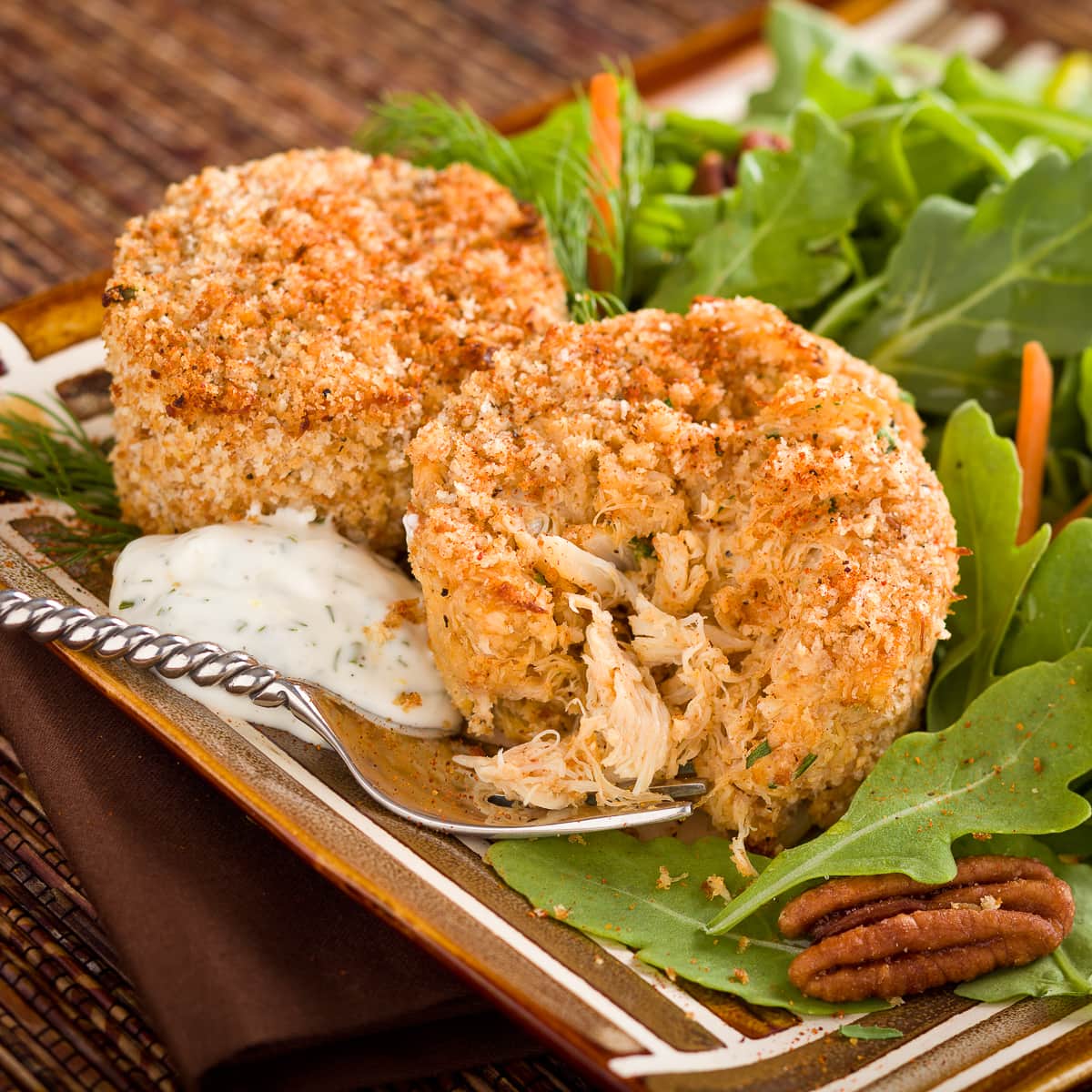
    Timing will depend on your oven and whether you use convection or not. I prefer baking this tart without convection if possible.

    Chef's Note on convection ovens: If you use convection and it puffs a little, it will settle as it cools. You can bake the tart a day ahead. Any cracks can be covered with whipped cream if desired.

    Pouring pumpkin filling into a tart crust before baking.

    Serving Suggestions: Garnishes & Toppings

    • Whipped cream - Whip heavy cream to stiff peaks with a splash of vanilla and your choice of sweetener: sugar, monk fruit, honey, maple syrup, or agave. For keto, use monk fruit syrup. A hand mixer works for small batches; for larger ones, use a stand mixer with the whisk attachment. I often use a Thermo-whipper with N₂O chargers - fast and fun.
    • Dressed-up version - Drizzle with melted white chocolate and sprinkle with chopped pecans. Or pipe whipped cream around the edge and drizzle lightly with maple syrup. A dusting of cinnamon through a small strainer adds a cozy finish.
    • Tangy option - Sour cream or crème fraîche whipped with vanilla and a touch of sweetener makes a lovely, slightly tart contrast to the sweet filling.

    Recipe FAQs

    How do you store pumpkin tart?

    Since homemade doesn't have all of the preservatives that commercially made pies and tarts do, it must be stored in the refrigerator.

    How long are pumpkin tarts good for?

    Any leftover tart will keep a day or two in the refrigerator well covered. So that you do not mess up the top of the tart, place a piece of parchment paper or waxed paper on top then cover with plastic wrap.

    Why is it called a tart?

    Tart is a French term for a shallow pie, a dessert with short sides and often fluted edges, then filled, but no top crust. The top is open and often covered in fruit, whipped cream, or other decorative garnishes. Tarts can be sweet or savory.

    A piece of pumpkin tart with a bite out of it, whipped cream and coffee.

    More Pumpkin Recipes

    Fall and pumpkin, from cakes to mouse, bread, and soup. Pumpkin os delicious and versatile!

    • Pumpkin snack cake with chocolate chips.
      Pumpkin Chocolate Chip Cake (Snack Cake)
    • A glass of creamy pumpkin mousse dusted with cinnamon with a gold spoon.
      Pumpkin Mousse (Easy No-Bake Dessert)
    • A golden loaf of pumpkin bread sliced and ready to enjoy with coffee.
      Easy Gluten-Free Pumpkin Bread Recipe
    • black bean pumpkin soup
      Creamy Black Bean Pumpkin Soup

    Did You Make This?

    If you make this pumpkin tart, please comment and let me know, and if you loved it, please give it a 5 star rating! They really help other readers.

    📖 Recipe

    Pumpkin tart

    Pumpkin Tart (gluten free grain free)

    Sally Cameron
    Smooth and nicely spiced, this pumpkin tart has a gluten-free. It's perfect for Thanksgiving dessert and can be made a day ahead. Sweeten to your taste preference.
    5 from 3 votes
    Prevent your screen from going dark
    Print Recipe Pin Recipe
    Prep Time 12 minutes mins
    Cook Time 48 minutes mins
    Total Time 1 hour hr
    Course Dessert
    Cuisine American
    Servings 8
    Calories 422 kcal

    Equipment

    • 9 ½-inch tart pan with a removable bottom
    • Food Processor
    • Half sheet size rimmed baking sheet
    • Silpat or similar liner optionals

    Ingredients
      

    Tart Crust (see the separate post for directions)

    • 1 ½ cups almond flour  5 ½ ounces or 160 grams
    • ½ cup organic coconut flour 2 ¼ ounces or 60 grams
    • 2 tablespoons raw light brown sugar or raw coconut sugar
    • 6 tablespoons unsalted butter melted

    Pumpkin Filling

    • 15 ounce can pumpkin puree not pumpkin pie mix
    • 8 ounces package block cream cheese room temperature
    • ⅓ cup granular monk fruit or sugar sub 25-30 drops of pumpkin flavored stevia
    • 2 large eggs
    • 2 tablespoons maple syrup
    • 2 teaspoons vanilla extract
    • 2 teaspoons cinnamon
    • ¼ teaspoon ground ginger
    • ⅛ teaspoon ground clove
    • ⅛ teaspoon ground nutmeg allspice is nice too

    Optional Garnish

    • 1 pint heavy whipping cream
    • ½ teaspoon vanilla extract or vanilla paste
    • sweetener of choice maple, honey, raw sugar, keto syrup

    Instructions
     

    Tart Crust

    • Find directions on this link for the crust https://afoodcentriclife.com/almond-coconut-tart-crust/ see hot link at the end.

    Pumpkin Filling

    • Pre-heat oven to 350° (177° C). Ready the pre-baked almond-coconut tart crust, placing it on a rimmed baking sheet with a silpat non-slip liner (optional).
    • Puree all ingredients from pumpkin through spices together in a food processor until smooth. Filling will be fairly fluid. Taste and add more spices or sweetener if desired. Pour the pureed pumpkin filling into tart crust. Fill almost to the top but leave an edge of crust showing. You may have extra filling.
    • Bake tart for approximately 30 minutes. It should be set and barely jiggly in the center. Remove from oven and cool on a wire rack for 1 hour, then cover and chill in the refrigerator for a few hours to completely set. Slice and serve.
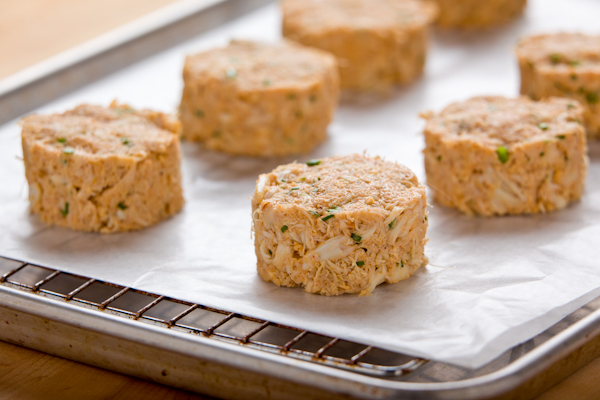
    Optional garnish

    • For garnish, whip cream with vanilla and sweetener to soft peaks. Serve on the side or pipe on top.

    Notes

    Sweetener options: I originally developed this recipe with flavored stevia drops to minimize sugar, but realize not everyone may be able to get it (or like stevia). Substitute approximately ⅓ cup of sugar or monk fruit and taste for your sweetness preference. 
    Cream cheese: Buy block cream cheese, not the tubs. They are different. Also, if you bake regular or convection it may make a difference in timing. 
    Convection oven note: If you use convection mode and it puffs a little, it will settle as it cools. You can bake the tart a day ahead. Any cracks can be covered with whipped cream if desired.
    Optional whipped cream garnish calories and nutrition calculations are not included. 
    Link for the tart crust is here

    Nutrition

    Serving: 1pieceCalories: 422kcalCarbohydrates: 23gProtein: 13gFat: 32gSaturated Fat: 15gPolyunsaturated Fat: 1gMonounsaturated Fat: 5gTrans Fat: 0.3gCholesterol: 106mgSodium: 252mgPotassium: 257mgFiber: 7gSugar: 11gVitamin A: 9058IUVitamin C: 3mgCalcium: 200mgIron: 2mg
    Tried this recipe?Let us know how it was with a comment and leave a star rating!

    How to Make Maple Butter

    10/18/2024 by Sally Cameron 1 Comment

    A glass jar of freshly whipped maple butter with maple drizzle and wooden spreader.

    Maple butter is creamy, luscious, and naturally sweetened with pure maple syrup. With just two ingredients, it takes only a minute to make. Spread it on warm cornbread or muffins, or dollop it over waffles and pancakes. Want a twist? Try honey butter, flavor variations, or even a dairy-free option to sweeten up your day.

    A jar of homemade maple butter with maple drizzle on top and small spreader.

    While homemade cornbread was baking, I made this terrific maple butter to go with it. This is a maple butter recipe, not maple cream. Making maple cream, which is cooked and whipped maple syrup, takes a candy thermometer. This is way easier, sometimes called maple syrup butter. 

    [feast_advanced_jump_to]

    Why You'll Love Maple Butter

    • Homemade maple butter takes a minutes to make.
    • It's a versatile spread and topping (see ideas below).
    • Just two ingredients!

    Try it atop these crispy golden gluten-free waffles for a terrific weekend breakfast.

    Ingredients You'll Need

    Simple ingredients for making maple butter, unsalted butter and maple syrup on a counter.
    • Butter: You want unsalted good quality butter (also called sweet butter.) For dairy-free use a good unsalted plant butter (in cubes not tubs) such as Miyoko's.
    • Maple syrup: Buy only real maple syrup, not the fake colored corn syrup that looks like maple syrup. It's just corn syrup and fake flavoring. Ick!

    Please see the recipe card for measurements.

    Chef's tip: Buying maple syrup. The grading of maple syrup changed years ago. The old A, B, and C system went away. All maple syrup is now labeled Grade A to reduce confusion. Grade A maple syrup has four levels better describing color and flavor. Grade A Golden is delicate, Grade A Amber is rich, Grade A Dark is robust, and Grade A Very Dark is strong. Want help choosing? Read more information on the grades here.

    Substitutions and Variations

    For variations on sweet flavored butters try these:

    • Swap in your favorite honey for honey butter.
    • Add cinnamon for a cinnamon butter.
    • Make vanilla bean butter by adding vanilla bean paste or ground vanilla bean.
    • For a zero-sugar honey butter, use this monk-fruit based honey.
    • For a zero-sugar use this monk-fruit based maple syrup.
    • Combine these flavors! Vanilla, cinnamon, and maple, delish!
    • Add pumpkin pie spice in fall!

    Of course you can make savory flavored butters (aka compound butters) too but that's a different post (in the works)!

    Make this simple stovetop seared salmon and top with a dollop of maple butter with a little Dijon mustard whipped in.

    How to Make Maple Butter

    Start by bringing two sticks (half a pound) of unsalted butter to room temperature so it's very soft. Leave it sit on the counter for about an hour.

    Two sticks of butter in a glass bowl with maple syrup.
    Step 1: Add the very soft butter and maple syrup to a medium bowl.
    Whipped butter in a glass bowl with sliver beaters.
    Step 2: With an hand mixer, whip maple butter together until it's a creamy, smooth consistency, about 1 minute. Taste and add more maple or flavorings if desired.
    A bowl of finished maple butter with maple drizzle and a wooden spreader.

    Chef's tip: If you're making a bigger batch for a crowd, you can use the bowl of a stand mixer fitter with a paddle attachment or whisk attachment.

    Serving Suggestions

    • Use it on top of pancakes, waffles, or french toast.
    • Smear it on muffins, cornbread, and banana bread.
    • Slather it on warm toast, biscuits, English muffins, or dinner rolls. 
    • Spread a little inside these gluten-free crepes and fold them for dessert.
    • Drizzle over roasted or steamed vegetables.
    • Mix it into oatmeal, overnight oats, or porridge.
    • Mix it into whipped sweet potatoes.
    • Try glazing ham, pork, chicken, or salmon with it. Try adding a little Dijon mustard.

    Storage

    Maple butter is perishable and must be stored in the refrigerator, not at room temperature. It keeps for 1-2 weeks in an airtight container in the refrigerator, or it can be frozen for several months.

    To bring maple butter back to a usable, spreadable consistency, there are two ways:

    • Allow the container to stand at room temperature until it's soft enough to spread.
    • Briefly microwave it on low power to melt it (which looks like a mess), then let it cool back in the refrigerator just until it starts to solidify, then re-whip. I've done this and it works great. It's gets nicely creamy and spreadable again.
    A slice of golden cornbread topped with maple butter on a white plate.

    Recipe FAQs

    What is maple butter made from?

    The first question is maple cream or maple butter? They are two different things sometimes called the same. Maple cream is made by cooking down maple syrup then whipping it. It is sometimes called maple butter. Real maple butter is simply good quality unsalted butter whipped with maple syrup. The first one takes abut 45 minutes to make, and maple butter, about 1 minute.

    What type of maple syrup should I use?

    Try Grade A Amber or Grade A Dark maple syrup for good strong maple flavor. The darker the color of the syrup, the more robust the flavor, the maple butter will taste.

    Does maple butter need to be refrigerated?

    Yes, it must be refrigerated to prevent spoilage. Do not store it on the kitchen counter. It can also be frozen.

    Related Recipes

    There are lots of yummy ways to use maple butter and it's flavor variations.

    • A single piece of gluten-free cornbread on a white plate with silver fork with pieces stacked behind.
      Gluten Free Cornbread (no flour)
    • A golden loaf of pumpkin bread sliced and ready to enjoy with coffee.
      Easy Gluten-Free Pumpkin Bread Recipe
    • carrot cake muffins
      Gluten-Free Carrot Cake Muffins (dairy-free)
    • Stacked buckwheat pancakes on a white plate with syrup and blueberries.
      The Best Buckwheat Pancakes Recipe

    ⭐️Did You Make This Recipe?

    If you make maple butter please comment and let me know how you liked it. If you loved it, please give it a 5 star rating! They really help other readers and I enjoy hearing from you.

    📖 Recipe

    A glass jar of freshly whipped maple butter with maple drizzle and wooden spreader.

    Maple Butter

    Sally Cameron
    Creamy, luscious maple butter takes 1 minute to make and is deliciously usable in so many ways! You need very soft room temperature butter to whip easily.
    5 from 1 vote
    Prevent your screen from going dark
    Print Recipe Pin Recipe
    Prep Time 1 hour hr
    Cook Time 0 minutes mins
    whiping time 1 minute min
    Total Time 1 hour hr 1 minute min
    Course condiment
    Cuisine American
    Servings 16
    Calories 120 kcal

    Equipment

    • Hand mixer

    Ingredients
      

    • ½ pound unsalted butter two cubes, or dairy-free butter
    • ⅓ cup amber or dark real maple syrup

    Instructions
     

    Maple Butter

    • Allow butter to come to room temperature before whipping, about an hour or two. Unwrap it to facilitate softening.
    • Add the very soft butter and maple syrup to a medium bowl and whip together until creamy, fluffy and smooth, about 1 minute. It's ready to serve, best at room temperature when soft.

    Storing and Re-Using

    • Maple butter lasts in the refrigerator 1-2 weeks or freezes for several months. If it is hardened in the refrigerator, to make it creamy and spreadable again, either leave it out on the counter for about an hour until soft, or briefly melt in the microwave on low power, pace back in the refrigerator until it begins to soldify again, then re-whip.

    Notes

    Fun flavor variations:
    • Swap the maple for your favorite honey for honey butter.
    • Add cinnamon for a cinnamon butter.
    • Make vanilla bean butter by adding vanilla bean paste or ground vanilla bean.
    • For a zero-sugar honey butter, use this monk-fruit based honey.
    • For a zero-sugar maple butter use this monk-fruit based maple syrup.
    • Combine these flavors! Vanilla, cinnamon, and maple, delish!

    Nutrition

    Serving: 1tablespoonCalories: 120kcalCarbohydrates: 5gProtein: 0.1gFat: 11gSaturated Fat: 7gPolyunsaturated Fat: 0.4gMonounsaturated Fat: 3gTrans Fat: 0.5gCholesterol: 30mgSodium: 2mgPotassium: 18mgSugar: 4gVitamin A: 354IUCalcium: 11mgIron: 0.01mg
    Tried this recipe?Let us know how it was with a comment and leave a star rating!

    Braised Beef Short Rib Ragu

    09/30/2025 by Sally Cameron Leave a Comment

    A gray bowl of twirled pasta topped with a beef short rib ragu, parsley, and a little parmesan.

    Beef short rib ragu is slow-braised alchemy in a pot. Sear the ribs to a deep mahogany brown, then slowly cook with onion, carrot, and celery to coax sweetness; build flavor with red wine, herbs, and quality San Marzano tomatoes. Braise until the meat is fall-off-the-bone tender and toss with wide pappardelle noodles or spoon over creamy polenta. Make it a day ahead: the flavors deepen, and it freezes beautifully.

    Gray bowl of wide pasta noodles with beef short rib ragu with carrots, and basil leaves.

    The braising method shows how slow patient cooking teases deep, concentrated flavor from humble ingredients. Years ago I made a similar meat ragu with pork ribs and loved it. This beef short ribs ragu feels richer and more luxurious while staying true to that same, simple idea. Yes, it takes time, but most of it is hands-off and the payoff is a sauce so good you'll be thankful for leftovers (and it freezes beautifully).

    [feast_advanced_jump_to]


    Why You'll Love Beef Short Rib Ragu

    • Rich and hearty - Tender, fall-apart beef short ribs in a slow-braised ragu with red wine and tomatoes.
    • Make-ahead friendly - Italian-style short rib ragu tastes even better the next day.
    • Freezer-friendly - Freezes beautifully, keep this braised beef ragu ready for quick comfort meals.
    • Versatile for serving - Perfect tossed with pappardelle pasta, spooned over creamy polenta, gnocchi, or mashed potatoes.

    Ingredients You'll Need

    Ingredients for beef short rib ragu in prep bowls on the counter.
    • Beef short ribs - Buy bone-in beef short ribs, called English-cut, not flanken ribs. Rib notes below.
    • Olive oil - For browning the ribs and vegetables, building a rich base.
    • San Marzano tomatoes - Sweet and low in acidity, perfect for a smooth ragu base.
    • Onion, carrot, celery - The classic soffritto, adding sweetness and depth.
    • Garlic - Savory backbone that ties everything together.
    • Tomato paste - Caramelized for concentrated richness.
    • Red wine - Dry red wine like Chianti, Cabernet, or Merlot for depth and balance.
    • Beef broth - Supports the braise volume and rounds out the sauce.
    • Herbs - Bay leaves and fresh thyme for subtle, long-cooked herbal notes.
    • Parsley - Fresh at the end for brightness.
    • Balsamic vinegar - A finishing splash for balance and gentle acidity.

    Please see the recipe card for measurements, salt, and black pepper.

    Chef's Tip - Why San Marzano Tomatoes?
    San Marzano tomatoes are prized for their balance of sweetness and low acidity, which makes them perfect for slow-cooked sauces like a short rib ragu. They're meaty with fewer seeds, so the sauce comes out smoother and richer without bitterness. They are worth finding, or look for high-quality canned plum or whole peeled tomatoes.

    Best Cut of Short Ribs for Ragu

    For the most flavor, always choose bone-in English-cut short ribs. The bones aren't just filler - they release collagen as they braise, which melts into the sauce and gives it that rich, velvety body. Think of it like making broth: bones equal great flavor.

    Boneless short ribs can work in a pinch, and they're easier to shred, but they won't deliver the same luxurious texture and the sauce may not be as thick. If boneless is all you can find, you can boost the sauce by adding a piece or two of beef shank or even a marrow bone to the pot, adding collagen.

    What about flanken-style ribs? These are cut thin across the bones, with several small bone pieces in each strip. While they add flavor, there isn't much meat, so they're better suited for grilling or soups than for a dish like this. For best results, stick with meaty, bone-in English-cut ribs for a braised short rib ragu.

    Substitutions and Variations

    • Red wine substitution - Use additional beef broth to deglaze the pan (½ cup), adding about a tablespoon of balsamic or red wine vinegar for acidity.
    • Dried herbs - Substitute 1 ½ teaspoons dried thyme or an Italian seasoning blend for fresh thyme sprigs. Add with the tomatoes so they have time to hydrate into the sauce.
    • Tomatoes - Regular whole tomatoes, crushed tomatoes, or a thick tomato purée can replace whole San Marzano; choose good quality for the best flavor.
    • Extra umami and depth - Add a parmesan rind for a terrific flavor booster. Discard at end of cooking. Another trick is adding an ounce of soaked (30 minutes hot water), strained, and chopped dried porcini mushrooms.

    Chef's Tip - Browning Short Ribs Properly
    Use a heavy Dutch oven for proper searing and even browning. Don't worry if the pot looks full: a 5 ½-quart Dutch oven can handle 4 pounds of short ribs. Searing develops flavor through caramelization, so take your time and let a deep golden crust form before turning the ribs. That crust becomes the base of this braised beef ragu. Those delicious bits stuck to the bottom are called a "fond", and add greatly to flavor.

    How to Make Beef Short Rib Ragu

    Pre-heat the oven to 325°F. Ready a 5 ½ quart Dutch oven with a tight fitting lid.

    Salt and pepper seasoned beef short ribs on a white cutting board.
    1. Season all sides of the beef short ribs with salt and pepper.
    Browned beef short ribs in a dutch oven.
    1. Over medium-high heat, add olive oil to the pan, when hot, brown short ribs well on sides and ends. Remove ribs to a plate.
    Carrots, onion, celery and garlic cooking in a pot with wooden spoon.
    1. Pour off all but 2 tablespoons of fat, lower heat, saute onion, carrot, and celery until soft, 6-8 minutes, add garlic and cook for 1 minute.
    Brick red sautéed vegetables after the addition of tomato paste.
    1. Stir in the tomato paste, cook until a deep brick red, 2 minutes.
    Red wine added to sautéed vegetables to deglaze before next step.
    1. Add the wine (or extra broth) to deglaze and stir, scraping up browned bits on bottom of pan. Cook and reduce by half.
    Bright red pureed tomatoes being poured into a pot.
    1. Pulse tomatoes and their juices in a blender briefly to break them up, pour into the pan.
    Broth being poured into a pot with vegetables and tomatoes.

    7. Add the herbs and broth. Simmer for 2 minutes.

    Beef short ribs nestled into braising liquid in a dutch oven for making a ragu.

    8. Nestle the beef short ribs into the braising liquid, they should come up at least half way but not submerge.

    A pot of beef short ribs finished braising in wine and broth.

    9. Place a lid on the pot and put in the oven for 2 ½-3 hours. When done rib meat will be falling off the bone, bones should pull out easily.

    A plate of braised beef short ribs waiting for the next step.

    10. Remove the ribs to a plate, cool until you can handle them then shred the meat. Wear disposable gloves as this is messy. Discard bones and extra fat.

    Degreasing a pot of braised beef ribs.

    11. Degrease the top of the sauce, skimming off with a large spoon. You can also place a paper towel gently on top to soak up more fat.

    Shredded Italian short rib ragu in a dutch oven, ready to serve

    12. Add shredded meat back into sauce and stir. Ready to serve. If it is thicker than you want, add a little more broth.
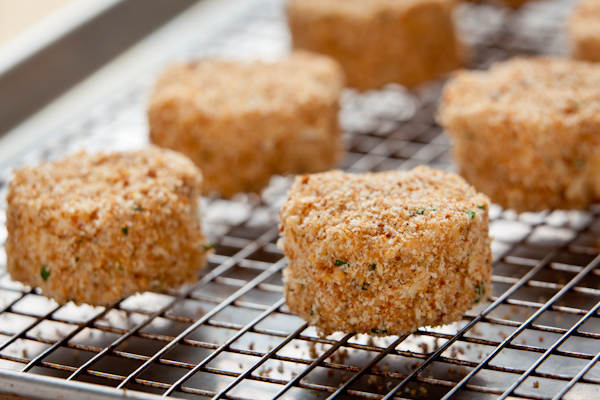
    Twirled pasta on a fork of beef rib ragu in a gray bowl with carrots and parsley.

    How to Serve Short Rib Ragu

    This ragu is rich, hearty, and flexible. Serve it the classic way over wide pappardelle pasta. If you follow a gluten-free diet, look for brands like DeLallo that make gluten-free pappardelle, or use GF tagliatelle, fettuccine, or even penne.

    This sauce is thick. To loosen the ragu for tossing with pasta if needed, stir in a little of the reserved pasta water until the sauce coats the noodles.

    Creamy polenta is another traditional pairing, and it's just as delicious spooned over gnocchi or buttery mashed potatoes. Don't forget crusty bread (or gluten-free garlic toast) on the side to soak up every drop of sauce.

    Make-Ahead & Freezing

    Beef short rib ragu is one of those dishes that actually improves with time. The flavors meld and deepen overnight, so it's perfect to make a day ahead. Leftovers keep well in the fridge for up to 4 days.

    For longer storage, portion into airtight containers and freeze for up to 3 months. Thaw overnight in the refrigerator, then reheat gently on the stovetop, covered on low heat, until warmed through. As this ragu is very thick, you'll need to loosen it up with some pasta water or hot broth to serve.
    Recipe FAQs

    Can I make this in an Instant Pot or slow cooker?

    Yes. For the Instant Pot, use the sauté function (or brown ribs on the stove), then pressure cook on high for 45-50 minutes with natural release. Check capacity first - 4 pounds of ribs may be too much at once. A slow cooker also works: 8-9 hours on low or 5-6 on high, until the meat is fall-off-the-bone tender. See recipe card for more details.

    Can I make beef short rib ragu ahead of time?

    Yes. Braised short ribs actually taste better the next day. See the Make-Ahead & Freezing section above for full storage and reheating instructions.

    Do I have to use red wine?


    No. Red wine adds depth and acidity, but you can deglaze with beef broth plus a splash of balsamic vinegar or red wine vinegar to add acidity.

    Why is my ragu greasy?


    Braised rib ragus are rich and release a lot of fat. Degrease by skimming off excess fat before adding shredded meat back in, and by placing a paper towel on top to sop up any extra. Another option: refrigerate sauce separately from meat, refrigerate, and remove fat after it solidifies.

    More Pasta Sauce Recipes

    If you love this short rib pasta sauce, try these pasta sauce recipes as well! From a meaty tasting mushroom sauce to a quick weeknight pasta sauce, these recipes are a great solution to what's for dinner.

    • roasted tomato marinara
      The Best Roasted Tomato Sauce
    • mushroom marinara pasta sauce
      Mushroom Tomato Sauce
    • bison bolognese with pasta
      Bison Bolognese(Ground Bison Meat Sauce)
    • Pot full of homemade marinara.
      Easy Pasta Sauce With Tomato Sauce

    Did You Make This Recipe?

    If you make this beef short rib ragu, let me know how you enjoyed it. Please leave a comment, I love to hear from you. And please consider leaving a star rating. They all help other readers.


    📖 Recipe

    A gray bowl of twirled pasta topped with a beef short rib ragu, parsley, and a little parmesan.

    Beef Short Rib Ragu

    Sally Cameron
    Fall-apart tender beef short ribs, slow-braised with tomatoes, red wine, and herbs, then shredded into a rich, hearty sauce. Thick and rich, this ragu is perfect over wide pasta noodles, penne, polenta, or gnocchi-and it tastes even better the next day.
    No ratings yet
    Prevent your screen from going dark
    Print Recipe Pin Recipe
    Prep Time 30 minutes mins
    Cook Time 3 hours hrs
    Finishing 15 minutes mins
    Total Time 3 hours hrs 45 minutes mins
    Course Entree, main
    Cuisine American
    Servings 10 Yield 1 ½ quarts
    Calories 309 kcal

    Equipment

    • 5 ½ quart Dutch oven
    • Disposable kitchen gloves

    Ingredients
      

    • 4 pounds meaty beef short ribs English cut not flanken
    • 1 tablespoon sea salt
    • ½ tablespoon ground black pepper
    • 1 tablespoon extra virgin olive oil
    • 28 ounces canned whole San Marzano tomatoes
    • 1 ½ cups chopped onion 1 large onion
    • ¾ cup chopped carrot
    • ¾ cup chopped celery
    • 3 large garlic cloves chopped fine
    • 2 tablespoons tomato paste
    • 1 cup red wine chianti, cabernet, merlot
    • 1 cup beef broth
    • 2 bay leaves
    • 4 sprigs fresh thyme
    • fresh chopped parsley optional garnish
    • balsamic vinegar optional for finishing

    Optional add-ins

    • parmesan rind
    • 1 ounce dried porcini mushrooms hydrated, strained, chopped fine

    Instructions
     

    • Pre-heat the oven to 325°F. Ready a 5 1/1 quart Dutch oven. If using porcini mushroom option, soak the mushrooms in hot water for 30 minutes, strain, and chop. Add when cooking the vegetables.

    Brown ribs

    • Pat ribs dry, season generously with salt and pepper. Heat olive oil in a dutch oven until hot over medium to medium-high, add the ribs and sear on all sides until well-browned. Remove ribs to a plate. Drain off and discard all but 2 tablespoons of fat.

    Cook vegetable base

    • Turn heat down and sauté onion, carrot, celery until softened, 6-8 minutes. Stir in garlic and cook 30 seconds, add tomato paste and cook until deep brick-red, stirring, 2 minutes. Add the wine and deglaze the pan, scraping up the browned bits. Cook until reduced by half.

    Build the braise

    • Pulse tomatoes in blender to break them down. Add tomatoes, broth, and herbs. Nestle ribs back in. Liquid should come about halfway up the ribs. Bring to simmer. Add the parmesan rind if using.
    • Cover the pot and transfer to the oven for 2½-3 hours, until meat is fall-off-the-bone tender. Test at 2 ½ hours. Ragu is done when the bones are easily pulled out of the meat and falling apart. Remove spent rind.

    Shred meat, finish the ragu

    • Remove rib meat and place in a bowl. Discard bones and extra fat. While the meat is cooling enough to handle and shred, use a large tablespoon to skim excess fat from the surface of the sauce. Taste and add the balsamic if desired.
      When the meat is cool enough to handle, use disposable kitchen gloves and shred the meat by hand into small pieces. Add back to the sauce and heat through for serving if needed. Garmish with fresh chopped parsley.

    Notes

    Make ahead
    Make beef short rib ragu a day or two ahead of time as it refrigerates well for up to 4 days. For longer storage, it freezes beautifully. I use Souper Cubes trays.
    To re-heat sauce, place frozen cubes in a pan on the stove top over low heat, covered and melt until saucy again, stirring occasionally. If sauce is thicker than you want,  loosen the ragu for tossing with pasta by stirring in a little warm broth or reserved pasta water.
    Instant Pot or Slow Cooker Instructions:
    • Instant Pot: Use the sauté function to brown the ribs in batches, or brown them on the stove and transfer. Be sure your pot can handle the volume of 4 pounds of ribs. Add ribs and liquid, then pressure cook on High for 45-50 minutes. Allow a natural pressure release.
    • Slow Cooker: Brown the ribs first on the stove for best flavor, then transfer with liquid. Cook on Low for 8-9 hours or High for 5-6 hours, until the meat is fall-off-the-bone tender and easy to shred.
    Note: oven-braising develops the deepest flavor, but these methods are convenient alternatives still with good flavor.

    Nutrition

    Serving: 0.66cupCalories: 309kcalCarbohydrates: 11gProtein: 27gFat: 15gSaturated Fat: 6gPolyunsaturated Fat: 1gMonounsaturated Fat: 7gCholesterol: 78mgSodium: 1018mgPotassium: 877mgFiber: 3gSugar: 6gVitamin A: 1880IUVitamin C: 12mgCalcium: 59mgIron: 4mg
    Tried this recipe?Let us know how it was with a comment and leave a star rating!

    Buttery Baby Dutch Yellow Potatoes

    03/29/2023 by Sally Cameron 16 Comments

    Baby dutch yellow potatoes wtih herbs and Parmesan cheese.

    Looking for a delicious and easy side dish that the whole family will love? Savor the delightful taste of baby Dutch yellow potatoes, made in just 25 minutes. These golden orbs are enjoyed with their skins on, providing a satisfying crunch and creamy texture that melts in your mouth. A perfect side dish, these little gems offer a tasty and nutritious addition to any meal.

    Baby Dutch yellow potatoes with herbs and parmesan.

    Baby Dutch Yellow Potatoes are an easy, favorite potato recipe for simple weeknight dinners or holiday celebrations. They are terrific for breakfast or brunch.

    These beautiful little potatoes are sometimes called Dutch cream potatoes and creamy they are. Because they are yellow potatoes, they are velvety, slightly waxy, and moist with a buttery flavor.

    [feast_advanced_jump_to]

    Why You'll Love

    • Who doesn't love baby potatoes?
    • Serve hot or cold (and yummy leftovers)
    • Made in 1 pot.
    • It's an easy and delicious baby potato recipe that can be made ahead.

    Serve these baby Dutch potatoes with a ham and cheese frittata for terrific weekend brunch.

    Ingredients You'll Need

    Ingredients for Baby dutch yellow potatoes on the counter.
    • Potatoes: Get a bag of the Melissas Baby Dutch Yellow Potatoes as they are a special, delicious breed of Dutch potatoes. Find them in the produce section of your grocery store in yellow netted bags. Just remember yellow potatoes, yellow bags.
    • Butter: Use unsalted butter, clarified butter, or plant butter for a dairy-free recipe
    • Olive oil: Olive oil is nice to finish the potatoes (along with the butter). The flavor of butter and olive oil together is terrific, but you can use all butter.
    • Seasoning: Sea salt, black pepper, granulated garlic or garlic powder.
    • Fresh herbs: Start with fresh parsley and add what you'd like; chives, fresh thyme, oregano, fresh rosemary, mix and match.

    Please see the recipe card for measurements.

    Substitutions and Variations

    • If you can't find Melissas's Baby Dutch Yellow Potatoes at your local market, there are two options: either use very small gold potatoes or other bite sized potatoes. The "pee wee" size potatoes (like large marbles) work great too and often come in multi-colored bags of gold, red and purple.
    • Use a plant-based butter for dairy-free or vegan.
    • Mix up the herbs that you use.
    • Add a little red chili pepper flakes for a kick.

    For a delicious variation, gently smash them after cooking then bake them briefly in a hot oven (or under the broiler) sprinkled with parmesan cheese and serve with a little sour cream or Greek yogurt on the side. So good. Sprinkle the herbs over the top for color. Chives work well for this.

    If you love potatoes, here's another delicious recipe for baked Parmesan potato wedges made with larger yellow potatoes.

    How to Make Baby Dutch Yellow Potatoes

    Potato Prep

    • How do you clean Dutch potatoes? Scrub them with a soft vegetable brush. A produce wash like this does more than just water.
    • Do you have to peel Baby Dutch Yellow Potatoes? No, you eat them with the peel on. Those peels are good for you with fiber, potassium, and vitamin C, plus the skins are tender.

    Cooking Baby Potatoes

    Cooking baby dutch potatoes in a gray pot.

    Step 1: Place potatoes in cold water (salted) and bring to a simmer over medium heat. Cook until they are tender when pierced with the tip of a paring knife. Cooking time is about 10 minutes. Why salted water for potatoes? Because it brings out the flavor of the potatoes.

    Baby gold potatoes in a colander after cooking.

    Step 2: Drain cooked baby Dutch potatoes in a colander or strainer.

    Cooked baby potatoes covered in fresh herbs in a pot.

    Step 3: Add the butter and a little olive oil, plus cooked baby potatoes back to the warm pot. Sprinkle with the salt, pepper, and garlic, and 2-3 tablespoons of chopped herbs. Stir to coat the potatoes.

    Dutch potatoes are ready to serve. Either hot or cold, they are simply delicious. Sprinkle with any additional salt, pepper, herbs and Parmesan cheese (optional).
    Herbed baby potatoes in a white bowl at the table for serving.

    Chef's Tip: Dry herbs chop much better than wet herbs. Wash your herbs and dry them rolled in paper towels and allow them to sit on the counter for awhile to dry (or use a salad spinner).

    How Else Can I Cook Dutch Potatoes?

    Baby Dutch potatoes are delicious oven roasted on a sheet pan or steamed on the stovetop in a steamer basket over a little boiling water. I've even cooked them until tender and finished them on the grill in a grill basket. Oh, and did I say they make terrific potato salads?

    Serving Suggestions

    Dutch Potatoes can be served hot, room temperature or even chilled. They are great with baked chicken breast, and any kind of meat like roast beef or grilled steak. Almost any main dish. Try them for brunch with softly scrambled eggs and some crisp bacon on the side with a sprinkle of green onions.

    Leftovers & Storage

    Leftover Dutch potatoes will keep 4-5 days in the refrigerator in an airtight container. You can also chop them up and use them for potato salad. See notes in recipe card.

    At the table, a white bowl of golden herbed baby Dutch potatoes wtih herbs and Parmesan.

    Recipe FAQs

    What kind of potatoes are Dutch potatoes?

    They are categorized as waxy potatoes as they remain dense and moist when cooked and hold their shape versus starchy like russets. For more on potato varieties here's a fun article.

    What is the difference between baby potatoes and regular potatoes?

    Baby potatoes are very small potatoes, with thinner skins and less starch than their larger potato cousins like russet potatoes, Yukon gold or sweet potatoes. They are younger potatoes and harvested earlier (new potatoes). The Baby Dutch Yellow Potato is naturally resistant to greening and sprouting (less light sensitive) so they have good shelf life.

    Are Baby Dutch Yellow potatoes healthy?

    Yes, for most people they are. In a 4-ounce serving there is 90 Kcals, 0 fat, 20 grams of carbs, 2 grams of fiber and 2 grams protein and 1 gram of natural sugar. As well, they provide vitamin C, vitamin B6, potassium and manganese.

    More Simple Side Dish Recipes

    For more side dish ideas, please check out the side dishes category.

    • cauliflower puree
      Creamy Cauliflower Puree with Fresh Herbs
    • A bowl of bright green beans almondine with toasted buttered almonds.
      Fresh Green Beans Almondine Recipe
    • A bowl of burnished roasted Brussels sprouts glazed with Balsamic.
      Brussels Sprouts with Balsamic Vinegar
    • roasted broccoli
      Roasted Broccoli with Parmesan and Lemon

    ⭐️Did You Make This Recipe?

    If you make baby Dutch yellow potatoes, please add your comment. I appreciate your feedback and enjoy hearing from you. If you loved it, please give it a 5-star rating! They really help other readers.

    📖 Recipe

    Baby dutch yellow potatoes wtih herbs and Parmesan cheese.

    Baby Dutch Yellow Potatoes

    Sally Cameron
    Buy the Melissas Baby Dutch Yellow Potatoes, pee wee potatoes or other very small baby potatoes for this recipe. Dutch potatoes work beautifully as a side dish for many dinners, or cold the next day turned into potato salad, even with eggs for breakfast and brunch.
    5 from 4 votes
    Prevent your screen from going dark
    Print Recipe Pin Recipe
    Prep Time 5 minutes mins
    Cook Time 10 minutes mins
    Water to boil 10 minutes mins
    Total Time 25 minutes mins
    Course Side Dish
    Cuisine American
    Servings 6 servings
    Calories 213 kcal

    Ingredients
      

    • 1 ½ pounds baby Dutch potatoes 1 bag
    • 1 tablespoon unsalted butter or plant butter
    • 1 tablespoon olive oil
    • 1 teaspoon sea salt divided use
    • ¼ teaspoon black pepper
    • ¼ teaspoon granulated garlic
    • 2-3 tablespoons fresh chopped herbs parsley, chives, thyme, oregano, chervil, rosemary, combination, dill.
    • 2 tablespoons grated Parmesan cheese optional garnish

    Instructions
     

    Cook the Potatoes

    • Place potatoes in a large pot like a Dutch oven and cover with an inch of cold water. Add ¾ teaspoon salt to the water to season the potatoes and bring out their flavor. Bring the water almost a boil, turn down and simmer on medium-low until tender with pierced with a sharp knife tip, about 20 minutes.

    Drain the Potatoes

    • When the potatoes are cooked to tender, drain in a colander or strainer. Add the potatoes back to the hot cooking pot to finish.

    Finish the Potatoes

    • To finish potatoes, add the butter and oil to the pot over medium-low heat. When warm, add last ¼ teaspoon of salt, the pepper, and garlic, then add potatoes and turn them over with a large spoon to coat. Toss with the herbs and serve.
    Notes

    If you want potato salad the next day, refrigerate leftover potatoes in an airtight container. To make potato salad, halve cold potatoes, add a little finely diced celery,  mayonnaise, a little Dijon mustard, and a little finely chopped onion or shallot. Season to taste with salt, pepper and a lemon zest for a fresh twist if desired.
    Baby Dutch Yellow Potatoes can be cooked 3-4 days ahead of time, cooled and refrigerated until just before serving.  Finished with melted butter, oil, and herbs. Serve warm, room temperature or chilled. Reheat in a pot on the stovetop with a lid on or in the oven.

    Nutrition

    Calories: 213kcalCarbohydrates: 40gProtein: 5gFat: 4gSaturated Fat: 2gPolyunsaturated Fat: 1gMonounsaturated Fat: 2gTrans Fat: 1gCholesterol: 5mgSodium: 209mgPotassium: 965mgFiber: 5gSugar: 2gVitamin A: 176IUVitamin C: 46mgCalcium: 30mgIron: 2mg
    Tried this recipe?Let us know how it was with a comment and leave a star rating!

    Creamy Sun-Dried Tomato Pesto Pasta

    07/13/2024 by Sally Cameron Leave a Comment

    A white bowl of sun-dried tomato pesto pasta with basil and parmesan garnish.

    Love creamy pastas? This sun-dried tomato pesto pasta combines the rich flavors of sun-dried tomato pesto and whipped ricotta for an irresistibly creamy sauce. Made in minutes in a food processor, toss it with hot cooked noodles for a satisfying gourmet meal. Use your favorite pasta shape to catch every bite of the luxurious sauce. Versatile, it works perfectly as a dip too, served with veggies, crackers, or crisp crostini.

    A white bowl of creamy sun-dried tomato pesto pasta with basil leaves , pine nuts, toasted bread, parmesan.

    Following my homemade sun-dried tomato pesto (also calIed red pesto or pesto rosso) I had to share this companion recipe. With the pesto made and a tub of ricotta on hand, I thought why not combine them? It came out amazing! Friends immediately asked for the recipe. Savory and creamy, pesto and whipped ricotta make natural partners for a terrific sauce or dip.

    [feast_advanced_jump_to]

    Why You'll like This Recipe

    • An easy pasta recipe, make it in a matter of minutes with a food processor.
    • Make the pesto ahead of time for for busy weeknights.
    • Whip the sauce together at serving time or before.
    • A gluten-free recipe (with gluten-free pasta).

    This would be good made with a traditional green basil pesto too, like this Pesto Genovese.

    Sun-Dried Tomato Pesto Pasta Ingredients

    Ingredients for red pesto pasta on a marble counter with a bowl of pasta.
    • Pasta: Use your favorite, either gluten-free or wheat pasta. For the best shapes to hold up to creamy sauces, check out the pasta guide below.
    • Ricotta cheese: I use whole milk ricotta for rich creaminess instead of heavy cream or cream cheese.
    • Sun-dried tomato pesto: Takes just minutes to make. Homemade pesto is the best (and easy!), but purchased works too.
    • Oil: Extra virgin olive oil is my top choice, but avocado oil works too.
    • Lemon juice: Lifts the flavor and balances the richness.

    Optional Garnishes for dun-dried tomato pesto pasta

    • Fresh herbs: Add fresh basil leaves as garnish, or Italian parsley.
    • Parmesan cheese: Extra to use as garnish if desired.
    • Red pepper flakes: For a little more heat.

    Please see the recipe card for measurements.

    Chef Sally's pesto rosso: To make sun-dried tomato pesto, you need just a few items. An 8-ounce jar of sun-dried tomatoes in extra virgin olive oil, pine nuts, parmesan, olive oil, lemon, garlic, and basil. See the link above for details. It's great make-ahead recipe. For substitutions with sun dried tomato pesto, check the substitutions section in the post.

    To add some protein to this creamy pasta dish, flake in some homemade smoked salmon. It's a delicious combination.

    Substitutions and Variations

    • This works well with the more common basil pesto too! Whip the ricotta cheese and enough pesto together until it tastes as you prefer, then add lemon juice and olive oil if needed.
    • To add protein for meat eaters, try sliced grilled chicken or cooked Italian sausages. Seafood like grilled shrimp and even salmon work well too.

    If you love to make homemade sauces, try my gluten-free bbq sauce! It has a nice kick and deep flavors for just about anything going on the grill.

    Recipe Instructions

    First, start a large pot of water for the pasta and add a little salt. Cook according to the package instructions until just al dente, then drain. Save a half cup of pasta water in case you want to loosen the sauce. While the pasta cooks, start the sauce. It takes just a minute.

    Rich reddish brown sun-dried tomato pesto on a spoon.
    Step 1: Make the red pesto. Add all ingredients to a food processor and process until fairly smooth.
    Food processor bowl with ricotta cheese, pesto, oil, and lemon juice to be pureed into a sauce.
    Step 2: Add ricotta, sun-dried tomato pesto, oil, and lemon juice to the food processor.
    Creamy orange tomato pesto sauce, finished in a food processor workbowl.
    Step 3: Puree until smooth and creamy, ready for pasta, or...
    Sun-dried tomato whipped ricotta dip in a white bowl with pine nuts and basil.
    Step 4: Scoop it into a bowl as a dip.

    Choosing the Right Pasta

    A white bowl of sun-dried tomato pesto pasta with basil and parmesan garnish.

    What type of pasta works best with this sauce? When it comes to pairing pasta shapes with richer, creamier sauces, certain types of pasta excel due to their ability to hold and complement the sauce effectively. Here are some of the best pasta shapes for richer sauces like sun-dried tomato pesto with whipped ricotta:

    • Fettuccine: The flat surface of fettuccine allows the creamy sauce to cling well, making it a classic choice for Alfredo and other creamy sauces .
    • Tagliatelle: The wide, flat shape of tagliatelle is perfect for thick, creamy sauces, ensuring that each bite is coated evenly. It's a little narrower than fettuccine.
    • Rigatoni: The characteristic ridges and hollow center trap creamy sauces, providing a satisfying bite with every mouthful.
    • Penne: The short tubes with ridges cut at an angle trap creamy sauces like rigatoni and go well with creamy sauces.
    • Fusilli: WIth sort of a corkscrew shape, there's lot's of room for the pasta to be coated with creamy sauce. Another good corkscrew shape is cavatappi.

    Love pasta salad? Try this terrific Caesar pasta salad, with chicken or without.

    Chef Sally's tip: Want to know more about pasta shapes? Check out the pasta shapes dictionary for lots of fun facts.

    Serving Suggestions

    Toss sun-dried tomato pesto pasta sauce with your favorite pasta while it's hot, right after draining. Save a little of the pasta water to loosen it up a bit if needed. What I do is make a batch, use it for snacking as a dip, then turn the rest into this sauce with the whipped ricotta for making pesto pasta.

    Can you freeze this? Can and should are two different things. Ricotta does not freeze well and gets grainy upon thawing so I advise making it fresh and using within 5 days. If you want to try freezing it, after thawing re-whip in a food processor and make any adjustments preferred with lemon juice or olive oil.

    Recipe FAQs

    Can I make the pesto ahead of time?

    Pesto can be made ahead of time and refrigerated for up to a week or even frozen in ice cube trays for several months.

    Can I add protein to the dish?

    Absolutely. To add protein, try sliced grilled chicken, cooked or grilled shrimp, or baked or grilled salmon.

    What can I serve with sun-dried tomato pesto pasta?

    It pairs well with a side salad, garlic bread, or as a dip with fresh veggies, crackers, or crostini.

    Looking for More Pasta Recipes?

    For three more sauces that pair well with pasta, try this bolognese made with ground bison, easy tomato marinara (red pasta sauce), or meaty mushroom marinara.

    • Gluten-free pasta salad with tomatoes, cucumber, pine nuts, herbs, and more.
      Lemony Mediterranean Pasta Salad Recipe
    • seared scallops with pasta
      Pasta Recipe With Scallops
    • Stuffed shells with kale and ricotta
      Pasta Shells Stuffed With Ricotta
    • Zucchini noodles with roasted tomatoes in a bowl.
      Zucchini Noodles Recipe with Roasted Tomatoes

    ⭐️Did you Make This?

    If you make sun-dried tomato pesto pasta, I hope you'll comment and let me know how you liked it. If you loved it, please give it a 5 star rating! They really help other readers and I appreciate hearing from you.

    📖 Recipe

    A white bowl of sun-dried tomato pesto pasta with basil and parmesan garnish.

    Sun-dried tomato pesto pasta

    Sally Cameron
    Intensely flavored sun-dried tomato pesto whipped with creamy ricotta cheese makes an amazing pasta sauce or dip. Serves 6 as a pasta sauce (using ⅓ cup) or more if using as a dip.
    No ratings yet
    Prevent your screen from going dark
    Print Recipe Pin Recipe
    Prep Time 15 minutes mins
    Total Time 15 minutes mins
    Course Entree, Main Course, pasta
    Cuisine American, Italian
    Servings 6 yield 2 cups
    Calories 426 kcal

    Equipment

    • Food Processor
    • Large pot to cook pasta

    Ingredients
      

    Pasta

    • 12 ounces pasta of choice gluten-free or wheat

    Pesto Pasta Sauce

    • 15 ounces whole milk ricotta cheese 1 tub
    • ¾ cup sun-dried tomato pesto see link below for homemade, or use purchased, about 6.7 ounces.
    • 2 tablespoons extra virgin olive oil
    • 2 tablespoons lemon juice

    Optional Garnishes

    • basil leaves
    • grated parmesan cheese
    • red pepper flakes

    Instructions
     

    • Fill a large pot ¾ full of water and add salt. Bring to a boil and cook pasta according to the box directions. While the water is coming to a boil, make the sauce.
    • To make the sun-dried tomato ricotta sauce, add all ingredients to a food processor and puree into a creamy sauce.
    • When pasta is done, drain, saving some of the hot pasta water to loosen the sauce if needed. Immediately toss the pasta with the pesto sauce and place into serving bowls. Garnish with copped basil leaves and parmesan if desired.

    Notes

    The best pasta shape for creamy sauce is something that offers plenty of surface area, such as penne pasta, fusilli, rigatoni, or a wide flat noodle. For more information please see the pasta shape notes in the post. 
    Link to the red pesto recipe
    Nutrition Disclaimer
    This nutritional information is an estimate provided to you as a courtesy. The numbers here may vary depending on different brands. If needed, calculate the actual nutritional information with the products and brands you are using with your preferred nutritional calculator.
     

    Nutrition

    Calories: 426kcalCarbohydrates: 49gProtein: 16gFat: 18gSaturated Fat: 7gPolyunsaturated Fat: 1gMonounsaturated Fat: 6gCholesterol: 39mgSodium: 348mgPotassium: 206mgFiber: 3gSugar: 4gVitamin A: 516IUVitamin C: 3mgCalcium: 189mgIron: 1mg
    Tried this recipe?Let us know how it was with a comment and leave a star rating!

    Nutrition Disclaimer

    Nutritional information is an estimate provided to you as a courtesy. You should calculate the actual nutritional information with the products and brands you are using with your preferred nutritional calculator.

    Smoked Salmon on a Pellet Grill

    09/23/2025 by Sally Cameron Leave a Comment

    Flaked smoked salmon from a pellet grill on a serving board with lemons.

    Smoked salmon on a pellet grill is flavorful, surprisingly easy, and always better when you make it yourself. This traditional hot-smoking method uses a simple salt-and-sugar dry brine, called a cure, plus low-temperature smoke to create tender, lightly smoky salmon with a rich color and deep flavor. Serve it as part of an appetizer spread, for brunch with eggs, or flaked into salads, grain bowls, or in pasta.

    Bright orange smoked salmon chunks on a white board with lemon wedges and capers in the back.

    Most people are familiar with cold-smoked salmon-thinly sliced and silky, often served on bagels or charcuterie boards. But smoked salmon on a pellet grill is different. Pellet smoked salmon is hot-smoked, gently cooked at 180°F, until tender and flaky with a lightly smoky flavor and a subtle lacquered finish. It's delicious served many ways and easy to do at home wtih a pellet grill or smoker.

    [feast_advanced_jump_to]

    Why You'll Love Pellet Smoked Salmon

    • Incredible flavor - Gently smoked with a hint of sweetness and subtle spice.
    • Better than store-bought - Fresher taste, cleaner ingredients, no preservatives.
    • Versatile - Serve flaked into salads, grain bowls, pasta, as appetizer platters, and many other ways
    • Simple ingredients - Just salmon, salt, sugar, and a few pantry spices.

    For a relatively quick smoking recipe, try my smoked chicken breasts, with boneless skinless chicken breasts.

    Ingredients You'll Need

    Ingredients for smoked salmon on a gray kitchen counter.
    • Salmon - My preference is fresh wild King (Chinook) salmon when it's available. Choose a center-cut fillet for even thickness and the most tender results. Coho or farmed salmon also work, and frozen fillets as well. Notes below.
    • Sugar - Light brown sugar adds a subtle molasses depth, while white sugar gives a cleaner, more neutral flavor. Either will balance the salt and help with caramelization.
    • Salt - Use kosher salt. Because salt densities differ, the amount must be adjusted by brand (see below).
    • Spices - A simple blend of granulated garlic, onion powder, and smoked paprika enhances the cure without overpowering the natural flavor of the salmon.

    Please see the recipe card for measurements, and pepper (optional).

    Chef's Tip - How Much Salmon to Buy
    Smoked salmon loses about 25-30% of its weight during curing and smoking. A 1 ¼-pound fillet will finish closer to 13-14 ounces after shrinkage and trimming the skin. Plan on 4-6 ounces cooked salmon per person for a main dish, or 2 ounces if serving as an appetizer.

    For an easy, fast salmon recipe, try these steamed salmon fillets.

    The Best Salmon for Pellet Smoking

    Here's what to know:

    • King salmon (Chinook): The richest and fattiest of the wild salmon, with a buttery texture that stays moist during smoking. Thick fillets may take a little longer to reach temperature, but King is the most forgiving.
    • Coho salmon: Leaner and milder than King, with medium fat content. Often sold in thinner fillets, so it may smoke a bit faster at lower temperatures.
    • Sockeye salmon: Famous for its deep red color and bold flavor. Very lean, so it can dry out quickly-watch the internal temperature closely.
    • Farmed salmon: Widely available and a reliable option if wild isn't on hand. Most farmed salmon is Atlantic (a different species than King), with flavor and sustainability ratings that vary. Scottish and British Columbia farmed salmon are often better, while premium New Zealand Ōra King is considered the gold standard.

    For sustainability ratings, check Monterey Bay Aquarium's Seafood Watch guide on salmon.

    Fresh Salmon vs. Frozen Salmon

    Frozen, thawed salmon can be smoked as well as fresh. Sometimes it's preferred because freezing kills parasites and may firm the flesh. Success depends on proper handling:

    • Freeze quickly in airtight packaging to minimize ice crystals.
    • Thaw slowly in the refrigerator for best texture.
    • After thawing, follow my curing process, then place the salmon uncovered on a rack in the refrigerator. This step forms a pellicle-a dry, slightly tacky surface that's essential for helping the smoke adhere and builds flavor.

    Substitutions and Variations

    • Spice it up - Try a pinch of cayenne, chipotle powder, ground coriander, or cumin in the dry brine for added flavor.
    • Glaze at the end - For a different finish, glaze the salmon during the last 15 minutes of smoking. Maple adds a subtle caramel note, while a Dijon-honey glaze brings tangy balance. For spice lovers, stir maple with a pinch of cayenne or chipotle.

    Love salsa? Try this smoked salsa recipe!

    Chef's Tip - The Pellicle
    The pellicle is the thin, tacky surface that develops on cured salmon during drying allowing smoke to better adhere during the smoking process. It may look shiny and feel sticky, but that's exactly what you want. It also helps create richer flavor, a glossy finish, and deep color. Don't skip this step: a well-formed pellicle is the difference between average smoked salmon and exceptional results.

    How to Smoke Salmon on a Pellet Grill

    Plan ahead: Smoked salmon takes approximately 24 hours start to finish-allow up to 12 hours for curing, 12 hours for drying, and about 3 hours of smoking, depending on the thickness of your salmon and the smoker temperature you choose.

    Bright orange salmon filet showing pin bones removed on a metal tray.
    1. Unwrap the salmon and remove and pin bones. Leave the skin on as it protect the flesh and make easier to handle.
    Salmon fillet covered in a smoking cure with bronw sugar, salt, and spices.
    1. Mix the cure and cover the salmon in a good layer, patting it on. Use a rimmed baking sheet with parchment.
    Plastic wrapped salmon filet covered in smoking cure for the curing phase.
    1. Wrap curing fillet well in plastic film. Place in the refrigerator for 10-12 hours.
    Salmon filet after curing with sugar and salt with excess liquid on tray.
    1. After curing, unwrap the cured salmon fillet.
    Salmon filet rinsed after curing to dry for smoking.
    1. Rinse the cure from the fillet and pat dry with paper towels.
    Raw king salmon fillet drying on a wire rack in the refrigerator.
    1. Place the fillet on a wire rack if possible (for air flow) and dry 10-13 hours in the refrigerator.
    Salmon fillet on a wire rack after drying and formation of the pellicle.
    1. The cured and dry fillet, now with a pellicle formed for smoking.
    Smoked salmon on a pellet grill cooked to 140°F per digital thermometer.
    1. Set pellet grill to 180F and smoke for 3 - 3 ½ hours or until 140F is reached. Check the grill occasionally and pellet levels.
    The bottom of a smoked salmon fillet being skinned and trimmed.
    1. After smoking, turn the fillet over and peel off the skin, and if desired, scrape off the bloodline with a paring knife.
    Finished and ready to serve, a pellet grill smoked salmon fillet.
    1. The finished smoking process and smoked salmon, ready to enjoy.

    How Long to Smoke Salmon on a Pellet Grill

    • Cook to temperature, not just time. Salmon is done when it reaches 140°F internal in the thickest part.
    • At 180°F grill temp, a 1-1.5 lb fillet usually takes 3 - 3 ½ hours.
    • Thicker King salmon fillets may run a little longer; thinner Coho or Sockeye may finish sooner.
    • You can run the smoker hotter (200-225°F) to cook faster, but you'll get less smoke flavor and risk more albumin leakage (the white protein spots), which is not as attractive. I do not recommend going hotter.
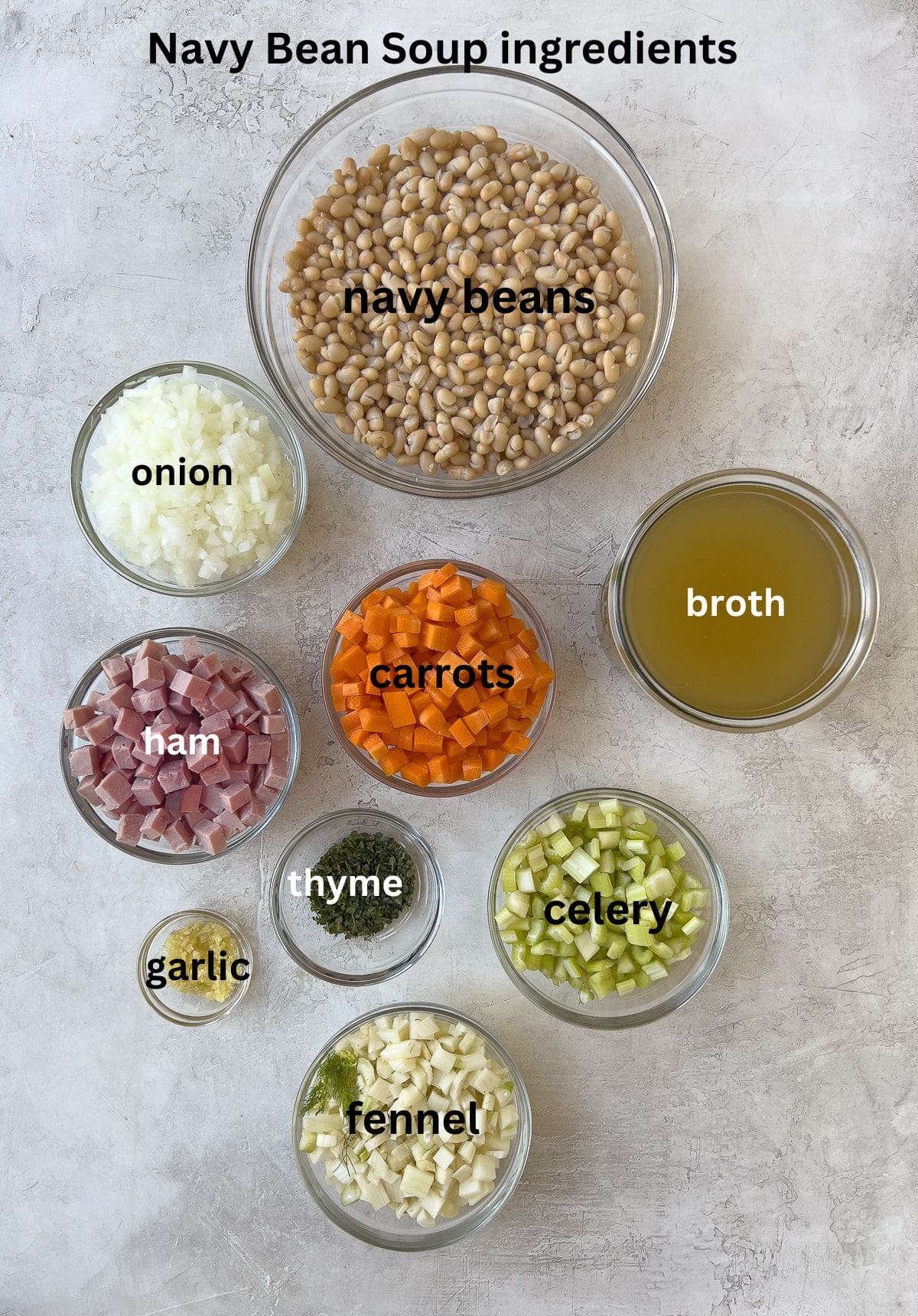
    Appetizer plates of smoked salmon on bread with whipped ricotta, capers, dill, and red onion.

    Serving Ideas for Smoked Salmon

    Smoked salmon is a versatile ingredient that works for breakfast, brunch, appetizers, and main dishes:

    • With classic bagels and cream cheese.
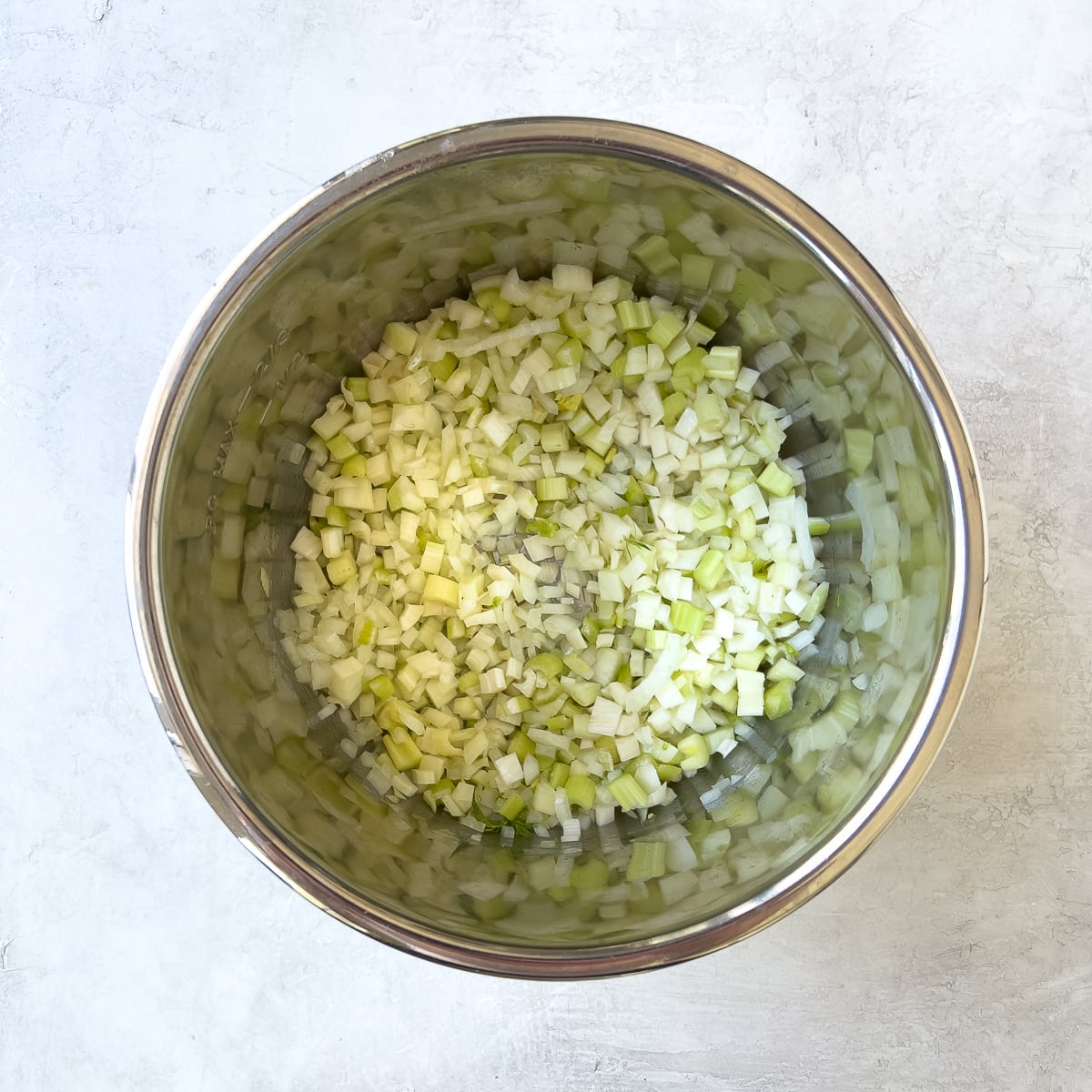
    • Flaked into fresh, colorful salads.
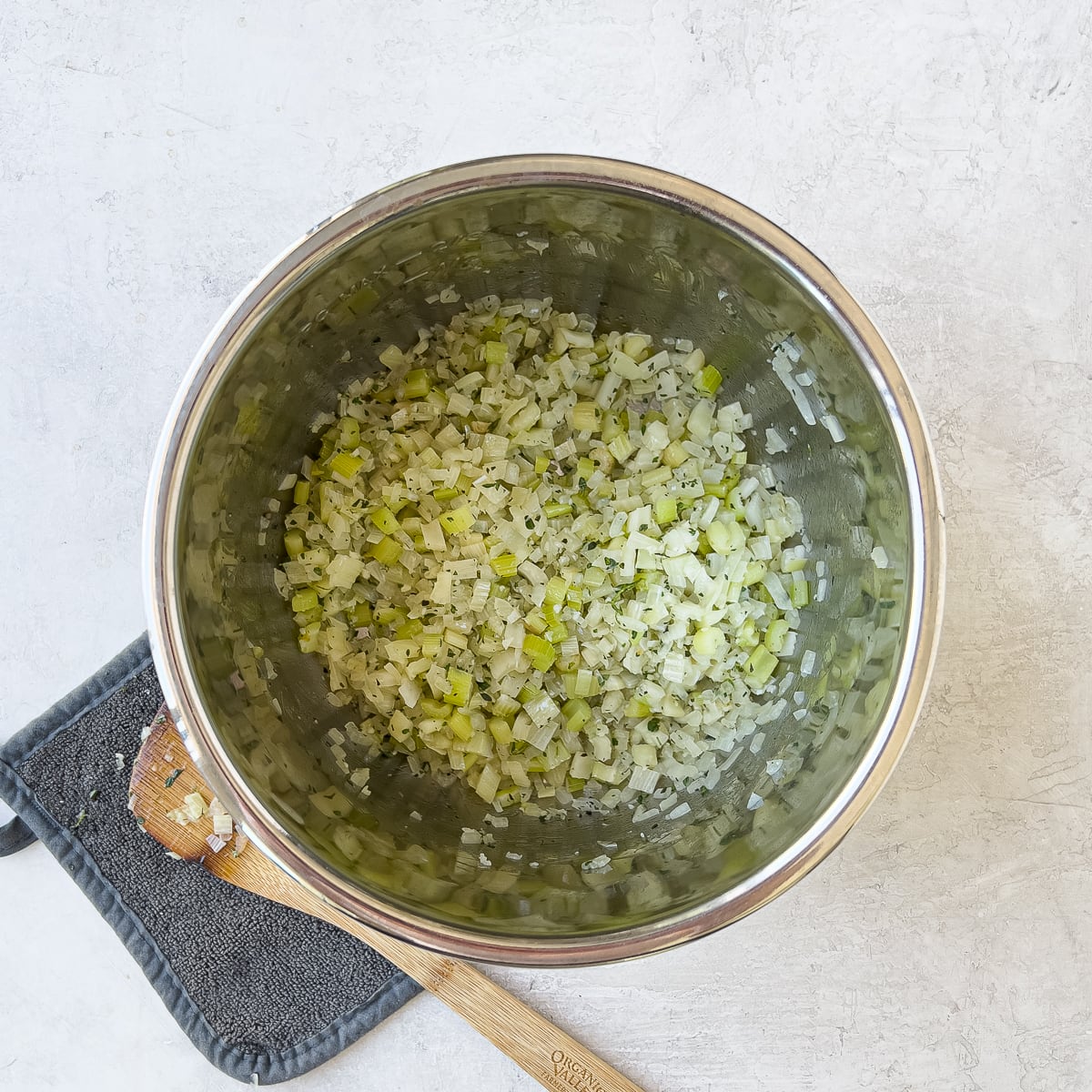
    • Creative appetizers like topping deviled eggs or cucumber bites.
    • Breakfast favorites: with eggs, avocado toast, or smoked salmon hash.
    • Lunch & dinner: tossed into pasta, risotto, or grain bowls; layered on pizza; rolled into sushi or wraps.
    • Appetizer platters: with capers, onions, and dill, or simply served on crackers with cream cheese or whipped ricotta.

    Storing Smoked Salmon

    Hot-smoked salmon keeps well in the refrigerator for 3 to 5 days in an airtight container. The flavor actually deepens a little after resting overnight, so don't feel like you need to eat it all right away.

    Freezing Tips

    Pellet smoked salmon freezes well. Once cooled, portion into serving sizes, wrap tightly in plastic wrap, and place in a freezer-safe bag or airtight container. Label and date it, then freeze for up to 2 months. Thaw overnight in the refrigerator for the best texture.

    While it might not be as tender and moist as freshly smoked, it's still excellent flaked into salads, pasta dishes, or scrambled eggs.

    Recipe FAQs

    Are there different ways to smoke salmon?

    Yes. Some recipes hot-smoke salmon at higher temps (around 225°F) for a firmer, flakier texture. Others, like this recipe, use a more traditional hot-smoking method-lower and slower at 165-185°F-for tender salmon with deeper smoke flavor. There's also cold-smoked salmon, which is cured and smoked at temps below 86° (usually done in commercial settings with special equipment), not usually done at home.

    What is gravlax?

    Gravlax is salmon that's cured with a mixture of salt, sugar, and fresh herbs-traditionally lots of dill-for 2-3 days in the refrigerator. Unlike smoked salmon, it's never smoked, so the flavor is delicate, herbal, and silky.

    What internal temperature should smoked salmon be cooked to?

    The USDA says 145°F, but you can take it to 140°F for a more tender texture, up to 150°F for firmer texture.

    What type of wood is best for smoking salmon on a pellet grill?

    Many people prefer alder, apple, or cherry (mild woods). Avoid mesquite or hickory as they are too strong. Pecan can be nice. I generally use a blend.

    Can you smoke frozen salmon on a pellet grill?

    Yes, but the salmon must be completely thawed first for even curing and smoking. Thaw it slowly in the refrigerator overnight, then follow the same curing, drying, and smoking process.

    More Pellet Grill Recipes

    Love your pellet grill? Me too! Check out more pellet grill recipes and grilling recipes on the grill and smoker recipe index page.

    • BBQ glazed smoked pork tenderloin sliced on a gray platter for serving.
      Smoked Pork Tenderloin (pellet grill)
    • Bright red orange Buffalo grilled chicken breasts on a gray platter with a serving fork.
      Grilled Buffalo Chicken
    • Smoked baby back ribs being sliced on a sheet tray with BBQ sauce.
      3-2-1 Ribs (Smoked Baby Back Ribs Recipe)
    • A browned, whole smoked turkey breast in a silver platter with bay leaves, potatoes on side,
      Smoked Turkey Breast (Bone-In, No Brine)

    Did You Make This Recipe?

    If you make this smoked salmon, please add your comment and let me know what version you made. I appreciate your feedback and enjoy hearing from you. They really help other readers. If you loved it, please give it a 5-star rating!

    📖 Recipe

    Flaked smoked salmon from a pellet grill on a serving board with lemons.

    Smoked Salmon on a Pellet Grill

    Sally Cameron
    Smoked salmon on a pellet grill, made with a simple salt-sugar cure and gentle wood smoke. This recipe yields enough for 8 appetizer portions or 4 main servings for salad or pasta.
    No ratings yet
    Prevent your screen from going dark
    Print Recipe Pin Recipe
    Prep Time 5 minutes mins
    Cook Time 3 minutes mins
    curing and drying 1 day d
    Total Time 1 day d 8 minutes mins
    Course Appetizer, main
    Cuisine American
    Servings 8 2 ounces per serving

    Equipment

    • Pellet grill or other smoker
    • pellets
    • Rimmed baking sheet

    Ingredients
      

    Salmon

    • 1 - 1 ½ pounds fresh salmon see salmon notes in post

    Smoked salmon cure

    • 6 tablespoons brown sugar or white
    • 2-3 tablespoons kosher salt notes below on salt brands
    • ½ teaspoons smoked paprika
    • ¼ teaspoon onion powder
    • ¼ teaspoon garlic powder
    • ¼ teaspoon black pepper optional

    Optional glaze

    • 2 tablespoons maple syrup for spice add a pinch of chipotle or cayenne

    Instructions
     

    24 hours ahead

    • Mix the cure. After removing salmon from the wrapping, be sure to remove any pin bones, place the salmon skin side down on a rimmed baking sheet on parchment and cover the salmon top well with the cure mix. You might not use it all depending on the size of your salmon fillet. Pat it on the salmon. Cover tightly with plastic wrap and refrigerate for 10-12 hours.
    • After the salmon has cured, rinse off cure and pat dry well with paper towels. Place salmon on a rimmed baking sheet with parchment on top of a wire rack for air circulation and allow to dry to create the pellicle, 10-12 hours.

    Smoke salmon

    • Remove the salmon from the refrigerator 45-60 minutes ahead of smoking. Be sure the grill is full of pellets and the grates are clean. Set the temperature to 180°F and super smoke (if you have the setting).
    • When the grill is hot, place the salmon fillet on the grill center. Use either a bulit-in probe or a wireless thermometer to be able to monitor cooking temperature. Salmon will take approximately 3- 3/12 hours depending on multiple factors. Cook to temperature not time.
    • When the salmon has reached 140°F, remove from the grill. Carefully turn the fillet over and peel off the skin. With a paring knife, scrape off the bloodline, the darker purple gray area under the salmon skin. Turn salmon over, and serve.
    Storing and Freezing

    • Hot-smoked salmon keeps well in the refrigerator for 3 to 5 days in an airtight container. The flavor actually deepens a little after resting overnight, so don't feel like you need to eat it all right away.
      To freeze, wrap well and use a freezer-safe bag or airtight container. Label and date it, then freeze for up to 2 months. Thaw overnight in the refrigerator for the best texture.

    Notes

    Salt notes: If using Diamond Crystal kosher salt  use 3 tablespoons for the cure. If using Morton, La Baleine, or Redmond kosher salt, use 2 tablespoons instead, as those salts are denser. 
    Chef’s Tip – How Much Salmon to Buy
    Smoked salmon loses about 25–30% of its weight during curing and smoking. A 1 ¼-pound fillet will finish closer to 13–14 ounces after shrinkage and trimming the skin. Plan on 4-6 ounces cooked salmon per person for a main dish, or 2 ounces if serving as an appetizer.
    For serving suggestions, please see the post. 
    Tried this recipe?Let us know how it was with a comment and leave a star rating!

    Green Juice with Cabbage and Celery

    01/19/2021 by Sally Cameron Leave a Comment

    Ever juice cabbage? This beautiful green juice with cabbage also has celery juice. Celery juice and cabbage juice are a great pairing with a crisp, clean, almost sweet flavor and a beautiful light green color. And with the health benefits of cabbage juice, this is one healthy healing juice. If you're a fan of celery juice and green juice, add this recipe to your juicing routine. Cabbage: it's for more than coleslaw and tacos!

    green cabbage juice | afoodcentriclife.com

    This green cabbage celery juice is my new go-to green juice. One day I was making celery juice and ran out except for a big head of green cabbage. I'd never juiced cabbage but thought, why not? Try it. Cabbage is for more than coleslaw, sauerkraut, taco filling, and stir fry (but it's good there too).

    [feast_advanced_jump_to]

    Recipe Ingredients

    Cabbage is a member of the cruciferous vegetable family like kale, broccoli and cauliflower and you know how good these veggies are for you.

    Please see recipe card for measurements.

    • Cabbage: use green cabbage for this juice.
    • Celery: Blends nicely with the cabbage, lemon and apple, and buy organic.
    • Green apple: I buy Granny Smith apples for juicing as they are lower in sugar than other apples with a nice tart flavor.
    • Lemon: Leave the lemon peel on if thinner skinned. There is beneficial limonene in the peel that is not in the lemon juice.
    celery juice | afoodcentriclife.com

    Recipe Instructions

    Wash all of your produce and get it ready to juice when you get home from the market, then you'll get your juice made faster. Simply process according to your brand of juicer manufacturer directions.

    • Cut the cabbage head into quarters, then into smaller chunks if needed for the feed tube of your juicer.
    • Chop off celery leaves as they can taste bitter.
    • Core and seed the apple, then quarter it.

    Some people peel lemons for juicing; I do not. Limonene is a chemical found in the peels of citrus fruits and in other plants that you want to consume. If the lemon has a heavy skin, slice off the ends before juicing.

    The Health Benefits of Cabbage Juice

    Studies recognize cabbage juice, referred to as vitamin U, for it's effectiveness in normalizing gastric and intestinal function. It's healing for peptic ulcers commonly caused by a Helicobacter pylori bacterial infection in the digestive system.

    The H. pylori bacteria attacks the stomach lining and in some people leads to ulcers and an inflammatory condition called gastritis. As someone who's had an H. pylori infection, it's not something I'd wish on anyone. I experienced crippling stomach aches, bloating, burping, and other unpleasant symptoms.

    If you're experiencing ongoing intestinal problems, please work with your healthcare provider to understand what's causing the problem and find treatments options.

    green cabbage celery juice | afoodcentriclife.com

    Juicing Tips

    It's best to buy organic for juicing, especially as celery usually shows up on the Dirty Dozen list for high pesticides. Cabbage is usually way down the list but I still recommend organic if possible. I use Eat Cleaner to safely wash my produce.

    Serving and Storage

    This recipe makes 2-18 ounce servings or 4 smaller ones. Juice is best consumed right after preparing. I love it at room temperature, right out of the juicer, but see the tip below.

    Chef's Tip: Depending on your juicer brand, you can keep the fresh juice tightly capped in bottles with no air between the cap and juice level for 24-72 hours. If it's a little low, fill with filtered water to top it off. See your juicer brand guidelines.

    For juicers, I use both the Slowstar and the Greenstar Elite from Tribest. Both models are slow masticating juicers that get the most out of your produce.

    Juices made with the Slowstar hold for 24 hours in the refrigerator and up to 72 hours for the Greenstar with minimal loss of nutrition. If you love to juice, these machines are a worthwhile investment in both time and money.

    For Histamine Intolerance

    As citrus is high in histamines, you can leave it out. It does have a better flavor with it and lemon lifts the flavor. I am ok with this this juice but do what works best for you.

    More Recipes

    For other ways to get cabbage into your diet, try this broccoli cabbage slaw or braised cabbage and leeks. All delicious.

    • Glasses of bright green, healthy cucumber, celery vegetables juice.
      Celery Cucumber Juice
    • Colorful fresh vegetable juices in tall glass bottles with caps on.
      The Best Healthy Juice When Juicing with Vegetables
    • glass of deep ruby red beet juice with vegetables behind.
      Beet Juice Recipe
    • carrot celery morning glow juice
      Carrot Ginger Juice Recipe

    ⭐️Did you Make This Recipe?

    If you make this recipe, please add your comment. I appreciate your feedback and enjoy hearing from you. If you loved it, please give it a 5-star rating! They really help other readers. If you had an issue with it, let me help you figure it out.

    📖 Recipe

    green cabbage juice | afoodcentriclife.com

    Green Juice with Cabbage and Celery

    Sally Cameron
    Not just for coleslaw and sauerkraut, cabbage is delightful and healing when juiced with celery, green apple and lemon. It's light, refreshing and tastes delicious.
    5 from 4 votes
    Prevent your screen from going dark
    Print Recipe Pin Recipe
    Prep Time 10 minutes mins
    Total Time 10 minutes mins
    Course Beverage, Juice
    Cuisine American
    Servings 2 18-ounce juices
    Calories 222 kcal

    Equipment

    • Juicer

    Ingredients
      

    • 1 large head green cabbage approximately 1 pound
    • 1-2 heads celery 1 ½ pounds
    • 1 green apple
    • 1 small lemon

    Instructions
     

    • After washing all produce, process vegetables through your juicer according to the manufacturers directions for your particular juicer. it's best enjoyed right away.

    Notes

    It's best to buy organic for juicing, especially as celery usually shows up on the Dirty Dozen list for high pesticides. Cabbage is usually way down the list but I still recommend organic if possible.

    Nutrition

    Calories: 222kcalCarbohydrates: 54gProtein: 9gFat: 1gSaturated Fat: 1gPolyunsaturated Fat: 1gMonounsaturated Fat: 1gSodium: 130mgPotassium: 1285mgSugar: 31gVitamin A: 762IUVitamin C: 262mgCalcium: 277mgIron: 3mg
    Tried this recipe?Let us know how it was with a comment and leave a star rating!

    Pasta Shells Stuffed With Ricotta

    12/05/2011 by Sally Cameron Leave a Comment

    Stuffed shells with kale and ricotta

    Pasta shells stuffed with ricotta are classic Italian-American comfort food-cheesy, creamy, and baked in marinara until golden and bubbling. This easy vegetarian stuffed shells recipe is hearty, family-friendly, and freezer-ready. I like to add spinach or kale to the ricotta filling for extra flavor and color, then finish with a sprinkle of Parmesan. They also freeze beautifully for make-ahead meals.

    An oval baking dish of pasta stuffed with ricotta, kale and topped with cheese and marinara.

    Pasta shells stuffed with ricotta are one of those recipes I've made for years, and it's still a reader favorite. Baked in marinara with plenty of cheese until hot and bubbling, this cozy dinner always disappears fast. I've even made double and triple batches for parties to feed a crowd-with rave reviews. Make them with wheat pasta shells, gluten-free pasta shells or even manicotti shells.

    [feast_advanced_jump_to]

    Why You'll Love Pasta Shells Stuffed With Ricotta

    • Hearty Italian-American classic - Cheesy, cozy comfort food that's always a crowd-pleaser.
    • Vegetarian-friendly - Meatless, so it's perfect for Meatless Mondays or a satisfying vegetarian dinner.
    • Make-ahead & freezer-friendly - Prep in steps, refrigerate until ready to bake, or freeze extras for an easy meal later.
    • Pasta flexibility - Use jumbo gluten-free or wheat jumbo shells, or use manicotti if shells are not available.

    Love ricotta like I do? Try this easy whipped ricotta dip.

    Ingredients You'll Need

    • Jumbo pasta shells - Look for boxes labeled jumbo shells (wheat) or gluten-free shells; gluten-free manicotti also works for stuffing. See option below for lasagna rolls.
    • Kale or spinach - Lacinato kale (also called Italian or dino kale) for body and color, but spinach is the classic choice and an option.
    • Olive oil - Extra virgin olive oil for sautéing and flavor.
    • Onion - White, yellow, or brown onions all work here.
    • Ricotta cheese - Whole milk ricotta gives the richest, creamiest filling, though low-fat ricotta can be used.
    • Garlic - Fresh garlic cloves are best; garlic puree works in a pinch.
    • Egg - Binds the ricotta filling, adds protein, and keeps it creamy.
    • Parmesan cheese - Freshly grated Parmesan adds sharp, nutty flavor; buy a block and grate for the best taste.
    • Herbs - Fresh flat-leaf parsley for brightness plus dried Italian seasoning for depth.
    • Spices - A pinch of nutmeg enhances the ricotta, and red chili flakes add gentle heat.
    • Pasta sauce - Use your favorite jarred marinara or make a batch of my easy homemade pasta sauce a day ahead (it freezes beautifully).

    Please see the recipe card for measurements, salt and pepper.

    For homemade pasta sauce recipes, try this mushroom sauce for pasta. It's rich and hearty.

    Substitutions and Variations

    • Spinach instead of kale - Fresh spinach works beautifully in the ricotta filling. Frozen spinach also works; just thaw it completely, cook it, and press out as much water as possible so the filling isn't watery.
    • Herb flexibility - Basil or oregano can stand in for Italian seasoning if that's what you have.
    • No shells? Make lasagna rolls - Cook lasagna noodles and trim them to about 6 inches. Place ¼ cup of the filling on one end, roll it up, and lay flat in the casserole dish. Top with sauce and bake. Works with wheat or gluten-free lasagna noodles if jumbo shells aren't available.

    For a stand alone spinach and ricotta filling, try this ricotta cheese filling recipe.

    How to Make Pasta Shells Stuffed With Ricotta

    Start a large pot of water to boil for the kale and shells and set aside a clean kitchen towel for the cooked pasta shells.

    Slicing the tough center ribs from kale leaves on a cutting board.
    1. Trim center stem from kale leaves and chop crosswise into thin ribbons. Cook in boiling salted water 2 minutes.
    Shocking cooked kale in ice water to stop the cooking process and chill leaves.
    1. Plunge cooked kale into ice water to stop the cooking process and chill. Drain and dry. A salad spinner works well. Keep water boiling for pasta.
    Cooked jumbo pasta shells cooling on a red striped kitchen towel.
    1. Cook the pasta shells according to package directions. Drain off water, cool on a kitchen towel.
    Greens, ricotta, eggs, cheese, and spices in a glass bowl for ricotta filling.
    1. Cook the onion and garlic in olive oil, add chopped kale. Mix in a medium bowl with the cheeses, eggs and herbs until smooth for filling.
    A white casserole dish of pasta shells stiffed with ricotta and kale getting ready to bake.

    Stuff the shells by hand with a large spoon, like a soup spoon or table spoon, then arrange the shells into a baking casserole dish. Cover with your favorite tomato sauce and bake.

    For another classic pasta dish, try this lasagna with no-boil noodles, either gluten-free or not.

    How to Serve Pasta Shells Stuffed With Ricotta

    Once the pasta shells are baked and piping hot, serve them family-style straight from the casserole dish or spoon portions into wide, shallow bowls along with the sauce. Set out plenty of freshly grated Parmesan. A crisp green salad adds freshness, and gluten-free garlic toast makes the classic pairing complete.

    Freezing and Heating Tips

    • To freeze - Stuffed pasta shells freeze well for future meals. Place portions in small airtight containers, cover with extra sauce to keep them moist, then label and date before freezing. Properly stored, they'll last for about 3 months.
    • To thaw - The safest way to thaw is over night in the refrigerator. Don't thaw on the counter as that is not food safe.
    • To re-heat - Pre-heat the oven to 350F. Place oven safe containers on a rimmed baking sheet for easier handling, cover with foil, and heat until the shells reached 165°F measured internally with a digital thermometer. Add fresh Parmesan at serving.
    Dish of stuffed pasta shells with ricotta and kale topped with red pasta sauce.

    More Pasta Recipes

    If you love pasta shells stuffed with ricotta, here are a few more pasta dishes to try next, from soup to salad or more entree dishes.

    • seared scallops with pasta
      Pasta Recipe With Scallops
    • A white bowl of sun-dried tomato pesto pasta with basil and parmesan garnish.
      Creamy Sun-Dried Tomato Pesto Pasta
    • A dutch oven full of chicken minestrone soup with a bowl on the side.
      Hearty Chicken Minestrone Soup
    • Gluten-free pasta salad with tomatoes, cucumber, pine nuts, herbs, and more.
      Lemony Mediterranean Pasta Salad Recipe

    Did You Make This Recipe?

    If you make pasta stuffed shells with ricotta, please let me know how they came out. I appreciate your comments and am always here to answer questions. Your comments help other readers too.

    📖 Recipe

    hale and ricotta stuffed shells | AFoodcentricLife.com

    Stuffed Pasta Shells with Ricotta and Spinach

    Sally Cameron
    Use either spinach or kale with ricotta for filling jumbo pasta shells. It's great for meatless Mondays. Used homemade tomato sauce or your favorite jar sauce. To save time, make your filling and sauce ahead and refrigerate, then cook the pasta, stuff the shells and bake when ready. Serve with a salad. See spinach notes at the end. Serve 3-4 shells per person.
    5 from 1 vote
    Prevent your screen from going dark
    Print Recipe Pin Recipe
    Prep Time 45 minutes mins
    Cook Time 30 minutes mins
    Total Time 1 hour hr 15 minutes mins
    Course Main Course
    Cuisine Italian
    Servings 4 to 5
    Calories 537 kcal

    Equipment

    • Large pasta pot to cook shells

    Ingredients
      

    • 16 pieces jumbo pasta shells gluten-free or wheat
    • 1 bundle flat leaf kale (lacinato or Italian) For spinach see notes below
    • 2 tablespoons olive oil
    • 1 cup finely chopped onion
    • 2 large garlic cloves finely chopped
    • 15 ounces Ricotta cheese
    • ¾ cup freshly grated Parmesan-Reggiano cheese divided use
    • 1 large egg
    • ¼ cup chopped fresh flat leaf parsley
    • 1 teaspoon dried Italian blend herbs or dried basil
    • ¾ teaspoon sea salt
    • ¼ teaspoon ground black pepper
    • ⅛ teaspoon freshly grated nutmeg optional
    • 4 cups homemade pasta sauce or your favorite jarred brand

    Instructions
     

    • Fill a large pot ¾ full of water, add salt, ad bring to a boil to cook the kale leaves and the pasta shells.

    Prep the Kale

    • Strip the tough center rib from the kale leaves or slice out with a sharp knife. Roll leaves like crosswise like a cigar and slice into thin ribbons. Clean kale ribbons.

    Cook the Shells and Kale

    • Cook pasta shells according to package directions. Remove the cooked shells to a clean kitchen towel to cool. Bring water back to a boil and add the kale leaves.
      Cook (blanch) for 2 minutes. Remove the leaves to a bowl of ice water for 1-2 minutes. When the kale is cold, drain, squeeze dry in paper towels. A salad spinner can help get rid of excess moisture. Chop the kale into small pieces and set aside.

    Make the Filling

    • In a medium skillet or saute pan, heat olive oil. Add onion and cook until its soft and transparent. Add the garlic and cook another 30-60 seconds. Add the chopped kale and cook 2 minutes. Place in a medium bowl and mix in ricotta and ½ cup of the Parmesan, egg, herbs, and seasonings until smooth.

    Fill Shells and Bake

    • Place about a 1 cup of the tomato sauce in a 9×13 casserole dish. Place about two tablespoons of filling in each shell. For reference, see the photo in the post. You want the shells to be full but not bursting.
      Place filled shells on top of the sauce. Top the shells with more sauce. Sprinkle with the last quarter cup of the Parmesan cheese. Cover with foil and bake in a 350 degree oven for about 30 minutes, until hot and bubbly.

    Notes

    If you can't find jumbo shells, use manicotti shells. If you ship the shells or manicotti beware they often break in transit. Better to find in a store or be sure to buy an extra box to cover breakage.
    For lasagna rolls - Buy GF lasagna noodles and make GF lasagna rolls. See the post for more detail.
    To substitute spinach - Swap 1 package of frozen baby spinach leaves (in a loose package not the block) for the kale. Cook and drain according to the package directions and squeeze dry in paper towels or a clean smooth textured kitchen towel. 
     

    Nutrition

    Serving: 3shellsCalories: 537kcalCarbohydrates: 46gProtein: 28gFat: 28gSaturated Fat: 13gPolyunsaturated Fat: 2gMonounsaturated Fat: 11gTrans Fat: 0.01gCholesterol: 113mgSodium: 2011mgPotassium: 1040mgFiber: 6gSugar: 12gVitamin A: 2099IUVitamin C: 26mgCalcium: 517mgIron: 4mg
    Tried this recipe?Let us know how it was with a comment and leave a star rating!

    Corn Souffle (From Scratch No Jiffy Mix)

    09/18/2025 by Sally Cameron Leave a Comment

    Golden corn souffle in a glass baking dish on a gray plaid kitchen towel.

    This easy corn soufflé side dish delivers all the comfort of the classic without a box of Jiffy mix. This light, cheesy version is made from scratch with fresh or frozen corn, creamy half and half, and a blend of cheeses. It bakes up golden and puffed, with a custardy interior that's perfect for holiday dinners with roast turkey or weeknight chicken. Naturally gluten-free when made with gluten-free cornmeal.

    A golden corn souffle casserole in a glass baking dish with corn cobs and parmesan nearby.

    I wanted a corn side dish that felt worthy of company dinners but didn't rely on a box mix. This from-scratch corn soufflé delivers all the comfort of the classic-light, cheesy, and custardy-without the Jiffy. In summer I use fresh corn, but frozen works beautifully too, which means it's just as perfect for holiday dinners with roast turkey or weeknight chicken.

    [feast_advanced_jump_to]

    Why You'll Love This Corn Souffle

    • Easy holiday side dish - perfect for Thanksgiving, Christmas, or Sunday dinner.
    • From scratch, no box mix - light and cheesy with clean ingredients.
    • Naturally gluten-free - when made with gluten-free cornmeal.
    • Make-ahead friendly - prep early, fold in egg whites and bake before serving.

    I created this recipe to go with my smoked pork tenderloin, what a combo!

    Chef's Tip - Corn Soufflé vs. Corn Pudding vs. Corn Casserole
    Corn pudding is usually creamier and looser, often made with creamed corn for a custard-like texture. Corn casserole can be denser, especially when made with Jiffy mix. This corn soufflé is lighter and airier, with a puffed top from whipped egg whites and a soft, custardy center - simply from scratch, no box mix needed.

    Ingredients You'll Need

    Ingredients for corn souffle in glass prep bowls on a counter with corn kernels, cheeses, eggs, cornmeal.
    • Corn - Fresh corn, cut from the cob, or frozen corn, fully thawed.
    • Dairy - Use half-and-half for a creamy soufflé.
    • Egg yolks - Form the custardy base of the soufflé.
    • Egg whites - Whipped for lift, replacing baking soda or powder.
    • Butter - Unsalted butter for the base.
    • Cornmeal - Fine-ground cornmeal, not polenta or coarse-ground.
    • Cayenne - A pinch adds a little spice (optional).
    • Cheeses - Gruyere or white cheddar for creaminess, plus parmesan for a salty, nutty finish. Fontina, or yellow cheddar work as well.
    • Honey - A mild flavored honey such as orange blossom or use zero0sugar hone based on monk fruit.

    Please see the recipe card for measurements, salt, and pepper (black or white).

    Chef's Tip - Why No Jiffy Mix?
    Most corn soufflé recipes call for Jiffy mix - a boxed corn muffin mix with added sugar, preservatives, and wheat flour. I skip it so I can control the flavor, texture, and ingredients (and keep it gluten-free). This from-scratch version is just as easy, with a fresher, cleaner taste, no boxes needed.

    Substitutions & Variations

    These easy corn soufflé variations let you customize the recipe for different flavor profiles while keeping it light, fluffy, and perfectly baked every time.

    • Mexican corn soufflé - Stir in 1-2 diced roasted poblano peppers, 1 cup shredded pepper jack or cheddar cheese, ½ cup drained canned green chilies before baking. Garnish with chopped cilantro before serving. A pinch of smoked paprika or ancho chili powder is good too.
    • Garlic & Herb corn souffle - Add 2-3 cloves of sautéed garlic to the batter, and fold in 2-3 tablespoons of chopped fresh herbs such as parsley, thyme, or chives. This gives the soufflé a savory, aromatic flavor. This also doubles as a light corn casserole soufflé-airy and cheesy instead of dense

    Gluten-free corn bread? Yes please. It's so good and so easy.

    Chef's Tip - Make Ahead Tips for Corn Souffle
    You can prepare the soufflé base several hours in advance - right up to the egg white whipping and folding step. Keep the base covered in the fridge. When you're ready to bake, get it out to warm up a bit, then whip the egg whites (room temp), fold them in, then straight into the pre-heated oven for the best puff.

    How to Make Corn Souffle

    Use a 2 quart baking dish to bake corn soufflé. Mine is a rectangular glass 11"x7". Start by spraying the baking dish with avocado oil.

    Cutting corn kernels off the cob on a white cutting board.
    1. Slice fresh corn off cobs.
    Cooking corn kernels in a pot of water.
    1. Cook in boiling salted water for 3 minutes.
    Draining bright yellow corn after cooking through a silver sieve.
    1. Drain and cool corn. If using frozen corn, fully thaw and drain. No need to cook as it is blanched.
    Pureed corn and half and half in a blender from the top down.
    1. Puree half and half with 1 cup corn.
    Glass bowl with cornmeal and silver whisked being mixed.
    1. Whisk together melted butter, cormeal, salt, pepper, and cayenne.
    A bowl of corn souffle batter with corn kernels and half and half.
    1. Pour in the blender liquid and stir in the other 1 cup corn.
    Adding grated cheese to a bowl of corn casserole batter.
    1. Stir in the cheeses.
    Softly whipped egg white in a large glass measuring container.
    1. Whip egg whites to soft peaks.
    Folding egg whites into the corn souffle batter.
    1. Gently fold into the corn souffle batter in 3 batches.
    A rectangular glass baking dish filled with creamy corn souffle batter ready to bake.
    1. Pour into a sprayed 2 quart baking dish and bake at 350°F for 30-35 minutes until puffed and golden.
    Golden corn souffle, right out of the oven in a glass baking dish on a gray plaid kitchen towel.

    How to Enjoy Corn Souffle

    • Classic holiday sides - Pair with roast turkey, prime rib, roast chicken or ham, plus green beans, cranberries, or mashed potatoes for a festive spread.
    • With smoked meats - Perfect alongside smoked pork tenderloin, pork chops, or smoked turkey breast. The creamy, cheesy soufflé balances the smoky flavors beautifully.
    • Summer cookouts - Serve with grilled chicken, steak, or fish, plus a fresh green salad.

    Storing and Freezing Corn Souffle

    Corn soufflé is best enjoyed fresh from the oven while the top is puffed and golden. If you have leftovers:

    Storage: Cover tightly and refrigerate up to 3 days. Reheat gently in a 325°F oven until warmed through, to 165°F.

    Can You Freeze Corn Soufflé?
    I do not recommend freezing. Soufflés lose their airy lift and custardy texture once thawed.

    Recipe FAQs

    Can I use canned corn instead of fresh or frozen?

    Yes, but fresh or frozen corn works best for flavor and texture. If using canned, drain it well and pat dry before adding. The kernels will be softer and less vibrant than fresh or frozen, and might have a slightly metallic taste from the can or liquid, but canned is an option.

    Why does your recipe not use baking powder or baking soda?

    Recipes using cornbread mixes often rely on chemical leaveners for lift such as baking powder and baking soda. In this corn soufflé, whipped egg whites provide the rise, so no baking powder or baking soda is needed.

    Can I make it in a 9×13 dish for a crowd?

    Yes - scale the recipe by 1.5× for a standard 9×13-inch dish (about 3 quarts). Bake at the same temperature, but add 5-10 minutes and check early for doneness.

    Can I make corn souffle ahead of time?

    Yes - you can prep the base earlier in the day and finish just before baking. See the Chef's Tip above for details.

    More Recipes With Corn

    Love corn as much as I do? Try one of my fresh corn salads. Each one is bright, colorful, and makes the perfect side for summer dinners or holiday tables.

    • Quinoa and corn salad in white bowl with mint and a gold spoon.
      Quinoa Corn Salad with Lemon Vinaigrette
    • Closeup of corn succotash with red and green peppers and bacon.
      Sweet Corn Succotash with Bacon
    • Cold green bean salad with cherry tomatoes, corn, feta and red onion in a white bowl.
      Cold Green Bean Salad With Tomatoes and Corn
    • Bright colored avocado , black bean, and corn salad with tomatoes and jalapenos in a white bowl.
      Avocado Corn and Black Bean Salad

    Did You Make This Recipe?

    Did you make this corn souffle? Please let me know how you enjoyed it. If you loved it, please give it a 5 star rating! They really help other readers and I enjoy hearing from you.

    📖 Recipe

    Golden corn souffle in a glass baking dish on a gray plaid kitchen towel.

    Corn Souffle (no Jiffy Mix)

    Sally Cameron
    Light and cheesy with a puffed golden top, corn souffle is a terrific side dish for late summer and into fall and holidays.
    No ratings yet
    Prevent your screen from going dark
    Print Recipe Pin Recipe
    Course Side Dish
    Cuisine American
    Servings 6
    Calories 229 kcal

    Equipment

    • 2 quart baking dish

    Ingredients
      

    • 2 cups fresh corn kernels or frozen, thawed
    • 1 cup half and half
    • 3 tablespoons unsalted butter melted and cooled
    • 4 large egg whites at room temperature
    • 3 large egg yolks
    • 2 teaspoons honey regular or no-sugar
    • 3 tablespoons fine cornmeal
    • ½ teaspoon fine sea salt
    • ¼ teaspoon white pepper or black pepper
    • 1 pinch cayenne pepper
    • ½ cup finely grated parmesan cheese 2 ounces
    • ½ cup grated gruyere 1.6 ounces, or white cheddar

    Instructions
     

    Get ready

    • Pre-heat the oven to 375°F, Spray a 2-quart baking dish with avocado oil or non-stick spray. Melt the butter and cool slightly. Separate the eggs. You need all 4 whites and 3 yolks.

    Prep the corn

    • If using fresh corn, slice the kernels off the cob and cook in boiling salted water for 3 minutes, then drain and cool. If using frozen corn, thaw completely and use as is (it is already blanched). Puree 1 cup of the corn kernels with the half and half until smooth in a blender.

    Make the batter

    • In a medium bowl, whisk the yolks and melted butter together until smooth, then add the cornmeal, salt, pepper, and cayenne. Add the liquid from the blender. Fold in the remaining 1 cup whole corn kernels, then cheeses, by hand.

    Beat egg whites

    • Beat the egg whites with a hand mixer until soft peaks form. Gently fold the whipped egg whites into the batter in 3 additions. The batter will be fluid.

    Bake corn souffle

    • Pour the batter into the baking dish. Sprinkle a little extra parmesan over the top if desired. Bake for 30-35 minutes or until the top is puffed and a golden brown, a little firm to the touch. Serve immediately.

    Notes

    Corn souffle is best served right from the oven, but if you've made it and set it aside for awhile, it can be re-heated successfully in a warm oven covered with foil. It might not be quite as creamy but it still tastes terrific. 

    Nutrition

    Calories: 229kcalCarbohydrates: 16gProtein: 12gFat: 14gSaturated Fat: 7gPolyunsaturated Fat: 1gMonounsaturated Fat: 4gTrans Fat: 0.02gCholesterol: 122mgSodium: 462mgPotassium: 268mgFiber: 2gSugar: 5gVitamin A: 536IUVitamin C: 4mgCalcium: 223mgIron: 1mg
    Tried this recipe?Let us know how it was with a comment and leave a star rating!

    How to Brine Pork (Tenderloin, Chops, & More) + Salt Chart

    09/16/2025 by Sally Cameron 1 Comment

    A container of golden brine with herbs, and garlic for brining pork.

    Brining pork doesn't have to be confusing. This simple guide shows you how to brine pork with one reliable, not-too-salty pork brine recipe that works for chops, tenderloin, and roasts. Brining helps pork stay juicy, well-seasoned, and forgiving-especially if it tends to dry out. I'll walk you through the basic ratio, salt options and brands, and how long to brine for great results.

    A container of clear golden pork brine with fresh herbs and crushed garlic.

    Brining is one of the simplest ways to ensure pork stays moist and flavorful from edge to center. This guide goes beyond the recipe - you'll find a quick salt-to-water chart below that accounts for different salt brands, so you can match the exact brine strength I use in my kitchen. Whether you're preparing a quick weeknight dinner or a holiday roast, this method delivers consistently juicy, delicious results.

    [feast_advanced_jump_to]

    Why You'll Love This Pork Brine

    • Locks in moisture - Helps keep pork juicy and tender after cooking.
    • Works for multiple cuts - Great for tenderloin, chops, loin, and roasts.
    • Customize flavors - Add herbs, spices, or aromatics to suit your taste.
    • Minimal prep time - Just mix until dissolved.

    For a delicious pork tenderloin recipe, try this roast pork tenderloin with Dijon mustard sauce.

    Ingredients You'll Need

    Ingredients for pork brine in glass prep bowls on the counter.
    • Water - The base for the brine; use filtered water if possible.
    • Salt - Kosher salt works best for brining. See the salt chart below for recommended brands. It dissolves easily, has a clean flavor, and doesn't contain additives like anti-caking agents, which can leave a metallic taste.
    • Brown sugar - The classic choice for a pork brine, adding balance to the saltiness. You can also use honey or maple syrup for a different flavor.
    • Garlic - Use fresh garlic cloves for the best flavor.
    • Herbs - Fresh thyme or rosemary sprigs work beautifully.
    • Pepper - Whole peppercorns add gentle heat and aroma

    Please see the recipe card for measurements.

    Chef's Tip - Salt Brands Matter
    Not all kosher or sea salts weigh the same by volume, which means a "½ cup" can vary dramatically in actual saltiness. Morton kosher salt is denser - ½ cup weighs about 120 g - while Diamond Crystal kosher salt is lighter at about 73 g for the same volume. La Baleine sea salt falls in between at about 100 g per ½ cup, and it's my go-to for brining because of its clean, consistent flavor and mid-range density. I also keep Redmond Real Salt kosher salt in my kitchen for everyday seasoning, but for brines I usually reach for La Baleine. For the most consistent brine, measure salt by weight rather than volume, matching the weights in my chart below.

    This sour cream pork chops recipe benefits from a quick pork chop brine first for even juicier, more flavorful meat

    Substitutions and Variations

    • Sugar substitute - Swap brown sugar for golden monk fruit.
    • Citrus brine - Add citrus zest and juice along with your favorite herbs and spices.
    • Fall brine - Swap part apple juice for water and use maple syrup in place of brown sugar for a seasonal twist. See the recipe card notes at the end.
    Boxes of different kosher salts for brining on a kitchen counter.

    Pork Brine Salt Chart

    Salt measurements can be tricky in brine recipes because the same "½ cup" can weigh very differently depending on the brand and type of salt. This chart is for 8 cups (1.9 L) water. If you use a different amount of water, scale the salt up or down proportionally.

    Quick scaling tip: For 4 cups water, use half the salt. For 16 cups water, use double the salt.

    Download My Pork Brine Salt Chart
    Want a printable version to keep in your kitchen? Click here to download the PDF.

    Salt Brand / TypeWeight per ½ cupTarget Weight for RecipeSalinity %*
    Morton Kosher Salt~120 g120 g (½ cup)~6.25%
    Diamond Crystal Kosher~73 g120 g (~¾ cup)~6.25%
    La Baleine Sea Salt~100 g120 g (~scant ⅔ cup)~6.25%
    Redmond Real Salt Kosher~112 g120 g (~slightly over ½ cup)~6.25%
    Table Salt (not recommended)~146 g120 g (~scant ½ cup)~6.25%

    Chef's note - 6.25% brine is a standard medium-strong brine for pork.

    How to Brine Pork Chops (Using the Salt Chart)

    • Thickness matters - Thicker chops can handle a longer brine; thin chops brine fast and can get overly salty.
    • Typical brine time range - Plan 30-60 minutes for thin chops and 1-4 hours for thicker chops (depending on brine strength and how salty you like them).
    • Don't over-brine thin chops - For chops around ½-¾ inch, keep it on the shorter end so the texture stays tender, not "cured."
    • Pat dry before cooking - Remove chops from the brine, pat very dry, then cook-this helps you get better browning and prevents steaming.

    Chef's Tip - Skip the Brine if Pork is Pre-Seasoned
    Some pork cuts are sold already "enhanced" with a salt solution for tenderness and moisture. Check the package label - if it lists water, salt, or broth, it's already brined and doesn't need this recipe. Brining again could make it too salty.

    How to Make Pork Brine

    Salt, brown sugar, bay leaf, herbs, garlic and peppercorns for pork brine in a bowl.

    Simply dissolve the salt and sugar in the water, then add the aromatics. Pork brine is ready to use. If making ahead, cover and refrigerate.

    This pistachio-crusted pork rib roast would benefit from an 8-12 hours brine, and it beautiful for holidays.

    Chef's Tip: You can make pork brine 1-2 days ahead and store it covered in the refrigerator. If your brine includes fresh garlic, the flavor can intensify over time, so add it closer to brining time for a milder taste.

    How to Use Pork Brine

    Two pork tenderloins submerged in a pork brine in a shallow casserole dish.

    Download My Pork Brine Salt Chart
    Want a printable version to keep in your kitchen? Click here to download the PDF.

    1. Place pork in a large non-reactive container or resealable bag.
    2. Pour cool brine over the meat until fully submerged.
    3. Refrigerate for the recommended brining time (see recipe notes):
      • Pork tenderloin or pork chops: 1-4 hours
      • Pork loin or roasts: 8-12 hours (but not longer).
    4. Remove pork from the brine and discard the liquid.
    5. Rinse briefly to remove surface salt, then pat dry with paper towels.
    6. Season lightly (the brine has already added salt) and cook as desired - grilling, smoking, roasting, or pan-searing.

    Recipe FAQs

    Can you brine any cut of pork?

    Yes. This all-purpose pork brine works for pork chops, pork tenderloin, pork loin, and roasts. You can also adapt it for ribs or pulled pork to help keep the meat juicy and flavorful. If you are specifically looking for a pork chop brine recipe, this is a great one.

    Do you rinse pork after brining?

    Yes. After brining, remove the pork, discard the liquid, and rinse briefly under cold water to remove excess surface salt. Pat completely dry before cooking for the best sear and crust.

    Can I brine pork before smoking or grilling?

    Absolutely. Brining pork before smoking, grilling, or roasting helps lock in moisture and adds flavor from the inside out. Just be sure to adjust any added salt in your rubs or marinades to account for the brine (less salt if any).

    How long should you brine pork?

    Brining time depends on the pork cut and thickness. Pork tenderloin or pork chops need 1-4 hours. Thin pork chops can even benefit from just 30 minutes in brine, while pork tenderloin is good up to 2 hours. For larger cuts like pork loin or roasts can go 8-12 hours maximum. Avoid over-brining, which can make the meat too salty and risk a mushy texture.

    Pork Recipes To Try With Brining

    Although I usually dry rub (aka dry brine) my back back ribs, some people do both. Brining does work great on many cuts of pork!

    • Pork tenderloin with creamy mustard sauce close up with a serving fork.
      Roast Pork Tenderloin with Dijon Mustard Sauce
    • Close up of creamy pork chops with sauce.
      Sour Cream Pork Chops Recipe
    • A golden crusted pork rib roast on a gray platter with fresh green parsley.
      Pistachio Crusted Pork Rib Roast
    • Smoked baby back ribs being sliced on a sheet tray with BBQ sauce.
      3-2-1 Ribs (Smoked Baby Back Ribs Recipe)

    Did You Make This Recipe?

    If you use this pork brine, please let me know what you used it for and leave a comment. I appreciate your feedback and enjoy hearing from you. And please leave a rating. They really help other readers.

    📖 Recipe

    A container of golden brine with herbs, and garlic for brining pork.

    Pork Brine

    Sally Cameron
    This liquid brine or wet brine recipe makes a half gallon of brine. For small needs, cut it in half, or for larger needs, double. All you need to do is totally cover the pork, or totally submerge.
    4 from 1 vote
    Prevent your screen from going dark
    Print Recipe Pin Recipe
    Prep Time 5 minutes mins
    Cooling time 10 minutes mins
    Total Time 15 minutes mins
    Course Seasoning
    Cuisine American
    Servings 1 Single Use

    Equipment

    • 2 quart container

    Ingredients
      

    • 8 cups filtered water
    • ½ cup kosher salt See the salt chart to measure for your brand in post
    • ¼ cup brown sugar or golden monk fruit
    • 2 large peeled garlic cloves smashed
    • 3-4 fresh herb sprigs thyme or rosemary
    • 1 large bay leaf
    • 1 teaspoon whole black peppercorns

    Instructions
     

    Make the brine

    • In a 2 quart container, stir cold water, salt, and sugar until dissolved; add garlic, herbs, bay leaf, and peppercorns. Brine can be made ahead 1-2 days, covered, and refrigerated.

    Use brine-submerge pork

    • Place pork in a zip-top bag or shallow dish. Pour brine over it is completely submerged or covered. The important part is to choose the right container so the pork cut is totally submerged.

    Refrigerate pork

    • Refrigerate pork for the recommended brining time. Pork tenderloin or pork chops: 1-4 hours. Pork loin or roasts: 8-12 hours (but not longer). Even thin pork chops will benefit from a short brine of 30-60 minutes at room temperature, on the counter (yes it is safe).

    Proceed with recipe

    • Remove pork from the brine, rinse off any surface salt, pat dry with paper towels, and proceed with recipe. Season lightly as the brine already added salt.

    Notes

    If you are brining a pork roast, you will need a tub or deeper container to get the pork submerged. Adjust your refrigerator shelves as needed to accommodate the container as needed. 
    Fall brine option with apple juice:
    • 4 cups (1 quart) filtered water
    • 4 cups (1 quart) natural apple juice
    • ½ cup kosher salt
    • ¼ cup pure maple syrup
    • 2 tablespoons cup brown sugar (optional)
    • Garlic, herbs, spices to taste as in the basic brine recipe.
    Apple juice adds sweetness and a mild fruitiness, but using it as 100% of the liquid can make the brine too sweet and mask the savory elements, so do not use all apple juice.
    Tried this recipe?Let us know how it was with a comment and leave a star rating!

    Smoked Pork Tenderloin (pellet grill)

    09/11/2025 by Sally Cameron 1 Comment

    BBQ glazed smoked pork tenderloin sliced on a gray platter for serving.

    Smoked pork tenderloin lives up to its name: tender, lean, and easy to cook. It's one of my favorite cuts for both weeknight dinners and special occasions. I start with a quick sear to lock in flavor and create a beautiful crust before smoking it low and slow on my pellet grill. No binder, no rub, just simple seasoning, gentle smoke, and a glossy homemade BBQ glaze to finish. The result is juicy, flavorful pork with a subtle smoky depth making it perfect for summer gatherings.

    Sliced pork tenderloins glazed with bbq sauce on a gray platter with a salad beside.

    I've made this smoked pork tenderloin many Saturday evenings for friends, served with my corn souffle. The quick sear at the start gives it a mahogany color, the low-and-slow smoke keeps the center perfectly tender and pink, and the light barbecue glaze added just enough shine. Serve extra bbq sauce on the side.

    [feast_advanced_jump_to]

    Why You'll Love Smoked Pork Tenderloin

    • Tender, juicy & flavorful - Low-and-slow smoking keeps the meat moist, while a quick sear adds rich color, a savory crust, and great flavor.
    • Easy to cook - Minimal prep: season, sear, smoke, glaze, and slice.
    • Pellet grill-friendly - Works beautifully on a pellet grill, but adaptable to any smoker, or a gas grill with a smoke tube.
    • Simple seasoning, bold results - Just salt, pepper, and my homemade BBQ glaze make the flavor shine.

    All summer I've been serving my smoked pork tenderloin wtih this quinoa corn salad. Make it ahead, cool, and refreshing!

    Ingredients You'll Need

    Raw pink pork tenderloins on a white tray with small bowls of salt and pepper to season.
    • Pork tenderloin - I usually buy pork tenderloins that are about 1 to 1¼ pounds each, but you may find them larger depending on the store.
    • Oil - A clean, neutral oil meant for high heat. I use this oil (no affiliate).
    • Glaze - Optional, but highly recommended. I use my homemade BBQ sauce, though you can use your favorite store-bought or homemade version.

    Please see the recipe card for measurements, salt, and black pepper. For this recipe, you don't need a rub.

    A terrific fall side dish for this pork tenderloin is air fryer butternut squash or Brussels sprouts with pancetta.

    Substitutions and Variations

    • Glaze options - I usually finish with my homemade BBQ sauce, but you can swap in my homemade hoisin sauce for a sweet-savory, Asian-inspired twist. You could also try a maple-mustard glaze for a touch of fall flavor.
    • Pellet grill alternatives - No pellet grill? This recipe works on any smoker, charcoal grill (with indirect heat and a smoker tube), or even in the oven at low heat for a similar result (but no smoke).
    • Brining option - While I don't always brine, you can brine the pork for extra moisture and flavor if you prefer. See my pork brine recipe in the recipe card notes.

    Chef's Tip - Why I Sear First
    Searing first adds color, flavor, and a light crust - and it takes the guesswork out of cooking. With a reverse sear, it's harder to know exactly when to pull the tenderloin for searing, and the temperature can climb more than expected in the process. Plus, if you're using a dry rub, the high heat at the end can burn the spices.

    How to Make Smoked Pork Tenderloin

    Fire up your pellet grill or smoker. Use a gas grill with a smoke tube if you can eaisly control the temperature. Be sure grates are clean.

    Trimming two pork tenderloins of silver skin and excess fat on a cutting board.
    1. Trim excess fat and the silver skin from the meat.
    Pork tenderloin being seasoned with salt and pepper on a white cutting board.
    1. Coat with a little oil then season well with sea salt and ground black pepper.
    Searing pork tenderloin on the stovetop to golden brown.

    3. In a hot skillet that can hold both pieces, add 2 tablespoons of a high heat oil then sear until each side has a golden brown crust, 60-90 seconds.

    Pork tenderloins rolled onto their sides for searing sides.
    1. Do the sides too. If the pan gets dry add just a little more oil. After all sides are browned, transfer to the pre-heated pellet grill or grill.
    Golden brown, seared pork tenderloins on the grill for finishing.

    7. Smoke the pork tenderloin at your preferred temperature (see chart below). Insert an internal meat thermometer or probe into the thickest part. Smoke to 140°F then remove from the grill and glaze with bbq sauce. You can also add a layer of the bbq sauce 10-15 minutes before it's done, then glaze again after pulling from the grill. Rest for 5 minutes and slice cross grain to serve.

    Chef's Tip - Best Woods for Smoked Pork Tenderloin
    Fruit woods are generally preferred for smoking pork because they add a mild, slightly sweet flavor that complements the meat without overpowering it. I like a blend of hardwood hickory, cherry, hard maple, and apple. It's a versatile mix with depth from the hickory, sweetness from the fruit woods, and balance from the maple. Always choose high-quality pellets or chunks with no fillers for the cleanest, purest smoke.

    Smoked Pork Tenderloin Time & Temperature Guide

    Pork tenderloin is lean and cooks relatively fast. For the juiciest results, sear first, then smoke until a reliable digital thermometer reads 140-145°F in the thickest part. Rest 5-10 minutes before slicing. Time is only a guideline - thickness, starting meat temperature, wind, and your grill all play a role. I buy small 1.0-1.25 lb tenderloins, so these times reflect that size:

    Smoker TempApprox. Time*Notes
    225°F50–70 minutesBest balance of smoke flavor and moisture
    235°F45–65 minutesSlightly faster, still good smoke absorption
    250°F28–35 minutesFastest option, milder smoke flavor

    *Always cook by internal temp, not time.

    Chef's tip: For juicy slices. Pull smoked pork tenderloin at 140-142°F and let carryover cooking bring it to 145°F during the rest. Need to speed it up? Bump the temperature by 10-15°F and keep the lid closed; follow the thermometer, not the clock.

    How to Enjoy Smoked Pork Tenderloin

    • Sliced hot for dinner - Serve straight from the smoker with classic BBQ sides like quinoa corn salad, broccoli salad, or whipped sweet potatoes.
    • As tacos - Thinly slice and tuck into warm tortillas with thinly sliced cabbage, your favorite grated cheese, and a drizzle of homemade BBQ glaze or buffalo ranch.
    • On sandwiches - Layer slices on crusty bread with your favorite cheese, pickled onions, and a smear of that Buffalo Ranch.
    • For meal prep - Store leftovers in airtight containers for quick lunches-great paired with sweet potatoes or simple salads.

    Recipe FAQs

    What's the best wood for smoking pork tenderloin?

    Fruit woods like apple, cherry, or peach are ideal for smoked pork tenderloin. They add a mild, sweet smoke flavor that complements the meat without overpowering it. For a bolder profile, mix fruit wood with a touch of hickory. My go-to is a blend of apple, cherry, maple, and hickory pellets.

    Do I need to brine pork tenderloin before smoking?

    Brining is optional for pork tenderloin, but it can help lock in moisture and add flavor - especially if you're cooking ahead or reheating leftovers. This pork tenderloin smoker recipe works beautifully without brining, but you can find my simple brine recipe in the recipe card notes if you'd like to try it.

    How long to smoke a pork tenderloin?

    For a 1-1.25 lb pork tenderloin, smoking at 225°F takes about 50-70 minutes. At 250°F, it's closer to 28-35 minutes. Always cook to an internal temperature of 140-145°F in the thickest part, not just by time - see my Time & Temperature Guide above for full details.

    Can I make smoked pork tenderloin without a pellet grill?

    Yes. This pork tenderloin smoker method works on a charcoal grill using indirect heat and wood chunks, or on a gas grill with a smoker box or smoke tube accessory. The key is maintaining a steady low temperature and adding wood smoke for flavor, whether you're using a pellet grill, stick-burner, or kamado-style cooker.

    More Terrific Pork Recipes You'll Love

    From weeknights to cookouts and special occasions, these pork recipe favorites always deliver big flavor.

    • A golden crusted pork rib roast on a gray platter with fresh green parsley.
      Pistachio Crusted Pork Rib Roast
    • Pork tenderloin with creamy mustard sauce close up with a serving fork.
      Roast Pork Tenderloin with Dijon Mustard Sauce
    • Close up of creamy pork chops with sauce.
      Sour Cream Pork Chops Recipe
    • Smoked baby back ribs being sliced on a sheet tray with BBQ sauce.
      3-2-1 Ribs (Smoked Baby Back Ribs Recipe)

    Did You Make This Recipe?

    If you make this smoked pork tenderloin, please add your comment and let me know what version you made. I appreciate your feedback and enjoy hearing from you. They really help other readers. If you loved it, please give it a 5-star rating!

    📖 Recipe

    BBQ glazed smoked pork tenderloin sliced on a gray platter for serving.

    Smoked Pork Tenderloin

    Sally Cameron
    5 from 1 vote
    Prevent your screen from going dark
    Print Recipe Pin Recipe
    Prep Time 10 minutes mins
    Smoking time 1 hour hr
    Total Time 1 hour hr 10 minutes mins
    Course Dinner, Entree, Main Course
    Cuisine American
    Servings 6
    Calories 244 kcal

    Equipment

    • 12" fry pan or larger skillet to handle the length of the pork tenderloins

    Ingredients
      

    • 2 pounds pork tenderloins buy 2 1-pound pieces
    • ½ teaspoon sea salt or as needed
    • ½ teaspoon ground black pepper or as needed
    • ¼ cup BBQ sauce to glaze plus extra for serving if desired
    • 2-3 tablespoons oil for searing see note below

    Instructions
     

    Prep the pork and grill

    • Pre-heat the grill to the temperature you are choosing: from 225°F - 250°F. See notes below. Be sure the grates are clean and oiled.
    • Trim any excess and fat and silverskin from the tenderloins. Season on all sides with salt and pepper. Pre-heat a large fry pan or skill over medium to medium-high heat. Add 2 tablespoons of oil and sear the pork tenderloins on all sides until browned. Watch heat and adjust as needed.

    Grill the pork

    • Place the pork tenderloins on the grill grates and insert a wireless thermometer or probe. Cook until the pork reaches 140°F- 142°F. Remove from grill and glaze with the bbq sauce. Allow the pork to rest for 5 minutes, then slice crosswise and serve. Serve extra sauce on the side if desired.

    Notes

    Oil note: For high heat searing and other cooking needs, I use a clean, neutral, healthy oil called Zero Acre Farm. Order it online, it's terrific. 

    Basic Small-Batch Pork Tenderloin Brine (Optional)

    Add together 2 quarts cold water, ½ cup kosher salt, ¼ cup brown sugar (or golden monk fruit), plus optional aromatics: 2 smashed garlic cloves, 1 teaspoon peppercorns, 2 herb sprigs like thyme or rosemary, and a bay leaf. Stir until totally dissolved. 
    Place pork tenderloins in a zip-top bag or shallow casserole. Pour brine over so they are completely submerged. Refrigerate 1–2 hours. Remove, pat dry, and proceed with recipe.

    Cooking temps and times

    Pork tenderloin is lean and cooks relatively fast. Use a reliable digital thermometer and aim for 140–145°F in the thickest part, then rest 5–10 minutes. Time is only a guideline—thickness, starting meat temp, wind, and your grill all affect it. I buy small 1.0–1.25 lb tenderloins, so these ranges reflect that size. Rest for 5 minutes before slicing.
    • 225°F: ~50-70 minutes
    • 235°F: ~45-65 minutes
    • 250°F: ~28-40 minutes

    Nutrition

    Calories: 244kcalCarbohydrates: 5gProtein: 31gFat: 10gSaturated Fat: 2gPolyunsaturated Fat: 2gMonounsaturated Fat: 5gTrans Fat: 0.1gCholesterol: 98mgSodium: 395mgPotassium: 624mgFiber: 0.1gSugar: 4gVitamin A: 31IUVitamin C: 0.1mgCalcium: 14mgIron: 2mg
    Tried this recipe?Let us know how it was with a comment and leave a star rating!

    Buffalo Chicken Salad

    09/08/2025 by Sally Cameron Leave a Comment

    Colorful rows of buffalo chicken salad in a round bowl with creamy dressing on the side.

    Buffalo Chicken Salad is a fresh, colorful twist on classic buffalo wings - often called Buffalo Ranch Chicken Salad for its zesty, creamy dressing. Built Cobb-style, it layers juicy chicken, crisp romaine, crunchy celery, carrots, cherry tomatoes, and tangy blue cheese over greens. Tossed with bold Buffalo Ranch dressing, every bite is tangy, spicy, and satisfying. Serve plated for a polished look or toss together for a quick, crowd-pleasing meal.

    Buffalo chicken salad arranged in colorful rows, with chicken, tomatoes, celery, blue cheese, and carrots.

    This Buffalo chicken salad recipe is as flexible as it is flavorful. Use grilled Buffalo chicken for the best option, or keep it easy with leftover chicken or a store-bought rotisserie chicken tossed in buffalo sauce. The bold Buffalo Ranch dressing ties everything together and doubles as a dip for veggies or wings. Serve it plated for a polished look or tossed family-style in a big bowl. I's a crowd-pleaser you'll make on repeat.

    [feast_advanced_jump_to]

    Why You'll Love This Buffalo Chicken Salad

    • Classic flavors - All the bold, tangy buffalo sauce flavor.
    • Perfect for hot weather - Cool and crisp, ideal for summer lunches or dinners.
    • Great using leftovers - Works beautifully with grilled chicken, roasted chicken, or rotisserie chicken.
    • Cobb salad vibes - Enjoy all the components separately or toss them together for a flavor-packed bite.
    • Protein-rich & satisfying - Keeps you full while still feeling light and fresh.

    For another fresh and light chicken salad, try this recipe, reminiscent of a Chinese chicken salad with ginger dressing.

    Ingredients You'll Need

    Ingredients for a buffalo chicken salad with carrots, celery, tomatoes, and romaine.
    Ingredients for Buffalo Ranch dressing and dip recipe in small prep bowls.

    For the Salad

    • Cooked chicken - Use grilled buffalo chicken (photo below), rotisserie, or roast chicken, chopped so it blends easily with the other salad ingredients.
    • Romaine lettuce - Hearts of romaine are crisp and sturdy, perfect for holding up to creamy dressing.
    • Carrots - Adds texture and color.
    • Celery - For fresh crunch and a nod to classic buffalo wing platters.
    • Cucumber - For fresh flavor and a crisp addition.
    • Cherry or grape tomatoes - Halved for juicy, sweet bites that balance the spicy dressing.
    • Blue cheese crumbles - Tangy, creamy, and the perfect buffalo pairing.
    • Red cabbage - A small amount adds beautiful color and crunch.
    • Scallions - Optional, but they add a fresh oniony note and nice garnish.
    Bright red orange Buffalo grilled chicken breasts on a gray platter with a serving fork.

    For the Buffalo Ranch Dressing

    • Sour cream - The creamy, tangy base.
    • Mayonnaise - For more creaminess creamy.
    • Hot sauce - Frank's RedHot Original is the classic, or a similar hot sauce.
    • Fresh chopped herbs - A mix of parsley, chives, and dill for fresh, bright flavor.
    • Vinegar - Apple cider vinegar or lemon juice, balances the richness.
    • Buttermilk - Thins the dressing slightly and adds that dairy ranch tang.
    • Worcestershire sauce - Adds savory, umami depth (optional).
    • Garlic powder - Brings mild, savory warmth.
    • Onion powder - Rounds out the flavor profile.

    Please see the recipe card for measurements, salt, and pepper.

    Chef's Tip: Quick & Easy Buffalo Chicken Salad Shortcut
    Short on time? Use pre-washed bagged salad greens, store-bought cooked chicken (rotisserie or grilled), and pre-chopped veggies. Toss the chicken in your favorite Buffalo sauce for extra flavor, then serve with my homemade Buffalo Ranch dressing for a fresh, flavor-packed meal in minutes.

    Substitutions and Variations

    • Protein swaps - Use grilled shrimp, spiced ground turkey, salmon bites, or leftover steak bites.
    • Lettuce alternatives - Use chopped iceberg or a mix of sturdy greens.
    • Cheese options - Try feta for a milder tang or skip cheese for dairy-free.
    • Spicy Buffalo Chicken Salad - Adjust the hot sauce in the dressing to make it spicier, and add extra drizzle over the salad or on the chicken before serving.
    • Veggie boosts - Add avocado, or bell pepper for more color and texture.

    How about a Caesar pasta salad with chicken? It's terrific and great for summer and family meals.

    Chef's Tip - Easy Shortcut with Store-Bought Chicken
    Starting with plain rotisserie chicken or grilled chicken from the store? Boost the flavor by tossing the cubed chicken in a few tablespoons of your favorite buffalo sauce until lightly coated. This quick step transforms it into spicy buffalo chicken that pairs perfectly with the creamy Buffalo Ranch dressing.

    How to Make the Best Buffalo Chicken Salad

    Chopping hearts of Romaine lettuce on a cutting board with a chef's knife.
    1. Chop romaine crosswise into thin ribbons, wash and dry well.
    Prepped ingredients for a buffalo chicken salad in small bowls.
    1. Chop all of the other vegetables. Halve tomatoes.
    Blending ingredients for buffalo ranch dressing in a glass bowl with a whisk.
    1. Combine sour cream, mayo, hot sauce, buttermilk (or powder), onion and garlic powder, salt & pepper.
    Adding fresh chopped green herbs to a bowl of buffalo ranch dip.
    1. Add the herbs and chill at least 30 minutes before serving for best flavor. Thicken or thin if needed.
    Colorful rows of buffalo chicken salad in a round bowl with creamy dressing on the side.
    1. Fill the bottom of a large shallow bowl with the romaine and arrange all of the vegetables on top on rows, or serve as a tossed buffalo ranch salad. Offer dressing on the side.

    Chef's Tip: How to Meal Prep Buffalo Chicken Salad - To get ahead on busy days, prep this salad in advance by keeping the cooked chicken, chopped veggies, and Buffalo Ranch dressing in separate airtight containers. Assemble right before serving to keep greens crisp. Buffalo Ranch dressing up to 2-3 days in advance.

    Ways to Enjoy Buffalo Chicken Salad

    • Main dish salad - Serve as-is for a bold, satisfying dinner with a mix of crunchy veggies, chicken, and tangy Buffalo Ranch.
    • Game day platter - Arrange the salad on a large platter for self-serve at casual gatherings; let guests drizzle on extra Buffalo Ranch.
    • Meal prep bowls - Divide into containers with greens on one side, toppings on the other, and dressing in a small cup for quick lunches.
    • Buffalo "Cobb" twist - Add hardboiled eggs and diced avocado in neat rows for a striking presentation.
    • Customizable buffet - Set out the salad components separately so everyone can build their own with the heat level and toppings they like.

    Recipe FAQs

    Can I use leftover or rotisserie chicken?

    Yes! Leftover or rotisserie chicken works beautifully-just shred or dice it and toss in the seasoning. It's a fantastic shortcut that doesn't compromise flavor

    Can I customize it for dietary needs or substitutions?

    Definitely! Try swapping Greek yogurt for some mayo to lighten it up, use regular or roasted chickpeas instead of chicken, or swap lettuce variety to suit your dietary preferences. Omit cheese for vegan or no-dairy, or use a plant-based cheese. Add edamame for plant-based protein as well for a healthy buffalo chicken salad.

    How spicy is this salad-and can I adjust it?

    Spice levels depend on the buffalo sauce you choose. If you're sensitive to heat, begin with half the amount, taste, then add more if you like. Another option, use a different dressing and skip the buffalo, like a creamy avocado dressing or a creamy Caesar dressing.

    More Great Salad Recipes

    Craving more salad inspiration? These recipes deliver big flavor in every bite, with unique flavor profiles that range from bright and herby to rich and tangy.

    • Colorful summer salad or burrata cheese, golden peaches, greens, basil, and balsamic dressing.
      Summer Burrata Peach Salad With Prosciutto
    • Tossed Greek Green Salad
    • spinach salad with pomegranate
      Pomegranate and Spinach Salad
    • Color Hawaiian salad with tomatoes, avocado, pineapple, beets. macadamia nuts and more in a bowl with utensils.
      Hawaiian Salad With Goat Cheese

    Did You Make This Recipe?

    If you enjoyed this buffalo chicken salad, let me know! Please comment as I love hearing from you, and if you loved it, please give it a 5 star rating! They really help other readers.

    📖 Recipe

    Colorful rows of buffalo chicken salad in a round bowl with creamy dressing on the side.

    Buffalo Chicken Salad

    Sally Cameron
    This hearty entrée salad is loaded with bold Buffalo flavor, crisp vegetables, and plenty of protein. It's tossed with my homemade Buffalo Ranch dressing - the recipe makes extra, so you'll have enough for another salad or for dipping fresh veggies. Nutrition information for the dressing alone is included in the recipe notes.
    No ratings yet
    Prevent your screen from going dark
    Print Recipe Pin Recipe
    Prep Time 20 minutes mins
    Cook Time 0 minutes mins
    Total Time 20 minutes mins
    Course Entree, main, Salad
    Cuisine American
    Servings 4
    Calories 390 kcal

    Equipment

    • salad spinner

    Ingredients
      

    Buffalo salad

    • 1 pound cooked chicken, chopped grilled, rotisserie, roast
    • 12 ounces hearts of romaine lettuce
    • 1 cup grated carrots 2-3 large
    • 1 cup chopped cucumber ½ of 1 english
    • 1 cup chopped celery 2-3 large stalks
    • 16 cherry tomatoes or grape tomatoes halve
    • 6 ounces crumbled blue cheese
    • ½ cup shredded or chopped red cabbage
    • ¼ cup chopped scallions

    Buffalo ranch dressing (makes extra)

    • ½ cup mayonnaise
    • ¼ cup sour cream
    • 3-4 tablespoons Franks RedHot original or similar hot sauce
    • 2 tablespoons fresh chopped herbs combination parsley, chives, dill
    • 1 tablespoons buttermilk powder or buttermilk
    • 1 tablespoon apple cider vinegar or lemon juice optional
    • 1 teaspoon worcestershire sauce
    • ½ teaspoon garlic powder
    • ½ teaspoon onion powder
    • ¼ teaspoon sea salt
    • ⅛ teaspoon ground black pepper

    Instructions
     

    Chop and wash romaine

    • Chop romaine crosswise into thin ribbons, wash with produce wash, and spin dry in a salad spinner. Place lettuce in a large salad bowl or on a platter.

    Arrange salad and dress

    • Arrange chicken, carrots, celery, tomatoes, red cabbage, and blue cheese on top. Drizzle with Buffalo Ranch Dressing, tossing lightly if desired. Serve immediately, with extra dressing on the side.

    Buffalo ranch

    • In a medium bowl, add the sour cream, mayonnaise, Frank's RedHot, herbs, buttermilk powder or buttermilk, apple cider vinegar or lemon juice (if using), Worcestershire sauce, garlic powder, and onion powder. Whisk until well blended and smooth. Season with salt and pepper.

    Rest and adjust

    • Let the dressing sit for 5-10 minutes before serving. This not only allows the flavors to blend, but also gives the buttermilk powder and seasonings time to hydrate, which naturally thickens the dressing.
      If the dressing thickens too much for your purpose, thin with a little milk.

    Notes

    Buttermilk powder is a terrific alternative to using liquid buttermilk. You don't waste a carton not knowing what else to do with it, and the powder helps thicken the dressing, plus it is pantry friendly and always available. Buy it online or at many markets. 
    For the nutrition numbers on the Buffalo Ranch dressing, find the numbers at this link as it is not included in the salad numbers (because it's optional).
    Here is the link to my Grilled Buffalo Chicken recipe. 
     

    Nutrition

    Calories: 390kcalCarbohydrates: 13gProtein: 47gFat: 17gSaturated Fat: 9gPolyunsaturated Fat: 1gMonounsaturated Fat: 5gCholesterol: 128mgSodium: 779mgPotassium: 1008mgFiber: 4gSugar: 6gVitamin A: 13762IUVitamin C: 30mgCalcium: 311mgIron: 3mg
    Tried this recipe?Let us know how it was with a comment and leave a star rating!

    Gluten-Free Breadcrumbs (Easy Homemade Recipe)

    10/07/2013 by Sally Cameron 29 Comments

    A tall jar with golden crunchy breadcrumbs piled high and overflowing.

    Gluten-free breadcrumbs may seem simple, but homemade can make a big difference in your cooking. Fresh, flavorful, and easy to make, these crumbs are the perfect way to use up bread that's past its prime. Whether you want fine crumbs for a panade or panko-style coarse flakes for super-crispy cutlets, this recipe shows you exactly how to make gluten free breadcrumbs at home-better, fresher, and without the additives in store-bought brands.

    A tall jar of homemade golden breadcrumbs on a round white plate.

    You can tailor this gluten-free breadcrumbs recipe to your needs-from light, airy gluten-free panko-style flakes for crispy coatings to fine, seasoned gluten-free breadcrumbs for extra flavor. Use them in meatballs, mac and cheese, or as a crunchy topping for roasted vegetables and casseroles. Start with your favorite bread labeled gluten-free and, in about 30 minutes, you'll have fresh, flavorful crumbs ready to use. I've included tips for making gluten free bread crumbs without a food processor and for storing breadcrumbs for later.

    [feast_advanced_jump_to]

    Why You'll Love Gluten-Free Breadcrumbs

    • Fresh flavor - Homemade beats store-bought every time.
    • Your texture, your way - Fine for making a panade (binding), toasted for gratins, panko-style coarse for crispy cutlets and air-fryer recipes.
    • Zero waste - The perfect use for stale or leftover gluten-free bread.
    • Clean ingredients - No preservatives, excess sodium, or mystery additives.
    • Freezer-friendly - Make a batch and keep it on hand for quick, last-minute cooking.

    Homemade gluten-free croutons are another terrific thing to make homemade!

    What You'll Need

    A sliced loaf of bread on a rimmed baking sheet on the counter.
    • Gluten-free bread - Any variety you like: white, whole grain, artisan, or sourdough. The bread you choose will determine the flavor, texture, and color of your breadcrumbs. Choose high-quality bread with clean ingredients and no unnecessary additives. Here is the GF bread I often buy if you're looking for a good option. And of course this works with wheat bread too.

    Substitutions & Variations

    • Seasoned breadcrumbs - Add dried herbs (Italian seasoning, parsley, basil, oregano), plus a pinch of garlic powder and salt, for homemade gluten-free Italian breadcrumbs.
    • Seasoned breadcrumbs - For Italian-style gluten-free breadcrumbs, see notes in the recipe card, adding dried Italian seasoning.
    • Crusts or no crusts - Remove crusts for a lighter texture and pale color, or keep them on for more crunch, rustic texture, and deeper flavor.

    You can also use gluten-free croutons to make this chicken pasta Caesar salad.

    Chef's Tip - Skip the parchment: Use bare, light aluminum sheet pans so the crumbs contact hot metal; they dry faster and crisp more evenly. Liners (parchment or silicone) insulate and encourage steaming. If you must use parchment and add 2-3 minutes and stir once more. Dark pans brown quicker, so check early. No oil or spray needed.

    How to Make Gluten-Free Breadcrumbs

    A cutting board with bread slices trimmed of crusts.
    1. Pre-heat your oven to 300°F. Either trim crusts from the bread or leave them on.
    A steel bowl of cubed bread for making breadcrumbs.
    1. Cut bread into cubes or tear into small pieces. If you have a food processor, go to next step. If not, toast the cubes, then crush by hand.
    Bread cubes in the workbowl of a food processor.
    1. Add the bread cubes to the food processor. Don't overload, do in two batches if needed.
    Bread cubes processed into crumbs to make breadcrumbs.
    1. Pulse until bread forms fine crumbs. You might need to process the breadcrumbs in two batches.
    Bread crumbs scatter on a rimmed baking sheet for baking.
    1. Spread on a rimmed baking sheet (s) and bake until crumbs are golden and dry. If you are using just one half sheet rimmed baking sheet, turn them over about half way through.
    Breadcrumbs finished baking into toasted crumbs on a rimmed baking sheet.
    1. Toasted breadcrumbs. You can also split them between two baking sheet for faster baking (drying), just watch your timing. Leave them coarse or process again to refine.

    Chef's Tip - How to Tell When Homemade Gluten-Free Breadcrumbs Are Dry Enough: You'll know they're ready when you can smell their toasty aroma, they're lightly golden, and they move freely when you shake the baking sheet - no clumps or damp spots. And to refine just a bit, rub them between your hands.

    Two small bowls showing different textures of breadcrumbs fine and coarse.

    Chef's tip for texture. Depending on the recipe needs, you can always toss breadcrumbs back in the food processor one last time after they are cool and pulse for about 45 seconds to refine. The lead photo at the top is coarse breadcrumbs, more panko-style, and the photo above shows different stages.

    Making Breadcrumbs Without a Food Processor

    No food processor? No problem. Trim the crusts (or leave them on for more texture) and cut the bread into small cubes. Toast the cubes as directed above until golden and crisp. Transfer to a large, sealed bag and crush with a rolling pin until you have fine crumbs. The texture will be a little more rustic and less uniform-but still delicious and perfect for most recipes.

    Gluten-free panko-style coarse flakes (coarse breadcrumbs) in a small bowl with a spoon.

    Fresh vs. Toasted vs. Panko-Style Gluten-Free Breadcrumbs

    Most packaged breadcrumbs are toasted, giving them a longer shelf life and a lightly nutty flavor. With homemade gluten-free breadcrumbs, you can choose the texture that fits the job:

    • Fresh (untoasted) - Soft, moisture-absorbing crumbs; best for panade in meatballs/meatloaf or stuffing where tenderness matters.
    • Toasted (dry) - Light and crisp; best for casserole/ gratin toppings and finishing roasted veg. Stores longer and stays crunchy.
    • Panko-style (coarse, airy flakes) - Very coarse dried crumbs from GF sandwich bread (trim crusts for the lightest flakes). Best for breaded cutlets and air-fryer or oven "fried" textures. Keep flakes pale in color and allows the cooking build color.

    Chef's tip: What's the difference between seasoned breadcrumbs, plain breadcrumbs, and gluten-free breadcrumbs? Seasoned breadcrumbs are usually store-bought with herbs and salt added. Plain breadcrumbs are just ground dried bread. Gluten-free breadcrumbs can be either plain or seasoned - the only difference is they're made with gluten-free bread. Making them yourself means you control the texture and seasoning.

    How to Use Gluten-Free Breadcrumbs

    Homemade gluten-free breadcrumbs are endlessly versatile, adding flavor and texture to all kinds of dishes. Use them to:

    • Coat proteins - Press onto chicken, fish, or roast pork before baking or pan-frying for a crisp, golden crust.
    • Top casseroles - Sprinkle over baked pasta, vegetable bakes, or a zucchini gratin for a crunchy finish.
    • Bind mixtures - Mix into homemade meatballs, meatloaf, or veggie patties to hold them together.
    • Stuff vegetables - Combine with sautéed onions, herbs, and cheese.
    • Air-frying - Use the panko-style breadcrumbs for crispy air-fryer chicken cutlets.

    Storage & Shelf Life (table)

    WhereHow longHow to store / use
    Pantry (toasted, fully dry only)Up to 1 weekCool completely; store airtight in a light aluminum or glass jar. Re-crisp at 300°F for 3–5 min if needed.
    Refrigerator1–2 weeksAirtight container. If you ever see moisture or mold, discard—they weren’t dried enough.
    FreezerUp to 3 monthsPortion into recipe-size bags or use IQF: spread in a thin layer, freeze 1 hour, then bag so crumbs stay loose. Use straight from frozen or re-crisp briefly.

    Chef's tip for freezing: Always cool breadcrumbs completely before storing to prevent condensation and sogginess.

    Recipe FAQs

    Can I use frozen bread?

    Yes, thaw it completely first so it toasts evenly.

    What's the best gluten-free bread for breadcrumbs?

    Almost any variety of bread works, but choose one with good flavor and texture; white for mild crumbs, whole grain for hearty flavor, artisan for rustic crumbs, or gluten-free sourdough for tang.

    Do I need to remove the crusts?


    Not unless you want a very pale, soft crumb. Crusts add flavor, color, and a touch of rustic crunch.

    Can I make them without a food processor?

    Yes. Dry small cubes, cool, then crush in a zip-top bag with a rolling pin until fine or coarse.

    Why did my topping turn soggy?

    The breadcrumbs weren't fully dry or steam/oil softened them-use toasted dry crumbs, add fat just before topping, bake uncovered last 10 minutes.

    Did You Make This Recipe?

    If you make homemade breadcrumbs, please comment and let me know, and if you loved it, please give it a 5 star rating! They really help other readers.

    Recipes With Breadcrumbs

    If you've got extra breadcrumbs on hand, put them to good use in these delicious recipes. Try them in one of these ideas to make the most of every batch.

    • Crispy golden air fryer chicken cutlets on a gray serving platter.
      Air Fryer Chicken Cutlets
    • A golden crusted pork rib roast on a gray platter with fresh green parsley.
      Pistachio Crusted Pork Rib Roast
    • Close up of savory meatballs with garlic, butter, olive oil sauce with herbs..
      Baked Turkey Meatballs
    • Zucchini Casserole with Parmesan Crumb Topping
      Zucchini Gratin with Parmesan Crust

    Did You Make This Recipe?

    If you make homemade breadcrumbs, please let me know how they came out. I enjoy hearing from you. If you loved the recipe, please give it a 5-star rating! They really help other readers.

    📖 Recipe

    A tall jar with golden crunchy breadcrumbs piled high and overflowing.

    Homemade Gluten-Free Breadcrumbs

    Sally Cameron
    Homemade breadcrumbs are easy and thrifty to make. Use them to give cooked vegetables a nice crunch, or to top casseroles, in meatloaf and meatballs, and to top mac and cheese. Nothing beats homemade. Freeze or refrigerate for several months.  
    5 from 1 vote
    Prevent your screen from going dark
    Print Recipe Pin Recipe
    Prep Time 10 minutes mins
    Cook Time 30 minutes mins
    Total Time 35 minutes mins
    Course Seasoning
    Cuisine American
    Servings 18 Yield: 9 ounces dry, approx. 2 ½ cups
    Calories 102 kcal

    Equipment

    • Food Processor optional
    • Rimmed baking sheet half sheet size

    Ingredients
      

    For plan breadcrumbs

    • 1 ½ pound loaf of bread GF or wheat, your choice

    Optional for Italian seasoned breadcrumbs (per 1 cup crumbs)

    • 1-2 teaspoons dried Italian seasoning
    • ½ teaspoon garlic powder
    • ¼ teaspoon onion powder
    • ¼ teaspoon kosher salt
    • ⅛ teaspoon black pepper optional
    • 1 tablespoon finely grated Parmesan skip for dairy-free

    Instructions
     

    Pre-heat oven and prep bread

    • Pre-heat the oven to 300°. Trim crust from bread slices or keep them on for more rustic breadcrumbs. Cut bread into cubes or tear into very small pieces.

    Food Processor Instructions

    • Process bread cubes by pulsing in a food processor until fine. Divide crumbs between two rimmed baking sheets and bake until crumbs are golden and dry, about 30 minutes. Stir them at half way to check their progress. Timing depends on your oven.
      If using a single baking sheet where the layer is thicker, stir a few times, they may take longer, or do them in two batches.

    By Hand (no food processor) Instruction

    • Cut the bread slices into small cubes and bake as cubes. When very dry, cool, place in an airtight bag, and crush fine (or leave more textured) with a rolling pin.

    Cooling and Storing

    • When done baking, cool crumbs completely and refrigerate or freeze in an airtight container.

    For panko-style breadcrumbs

    • Dry cubed GF bread at 300°F for 10-15 minutes, then pulse in a food processor in short bursts, or crush in a bag with a rolling pin. Stop while large flakes remain. Sift out fine crumbs and save for toppings. If needed, return flakes to the oven 3-5 minutes to finish drying.

    Notes

    Storing breadcrumbs:
      • Room temperature: Store toasted breadcrumbs in an airtight container in the pantry for up to 1 week.
      • Refrigerator: 1-2 weeks in an airtight container. They'll stay safe longer, but they start losing crispness and flavor after that. And if they ever look moldy toss them. That means you did not get them dry enough.
      • Freezer: 3-4 months in an airtight, freezer-safe container or bag. Freeze them in recipe-sized portions to make grabbing what you need easy. Thaw at room temperature or toast briefly in a skillet to refresh.
    •  
    Yield notes: A 1½-pound loaf of bread (with crust removed) yielded just over 9 ounces of toasted breadcrumbs. Since ¼ cup weighs about 1 ounce, that’s roughly 2 ½ cups total. Your yield will vary slightly depending on bread type, density, and how finely you process the crumbs.

    Nutrition

    Serving: 2tablespoonsCalories: 102kcalCarbohydrates: 19gProtein: 4gFat: 1gSaturated Fat: 0.3gPolyunsaturated Fat: 1gMonounsaturated Fat: 0.3gTrans Fat: 0.01gSodium: 180mgPotassium: 44mgFiber: 1gSugar: 2gVitamin A: 0.4IUCalcium: 80mgIron: 1mg
    Tried this recipe?Let us know how it was with a comment and leave a star rating!

    Buffalo Ranch - Homemade Dip and Dressing

    09/01/2025 by Sally Cameron 1 Comment

    A small glass pitcher of buffalo ranch dressing ready to pour over salad greens.

    Who doesn't love the zesty kick of Buffalo sauce and the cool creaminess of ranch dressing? This Buffalo Ranch recipe combines the best of both in one irresistible sauce that is rich, creamy, tangy, and with just the right amount of heat. It's perfect as a salad dressing or a dip for veggies, wings, and more. It's easy to make at home with fresh herbs, pantry staples, and classic Frank's RedHot for that signature Buffalo flavor. Make it in minutes!

    A glass cruet of creamy orange buffalo ranch dressing with a salad near by.

    I originally created this dressing for my Buffalo Chicken Salad, but it turned out so good, and is so versatile, that it deserved its own spotlight. Creamy, tangy, and full of Buffalo and ranch flavor, it's just as perfect drizzled over greens as it is served as a dip next to spiced chicken wings. One of my favorite tricks? Using buttermilk powder instead of buying a whole quart of buttermilk when you only need a few tablespoons. You still get that classic tang without wondering what to do with the rest of the carton.

    [feast_advanced_jump_to]

    Why You'll Love This Buffalo Ranch Recipe

    • Bold flavor - Creamy ranch base meets the tangy heat of Frank's RedHot.
    • Versatile - Drizzle over salads, use as a dip for wings and veggies, or spoon over grain bowls.
    • No waste - Use buttermilk powder instead of buying a quart for a few tablespoons.
    • Quick to make - Comes together in minutes with pantry and fridge staples.

    For another classic dressing that works as a dip too, try my easy green goddess recipe.

    Ingredients You'll Need

    Ingredients for Buffalo Ranch dressing and dip recipe in small prep bowls.
    • Sour cream - The creamy backbone of the dressing; full-fat for best body and tang.
    • Mayonnaise - Adds richness and smoothness.
    • Buttermilk - Use buttermilk powder or buttermilk. Extra powder can be whisked in for increased thickness, and it's a great pantry item.
    • Frank's RedHot Original - The essential Buffalo heat and tang.
    • Vinegar - I've made Buffalo Ranch with and without apple cider vinegar. Add it for extra tang or pass, it's up to you.
    • Worcestershire sauce - Adds savory depth (umami) and rounds out the Buffalo flavor; use gluten-free if needed.
    • Garlic powder - For depth of flavor.
    • Onion powder - Classic ranch flavor builder.
    • Herbs - Fresh parsley, fresh chives, and fresh or dried dill add fresh herbal notes add that unmistakable ranch nuance.

    Please see the recipe card for measurements, salt, and pepper.

    Chef's tip on buttermilk: For the best flavor and creamy texture that rivals bottled ranch (without the additives), I recommend using buttermilk powder. At first I hydrated the powder with a tablespoon of milk (vs water), then found using just the powder straight was fine. It delivers that signature tang and body without buying a quart of buttermilk. I used acidulated milk (milk + vinegar or lemon juice) for testing, and while it works, it's less tangy and slightly thinner. Buttermilk powder also lets you control thickness - add more powder for a thicker dip, or thin with milk or water to thin for dressing.

    Love a good Caesar dressing? Skip the bottles and make fresh Caesar dressing at home in minutes.

    Substitutions and Variations

    • Hot Sauce - Swap Frank's for your favorite hot sauce (Cholula, Crystal, or Tabasco) to adjust heat and flavor.
    • Greek Yogurt - Replace some or all of the sour cream with Greek yogurt for a lighter, protein-rich version.
    • Herbs - Use dried parsley or chives if fresh isn't available (reduce quantity to about ⅓ of fresh).
    • Dairy-Free - Use dairy-free sour cream, mayo, and milk for plant-based options.

    How to Make Buffalo Ranch at Home

    Blending ingredients for buffalo ranch dressing in a glass bowl with a whisk.
    1. Combine sour cream, mayo, hot sauce, buttermilk (or powder), Worcestershire, onion and garlic powder, salt & pepper.
    Creamy light orange buffalo dressing being made in a bowl with a whisk.
    1. Whisk until smooth.
    Adding fresh chopped green herbs to a bowl of buffalo ranch dip.
    1. Whisk in herbs.
    Finished buffalo ranch dip in a bowl with a whisk.
    1. Chill at least 30 minutes, or longer if possible, before serving for best flavor. Adjust the thickness depending on need.
    A platter of colorful fresh cut veggies with buffalo ranch in the center bowl.

    Chef's Tip - Adjusting Buffalo Ranch for Dip or Dressing
    As made, this Buffalo Ranch has the consistency of a thick, creamy dressing - perfect for salads. After refrigeration, it naturally thickens into more of a dip. For an even thicker texture, stir in a little whole milk powder or buttermilk powder (my favorite trick for richness without altering flavor) or a more thick sour cream. To make it thinner and more pourable for drizzling, whisk in milk or buttermilk a splash at a time until it's just right for you. This is adjustable based upon your needs.

    Ways to Enjoy Buffalo Ranch Dip and Dressing

    • As a salad dressing - Perfect over crisp greens, especially in a Buffalo Chicken Salad with chopped chicken, celery, carrots, and blue cheese.
    • As a dip - Serve with fresh veggie sticks (celery, carrots, bell pepper strips, cucumber, endive leaves) for an easy appetizer or snack.
    • With wings - A cool, creamy counterpoint to spicy Buffalo wings.
    • On wraps or sandwiches - Use buffalo ranch inside a grilled chicken wrap, turkey sandwich, or veggie pita for extra flavor.
    • With grilled meats or shrimp - Drizzle over grilled chicken, shrimp, or steak to add a tangy, spicy kick.
    • As a burger topper - Spoon onto burgers (beef, turkey, or veggie) instead of regular mayo.

    Check out this creamy ginger dressing recipe, another one that flavorful and super easy made with a nut butter.

    Storage

    Store this dressing in an airtight jar or container in the refrigerator for up to 1 week. Stir before using, as it may thicken slightly when chilled, or add a little milk to thin.

    Recipe FAQS

    Can I make Buffalo Ranch without mayonnaise?

    Absolutely. Swap the mayo for extra Greek yogurt or sour cream for a lighter version while keeping the creamy texture.

    What's the best Buffalo sauce for this recipe?

    Frank's RedHot is my go-to for that classic Buffalo flavor, but you can use your favorite brand such as Crystal or Cholula, or even homemade Buffalo sauce.

    How do I adjust Buffalo Ranch consistency?

    If your Buffalo Ranch dressing is too thin, stir in a bit more sour cream, or thick Greek yogurt-about a tablespoon at a time-until it reaches your desired consistency. Another great trick is adding a little whole milk powder or buttermilk powder, which thickens the dressing while adding a subtle richness. Whisk smooth and allow a few minutes to hydrate and thicken.

    Can I make Buffalo Ranch ahead of time?

    Yes! Buffalo Ranch can be made up to 3 days in advance. Store it in an airtight container in the refrigerator, and give it a quick stir before serving to refresh the texture.

    More Terrific Dip Recipes

    Whether you're planning game day snacks, holiday appetizers, or just need something quick for a weeknight, Buffalo Ranch dip and these other recipes are guaranteed to please.

    • Creamy salmon dip on an appetizer tray with crackers and cucumber chips.
      The Best Smoked Salmon Dip Recipe
    • Close up of creamy basil and avocado dip in white bowl.
      Avocado Dip with Yogurt and Fresh Basil
    • Easy Green Goddess Dip (and dressing)
    • A bowl of whipped ricotta cheese dip with endive leaf in for scooping.
      Whipped Ricotta Cheese (Dip or Spread)

    Did You Make This Recipe?

    If you make this Buffalo Ranch, please add your comment and let me know what version you made. I appreciate your feedback and enjoy hearing from you. They really help other readers. If you loved it, please give it a 5-star rating!

    📖 Recipe

    A small glass pitcher of buffalo ranch dressing ready to pour over salad greens.

    Buffalo Ranch - Homemade Dip and Dressing

    Sally Cameron
    5 from 1 vote
    Prevent your screen from going dark
    Print Recipe Pin Recipe
    Prep Time 5 minutes mins
    resting titme 10 minutes mins
    Total Time 15 minutes mins
    Course Dip, Dressing
    Cuisine American
    Servings 8 Yield about 1 cup
    Calories 50 kcal

    Equipment

    • Whisk
    • Medium bowl

    Ingredients
      

    • ½ cup sour cream
    • ¼ cup mayonnaise
    • 3-4 tablespoons Frank's RedHot Original or your favorite hot sauce
    • 1 tablespoon buttermilk powder or use 1-2 T buttermilk
    • ½ teaspoon onion powder
    • ½ teaspoon garlic powder
    • 2 tablespoons finely chopped fresh parsley
    • 1 teaspoon Worcestershire sauce
    • ½ tablespoon fresh chopped dill or 1 teaspoon dried dill
    • ½ tablespoon finely chopped chives
    • ¼ teaspoon sea salt
    • ⅛ teaspoon ground black pepper

    Instructions
     

    • Add sour cream, mayonnaise, Frank's, buttermilk powder or buttermilk, onion powder, and garlic powder to a medium bowl and whisk until smooth. The buttermilk powder hydrates quickly.
    • Add the herbs, salt and pepper the whisk smooth. Allow the dressing to stand for 10-30 minutes for the flavors to blend, then serve as desired.
      Adjust the thickness of the dressing with a little milk to thin, or to thicken for a dip, add more buttermilk powder or sour cream and whisk smooth.

    Notes

    About buttermilk powder: it's a terrific ingredients to have in your pantry! No buying a quart of fresh buttermilk and tossing most of it. Just reconstitute when needed. The package says mix with water but I prefer to use milk. 
    Storage – Store in an airtight jar in the refrigerator for up to 5 days.
     

    Nutrition

    Serving: 2tablespoonsCalories: 50kcalCarbohydrates: 2gProtein: 1gFat: 4gSaturated Fat: 2gPolyunsaturated Fat: 1gMonounsaturated Fat: 1gTrans Fat: 0.004gCholesterol: 10mgSodium: 312mgPotassium: 42mgFiber: 0.1gSugar: 1gVitamin A: 190IUVitamin C: 2mgCalcium: 26mgIron: 0.1mg
    Tried this recipe?Let us know how it was with a comment and leave a star rating!

    Spicy Shrimp and Pasta (Shrimp Fra Diavolo)

    12/09/2015 by Sally Cameron Leave a Comment

    shrimp fra diavolo

    Spicy shrimp and pasta is a quick, flavor-packed dinner that's ready in about 30 minutes. Tender shrimp are simmered in a bold, garlicky tomato sauce with just the right amount of heat - easy to dial up or down to suit your taste. Inspired by the Italian-American classic shrimp fra diavolo, this version delivers all the rich flavor with simple steps you can make on any weeknight. Serve with your favorite pasta for a dish that feels like restaurant fare, right from your own kitchen.

    Shrimp Fra Diavolo | AFoodCentricLife.com

    Shrimp Fra Diavolo is shrimp cooked in a zesty, tomato-based sauce with wine, garlic, and herbs-its name may sound Italian, but it's actually an Italian-American creation. The heat level is totally up to you. I start with ¼ teaspoon of crushed red pepper flakes (also called pizza pepper) for four servings-just enough to make my wimpy nose run. Toss in quick-cooking shrimp and dinner is done!

    [feast_advanced_jump_to]

    Why You'll Love Spicy Shrimp and Pasta

    • Everyone loves shrimp - Tender, juicy, and America's favorite seafood.
    • Freezer-friendly - Works perfectly with thawed frozen shrimp for convenience.
    • Quick and simple - Ready in minutes with pantry-friendly ingredients.
    • Bold, garlicky heat - A vibrant tomato sauce with just the right amount of spice.

    Ingredients You'll Need

    • Shrimp - Wild shrimp have the best flavor and texture. Look for peeled and deveined to save time, or buy peel-on shrimp and clean them yourself to save a little money.
      Olive oil - Extra virgin olive oil adds richness and complements the bold flavors of the sauce.
      Onion - Brown, yellow, or white onions all work well - use what you have on hand.
      Garlic - Fresh cloves give the best flavor, but garlic paste from a tube works as a quick shortcut.
      Wine - A splash of dry white wine is traditional, though a dry red works too. Avoid sweet wines.
      Tomatoes - Crushed canned tomatoes form the base of the sauce. Fire-roasted tomatoes add a subtle smoky depth.
      Herbs - Dried oregano for a classic backbone; fresh basil stirred in at the end for brightness (plus extra to garnish).
      Spice - Crushed red pepper flakes give the dish its signature kick. Start with a little and adjust to your heat preference.
      Parmesan cheese - Grated Parmigiano-Reggiano is optional but delicious. Omit for a dairy-free dish.

    Please see the recipe card for measurements.

    For more information on buying shrimp, check out this Sustainable Shrimp Guide from Seafood Watch and read this post from the Marine Stewardship Council.

    Chef's Tip: How much shrimp do I buy? Buy 4-6 ounces per person or 1 - 1 ½ pounds for 4 servings. Smaller shrimp will cook more quickly. If the shrimp are already peeled and deveined (cleaned), the prep time is faster. If they are shell on, peel and devein the shrimp before cooking. Buying the peel-on is actually a better option (if you don't mind a few minutes of cleaning them) because the shells protect the fragile flesh.

    Substitutions and Variations

    • With Parmesan (optional) - While traditional Italians would never finish seafood with cheese, a sprinkle of freshly grated Parmigiano-Reggiano adds a rich, salty finish. Skip the pre-grated "green can" for the best flavor.
    • Gluten-free - Serve over gluten-free brown rice pasta for a classic feel without the wheat.
    • Grain-free - Try zucchini noodles or tender steamed kale ribbons for a lighter, low-carb base.
    • Dairy-free - Simply omit the Parmesan.
    • Polenta - Creamy polenta makes a hearty, comforting base that pairs beautifully with the spicy tomato sauce.

    If you like shrimp and pasta, you might enjoy this white wine shrimp pasta recipe as well.

    Chef's Tip: Quick thaw technique for frozen shrimp. Seal frozen shrimp in a plastic bag and press out the air. Place the bag in cold water, changing the water every 30 minutes. Depending on the size, shrimp should thaw in an hour or less. Shrimp are highly perishable, so cook them within 24 hours of purchase or thawing.

    How to Make Spicy Shrimp and Pasta

    First get your water boiling for the pasta.

    Shrimp Fra Diavolo | AFoodCentricLife.com

    It's as simple making the sauce, simmering for flavors to blend, then adding shrimp and cooking for a few more minutes until they turn pink. So easy! Shrimp cook quickly so don't over cook them. You want tender not rubbery shrimp for your spicy shrimp and pasta.

    A tray of raw cleaned shrimp getting ready to be cooked.

    Serving Suggestions

    • With Parmesan (optional) - While traditional Italians would never finish seafood with cheese, a sprinkle of freshly grated Parmigiano-Reggiano adds a rich, salty finish. Skip the pre-grated "green can" for the best flavor.
    • Gluten-free - Serve over gluten-free brown rice pasta for a classic feel without the wheat.
    • Grain-free - Try zucchini noodles or tender steamed kale ribbons for a lighter, low-carb base.
    • Dairy-free - Simply omit the Parmesan.
    • Polenta - Creamy polenta makes a hearty, comforting base that pairs beautifully with the spicy tomato sauce.

    Since shrimp are so easy and tasty, try my baked shrimp scampi too!

    Shrimp Fra Diavolo|AFoodCentricLife.com

    Recipe FAQs

    Can I make Shrimp Fra Diavolo with other seafood?

    Typically made with seafood, shrimp Fra Diavolo can be made with other seafood such as clams, mussels, chunks of mild white fish, small lobster tails, crab, or calamari (squid).

    Can I make shrimp Fra Diavolo in advance?

    The best way to make Shrimp Fra Diavolo ahead of time is to make the sauce, cool, and refrigerate. When ready to enjoy, bring the sauce to a simmer and add raw shrimp to cook until pink, just a few quick minutes. For best results, do not make the whole dish ahead. Shrimp do not re-heat very well. It's better made fresh and super easy if your sauce is already made.

    What can I serve with Shrimp Fra Diavolo

    Serve this fiery Italian-American shrimp dish with a crusty roll and a side green salad tossed with homemade Italian dressing.

    More Delicious Seafood Recipes

    For another spicy shrimp dish try these jalapeno mint grilled shrimp or this Thai-inspired shrimp soup called Tom Yum.

    • halibut with lemon caper sauce
      Pan-Seared Halibut with Lemon Caper Vinaigrette
    • spicy grilled shrimp tacos
      Baja Shrimp Tacos (Grill or Stovetop)
    • Miso butter topped halibut on a bed of black rice in a gray bowl.
      Halibut with Miso Butter Recipe
    • Steamed mussels in a white bowl
      Mussels in White Wine (Moules Marinières)

    ⭐️Did You Make This Recipe?

    If you make spicy shrimp and pasta, please comment, and let me know, I enjoy hearing from you and your comments help other readers. If you loved it, please give it a 5 star rating!

    📖 Recipe

    Shrimp Fra Diavolo | AFoodCentricLife.com

    Spicy Shrimp and Pasta

    Sally Cameron
    Spicy Shrimp and Pasta, fra diavolo style, in a spicy tomato sauce. How spicy is up to you. The shrimp cook fast for a quick an easy dinner.  Serve over brown rice pasta for gluten-free, polenta, zucchini noodles, or steamed kale ribbons for grain-free. Skip the cheese garnish for dairy-free.
    5 from 1 vote
    Prevent your screen from going dark
    Print Recipe Pin Recipe
    Prep Time 10 minutes mins
    Cook Time 25 minutes mins
    Total Time 35 minutes mins
    Course Main Course
    Cuisine Italian
    Servings 4 servings
    Calories 272 kcal

    Ingredients
      

    • 1 ½ pounds large wild shrimp peeled and deveined
    • 1 ½ tablespoons olive oil
    • 1 large onion 1 ½ cups, chopped
    • 3 large garlic cloves finely chopped
    • ¾ cup wine, white or red optional, substitute vegetable or chicken broth
    • 1 28 ounce can crushed tomatoes
    • 2 tablespoons chopped fresh basil leaves plus extra for garnish if desired
    • ½ teaspoon dried oregano
    • ¼ teaspoon sea salt
    • ⅛ teaspoon crushed red pepper
    • ¼ cup grated Parmigiano-Reggiano cheese skip for dairy-free

    Instructions
     

    • Heat a medium (3-4 quart) saute pan or large skillet over medium heat. Add the olive oil. When the oil is warm, add the chopped onion and cook until softened, about 3 minutes. If the onion starts to brown, turn the heat down to medium-low. Add the garlic and cook 1 minute. Add the wine and cook down halfway.
    • Next, add the tomatoes, basil, oregano, peppers and salt. With the heat on medium, cook the tomatoes until bubbling. Turn the heat down to low and cover. Simmer for about 10 minutes to blend flavors.
      Add the shrimp in a single flat layer, cover and turn heat to medium low. Cook until shrimp turn pink, about 5 minutes. Timing will depend on the size of the shrimp. For large shrimp you may need to turn them over once.
      Serve hot garnished with extra basil leaves and a sprinkle of cheese if desired.

    Notes

    To serve:
    • Serve over pasta of choice (wheat, GF, grain-free).
    • Serve over zucchini noodles or steamed kale ribbons. (do two bunches for 4 people)
    • For dairy-free skip the Parmesan.
    • If grains are ok, polenta is another delicious option.

    Nutrition

    Calories: 272kcalCarbohydrates: 6gProtein: 37gFat: 8gSaturated Fat: 2gPolyunsaturated Fat: 1gMonounsaturated Fat: 4gTrans Fat: 1gCholesterol: 278mgSodium: 381mgPotassium: 559mgFiber: 1gSugar: 2gVitamin A: 126IUVitamin C: 4mgCalcium: 206mgIron: 1mg
    Tried this recipe?Let us know how it was with a comment and leave a star rating!

    If you are serving with pasta, get your water boiling first so everything is done at the same time and hot to serve.

    Shrimp Fra Diavolo|AFoodCentricLife.com

    Serving Shrimp Fra Diavolo

    While traditional Italians would never, ever finish seafood with cheese (and probably look at you with horror), a little Parmesan sure adds a nice rich saltiness at the end. Skip the green can and get a chunk to grate fresh yourself.

    • Instead of wheat pasta, serve over gluten-free brown rice pasta for GF.
    • For grain-free, serve over zucchini noodles or steamed kale ribbons.
    • For dairy-free skip the Parmesan.
    • If grains are ok, polenta is another option.

    Since shrimp are so easy and tasty, try my baked shrimp scampi too!

    Recipe FAQs

    Can I make Shrimp Fra Diavolo with other seafood?

    Typically made with seafood, shrimp Fra Diavolo can be made with other seafood such as clams, mussels, chunks of mild white fish, small lobster tails, crab, or calamari (squid).

    Can I make shrimp Fra Diavolo in advance?

    The best way to make Shrimp Fra Diavolo ahead of time is to make the sauce, cool, and refrigerate. When ready to enjoy, bring the sauce to a simmer and add raw shrimp to cook until pink, just a few quick minutes. For best results, do not make the whole dish ahead. Shrimp do not re-heat very well. It's better made fresh and super easy if your sauce is already made.

    What can I serve with Shrimp Fra Diavolo

    Serve this fiery Italian-American shrimp dish with a crusty roll and a side green salad tossed with homemade Italian dressing.

    More Delicious Seafood Recipes

    For another spicy shrimp dish try these jalapeno mint grilled shrimp or this Thai-inspired shrimp soup called Tom Yum.

    • halibut with lemon caper sauce
      Pan-Seared Halibut with Lemon Caper Vinaigrette
    • spicy grilled shrimp tacos
      Baja Shrimp Tacos (Grill or Stovetop)
    • Miso butter topped halibut on a bed of black rice in a gray bowl.
      Halibut with Miso Butter Recipe
    • Steamed mussels in a white bowl
      Mussels in White Wine (Moules Marinières)

    ⭐️Did you Make This Recipe?

    If you make this recipe, please comment, and let me know, I enjoy hearing from you. If you loved it, please give it a 5 star rating! They really help other readers.

    📖 Recipe

    Shrimp Fra Diavolo | AFoodCentricLife.com

    Spicy Shrimp and Pasta

    Sally Cameron
    Spicy Shrimp and Pasta, fra diavolo style, in a spicy tomato sauce. How spicy is up to you. The shrimp cook fast for a quick an easy dinner.  Serve over brown rice pasta for gluten-free, polenta, zucchini noodles, or steamed kale ribbons for grain-free. Skip the cheese garnish for dairy-free.
    5 from 1 vote
    Prevent your screen from going dark
    Print Recipe Pin Recipe
    Prep Time 10 minutes mins
    Cook Time 25 minutes mins
    Total Time 35 minutes mins
    Course Main Course
    Cuisine Italian
    Servings 4 servings
    Calories 272 kcal

    Ingredients
      

    • 1 ½ pounds large wild shrimp peeled and deveined
    • 1 ½ tablespoons olive oil
    • 1 large onion 1 ½ cups, chopped
    • 3 large garlic cloves finely chopped
    • ¾ cup wine, white or red optional, substitute vegetable or chicken broth
    • 1 28 ounce can crushed tomatoes
    • 2 tablespoons chopped fresh basil leaves plus extra for garnish if desired
    • ½ teaspoon dried oregano
    • ¼ teaspoon sea salt
    • ⅛ teaspoon crushed red pepper
    • ¼ cup grated Parmigiano-Reggiano cheese skip for dairy-free

    Instructions
     

    • Heat a medium (3-4 quart) saute pan or large skillet over medium heat. Add the olive oil. When the oil is warm, add the chopped onion and cook until softened, about 3 minutes. If the onion starts to brown, turn the heat down to medium-low. Add the garlic and cook 1 minute. Add the wine and cook down halfway.
    • Next, add the tomatoes, basil, oregano, peppers and salt. With the heat on medium, cook the tomatoes until bubbling. Turn the heat down to low and cover. Simmer for about 10 minutes to blend flavors.
      Add the shrimp in a single flat layer, cover and turn heat to medium low. Cook until shrimp turn pink, about 5 minutes. Timing will depend on the size of the shrimp. For large shrimp you may need to turn them over once.
      Serve hot garnished with extra basil leaves and a sprinkle of cheese if desired.

    Notes

    To serve:
    • Serve over pasta of choice (wheat, GF, grain-free).
    • Serve over zucchini noodles or steamed kale ribbons. (do two bunches for 4 people)
    • For dairy-free skip the Parmesan.
    • If grains are ok, polenta is another delicious option.

    Nutrition

    Calories: 272kcalCarbohydrates: 6gProtein: 37gFat: 8gSaturated Fat: 2gPolyunsaturated Fat: 1gMonounsaturated Fat: 4gTrans Fat: 1gCholesterol: 278mgSodium: 381mgPotassium: 559mgFiber: 1gSugar: 2gVitamin A: 126IUVitamin C: 4mgCalcium: 206mgIron: 1mg
    Tried this recipe?Let us know how it was with a comment and leave a star rating!

    Quinoa Corn Salad with Lemon Vinaigrette

    09/04/2025 by Sally Cameron 2 Comments

    Quinoa and corn salad in white bowl with mint and a gold spoon.

    Fresh, colorful, and full of texture, this quinoa corn salad is what summer tastes like. Sweet, juicy corn kernels add a satisfying pop to fluffy quinoa, while lemon, olive oil, and a handful of fresh herbs keep every bite light and lively. Whether you call it a quinoa corn salad or a corn and quinoa salad, it's quick to throw together, pairs perfectly with anything off the grill, and the leftovers are just as good the next day (if there are any).

    A Corn and quinoa salad with fresh mint garnishing the center of the bowl.

    Tossed with a bright lemon vinaigrette, this quinoa corn salad is crisp, refreshing, and easy to customize. Add crumbled feta for richness, swap herbs to suit your meal, or top with grilled chicken, shrimp, or sliced steak for a more substantial main. It's a flexible favorite for everything from picnics to meal prep. It's a simple, summery favorite I can't stop eating.

    Why You'll Love Quinoa Corn Salad

    • Light & refreshing - Perfect for warm-weather meals and summer gatherings.
    • Versatile - Serve as a side dish or make it a main dish with added protein.
    • Make-ahead friendly - Holds up well in the fridge for meal prep or leftovers.
    • Flexible ingredients - Use freshly cooked corn and quinoa, or take the shortcut with frozen.

    Here's another terrific quinoa salad with lentils that's a great summer dish, make ahead too.

    Ingredients You'll Need

    Ingredients for a quinoa corn salad with herbs, in prep bowls on a marble counter.
    • Quinoa - Use cooked and cooled quinoa, either white or a tri-color blend, and frozen thawed works too.
    • Corn - Fresh grilled corn is best for that smoky-sweet flavor, but frozen grilled corn (or plain frozen corn) works too-just thaw it first.
    • Pine Nuts - Their buttery crunch pairs perfectly.
    • Fresh Herbs - I like a mix of chopped mint, chives, and parsley for brightness and balance, but feel free to adapt based on what's in your garden.
    • Shallot - Adds a mild, savory bite and extra flavor, or use a little red onion.
    • Olive Oil - A good-quality extra virgin olive oil is ideal. If you have a citrus- or herb-infused oil, even better-it adds an extra layer of flavor.
    • Lemon Juice - Always use fresh lemon juice here. It gives the vinaigrette that clean, zesty acidity without the bitterness or preservatives found in bottled juice.
    • Garlic - A small fresh clove finely zested adds a punch of flavor.
    • Mustard (optional) - A little Dijon helps the vinaigrette emulsify and gives flavor.

    Please see the recipe card for measurements, salt, and pepper.

    Here's a reader favorite summer green bean salad with corn and tomatoes you'll love.

    Chef's tip: Frozen corn is blanched before packaging, so it's fully cooked. All you need to do is thaw it completely - either overnight in the refrigerator or by placing it in a colander and running cool water over it. Drain well before adding to the salad. No extra cooking required.

    Substitutions and Variations

    • Nuts - Swap in toasted sliced almonds, chopped walnuts, or sunflower seeds if preferred.
    • Cheese - Crumbled feta adds a creamy, salty bite that pairs beautifully with the sweet corn. Skip the cheese to keep it dairy-free.
    • Protein - Make it a satisfying main dish by adding chopped grilled chicken, grilled shrimp, or sliced steak. Edamame is terrific too for plant-based protein!
    • Herbs - Use whatever fresh herbs you have on hand. Basil, parsley, oregano, cilantro, or dill are all good options.
    • Grains - No quinoa? Try cooked farro, brown rice, couscous, or millet. Just make sure the grain is fully cooled (and fluffy) before tossing with the other ingredients (and GF if needed).

    Please see the recipe card for measurements, salt, and pepper.

    Chef's Tip for Fresh Corn: If you're using fresh summer corn, cook it just until tender-crisp - about 3 minutes in boiling salted water or 8-10 minutes on the grill - then cool it quickly. This keeps the kernels sweet, juicy, and brightly colored. Overcooking can make corn tough and dull in flavor.

    How to Make Quinoa Corn Salad

    Shortcut: Cook and cool the quinoa, and cook and slice the corn ahead of time to make assembly fast. You can also use pre-cooked quinoa and frozen (thawed) corn kernels for an even quicker prep.

    Cooked corn on the cob, sliced off on a cutting board with a knife.
    1. Cook the corn and slice off the cobs.
    A vinaigrette whisked together in a glass bowl with a silver whisk.
    1. Mix the vinaigrette.
    Ingredients for a quinoa corn salad in a bowl, not yet mixed.
    1. Add the salad elements to a medium bowl and mix gently.
    Grain bowl salad being mixed with corn, herbs, pine nuts, and vinaigrette.
    1. Add the vinaigrette and toss to serve.
    Quinoa and corn salad in white bowl with mint and a gold spoon.

    How to Serve Corn and Quinoa Salad

    Serve slightly warm, room temperature, or chilled. All are delicious, and each works for different occasions.

    • Pair with grilled chicken, fish, or shrimp for a balanced summer dinner.
    • Bring to picnics, potlucks, or barbecues, it transports and holds well.
    • Add to a bed of mixed greens for extra crunch and volume.
    • Top with sliced avocado or crumbled feta for a richer twist.

    Storage

    Store quinoa corn salad in an airtight container for up to 3 days. If it's been chilled, give it a quick stir before serving to refresh the flavors.

    For another terrific salad with corn, try this avocado, corn, and black bean salad.

    Recipe FAQs

    Can I prepare corn quinoa salad ahead of time?

    Yes. You can cook and cool the quinoa, and cook and cut the corn, up to a day ahead. Assemble the salad right before serving for the best texture, and keep dressing separate until just before serving.

    Can I use frozen corn instead of fresh?

    Absolutely. Frozen, thawed corn works great. Thaw completely and drain well before adding to the salad. Frozen is a great year-round option.

    How can I make it more filling or add protein?

    Stir in black beans, chickpeas, grilled chicken, shrimp, or cubed tofu. Crumbled feta or queso fresco also adds richness and extra flavor. All add more protein and make it more hearty.

    Can I serve quinoa corn salad warm or cold?

    Yes, it's delicious either way. Serve it room temperature right after you make it for a fresh-from-the-kitchen feel, or chill it for at least 30 minutes for a refreshing, make-ahead option. I often enjoy it cold for picnics and meal prep, but warm is perfect alongside grilled mains.

    More Recipes With Quinoa

    If you're craving more fresh, colorful ideas, these quinoa recipes are a great place to start. From hearty mains to light salads like this quinoa and corn salad, you'll find plenty of ways to use quinoa.

    • A white bowl of lentil quinoa salad with basil leaves and a serving spoon.
      Lentil Quinoa Salad with Lemon Vinaigrette
    • Colorful baked ground turkey stuffed peppers with quinoa and herbs.
      Ground Turkey Stuffed Peppers
    • A close up of tabouli salad with tomatoes and green onion in a white bowl.
      Tabouli Salad Recipe (Tabbouleh)
    • quinoa spinach salad
      Avocado Quinoa Salad

    Did You Make This Recipe?

    If you make this quinoa corn salad, please comment. I enjoy hearing from you and appreciate your feedback. If you loved it, please give it a 5 star rating! They really help other readers.

    📖 Recipe

    Quinoa and corn salad in white bowl with mint and a gold spoon.

    Quinoa Corn Salad with Lemon Vinaigrette

    Sally Cameron
    An easy summer side salad, use grilled corn and cooked quinoa, plus lots of fresh herbs and pine nuts. It keeps in the fridge for a few days to enjoy multiple ways. In summer, grill your own corn ahead of time. In winter, use frozen roasted corn. Serve as a side with grilled chicken or shrimp.
    5 from 2 votes
    Prevent your screen from going dark
    Print Recipe Pin Recipe
    Prep Time 20 minutes mins
    Total Time 20 minutes mins
    Course Salad, Side Dish
    Cuisine American
    Servings 4 ¾ cup servings
    Calories 280 kcal

    Ingredients
      

    • 2 cups cooked quinoa tri color
    • 1 cup corn kernels fresh grilled, or frozen thawed
    • ⅓ cup pine nuts
    • 2-3 tablespoons finely chopped mixed fresh herbs mint, chives, oregano, basil
    • ½ medium shallot chopped fine, or red onion

    Lemon Vinaigrette

    • 2 tablespoons olive oil
    • 2 tablespoons fresh lemon juice
    • ¼ teaspoon sea salt
    • ¼ teaspoon ground black pepper
    • 1 small garlic clove, zested fine optional for vinaigrette

    Instructions
     

    • Add quinoa, corn, nuts, herbs, and shallot to a medium bowl and mix gently.
    • Whisk olive oil, lemon juice, salt and pepper, and garlic if using together and toss with the quinoa and corn. Taste and adjust to your preference. with more salt or pepper.

    Notes

    Still want to make it in the winter? Use frozen roasted corn or make extra summer steamed or boiled corn and cut it off the cob and freeze for winter cooking.
    To cook your own quinoa, raw quinoa quadruples when cooked. I cook a full 1 cup raw, rinsed well before cooking, and freeze the leftover quinoa for other salads or side dishes.
    Great adds-ons: Chopped cooked chicken, edamame, crumbled cheese like Greek feta, for more color add finely chopped carrots. 

    Nutrition

    Calories: 280kcalCarbohydrates: 28gProtein: 7gFat: 17gSaturated Fat: 2gPolyunsaturated Fat: 6gMonounsaturated Fat: 8gSodium: 237mgPotassium: 300mgFiber: 4gSugar: 3gVitamin A: 28IUVitamin C: 4mgCalcium: 21mgIron: 2mg
    Tried this recipe?Let us know how it was with a comment and leave a star rating!

    Grilled Buffalo Chicken

    08/28/2025 by Sally Cameron Leave a Comment

    Bright red orange Buffalo grilled chicken breasts on a gray platter with a serving fork.

    If you love the bold, tangy flavor of Buffalo sauce, you'll love Grilled Buffalo Chicken. Juicy chicken breasts are gently pounded for even cooking, marinated in a zesty blend of Frank's RedHot, olive oil, garlic, and smoked paprika, then grilled to perfection. The result is tender, smoky, and packed with flavor-perfect sliced over salads, tucked into wraps, or terrific served for game day.

    Bright orange Grilled Buffalo Chicken with perfect grill marks on a gray platter.

    Juicy, tangy, and just the right amount of spicy, this grilled Buffalo chicken recipe is a fantastic for weeknight dinners and game day menus. The simple marinade of hot sauce, olive oil, garlic, and spices delivers bold Buffalo flavor in every bite. Whether you serve it over salads or skewered for party appetizers, they're a healthy twist on classic buffalo wings, with all the same zesty heat and smoky char from either a pellet grill or a gas grill.

    [feast_advanced_jump_to]

    Why You'll Love Grilled Buffalo Chicken

    • Bold, tangy flavor - The perfect balance of heat from Frank's and tang from vinegar.
    • Versatile - Serve sliced over salads, in wraps, on sandwiches, or as a main dish.
    • Quick to prepare - Just marinate, grill, and slice-done in an hour (marinade time included).
    • Football season favorite - Works for game day, backyard BBQs, or weeknight dinners.
    • Leftovers are great - Use extra to make this Buffalo Chicken Salad!

    For another terrific grilled chicken breast recipe, try this Grilled Lemon Chicken.

    Ingredients You'll Need

    Ingredients for a buffalo chicken salad and marinade in small glass prep bowls
    • Chicken - Lean, quick-cooking boneless, skinless chicken breasts, but thighs work too.
    • Oil - Helps the marinade cling to the chicken and prevents sticking on the grill.
    • Hot sauce - Frank's RedHot or similar for classic Buffalo tang and heat. Other sauces such as Louisiana Hot Sauce, Crystal Hot Sauce, and Cholula work too.
    • Paprika - Use smoked paprika for a subtle smokiness or regular for a more neutral flavor.
    • Onion powder - Adds mild, savory depth to balance the heat.
    • Garlic - Fresh garlic for a richer flavor base.
    • Honey - Regular or no-sugar honey for a touch of sweetness to round out the spice.

    Please see the recipe card for measurements, salt, and black pepper.

    Chef's Tip - Vinegar or No Vinegar?
    Classic Buffalo sauces often include vinegar for a sharp tang, but many hot sauces-especially Frank's RedHot-are already vinegar-forward. If you prefer a mellower flavor, skip the added vinegar and let the hot sauce shine. Want extra tang? Add 1 tablespoon apple cider vinegar to the marinade for a zippier kick. I've made it both says.

    Substitutions & Variations

    • Heat level - Use Frank's Original for classic Buffalo flavor, or Frank's Extra Hot if you want more kick, or add cayenne, Tabasco, a different hot sauce.
    • Smoky twist - Add 2-3 drops of liquid smoke to the marinade smokey flavor.
    • Different protein - Works great with chicken thighs, wings, or even shrimp (adjust cooking time).
    • Grill or bake - No grill? Bake at 400°F until chicken reaches 165°F.
    • Herbs & aromatics - Add fresh chopped parsley or cilantro for a fresh finish.

    These grilled harissa chicken skewers are another easy, fast chicken recipe with a spicy marinade.

    Chef's Tip - Why Pound Chicken Breasts
    Pounding boneless, skinless chicken breasts to a more even thickness focusing on the thicker end) ensures they cook more evenly on the grill. This helps prevent the thin end from drying out while the thicker end finishes cooking, giving you juicier, more consistent results. Use gentle, even pressure when pounding. You're aiming to flatten, not tear the flesh. I show this step in the process photos so you can see exactly how it's done. Investing in an inexpensive meat pounder is a good idea.

    How to Make Grilled Buffalo Chicken Breasts

    Two boneless skinless chicken breasts pounded thin in a zip bag with a meat pounder on top.
    1. Add the chicken breasts smooth side up to a heavy zip bag and gently pound to more of an even thickness, focusing on the thicker end.
    A bright orange red buffalo chicken marinade in a small bowl with a whisk.
    1. Whisk together the marinade ingredients until smooth.
    Boneless chicken breasts marinating in an oval white shallow dish.
    1. Marinate the chicken breasts covered on marinade for 45-60 minutes (no longer) on the countertop.
    Griled chicken breasts with perfect grill marks, pastry brush, and marinade jar.
    1. Grill chicken breasts for 10-12 minutes on a clean hot grill turning part way through, until they reach 160°F-165°F. Brush with more clean marinade when done for extra flavor.
    Bright red orange buffalo grilled chicken breasts on a gray platter with a serving fork.

    5. Slice crosswise and serve Buffalo Chicken with extra clean marinade as sauce if desired.

    How to Serve Grilled Buffalo Chicken

    Serve it fresh off the grill with your favorite sides, or slice it thin for salads, wraps, and sandwiches.

    • Classic Platter: Serve whole or sliced on a platter with celery sticks, carrot sticks, and a side of ranch or blue cheese dressing.
    • Buffalo Chicken Salad: Slice or cube the chicken and toss it over crisp greens with chopped veggies and a drizzle of ranch.
    • Wraps & Sandwiches: Layer sliced chicken in a tortilla or bun with lettuce, and tomato.
    • Protein Boost for Bowls: Add to grain bowls with rice, quinoa, or cauliflower rice, along with roasted veggies.

    Chef's Tip: For a quick serving sauce, whisk ¼ cup of leftover marinade with 3 tablespoons of melted butter. This mellows the tang and adds richness. For a sweeter balance, stir in a bit more honey to taste. Drizzle over the sliced chicken or serve on the side. For a creamy twist, pair it with my Buffalo Ranch Dressing (link coming soon).

    Recipe FAQs

    How do I know when the chicken is fully cooked?

    Use an instant-read thermometer. The internal temperature should hit 165°F. This ensures the chicken is cooked safely through without drying out. For moist chicken, pull the chicken at 160°F and carry over cooking will bring it up the exta fe degrees.

    Can I use other cuts of chicken?

    Yes, this Buffalo marinade and grilling works well on breasts, thighs, chicken tenders, or even wings. Just adjust your cooking time and watch your internal temperature.

    Can I make buffalo marinade from scratch for this recipe?

    Yes, homemade buffalo marinade and sauce is quick and tastes fresher than bottled. Mine combines hot sauce, olive oil, a little honey, and seasonings for a balanced heat and tang. Making your own means you can adjust spice levels to suit your taste and avoid preservatives found in store-bought versions.

    More Grilled Chicken Recipes

    From quick weeknight dinners to cookout favorites, these grilled chicken recipes deliver big flavor with minimal fuss.

    • Sliced and whole smoked chicken breasts on a gray serving plate.
      Easy Smoked Chicken Breast
    • Grilled chicken kabobs glazed with hoisin sauce on a baking sheet.
      Grilled Hoisin Chicken Skewers
    • Platter of grilled chicken breasts with herbs.
      Easy Blender Lemon Chicken Marinade
    • Tray of grilled harissa chicken on bamboo skewers with harissa sauce.
      Harissa Chicken (Grilled Skewers)

    Did You Make This Recipe?

    Did you try this Grilled Buffalo Chicken? Tell me how it turned out, and if you loved it, please give it a star rating. They really help other readers and I appreciate your feedback.

    📖 Recipe

    Bright red orange Buffalo grilled chicken breasts on a gray platter with a serving fork.

    Grilled Buffalo Chicken

    Sally Cameron
    Juicy grilled Buffalo chicken with tangy homemade marinade that doubles as a sauce. Bold flavor, quick to make, and perfect for dinner, meal prep, or game-day entertaining.
    No ratings yet
    Prevent your screen from going dark
    Print Recipe Pin Recipe
    Prep Time 50 minutes mins
    Cook Time 10 minutes mins
    Total Time 1 hour hr
    Course Entree, Main Course
    Cuisine American
    Servings 4
    Calories 271 kcal

    Equipment

    • Grill or grill pan

    Ingredients
      

    Buffalo Chicken

    • 1 ½ pounds boneless skinless chicken breasts or thighs

    Buffalo Chicken Marinade

    • ¼ cup Frank's RedHot Sauce original
    • 2 tablespoon extra virgin olive oil
    • 2-3 teaspoons honey or no-sugar honey, or maple
    • 1 teaspoon smoked paprika
    • 2 large garlic cloves zested fine
    • ½ teaspoon onion powder
    • ¼ teaspoon sea salt
    • ⅛-1/4 teaspoon ground black pepper

    Instructions
     

    Prep the marinade

    • Add all marinade ingredients to a jar and shake or whisk in a small bowl.

    Prep chicken breasts

    • Place chicken breasts in a heavy zip-style bag and gently pound the to a more even uniform thickness, concentrating on the thicker end. Add all but 2-3 tablespoons of the marinade to the chicken and allow it to marinate at room temperature for 45 minutes.

    Prepare gril

    • Be sure grates are clean. Heat the grill on high. Turn down to medium and add the chicken breasts, smooth side down first. Grill for approximately 6 minutes, turning the chicken breasts to a different angle for crosshatch marks if desired.
      Turn the chicken over and grill another 4 minutes or until they reach just short of 165°F. Those few extra degrees will rise after you remove them from the grill.
      Brush the grilled chicken with the clean tablespoons of the marinade right away for more flavor and glaze. Allow the chicken to rest for a few minutes, slice cross-grain and serve.
    Notes

    Marinade tip: 45-60 minutes is plenty for boneless, skinless chicken breasts, as with a high-acid mix the texture can get a bit mushy.

    Nutrition

    Calories: 271kcalCarbohydrates: 4gProtein: 36gFat: 11gSaturated Fat: 2gPolyunsaturated Fat: 1gMonounsaturated Fat: 6gTrans Fat: 0.02gCholesterol: 109mgSodium: 804mgPotassium: 652mgFiber: 0.3gSugar: 3gVitamin A: 298IUVitamin C: 3mgCalcium: 14mgIron: 1mg
    Tried this recipe?Let us know how it was with a comment and leave a star rating!

    Easy Steps for How to Dice a Tomato

    08/28/2023 by Sally Cameron Leave a Comment

    A glass bowl of perfectly diced tomatoes on a cutting board.

    Learn how to dice a tomato the best way so you're a more confident cook and get your prep work done faster. Learn the quick way to chopping tomatoes for using in recipes or freezing diced tomatoes for later use. Here are step-by-step instructions with photos. If you've been looking for the easiest way to chop tomatoes, look no further.

    Diced red tomatoes in a glass bowl on a the counter.

    Diced tomatoes are used in many recipes and are a versatile ingredient. From soups and stews to salsa and sauces, tomatoes are everywhere. While canned tomatoes are called for in many recipes, sometimes fresh diced tomatoes are needed.

    [feast_advanced_jump_to]

    Why You'll Like This Recipe

    • It's a method or classic culinary technique.
    • Follow it once and you'll always know how to it.
    • Use fresh diced tomatoes in many recipes.
    • Handy in summer months when tomatoes are their best and abundant.

    Here's a terrific use for fresh diced tomatoes; use them as part of my recipe for classic steam mussels in white wine.

    Recipe Ingredients

    A round sieve with whole ripe Roma tomatoes draining after washing.
    • Tomatoes: The type of tomato best for dicing is Roma tomatoes because they are meatier, but this method works for most any kind of tomato. Romas tomatoes are also called plum tomatoes or Italian tomatoes. Buy ripe tomatoes but not overly-ripe (squishy) tomatoes.

    Sizes in tomatoes vary a lot. For reference, the first pound I bought at the grocery store were smaller tomatoes; 5 Romas were a pound. The next 5 I bought were larger tomatoes and weighed 1 ¾ pounds. Of the 1 pound batch, after seeding and dicing the yield was 11 ounces.

    Use fresh diced tomatoes in Tabouli, a terrific Mediterranean salad recipe.

    Substitutions and Variations

    Can I substitute fresh diced tomatoes for canned diced tomatoes?

    It depends on the recipe. If a recipe calls for canned diced tomatoes and their juice, you will need to compensate for the juice with another liquid. Possibly tomato juice or pureed tomato.

    If the recipe has broth, like a soup recipe, you might be able to compensate with broth. If the recipe needs a boost of tomato-y goodness, try adding a little tomato paste.

    Generally 2 cups of fresh diced tomato equals 1 can of diced tomatoes (undrained) or 1 cup drained. Another thing to think about with recipes; canned tomatoes are peeled. If the peel will not be appealing in your recipe, peel your tomatoes. If in doubt, stick with canned diced tomatoes which are easy to keep in the pantry or be willing to experiment.

    Freezing Tomatoes

    What about freezing tomatoes? Frozen tomatoes last 6-9 months in the freezer. Raw tomatoes can be frozen whole, sliced, chopped (diced), or even puréed. After thawing use tomatoes in cooked dishes because the texture will be mushy due to changes in cell structure. Unfortunately frozen tomatoes don't substitute well for fresh tomatoes in most recipes.

    To freeze diced tomatoes, use freezer zip bags. Gently spread tomatoes into a single layer, then gently press the air out before sealing the bag.

    A zip bag of fresh diced tomatoes ready for the freezer.

    Here's a great guide on tomatoes from UC Davis and how to freeze foods from the University of Minnesota.

    Terminology & Tomato Tips

    What does dice mean?

    To dice is to cut an ingredient into even small cubes, whether small, medium, or large. For dice size, technically fine dice is ⅛", small dice is ¼", medium dice is ½", and large dice is ¾". It's a common term. This method works great for dicing bell peppers too, even cucumber.

    What is the best knife to dice tomatoes?

    You need the right knife for dicing tomatoes. There are two I use for slicing, chopping or dicing tomatoes. You need a sharp chef's knife or a handy utility knife called a Santoku.

    For tomato slices, a serrated knife is handy because tomato skins can be stubborn to cut through unless you have a very sharp knife. Serrated edges make it easy and you can cut nice thin tomato slices. Instead of a long serrated bread knife, get an inexpensive tomato knife. It's a smaller serrated kitchen knife and a great addition to your knife collection, handy for many uses.

    Some people use a paring knife to core the tomatoes first, but I find this method faster and easier when I need diced tomatoes.

    Chef's Tip: A cook's best friend is a sharp knife. Have them professionally sharpened a few times a year. I use a mobile service and get their notifications when they are in my area. Sharp knives make a huge difference! Dull knives are dangerous and make everything harder. Sharp knives are a pleasure to use.

    Recipe Instructions

    Follow along step-by step for how to dice a tomato. It's good knife skills practice and the first thing you learn in culinary school. Once you get comfortable with this method you can get through a bunch of tomatoes in no time with minimal effort.

    First step for cutting tomatoes, top sliced off and cut it in half, then quarters.
    Step 1: Slice a thin piece off of the stem end (top) of the tomato and slice in half from top to bottom. Then slice the halve into quarters.
    Slicing seedy centers out of tomatoes on a walnut cutting board with a sharp knife.
    Step 2: Holding your knife parallel to the cutting board, slice out the tomato seeds. It's a bit of a juicy mess so push that aside and have a clear place to dice. A bench scraper is a handy tool.
    Roma tomatoes cut in strips for dicing crosswise into nice cubes.

    Step 3: Once the seeds are gone, slice each quarter tomato into long thin strips. Thick slices or thin slices, it depends on the size of diced tomato you need. The thinner the strips, the small the diced tomato will be. If you want perfect cube edges, clean up the strip edges before dicing.

    Cubes of chopped tomatoes on a dark brown cutting board.
    Step 4: Create your dice by chopping your tomato strips crosswise into cubes.

    Serving Suggestions

    Once you know how to dice a tomato, here's just a few ways to use your newly developed culinary prowess.

    • Make a fresh salsa like pico de gallo with diced tomatoes, onion, jalapeno, and lime juice.
    • Top crispy crostini drizzled with balsamic dressing as an appetizer.
    • Skip canned tomatoes and use fresh diced tomatoes in this tortilla soup recipe, or Instant Pot Beef Stew recipe.
    • Sprinkle them into grilled shrimp tacos or any tacos.
    • Scatter them over pizza or flatbread drizzled with olive oil, salt and pepper, and maybe some freshly chopped basil leaves.

    Diced tomatoes keep in an airtight container 3-5 days. Beyond that, freeze them.

    FAQs

    Do I need to remove the seeds before dicing a tomato?

    Most of the time I remove the seeds before dicing a tomato. Tomato seeds are surrounded by a juicy gel-like fluid, and if you don't want the extra juice added to your recipe, it's best to remove the seeds before dicing a tomato.

    How do I dice a tomato without making a mess?

    If your tomatoes are super juicy, using a cutting board with a juice edge helps contain any running juices (and use a good size cutting board not a tiny one). The other thing is to slice all of your tomatoes into quarters following my method then sweep your cutting board clean of the seeds and core before continuing with chopping tomatoes.

    What's the difference between dicing, chopping, and mincing a tomato?

    Dicing, chopping and mincing are all descriptions for the same culinary job. Mincing means very small or very fine chopping. Dicing technically refers to a specific size of the cube: ¼", ½", or ¾" in a professional kitchen. Chopping can mean more general and not necessarily a specific size as how it is cut may not matter.

    Should I use a cutting board or a special surface for dicing tomatoes?

    Use a heavy enough cutting board with enough real estate (size) to work on. I like to use a cutting board in the 12"x18" size or larger. Don't use a flimsy cutting mat. Another trick is to put a damp clean kitchen towel under the cutting board for stability. Also, if you're dicing a lot of tomatoes, use a cutting board with a juice groove to contain the mess of the juices from over flowing onto your counter.

    Should I peel the tomato before dicing it?

    Peeling depends on the intended use and recipe. Many times you don't have to peel tomatoes before dicing plus there is fiber and nutrition in the peels you might as well retain. Not peeling tomatoes before dicing helps them hold their shape better. If you want diced tomatoes to soften and almost disappear into a recipe, them yes, you can peel them as canned tomatoes are peeled.

    Recipes with Tomatoes

    You can substitute fresh diced tomatoes in many recipes where cherry tomatoes are called for. Usually canned diced tomatoes can be substituted as long as they don't need the juice in the can. If the recipe needs it you will have to compensate for the liquid.

    • Instant pot lentil soup
      Instant Pot Lentil Soup Recipe
    • Taco meat in a cast iron pan with fixings for tacos around it.
      Ground Meat Taco Recipe
    • Gluten-free pasta salad with tomatoes, cucumber, pine nuts, herbs, and more.
      Lemony Mediterranean Pasta Salad Recipe

    ⭐️Did you Make This Recipe?

    If this how-to post helped you, please add your comment. I enjoy writing these types of posts to help you be a more confident cook and I enjoy hearing from you. If you loved it, please give it a 5-star rating! They really help other readers.

    📖 Recipe

    A glass bowl of perfectly diced tomatoes on a cutting board.

    How to Dice a Tomato

    Sally Cameron
    1 pound of Roma tomatoes (plum tomatoes) seeded and diced yields approximately 11 ounces of diced tomatoes or 2 cups. A pound is about 5 medium tomatoes.
    5 from 1 vote
    Prevent your screen from going dark
    Print Recipe Pin Recipe
    Prep Time 10 minutes mins
    Total Time 10 minutes mins
    Course Main Course, Side Dish
    Cuisine American
    Servings 6 Yield 11 ounces
    Calories 14 kcal

    Equipment

    • Chef's knife or a Santoku utility knife
    • Produce wash

    Ingredients
      

    • 1 pound Roma tomatoes or plum tomatoes

    Instructions
     

    • Slice a thin piece off of the top of the tomato, then slice vertically into halves then quarters.
      Lay the quarters flat and with your knife parallel to the cutting board, slice out the seeds and gel like fluid. Next slice the cleaned quarter into long thin strips, the crosswise into nice cubes (dice).
    • Diced tomatoes can be stored in an airtight container in the refrigerator for 4-5 days or in the freezer in a flat zip bag with the air pressed out for 3 months. Remember to label with the quantity and date.

    Notes

    Dice sizes, technically: small dice = ¼", medium dice = ½", large dice = ¾"
    Substituting fresh diced tomatoes for canned diced tomatoes. 
    It depends on the recipe. If a recipe calls for canned diced tomatoes and their juice, you will need to compensate for the juice with another liquid. If the recipe needs a boost of tomato-y goodness without the canned juices, try adding a little tomato paste.
    Generally 2 cups of fresh diced tomato equals 1 can of diced tomatoes (undrained) or 1 cup drained. Another thing to think about with recipes; canned tomatoes are peeled. If in doubt, stick with canned diced tomatoes which are easy to keep in the pantry. See more tips in the post.


    Nutrition

    Calories: 14kcalCarbohydrates: 3gProtein: 1gFat: 0.2gSaturated Fat: 0.02gPolyunsaturated Fat: 0.1gMonounsaturated Fat: 0.02gSodium: 4mgPotassium: 179mgFiber: 1gSugar: 2gVitamin A: 630IUVitamin C: 10mgCalcium: 8mgIron: 0.2mg
    Tried this recipe?Let us know how it was with a comment and leave a star rating!

    Gluten Free Peach Cobbler

    08/25/2025 by Sally Cameron 1 Comment

    A white bowl of golden peach cobbler with vanilla bean ice cream scoop.

    Gluten free peach cobbler has all the juicy sweetness of fresh summer peaches with a tender, golden crust - no boxed cake mix here. This easy, from-scratch recipe uses a simple pour-over batter that's poured on top of the fruit and bakes up into a classic cobbler crust. Serve it warm with a scoop of vanilla ice cream for the ultimate summer comfort food. And when peaches aren't in season, you can make this cobbler year-round with frozen peaches.

    A shallow bowl of peach cobbler with a scoop of vanilla ice cream on top melting, baking dish behind.

    When ripe peaches are in season, this gluten free fresh peach cobbler recipe is irresistible and comes together in minutes. The pour-over method keeps it fuss-free with no biscuits to roll or cut, making it an easy gluten free peach cobbler anyone can master. You can sweeten it with regular sugar or a natural alternative like a monk fruit-allulose, blend and it's always a crowd-pleaser for cookouts, weekend gatherings, or a cozy dessert at home.

    [feast_advanced_jump_to]

    Why You'll Love This Peach Gluten Free Peach Cobbler

    • Gluten-Free & Delicious - Made with a GF flour blend for a tender topping.
    • Fresh, Juicy Peaches - The star of the show, sweetened just enough to shine.
    • Easy Homemade Batter - No cake box mixes here, just pantry basics for a quick pour-over topping.
    • Perfect for Summer Gatherings - Serve warm with vanilla bean ice cream or a dollop of whipped cream.

    Ingredients You'll Need

    Ingredients for a peach cobbler in prep bowls on a marble counter.

    For the Peach Filling

    • Fresh peaches - About 4½ to 5 pounds (around 12 medium). Freestone varieties are easiest to work with.
    • Sugar - I prefer natural cane sugar for its cleaner flavor and gentle sweetness, but regular granulated sugar works just fine. If your peaches are tart or under-ripe, add 1-2 extra tablespoons.
    • Cornstarch - Thickens the juices without making the filling gummy.
    • Vanilla extract - Adds warm depth and rounds out the fruitiness.

    For the Cobbler Batter

    • Gluten-free flour blend - I use one with xanthan gum (King Arthur Measure-for-Measure). Other GF blends may work, but this is what I test with. If your blend doesn't contain xanthan gum, add ¼ teaspoon.
    • Baking powder - Gives the batter lift and lightness.
    • Baking soda - Helps with browning and a tender crumb.
    • Sugar- Natural cane sugar for balanced sweetness or regular granulated sugar.
    • Unsalted butter - Adds richness and flavor to the topping.
    • Milk - I use whole milk, but buttermilk works equally well.
    • Acid - Either lemon juice or white vinegar to acidify the whole milk. Skip if using buttermilk.
    • Egg - Provides structure and extra richness.
    • Vanilla extract - For classic warm flavor.

    Please see the recipe card for measurements and salt.

    Chef's Tip - Skip the Lemon Juice
    Many cobbler recipes call for a splash of lemon juice to "brighten" the flavor of peaches. In my testing, good ripe peaches need no help. The lemon can actually mute their natural sweetness. In testing, we preferred the "no lemon juice" cobbler. Unless your peaches are bland or underripe, skip it and let the fruit shine.

    Substitutions and Variations

    • Dairy-Free - Swap dairy milk for almond or oat milk, and use plant-based butter.
    • Add Warm Spices - Cinnamon, nutmeg, ginger, or cardamom add cozy flavor. Use ½-1 teaspoon in the batter or toss with the peaches before baking.
    • Lower Sugar - Replace the sugar with a monk fruit/allulose blend.
    • Almond Twist - Add ¼-½ teaspoon almond extract to the batter for a subtle nutty note that complements peaches beautifully.
    • Swap the Fruit - Use nectarines instead of peaches, or a mix of both, with no change in the method.

    For another fruity dessert option, try this blueberry compote over a scoop of vanilla ice cream, or with overnight oats which makes breakfast like dessert!

    Chef's Tip - Whole Milk Powder.
    While testing a batch of cobbler, I ran out of milk. Not wanting to make another store run, I grabbed my whole milk powder, mixed ⅔ cup water with 3 tablespoons powder, and let it stand for 5 minutes. Then I added vinegar to acidify it for the batter-voilà! It worked perfectly. Whole milk powder is a terrific pantry backup and one of my secret weapons. I also use it in my gluten-free pound cake and vanilla bean ice cream for richer flavor and texture.

    How to Make This Easy Gluten Free Peach Cobbler

    Baking Dish Size Tip: I use a 9-inch square, 2 ½-quart baking dish to ensure the peaches and batter have enough room to rise and bubble. If your pan is smaller, set it on a foil-lined baking sheet to catch any drips. Butter the dish to prepare for the cobbler.

    START HERE: Set up an ice bath and bring a medium pot of water to a boil. Add the vinegar or lemon juice to the whole milk and let it stand (skip if using buttermilk).

    A pot of boiling water with peaches blanching for peeling.

    1. Slice a shallow X in the bottom of each peach. Add a few at a time to the boiling water and blanch for 30-40 seconds.

    Peaches in an ice bath chilling for peeling.

    2. Place peach in the ice bath and chill for 15-30 seconds.

    A peeled peach after blanching with peeled peaches in the background.

    3. Remove the peaches and peel with a paring knife. The skin slips right off. Repeat blanching and shocking process with all peaches.

    A glass bowl of flour and dry ingredients for baking a cobbler.

    4. For the batter, whisk together flour, sugar, baking soda, baking powder, and salt.

    A glass bowl of eggs, milk and melted butter.

    5. In another bowl, whisk together the wet ingredients: melted butter, acidulated milk, egg, and vanilla.

    Wet and dry ingredients being whisked together to create a batter.

    6. Combine the wet and dry ingredients.

    Smooth whisked batter to pour over a peach cobbler.

    7. Whisk until smooth, then let batter rest for 15-20 minutes to hydrate (for GF flour).

    Golden sliced yellow peaches in a large mixing bowl.

    8. Slice the peaches ¼" - 1 ½" thick, add the sugar, cornstarch, lemon juice if using, and vanilla. Toss gently to coat well.

    A square baking dish filled with sliced peaches to make ap each cobbler.

    9. Add peaches to the buttered baking dish.

    A white baking dish spread over the top with creamy batter for a cobbler.

    10. Spread the batter evenly over the top.

    A baked peach cobbler with a golden crusty top on a cooling rack.

    11. Bake peach cobbler at 350°F for approximately 50 minutes until the top is golden brown and firm to the touch. Watch timing as ovens vary. Allow the peach cobbler to stand at least 10 minutes before slicing to thicken and settle so you're not serving peach cobbler soup. It will still be warm and delicious.

    How to Serve Peach Cobbler

    Peach cobbler is best enjoyed warm, when the juices are syrupy and the topping is tender inside with a delicate golden crust. It's just as delicious at room temperature, and leftovers can be enjoyed cold straight from the fridge for a refreshing treat.

    • With Ice Cream - Vanilla bean is the classic pairing, but butter pecan, cinnamon, or simple vanilla ice cream makes it unforgettable.
    • With Whipped Cream - Lightly sweetened whipped cream (or coconut whipped cream for dairy-free) adds an airy contrast to the rich, fruity filling.
    • In a Shallow Bowl - Cobblers are juicy, so use small shallow bowls instead of plates to keep every drop of syrupy peach goodness where it belongs.
    • With Yogurt - Try frozen yogurt or sweetened Greek yogurt for a lighter, tangy option.
    • Extra Texture - Sprinkle on toasted sliced almonds, pecans, or a pinch of cinnamon sugar just before serving.

    Storage

    Gluten-free peach cobbler is best the day it's made - the topping stays tender and the fruit is perfectly juicy. By the next day, the crust softens from all of the juiciness. If you do have leftovers, refrigerate them and enjoy within 24 hours.

    Salvage Tip: When the crust is too soggy to enjoy, I toss it and just enjoy the peaches like stewed fruit or applesauce. They're still delicious alone, on yogurt, oatmeal, or over ice cream. Can't waste those terrific peaches!

    Freezing

    Honestly, I do not recommend freezing a peach cobbler. The ice crystals that develop in the process break down both the fruit and topping, so when thawed you get watery filling and gummy crust. This is just one of those desserts that is best served fresh, and maybe at best the next day.

    Recipe FAQs

    Does this work with all-purpose flour?

    Yes. While my version is gluten-free, you can substitute regular all-purpose flour 1:1. The crust texture might be slightly different, but still delicious.

    Can I use frozen peaches in this gluten free peach cobbler?

    Yes, but thaw completely and dry well them first for the best texture and flavor. Frozen peaches release a lot of water as they bake, which can make the cobbler too juicy or the topping soggy. And you might need to slightly increase the thickener when you toss the peaches.

    Can I make this cobbler ahead?


    This gluten free peach cobbler recipe is best fresh, but you can bake it earlier in the day and rewarm in a 325°F oven for about 20 minutes before serving.

    Why didn't my cobbler brown on top?

    If using a sugar-free sweetener, like a monk fruit blend, it won't caramelize as much as regular sugar. For more color, sprinkle with a tablespoon of sugar before baking.

    More Summer Dessert Recipes

    If you love a good GF peach cobbler, try these other gluten-free summer desserts that keep the summer flavors going.

    • A single layer sweet cherry cake with golden top on white plate.
      Easy One-Pan Cherry Cake with Fresh Cherries
    • Sliced of golden pound cake with strawberries and a small bowl of whipped cream.
      Gluten Free Pound Cake with Cream Cheese
    • Gluten-free brownies with melted chocolate in a square pan after baking.
      Fudgy Gluten-Free Chocolate Brownies
    • Strawberries with Balsamic syrup in stemmed glasses for dessert.
      Balsamic Strawberries (with Homemade Balsamic Glaze)

    Did You Make This Recipe?

    If you make a peach cobbler, please comment and let me know, and if you loved it, please give it a 5 star rating! They really help other readers.

    📖 Recipe

    A white bowl of golden peach cobbler with vanilla bean ice cream scoop.

    Gluten Free Peach Cobbler

    Sally Cameron
    Sweet summer peaches shine in this easy gluten-free pour-over style peach cobbler. Fresh fruit is lightly sweetened and thickened, then topped with a simple batter that bakes into a golden, tender crust. Great with a scoop of vanilla ice cream.
    5 from 1 vote
    Prevent your screen from going dark
    Print Recipe Pin Recipe
    Prep Time 1 hour hr
    Cook Time 50 minutes mins
    Cooling time 30 minutes mins
    Total Time 2 hours hrs 20 minutes mins
    Course Dessert
    Cuisine American
    Servings 6
    Calories 385 kcal

    Equipment

    • 9x9 2 ½ quart baking dish

    Ingredients
      

    For the cobbler batter

    • ⅔ cup whole milk or use buttermilk
    • 1 teaspoon lemon juice or white vinegar skip if using buttermilk
    • 1 cup GF flour blend with xanthan gum King Arthur M4M
    • 3 tablespoons natural cane sugar or regular white sugar or monk fruit /allulose blend for lower sugar
    • 1 teaspoon baking powder
    • ¼ teaspoon baking soda
    • ¼ teaspoon sea salt
    • 4 tablespoons unsalted butter melted
    • 1 large egg
    • 1 teaspoon vanilla extract

    For the cobbler filling

    • 4 ½ - 5 pounds fresh peaches about 12 medium
    • ⅓ cup natural cane sugar or regular white sugar or monk fruit /allulose blend for lower sugar
    • 2-3 tablespoons cornstarch
    • 1 teaspoon vanilla extract

    Instructions
     

    Pre-heat oven and prep dish

    • Preheat oven to 350°F (175°C). Butter or spray a 9x9-inch, 2 ½ quart baking dish. If you use an 8x8 3-quart dish, place a tray with foil underneath to protect from possible overflow.
    • Add 1 teaspoon of lemon juice to the milk and allow it to stand 5-10 minutes to curdle or acidulate. If using buttermilk, skip this step.

    Peel Peaches

    • Use the blanch-and-shock method to peel peaches. Start a medium pot of water to boil and set up an ice bath by filling a large bowl half full of ice and cold water.
    • Slice about a 2" long, shallow X in the bottom of the peaches. When the water is boiling, add a few peaches at a time to the boiling water and blanch for 30-40 seconds. Remove the peaches to the ice bath for another 15-30 seconds, then drain on a kitchen towel or paper towels. Peel with a paring knife or your fingers. Repeat with all of the peaches.

    Make the batter

    • In a medium bowl, whisk together the dry ingredients - flour, sugar, baking powder, baking soda, and salt. In a separate bowl, whisk together the wet ingredients - melted butter, acidulated milk, egg, and vanilla.
    • Pour wet ingredients into dry and whisk until smooth. For gluten-free flour, let the batter rest for 20 minutes at room temperature while you finish the peaches.
      Batter note - The batter may thickens as it rests. If it feels too stiff to pour, stir in 1-2 tablespoons extra milk, one at a time, until slightly more fluid and pourable.

    Assemble the peach cobbler

    • Slice the peaches into ¼" - ½" slices. Add sugar, cornstarch, and vanilla to a bowl and mix, then add the peaches and toss gently to completely coat. Spread the peach mixture evenly in the prepared baking dish. Pour the batter evenly over the top, it will bake up over the fruit.

    Bake cobbler

    • Bake for approximately 50 minutes, until the top is golden and a toothpick inserted into the batter comes out clean. Timing may vary as ovens vary.

    Cool and serve

    • Cool for at least 10 minutes before serving to allow juices to set. Serve warm or at room temperature with vanilla ice cream or whipped cream.

    Video

    Notes

    Sweetener Note: If using monk fruit/allulose sweetener for a lower-sugar option, the topping will brown better if you use a little regular sugar on top. For the best color and caramelization, sprinkle the top with a little regular sugar before baking if desired.
    Nutrition Note: This recipe’s nutrition calculation is based on using natural cane sugar. If you make it with monk fruit sweetener instead, subtract approximately 16.7 g carbohydrates per serving (based on ⅓ cup + 3 tablespoons sugar divided into 6 servings). That is 100 grams of carbs per the whole cobbler. 
    Cornstarch – The 2 tablespoons in the recipe lightly thicken the peach juices. If your peaches are especially ripe and juicy, add up to 1 additional tablespoon for a slightly thicker filling.

    Nutrition

    Calories: 385kcalCarbohydrates: 70gProtein: 7gFat: 11gSaturated Fat: 6gPolyunsaturated Fat: 1gMonounsaturated Fat: 3gTrans Fat: 0.3gCholesterol: 54mgSodium: 281mgPotassium: 475mgFiber: 7gSugar: 48gVitamin A: 1431IUVitamin C: 15mgCalcium: 107mgIron: 2mg
    Tried this recipe?Let us know how it was with a comment and leave a star rating!

    Vanilla Bean Ice Cream

    08/18/2025 by Sally Cameron 3 Comments

    A scoop of cream vanilla bean ice cream on a silver ice cream scooper.

    Let me give you the inside scoop on making ultra-premium vanilla bean ice cream at home. Getting it rich and creamy-without additives or corn syrup like the commercial brands took plenty of testing and fine-tuning. This French-style custard base uses a carefully balanced ratio of heavy cream, whole milk, and egg yolks, plus one secret ingredient that boosts both texture and flavor. And the star of the show? Vanilla bean paste for deep, aromatic flavor-easier to use than whole vanilla beans.

    A perfect scoop of vanilla bean ice cream in a white ceramic loaf pan with silver scooper.

    The phrase 'plain vanilla' always makes me laugh, because real vanilla is one of the most beautiful (and yes, expensive) flavors on the planet. Too often taken for granted, it truly shines when turned into homemade vanilla bean ice cream - a cool, creamy, luxurious treat. I've been making this recipe for years, tweaking and fine-tuning until I finally got it perfected. This is the best vanilla bean ice cream! And now I'm sharing it with you. Just one thing - you'll need an ice cream maker.

    [feast_advanced_jump_to]

    Why You'll Love Vanilla Bean Ice Cream

    • No junk - No corn syrup, no artificial flavors, no titanium dioxide or propylene glycol-just real food. Thank heavens.
    • French-style custard - This is true French vanilla bean ice cream, made the classic way with egg yolks and a high butterfat ratio.
    • Ultra-creamy texture - With deep vanilla flavor you'd expect from a premium pint.
    • Butterfat magic - At ~19% butterfat, it rivals top-shelf brands like Häagen-Dazs in richness and scoop-ability.

    To take summer dessert over the top, start with this easy one pan cherry cake or peach cobbler. They're fantastic topped with vanilla bean ice cream.

    Ingredients You'll Need

    • Dairy - A mix of heavy whipping cream and whole milk gives this ice cream the ideal balance of richness and smooth texture-without being overly heavy or cloying.
    • Eggs - Yolks give the ice cream a silky texture and a sometimes yellowish color.
    • Sugar - You can use all cane sugar, or swap part for monk fruit sweetener to reduce sugar. Just note: ice cream made with alternative sweeteners will freeze harder than one made with all sugar. Sugar not only sweetens-it acts like anti-freeze to help keep ice cream scoop-able.
    • Vanilla - Vanilla bean paste offers deep, aromatic flavor and those beautiful specks of real vanilla. Easier than using a whole vanilla bean pod.
    • Whole Milk Powder - This is my secret weapon. It boosts the milk solids without adding extra water, enhancing richness and reducing iciness-especially helpful when you're skipping gums or corn syrup.
    • Almond extract (optional) - Just a little enhances the vanilla and adds a subtle complexity. It doesn't make the ice cream taste like almonds-it deepens the overall flavor.

    Please see the recipe card for measurements.

    Chef's Tip: Vanilla Paste vs Extract. Vanilla bean paste gives you the best of both worlds-the rich flavor of extract plus those beautiful little vanilla bean flecks. It's easier than scraping pods and more flavorful than extract alone. Check your label! Some brands are single-strength, while others are double or triple-strength. I use Tahitian Gold, a triple-strength paste-which means a little goes a long way. In the recipe, I call for ½ teaspoon, which delivers plenty of vanilla flavor without overwhelming the custard. If you're using a single-strength paste or extract, you can increase it to 1½ teaspoons, depending on your taste.

    Substitutions and Variations

    This vanilla bean ice cream recipe is beautiful just as is, or try some of these fun variations:

    • Towards the end of churning add finely chopped chocolate or mini chocolate chips for chocolate chip ice cream.
    • Make strawberry swirl ice cream with pureed or chopped strawberries (or other berry).
    • Drizzle in caramel sauce for caramel ribbon ice cream.
    • Add chopped nuts such as walnuts, pecans, or pistachios.

    Rich gluten-free chocolate brownies are a great base for a scoop of vanilla bean ice cream.

    Chef's Tip: Why Add Whole Milk Powder? Whole milk powder quietly works behind the scenes to give homemade ice cream a smoother, creamier texture. It adds milk solids (like proteins and natural sugars) without adding water, which helps reduce iciness and improves body-especially in recipes without commercial stabilizers. Stir it into the cream and milk while heating to help it fully dissolve. It's my secret ingredient that really works.

    How to Make Vanilla Ice Cream (step-by-step)

    Making vanilla bean ice cream requires an ice cream maker. They are available in all price ranges for all budgets and kitchens. Go for an electric model. Can you make ice cream without an ice cream maker? Some people do but I have not tried it.

    Set up an ice bath with a fine strainer on the top.
    1. Set up an ice bath and place a fine sieve over the top.
    Bright yellow whisked egg yolks with sugar, and a silver whisk.
    1. Whisk egg yolks and sugar until smooth.
    A stainless steel pan with heavy cream and milk powder, and a whisk.
    1. Heat the cream and milk, whisk in milk powder until smooth.
    Pouring cooked egg yolks and cream into a stainless steel pan for cooking an ice cream base.
    1. When cream is steaming (not boiling), pour a little at a time into the bowl with the yolks and sugar whisking quickly until half is used, then pour it all back into the pan (tempering).
    Cooked base for vanilla bean ice cream with thermometer at 175°
    1. Over medium-low heat, cook the custard base, stirring, until it reaches 170°F - 175°F. It does not take long.
    Back of the spoon test to see if custard is ready.
    1. Without a digital thermometer, use the spoon test to see if the custard is done, just don't over-cook or it will be grainy.
    Straining custard through a sieve into a bowl in an ice bath.
    1. Pour the base through a fine mesh sieve in the ice bath and cool to 70° or less before covering and refrigerating to chill further.
    Chilling vanilla bean ice cream base in an ice bath until cold.
    1. Vanilla bean ice cream base is ready to churn after an hour or few hours of further chilling in the refrigerator.
    Vanilla bean ice cream after churning in an ice cream maker, ready for the freezer to set up.

    How to Serve

    I probably don't need to tell you how to serve ice cream! But if you want those perfect, round scoops of vanilla bean ice cream, this is the tool to get - the best ice cream scooper I've ever used.

    Chef's Tip: Crème Anglaise Bonus!
    Before you churn this custard into ice cream, you've actually made crème anglaise - the classic French dessert sauce. Serve it warm or chilled over fresh berries, cakes, or tarts for an elegant twist. Two desserts in one! And it's great over my gluten-free pound cake and cherry cake.

    How to Store Vanilla Bean Ice Cream

    I've tested all kinds of containers over the years-stainless steel, loaf pans, cardboard tubs with lids, and while they all work, a few stand out:

    • Best overall: A freezer-safe ice cream tub with a silicone lid seals well and keeps your ice cream fresh, soft, and scoopable.
    • Also great: A long, narrow container like this one makes it easy to get those pretty, rolling scoops.
    • Loaf pan: I used to use metal loaf pans, but they freeze ice cream too hard and can lead to icy edges. I don't recommend them for this ultra-creamy custard base, unless it's a ceramic loaf pan (like the Le Creuset loaf pan I shot the lead photo in). They work well.

    Tip: Whatever container you use, press a piece of parchment or wax paper directly against the surface of the ice cream before sealing. It helps prevent ice crystals and keeps your scoops ultra-smooth.

    Recipe FAQs

    What's the difference between vanilla bean ice cream and vanilla ice cream?

    Vanilla ice cream is generally flavored with vanilla extract. Vanilla bean ice cream has flecks of real vanilla bean which you can see and taste. Additionally vanilla ice cream may or may not be made with real vanilla as vanilla is one of the most expensive flavors in the world. Vanilla beans provide rich robust vanilla flavor. Be sure to read the label for the real deal.

    Can I use vanilla extract instead of vanilla beans?

    You can use vanilla extract instead of vanilla beans but you will have vanilla ice cream not vanilla bean ice cream. Both are delicious but vanilla bean is just a little more special at least in my book. The flavor of vanilla beans is unmatched.

    Can I use vanilla bean paste instead of whole vanilla beans?

    Using vanilla bean paste is faster and easier than working with whole vanilla beans while still providing rich vanilla flavor and the signature vanilla bean specks.

    What's the difference between vanilla gelato and vanilla ice cream?

    Gelato is churned more slowly than ice cream, meaning it incorporates less air and ends up denser texture. Traditional gelato is often made with more milk and less cream, and many recipes skip egg yolks entirely. Ice cream, on the other hand, usually has more cream and egg yolks, giving it a richer custard base.

    Can I make this vanilla ice cream in a Cuisinart ice cream maker?

    Yes, this vanilla ice cream recipe works in any electric ice cream maker, including Cuisinart.

    More Summer Dessert Recipes

    Here are few things to serve with this vanilla bean ice cream, or try the strawberry sauce over the top. For more ideas, check out the dessert recipe page.

    • Gluten-free brownies with melted chocolate in a square pan after baking.
      Fudgy Gluten-Free Chocolate Brownies
    • A single layer sweet cherry cake with golden top on white plate.
      Easy One-Pan Cherry Cake with Fresh Cherries
    • A golden slice of lemon olive oil cake, made wit whole almonds, served with berries and glaze.
      Super Moist Lemon Olive Oil Cake Recipe
    • Bright red strawberry coulis (strawberry sauce), in a jar with a gold spoon.
      Fast and Fresh Strawberry Coulis

    ⭐️Did You Make This Recipe?

    If you make this vanilla bean ice cream, please comment and let me know. I enjoy hearing from you. If you loved it, please give it a 5 star rating! They really help other readers.

    📖 Recipe

    A scoop of cream vanilla bean ice cream on a silver ice cream scooper.

    Vanilla Bean Ice Cream

    Sally Cameron
    Rich, creamy, and smooth with flecks of real vanilla bean, this is the ultra-premium vanilla ice cream of your dreams! This recipe requires an ice cream maker.
    5 from 2 votes
    Prevent your screen from going dark
    Print Recipe Pin Recipe
    Prep Time 5 minutes mins
    Cook Time 10 minutes mins
    Churning and chilling 2 hours hrs
    Total Time 2 hours hrs 15 minutes mins
    Course Dessert
    Cuisine American
    Servings 6 Yield 1 quart
    Calories 453 kcal

    Equipment

    • Ice Cream Maker

    Ingredients
      

    • 2 cups heavy whipping cream
    • 1 ½ cups whole milk
    • 5-6 large egg yolks
    • ⅔ cup sugar
    • 2 tablespoons whole milk powder
    • ½ teaspoon vanilla bean paste see note below
    • ½ teaspoon almond extract optional
    • 1 pinch sea salt

    Instructions
     

    Set up an ice bath

    • Fill a large bowl half full with ice and cold water. Place a medium bowl inside with a fine strainer inside to strain the cooked ice cream base. This is to chill the custard base quickly after cooking.

    Separate eggs

    • Separate eggs and save egg yolks, save egg whites for another use. Whisk egg yolks and sugar in a medium bowl until smooth and a lighter yellow.
      Tip - eggs are easier to separate cold.

    Make the custard ice cream base

    • Combine milk, heavy cream, and milk powder in a medium saucepan and heat over medium low heat until steaming, but not boiling. Move the pan to a cool burner and with a measuring cup or large ladle, add portions of the hot cream to the bowl with the egg yolks little by little, whisking continuously. This is called tempering- so you do not end up with scrambled eggs. When about half of the dairy is added to the yolks, pour back into the pan and put the pan back on the hot burner.
    • Cook custard base over medium low heat stirring. The custard base is ready it reaches 170°F-175°F. Do not go over 180°F or you may have scrambled eggs. Use a digital kitchen thermometer.
      Another test - it will coat the back of a spoon. Draw your finger through it and the line should hold, but the temperature reading is more accurate as custard is easy to over-cook.
    • Pour the custard through the sieve into the chilled bowl nestled inside the ice bath. This catches any stray bits of cooked egg. Stir the custard to help it release the heat and allow it to get cold, at or below 70°F, 15-20 minutes.
    • When the base gets cold, place it in the refrigerator to get as cold as possible, a hour or two is good. To this point you can even make it a day ahead. When base is very cold, process according to your ice cream machine directions.
    • To serve, enjoy straight out of the machine like soft serve or scrape the ice cream into a container and freeze for several hours or overnight.
      If ice cream gets too hard, allow it to stand at room temperature for about 20 minutes checking to see it does not get too soft. Scoop and enjoy!

    Notes

    About vanilla paste: I use Tahitian Gold triple strength vanilla bean paste, so if you're vanilla bean paste is single strength, you will want to use more.
    For fun variations, try adding  finely chopped chocolate or mini chocolate chips towards the end of churning.  Make strawberry swirl ice cream with pureed or chopped strawberries (or other berry), drizzle in caramel sauce for caramel ribbon ice cream, add chopped nuts such as walnuts, pecans, or pistachios.
    Yolk notes: I've made vanilla bean ice cream with both 5 and 6 egg yolks. Both are great! The extra yolk adds even more richness but 5 is fine. 

    Nutrition

    Serving: 0.66cupCalories: 453kcalCarbohydrates: 29gProtein: 7gFat: 35gSaturated Fat: 21gPolyunsaturated Fat: 2gMonounsaturated Fat: 9gCholesterol: 252mgSodium: 67mgPotassium: 216mgSugar: 29gVitamin A: 1493IUVitamin C: 1mgCalcium: 169mgIron: 0.5mg
    Tried this recipe?Let us know how it was with a comment and leave a star rating!

    Italian Ribollita Soup (Ribollita Toscana)

    10/14/2018 by Sally Cameron 21 Comments

    Ribollita in a gray pot.

    This Italian ribollita soup is so thick and hearty it's practically a stew. Ribollita Toscana brims with vegetables, creamy cannellini beans, herbs, and a savory broth, making it incredibly satisfying and perfect for cold weather. I've included simple variations for grain-free, dairy-free, and vegan diets so everyone can enjoy this classic Tuscan dish.

    A pot of ribollita soup ready to serve with a ladle in the pot.

    We fell in love with ribollita (also known as ribollita Toscana) in Siena, Italy - a stunning medieval city steeped in history and good food. This hearty vegetable-and-bean soup is a staple throughout Tuscany. The name ribollita means "reboiled," a nod to the tradition of thrifty Tuscan cooks who turned leftover vegetables, beans, and bread into a rich, comforting soup. It's a true meal in a bowl - perfect for making a big, flavor-filled pot for your family. Make it a day ahead for even better flavor.

    [feast_advanced_jump_to]

    Why You'll Love Ribollita Toscana

    • Hearty and satisfying - Thick, rustic, and almost stew-like, this is true meal-in-a-bowl comfort.
    • Make-ahead friendly - Ribollita is even better the next day, and it reheats beautifully, true to its "reboiled" roots.
    • Packed with good-for-you ingredients - Loaded with vegetables, beans, herbs, and olive oil, it's nourishing as well as cozy.

    For another hearty Italian-inspired soup, try this chicken minestrone soup recipe.

    An old stone street in Siena, Italy.

    Ingredients You'll Need

    Don't let the long list scare you; a lot of it is vegetables and some prep work but it's worth it.

    • Olive oil - Extra-virgin, for sautéing the vegetables and adding that classic Tuscan flavor.
    • Prosciutto or pancetta - A little goes a long way; adding savory depth and a subtle smokiness. Skip it to keep the soup vegetarian or vegan.
    • Onion - Adds gentle sweetness and a flavorful base as it softens and cooks down.
    • Garlic - Fresh cloves are a must in an Italian soup, adding warmth and aroma.
    • Carrots - For natural sweetness, color, and another layer of vegetable flavor.
    • Celery - Part of the classic soup base and essential for depth of flavor.
    • Fennel - Widely used in Italian cooking; it adds a delicate, slightly sweet anise note and more vegetable texture.
    • Dried Italian herb blend - An easy way to layer in classic Tuscan flavors.
    • Greens - Tuscan or lacinato kale (the big flat, crinkly leaves) for hearty texture and color.
    • Beans - Canned cannellini beans keep things simple and add creaminess and protein.
    • Broth - Chicken broth, low sodium vegetable broth, or turkey broth. Homemade is best, but a good-quality refrigerated or frozen store brand is a fine shortcut.
    • Bread - Stale, crusty bread is essential for authentic ribollita. Use day-old sourdough or ciabatta (regular or gluten-free); the drier, the better. It absorbs the broth, thickens the soup, and gives it that hearty, almost porridge-like texture without turning mushy.
    • Tomatoes - Canned diced tomatoes (petite diced if available) for acidity, sweetness, and color.
    • Fresh basil - Adds a bright, fresh finish; skip it if it's not in season.
    • Parmesan cheese - Finely grated for serving, if you'd like a salty, savory finish.

    Please see the recipe card for measurements, salt, black pepper, and red pepper.

    Chef's Tip - What Makes Ribollita "Real"
    Ribollita means "reboiled," and the bread is part of the soup, not a garnish. True ribollita isn't vegetable bean soup with croutons or garlic toast on top-the stale, crusty bread is stirred in and melted into the broth to thicken it into a hearty, rustic bowl.

    Substitutions and Variations

    The beauty of ribollita is that it's a flexible dish made with what's available. Don't hesitate to make substitutions that suit your taste and pantry. 

    • Sub swiss chard for the kale.
    • Bean swap - Try botlotti beans (cranberry beans), red kidney beans, chickpeas, or even navy beans.
    • For grain-free, skip the bread cubes, it is just not as thick.
    • If you have mixed dietary preferences in your home, you can use the crisped Prosciutto as a garnish instead of cooked in so each person can choose. Same for the cheese.
    • Add a parmesan rind to the simmering soup for more flavor (and remove before serving).
    Cooking vegetables for ribollita in a pot.

    Chef's Tip - Preparing the Bread for Ribollita
    For the best texture, use stale, crusty bread. Sourdough or ciabatta (gluten-free if needed) works well once it's had time to dry out, such as a day on the counter uncovered. If you don't have day-old bread, cut it into pieces and dry it in a low oven until firm but not browned - this helps it thicken the soup instead of dissolving into paste.

    How to Make Ribollita Soup

    There is a bit of prep work to making ribollita with chopping all of the vegetables, but think of it as great knife skills practice. You can do your prep ahead and cook when ready. Originally I used pancetta, but if prosciutto is easier to find, that works too.

    • Chop the meat and all of the vegetables. Drain and rinse the beans and open the tomatoes.
    • Brown the meat briefly until crisped, remove, then saute the vegetables.
    • Add kale, tomatoes, beans, broth and bread, then simmer until thickened.
    • Add the fresh basil before serving and enjoy ladled into shallow wide bowls and sprinkle with Parmesan.
    A pot of Italian soup called Ribollita in a gray pot with beans, veggies, and kale.

    Serving Ribollita

    This is a hearty, rustic Italian soup that is traditionally served as a stand-alone meal, but there are plenty of ways to complement your meal. Here are some serving suggestions:

    • Serve with toasted crusty bread or garlic toast (GF).
    • Drizzle the top with a little good olive oil.
    • The salty finish of grated Parmesan cheese or Pecorino Romano cheese is delicious.
    • Garnish with freshly chopped parsley or basil for a pop of freshness.

    Storing and Freezing

    Ribollita keeps in an airtight container in the refrigerator 3-4 days. If you won't finish it by then, freeze it.

    Ribollita freezes well overall, especially if you freeze it without the bread. Even with the bread, it can still be delicious-just expect a thicker consistency that may need some adjustments (like extra broth) during reheating.

    The best way to freeze ribollita is before adding the bread. Thaw in the refrigerator overnight then simmer on the stovetop until hot and add the bread. For freezing:

    • Cool Completely, then transfer to airtight containers.
    • Portion: Freeze in individual portions or family-sized batches for easy reheating.
    • Leave Space: Leave about an inch of space in the container to allow for expansion during freezing.
    • Label: Add a label with the date and contents for easy identification.

    Recipe FAQs

    What kind of greens work best in ribollita?

    The best greens for ribollita include lacinato kale (aka Tuscan kale or dino kale), Swiss chard, or spinach.

    Is ribollita vegan or vegetarian?

    To make ribollita vegan or vegetarian, skip the meat (pancetta or prosciutto), use vegetable broth, and omit any grated cheese for garnish. You can also use a vegan, plant-based parmesan. Try topping it with a sprinkle of nutritional yeast for a cheesy flavor. Make these simple changes and you'll love the vegan or vegetarian version of ribollita.

    What's a good substitute for Parmesan cheese?

    Good substitutes for Parmesan cheese include Pecorino Romano (sharper, saltier Italian cheese made from sheep's milk), Grana Padano (similar to Parmesan but milder and less expensive), Manchego (a Spanish cheese with a rich, buttery taste), or Asiago (with a nutty, slightly tangy flavor.)

    More Hearty Soup Recipes

    Nothing like a hearty bowl of soup on a cold day to warm you up from the inside out. Here are a few recipes that meet that need exactly!

    • The deep colors of beef barley soup in a white bowl with herbs.
      Beef Barley Soup Recipe (Gluten-Free Option)
    • Instant pot lentil soup
      Instant Pot Lentil Soup Recipe
    • Navy bean soup with ham and vegetables.
      Instant Pot Navy Bean Soup Recipe (with ham)
    • Close up of Mexican chicken soup in a white bowl.
      Mexican Chicken Tortilla Soup Recipe

    Did You Make This Recipe?

    If you make ribollita, please add your comment. I appreciate your feedback and enjoy hearing from you. They really help other readers. If you loved it, please give it a 5-star rating.

    📖 Recipe

    Ribollita in a gray pot.

    Italian Ribollita Soup

    Sally Cameron
    This hearty, thick soup is filled with vegetables, beans and bread cubes that melt in to create a thick, stew-like consistency. Perfect for a cold day when you need something warming, and a great way to use up vegetables and bread in the Italian tradition. For a vegetarian or vegan version, use homemade vegetable broth and skip the pancetta or Prosciutto (or use it as a garnish). Leftovers are great and freeze well. 
    5 from 2 votes
    Prevent your screen from going dark
    Print Recipe Pin Recipe
    Prep Time 20 minutes mins
    Cook Time 40 minutes mins
    Total Time 1 hour hr
    Course Soup
    Cuisine Italian
    Servings 6 Yield 2 ½ quarts
    Calories 315 kcal

    Equipment

    • Large soup pot or Dutch oven (5 ½ qt)

    Ingredients
      

    • 1 ½ - 2 cups bread cubes sourdough bread, GF or not, day old staled
    • 2 tablespoons olive oil divided use
    • 3 ounces prosciutto, chopped or pancetta
    • 1 large onion diced, 2 cups
    • 3-4 large cloves garlic chopped fine
    • 1 cup diced carrots 2 large
    • 1 cup diced celery 2-3 ribs
    • 1 cup diced fennel bulb 1 medium bulb
    • 1 ½ teaspoons dried Italian herb blend
    • ½ teaspoon sea salt
    • ¼ teaspoon freshly ground black pepper
    • ¼ teaspoon red pepper flakes
    • 4 cups chopped kale 5-6 large leaves without center ribs
    • 15 ounces canned cannellini beans rinsed and drained
    • 4 cups low sodium chicken broth preferably homemade
    • 1 28-ounce can diced tomatoes
    • ¼ cup chopped fresh basil leaves
    • ½ cup grated Parmesan cheese optional

    Instructions
     

    Ready the bread

    • Either stale the bread by leaving slices on the counter overnight uncovered or oven dry it at 300°F, 1503- minutes depending on the bread.

    Cook the prosciutto or pancetta

    • Heat 1 teaspoon olive oil in a large heavy pot (5½-6 quarts) over medium heat. Add the chopped prosciutto or pancetta and cook until lightly crisp, about 4-5 minutes. Transfer to a small plate and set aside.

    Sauté the aromatics

    • Add the remaining olive oil to the pot. Stir in the onion and cook until softened and translucent, about 5 minutes. Add the garlic and cook 1 minute, stirring so it doesn't brown.

    Add the vegetables

    • Add the carrots, celery, and fennel. Cook until tender, 5-7 minutes, stirring occasionally. Stir in the dried Italian herbs, salt, pepper, and red pepper flakes.

    Add the kale

    • Stir in the chopped kale and cook 4-5 minutes, until slightly wilted. This step helps the greens integrate into the base rather than floating.

    Build the soup

    • Add the tomatoes with their juices, cannellini beans, and broth. Stir to combine.

    Add the bread

    • Stir in the cubed, day-old bread. It will begin to soften and thicken the soup as it absorbs broth.

    Simmer gently

    • Raise the heat just until the soup is almost boiling, then cover and reduce to low heat. Cook 15 minutes until the kale is tender and the bread has melted into the pot.

    Finish soup

    • Return the cooked prosciutto or pancetta to the soup, stir in the fresh herbs, remove the parmesan rind if using, and taste for seasoning. Ladle into bowls and top with grated Parmesan if desired (and remember parmesan is salty).

    Notes

    Recipe Notes: This soup is even better the next day. I like it very thick as we had it in Italy. If you want a more brothy soup, add more broth. Leftovers freeze well. 
     

    Nutrition

    Calories: 315kcalCarbohydrates: 32gProtein: 15gFat: 15gSaturated Fat: 4gPolyunsaturated Fat: 2gMonounsaturated Fat: 7gTrans Fat: 0.02gCholesterol: 17mgSodium: 597mgPotassium: 796mgFiber: 7gSugar: 4gVitamin A: 5222IUVitamin C: 19mgCalcium: 225mgIron: 4mg
    Tried this recipe?Let us know how it was with a comment and leave a star rating!

    Baked Corn Tortilla Chips or Strips

    04/16/2013 by Sally Cameron 2 Comments

    baked tortilla strips

    My family went crazy over these baked corn tortilla chips so I had to share my easy recipe. The right little garnishes make a simple soup or salad a lot more fun and tasty to eat so I baked them into strips to garnish chicken tortilla soup. They provide a nice satisfying crunch. Be sure to bake extra!

    baked tortilla strips
    Homemade baked corn tortilla strips in a pan on a rustic wood table

    Baked Corn Tortilla Chips or Strips

    Baking homemade tortilla strips for garnishing soups and salads takes just minutes in a 350 oven. I discovered sprouted corn tortillas made by Food For Life. These fantastic tortillas are made from freshly sprouted 100% organic whole kernel corn, not corn meal or corn flour. And being organic, they are not made with GMO (genetically modified) corn. New to sprouted grains? Here is why they are good for you.

    Why Sprouted Tortillas

    The process of sprouting a grain increases its digestibility (in this case corn) and absorption of minerals. Sprouting also releases more antioxidants that are naturally stored in grains and seeds. Read more about this on the Food For Life site.

    Sprouted corn tortillas are more rustic in texture compared to standard corn tortillas. I found them at Whole Foods in the refrigerated deli section.

    Alternatively you can use regular corn tortillas. Choose organic corn tortillas if you can because corn is one of the top GMO crops.

    Chicken Tortilla Soup

    Fresh Baked in Minutes

    Cut the tortillas in half, then cut the halves into thin strips. Toss with a little olive oil and a sprinkle of salt and bake at 350 degrees for 9-10 minutes or until they are golden and crisp. If you cut the strips larger, you can have chips instead of strips.

    Ideas to Use Them

    Use strips or chips to garnish Chicken Tortilla Soup, Gazpacho or Vegetable Chili. I've also used them on salads, like a Southwestern chicken salad I did recently for a catered lunch.

    Top chopped hearts of Romaine with black beans, corn kernels, tomatoes, avocado and sliced chicken breast. Drizzle with a cumin-lime vinaigrette, then finish with these crunchy strips.

    📖 Recipe

    baked tortilla strips

    Baked Corn Tortilla Chips or Strips

    Sally Cameron
    The right garnish can make a simple soup or salad a lot more fun, interesting and tasty to eat. Thin baked tortilla strips are easy to make and definitely hard to stop eating! They give a satisfying crunch to many dishes. I like to use organic sprouted corn tortillas. Cut them wider and you'll have homemade tortillas chips. Find them in the refrigerated section of health-oriented grocers. Leftovers keep awhile in an airtight container in the pantry.
    5 from 1 vote
    Prevent your screen from going dark
    Print Recipe Pin Recipe
    Prep Time 5 minutes mins
    Cook Time 10 minutes mins
    Course Garnish, Snack
    Cuisine Mexican
    Servings 4
    Calories 74 kcal

    Ingredients
      

    • 4 corn tortillas organic if possible
    • 2 teaspoons olive oil
    • ⅛ teaspoon sea salt

    Instructions
     

    • Pre-heat oven to 350 degrees. Cut tortillas in half, then cut them crosswise into thin strips or wider for chips. Scatter the strips on a metal rimmed baking sheet. Drizzle with olive oil and sprinkle with salt. Toss with your hands to coat the strips. Bake for 9-10 minutes (convection oven) or until crisp and golden. The timing will depend on your oven.

    Nutrition

    Serving: 4Calories: 74kcalCarbohydrates: 12gProtein: 1gFat: 3gSaturated Fat: 1gSodium: 84mgPotassium: 48mgFiber: 2gSugar: 1gCalcium: 21mgIron: 1mg
    Tried this recipe?Let us know how it was with a comment and leave a star rating!

    Smoked Turkey Breast (Bone-In, No Brine)

    08/05/2025 by Sally Cameron 6 Comments

    A browned, whole smoked turkey breast in a silver platter with bay leaves, potatoes on side,

    Smoked turkey breast makes a delicious, elegant, alternative to a whole bird-perfect for Thanksgiving, Christmas, or a summer cook out. It's great for anytime you want all the flavor without the fuss. A bone-in turkey breast rubbed with savory herbs and spices and smoked at a moderate 275°F stays tender and juicy while developing a golden-brown crust that's as beautiful as it is flavorful. It's simple to carve, and great for everything from weeknight dinners to holiday meals.

    A whole smoked turkey breast on a pewter platter with fresh bay leaves and orange wedges.

    I've always loved the aroma of food cooking over smoke, and when we built our backyard, I finally had the perfect spot for a pellet grill. It quickly became one of my favorite ways to cook - the gentle, steady heat keeps turkey breast juicy, while the clean wood smoke infuses every bite with rich flavor. This recipe has become a holiday standby in my kitchen, and once you try it, I think it will be in yours too.

    [feast_advanced_jump_to]

    Why You'll Love Smoked Turkey Breast

    • All white meat - Perfect for families or gatherings where everyone prefers lean, tender turkey breast over dark meat.
    • Hands-off cooking - The smoker (or pellet grill) does the heavy lifting-just season and let it go.
    • Moist and flavorful - The bone-in breast stays juicy and tender, with just the right amount of smoky goodness.
    • Great for leftovers - Slice for sandwiches, shred into soups, salads, or chili, or freeze extra for future meals.

    For a faster dinner on your pellet grill, try these smoked chicken breasts, done in about an hour.

    What You'll Need

    Ingredients for whole smoked turkey breast in a tray with prepped spices.

    You'll need a smoker or pellet grill for this recipe. And be sure you have enough pellets.

    • Turkey - Use a bone-in, whole turkey breast for maximum flavor and moisture.
    • Binder - A mix of Dijon mustard and mayonnaise helps the seasoning stick without overpowering the meat.
    • Seasoning - Go simple with salt and pepper, use your favorite BBQ-style rub, or try a more traditional turkey rub with herbs (see the recipe card for my recipe).
    • Glaze - Brush with plain melted butter or a blend of butter and a touch of maple syrup or honey near the end for extra flavor and shine.

    Please see the recipe card for measurements, salt, and pepper.

    Chef's Note: Whole turkey breasts can be tricky to find outside of the holiday season. I've ordered them online at times. If you're planning ahead, buy one to cook now and another to freeze another for a future smoked turkey dinner. They'll keep well in the freezer for up to 3 months.

    Substitutions & Variations

    • Pellets - I use a premium hardwood blend of hickory, cherry, hard maple, and apple. It gives the turkey a balanced, subtly sweet smoke without overpowering the meat's natural flavor. These pellets have no fillers and no additives, best for good smoking.
    • Single wood - Try using milder fruitwoods like apple or cherry on their own-or combine them with a little hickory or pecan for deeper flavor. Avoid mesquite, which can be too strong for turkey. Another good options is pecan shell pellets.

    New to pellet grills? Try these smoked chicken legs for an easy win.

    Chef's tip on salt: I don't include salt in the rub itself-I prefer to season the meat separately for better control. If you'd like to add it to the rub, start with 1 to 1½ tablespoons of kosher salt per batch (the rub yields about 7 tablespoons total). For reference, Morton Kosher and La Baleine Kosher have very similar density, so they measure about the same. Diamond Crystal Kosher is much lighter and flakier, so a tablespoon contains significantly less salt by weight. If you're using Diamond Crystal, you may want to use the higher end of the range; if using Morton or La Baleine, stay closer to the lower end and adjust to taste.

    How to a Smoke Turkey Breast

    About 20 minutes before you are ready to smoke the turkey, fire up your pellet grill to 275°F. Be sure the grates are clean and the hopper full.

    A raw whole turkey breast on a parchment covered sheet tray for perp.
    1. Remove the turkey breast from the refrigerator and unwrap to get the chill off 1 - 1 ½ hours prior to smoking. Be sure to unwrap on a rimmed baking sheet to catch juices.
    Turkey breast covered in dry rub seasoning on a baking tray.
    1. Trim the excess fat at the neck. Season the bird with salt if using separately. Lightly coat with the mayo-mustard binder, then coat with the seasoning rub.
    Seasoned whole turkey breast on the grill for smoking.
    1. When the grill is to temperature, place the turkey breast on the grill. Note your time so you know how long it has been going and use a probe or wireless thermometer set to 160°F, as carry over cooking will finish it as it rests.
    Smoking a turkey breast with a meat probe on the grill.
    1. During the smoking, check the turkey occasionally. I like to give it a quick spritz of avocado oil for shine. Towards the end, glaze with melted butter with a little honey (or without) if desired for color, flavor, and moisture.
    A foil covered turkey breast resting before carving.

    5. Wrap the smoked turkey in foil and allow it to rest for approximately 20 minutes before carving.

    Half of a smoked turkey breast sliced on a black cutting board.

    6. Slice each half breast off of the whole, then slice crosswise for serving.

    Chef's Tip: Avocado Spray! During smoking, I give the turkey a quick mist of avocado oil spray a couple of times when I am checking on the bird. It helps lock in surface moisture, adds a gentle sheen, and encourages a more beautiful, even crust-especially when paired with a sugar-containing rub or glaze.

    Tips for Smoking Turkey Breast

    Smoking times will vary depending on the size of turkey breast you use and the temperature you smoke at, so here's a helpful guide to get it just right:

    How Long to Smoke a Turkey Breast

    • At 275°F: Plan on about 38 minutes per pound. A 4-pound bone-in breast takes around 2½ hours, a 6-pound about 4 hours.
    • At 250°F: Plan on about 50 minutes per pound. A 6-pound breast takes just over 5 hours.

    Use a probe thermometer and cook to 160°F internal, then let it rest to 165°F. (Always go by temperature, not just time.)

    Best Temperature for Smoked Turkey Breast

    I like 275°F as my go-to - it cooks faster and gives better browning. If you want extra smoke flavor and have the time, 250°F works too. Feeling impatient? Start at 250°F for smoke, then raise to 275°F near the end for color and a faster finish.

    Cook to Temperature, Not Time

    Use a thermometer and pull the turkey breast at 160°F. Resting will bring it to the safe 165°F while keeping it juicy.

    Resting is a Must

    Loosely cover with foil and rest for 20 minutes before slicing so the juices redistribute for tender, moist meat.

    Use a Reliable Thermometer

    Use your smoker's built-in probe, a good instant-read, or a wireless thermometer like the Meater to monitor without lifting the lid.

    Turkey Breast Size and Yield

    A bone-in turkey breast yields about 55% - 60% edible meat. A 6-pound breast gives roughly 3.3 - 3.65 pounds cooked meat, enough for 8 -10 servings.

    A sliced smoked turkey breast on a pewter platter with bay leaves and orange wedges.

    Serving Suggestions

    What to serve with smoked turkey breast? It pairs well with both classic holiday sides and lighter summer dishes. For Thanksgiving side dishes or for Christmas, serve with mashed potatoes, stuffing, cranberry sauce, and roasted vegetables. In summer, try fresh salads, grilled corn, or a cold green bean salad. Leftovers make excellent sandwiches and wraps.

    Storage

    How to store smoked turkey breast: Cool completely, then wrap in foil or place in an airtight container. Refrigerate for up to 4 days, or freeze sliced or whole portions for up to 3 months. Thaw overnight in the refrigerator before reheating.

    Recipe FAQs

    How long does it take to smoke a turkey breast?

    It depends on the size of the turkey breast and your smoker temperature. A 6-pound bone-in turkey breast typically takes around 3½ hours at 275°F, a 4-pound maybe 2 ½ hours, but this has been my experience on my grill. Always go by internal temperature, not time. Use a probe thermometer and pull the turkey when it reaches 160°F, then rest 15-20 minutes before carving.

    Can I smoke a boneless turkey breast?

    Yes! Boneless turkey breast works too, and will cook faster. Just know you may sacrifice some moisture and flavor compared to bone-in, and you can considering brining it for more moisture and flavor. Keep a close eye on temperature-boneless breasts can be done in as little as 1½ to 2 hours, depending on size.

    Do I need to brine the turkey first?

    Not with this method. The bone-in cut, a good rub, and careful temperature control result in tender, juicy meat-no brine needed. That said, if you're a briner, go for it! I have a turkey brining recipe on this site. Just pat the meat dry before adding the binder and rub, and skip extra salt.

    Can I make this ahead of time?

    Absolutely. Leftovers store well in the fridge for up to 4 days and freeze beautifully. I often freeze a second raw turkey breast to smoke later-it's a great way to enjoy smoked turkey beyond the holidays when they can be harder to find in the stores.

    What's the best temperature to smoke turkey breast-250°F or 275°F?

    Both temps work well, but 275°F is my preferred sweet spot. It develops beautiful color, keeps things moving without drying out the meat, and delivers a lightly smoky flavor a little faster. Smoking at 250°F adds more smoke exposure but takes longer, which can be a bonus for smoky flavor. Choose based on your schedule and smoker setup.

    More Smoked Recipes

    Craving more smoky flavor? Try these other pellet grill favorites and expand your smoking recipes game with these tested favorites.

    • Smoked baby back ribs being sliced on a sheet tray with BBQ sauce.
      3-2-1 Ribs (Smoked Baby Back Ribs Recipe)
    • Smoked salsa in a tall jar and a small serving glass cup with corn chips
      Easy Smoked Salsa (pellet grill recipe)
    • Cast iron pan of cheesy queso dip with cilantro, tortilla chips, and jalapeno garnish.
      Smoked Queso Dip with Real Cheese
    • Sliced and whole smoked chicken breasts on a gray serving plate.
      Easy Smoked Chicken Breast

    Did You Make This Recipe?

    If you make this smoked turkey breast, please add your comment. I appreciate your feedback and enjoy hearing from you. If you loved it, please give it a 5-star rating! They really help other readers.

    📖 Recipe

    A browned, whole smoked turkey breast in a silver platter with bay leaves, potatoes on side,

    Smoked Turkey Breast (Bone-in)

    Sally Cameron
    Juicy, flavorful smoked turkey breast-made easy! This bone-in recipe skips the brine and uses a simple rub plus a light glaze for perfect results. Yield will vary with size, but expect about 50-55% of the raw weight after cooking. Nutrition is calculated for 10 servings (approx. 5 ounces each) from a 6-pound turkey breast.
    No ratings yet
    Prevent your screen from going dark
    Print Recipe Pin Recipe
    Prep Time 1 hour hr
    Cook Time 3 hours hrs
    20 minutes mins
    Total Time 4 hours hrs 20 minutes mins
    Course Christmas, Entree, Main Course, Thanksgiving
    Cuisine American
    Servings 8 to 10 servings
    Calories 241 kcal

    Equipment

    • Pellet grill

    Ingredients
      

    • 6 pound whole bone-in turkey breast yield approximately 3.3 pounds meat
    • 4 tablespoons unsalted butter
    • 2 ounces bbq-style dry rub or turkey rub Notes below
    • salt optional
    • 1 ½ tablespoons creamy Dijon mustard
    • 1 ½ tablespoons mayonnaise

    Instructions
     

    Pull the turkey

    • Remove the turkey breast from the refrigerator an hour ahead of smoking to get the chill off. Trim any extra hanging fat at the neck.
      About 20 minutes before smoking fire up the pellet grill to 275°F. Fill the hopper with pellets, and be sure grates are clean.

    Salt, binder, and seasoning

    • Salt the turkey breast (unless the rub you're using has salt). Combine the mayonnaise and mustard for the binder until smooth, pat the turkey dry and apply binder to the turkey in a light but even coating. You may not use it all. Season with turkey rub, bbq-style rub, or your favorite rub.

    Smoke the turkey breast

    • Place the turkey directly on the grates and set a timer depending on the size of your turkey breast. Occasionally check on the bird and give it a spray of avocado oil for shine (optional). Timing notes below.
      Occasionally check on the turkey, and give it a quick spray of avocado oil if desired.

    Finish and glaze

    • Near the end of smoking, use a pastry brush and brush a little melted butter on the turkey for a nice shine, finish, flavor, and moisture. Add a little honey or maple syrup if you'd like.

    Rest and slice

    • Pull the turkey from the grill and wrap loosely in foil for 20 minutes. With a long slicing knife, free each breast half from the sides of the turkey, then slice them crosswise for serving into slices.

    Notes

    Savory Turkey Rub  (Make 2 ounces, about 7 tablespoons)

    • 2 tablespoons brown sugar
    • 1½ teaspoons rubbed sage
    • 1½ teaspoons granulated garlic
    • 1 teaspoon dried thyme
    • ½ teaspoon paprika (smoked or sweet)
    • ½ teaspoon black pepper
    • ¼-½ teaspoon onion powder
    • (Optional) ¼-½ teaspoon ground fennel
    • (Optional) 1½ teaspoons kosher salt
    Note: I usually salt the turkey separately for more control, and leaving it out helps salt-sensitive people. For my bbq-style rub please see this recipe

    Turkey Temp and Timing Notes: 

    I've tested both 250°F and 275°F on my pellet grill for smoked turkey breast.
      • 275°F is my go-to for a slightly faster cook and better browning.
      • 250°F adds a touch more smoke flavor but takes quite a bit longer. If you're craving more smoke and have time, go low and slow. If you're getting impatient, raise the heat!
    A 4-pound bone-in breast takes about  2½ hours at 275°F (38 minutes per pound), while a 6-pounder smoked at 250°F took just over 5 hours (50 minutes per pound). I bumped it to 275°F near the end to finish and improve the glaze. I recommend 275°F.
     

    Nutrition

    Serving: 5ouncesCalories: 241kcalCarbohydrates: 0.004gProtein: 41gFat: 9gSaturated Fat: 4gPolyunsaturated Fat: 1gMonounsaturated Fat: 2gTrans Fat: 0.3gCholesterol: 117mgSodium: 390mgPotassium: 459mgSugar: 0.1gVitamin A: 213IUCalcium: 28mgIron: 1mg
    Tried this recipe?Let us know how it was with a comment and leave a star rating!

    Cold Green Bean Salad With Tomatoes and Corn

    08/25/2023 by Sally Cameron 14 Comments

    Cold green bean salad with cherry tomatoes, corn, feta and red onion in a white bowl.

    Cold green bean salad with tomatoes and corn is a crisp, colorful summer side that's ready in 30 minutes. Tender green beans, sweet cherry tomatoes, golden corn, and salty feta are tossed with a tangy Dijon vinaigrette for fresh flavor in every bite. It's make-ahead friendly, perfect for BBQs, picnics, and summer cookouts, and pairs beautifully with grilled steak, chicken, or ribs.

    Summery cold green bean salad with cherry tomatoes, corn kernel, and feta cheese with vinaigrette.

    I had a friend whose idea of an easy summer green bean salad meant draining canned green beans and dousing them in bottled Italian salad dressing for an Italian green bean salad. The memory of those drab, soggy beans as a green bean salad still makes me grimace. When summer vegetables are at their best, make a fresh green bean salad.

    [feast_advanced_jump_to]

    Why You'll Love This Cold Green Bean Salad

    • Colorful & crunchy - made with fresh summer produce.
    • Veggie-packed - a delicious way to eat more vegetables.
    • Make-ahead friendly - dress just before serving.
    • Flexible serving - enjoy chilled or at room temperature.
    • Goes by other names - also called string bean salad.

    Since most of us eat green beans year round, try these 12 ways to dress up green beans to keep thing interesting.

    Ingredients for a green bean salad in bowls.

    Recipe Ingredients

    Salad

    • Green beans: For a cold green bean salad I prefer the tender baby green beans called by their French name, haricot verts. Blue Lake green beans are a favorite too. Get the freshest green beans at the market, bright green, no spots. Take time to really pick out good ones from a bin or look at the packaged options. If the beans are very long, you can cut them in 2-3 pieces for the salad.
    • Tomatoes: Choose sweet grape tomatoes or cherry tomatoes and get a variety of colors for more eye appeal.
    • Corn kernels: Get fresh corn on the cob or buy the frozen roasted corn kernels and thaw them.
    • Onion: Slice slivers of red onion or thinly slice shallots into rings.
    • Feta cheese: Buy either a block and cube or get the already crumbled to save time. See cheese options below. For vegan or dairy-free diners, skip the cheese or serve it on the side.
    • Herbs: Herbs are optional. Mint is a nice twist or use fresh oregano or parsley.

    French Vinaigrette

    • Extra virgin olive oil: For the easy tangy vinaigrette dressing.
    • Vinegar: Use red wine vinegar, apple cider vinegar, or white wine vinegar. Lemon juice is great too.
    • Garlic: Fresh is best. Grate it on a microplane zester so it disappears into the dressing (optional).
    • Mustard: For the vinaigrette, creamy Dijon is the best. Provides great flavor and emulsifies the dressing.

    Please see the recipe card for measurements and seasoning.

    For another terrific vegetable medley, try this colorful vegetable mix with zucchini, sweet bell peppers, corn, herbs and garlic.

    Chef's Tip: How do you make red onions milder for salad? To make red onions milder, slice them and soak in cold water for 10 minutes, then drain and dry before adding to your salad. This reduces their pungent bite. In a hurry, rinse them well under cold water.

    Cold Green Bean Salad Variations & Substitutions

    This salad is flexible and easy to adapt to your taste or what's in your kitchen. Here are some simple swaps to try:

    • Change up the cheese - swap feta for goat cheese, blue cheese, or gorgonzola.
    • Add briny flavor - toss in pitted Kalamata olives.
    • Add crunch - chopped walnuts, sliced almonds, or pine nuts work beautifully.
    • Flavor the vinaigrette - try lemon, basil, or rosemary-infused olive oil.
    • Go balsamic - use balsamic vinegar for a simple vinaigrette, or make a rich balsamic glaze for extra depth.
    • Grill the corn - adds smoky sweetness. Here's how to grill corn on the cob.
    • Dress it right - use your favorite vinaigrette or try my homemade Italian dressing. It beats bottled and works with leafy greens, too.
    • Switch the tomatoes - use oil-packed sun-dried tomatoes instead of fresh, cut into strips if whole.

    Recipe Instructions

    While a large pot of water is coming to a boil over high heat, set up a a large bowl of ice water. Trim the green beans if needed and make the homemade dressing. Either whisk it together in a small bowl or shake it in a jar. For a creamy dressing, make it in the blender as the Dijon mustard emulsifies it.

    Corn cobs cooking in boiling water on stovetop.
    Step 1: Boil corn in salted water for 3 minutes to keep kernels tender and sweet.
    Green beans cooking boiling water.
    Step 2: Blanch green beans in the same pot to keep them crisp-tender and bright green.
    Green beans chilling in an ice bath after cooking.
    Step 3: Chill beans in an ice bath to stop cooking and lock in color.
    Soaking thinly sliced red onions in cold water to reduce their pungency.
    Step 4: SoakSoak sliced red onions in cold water for 10 minutes to mellow their bite.
    Slicing cherry tomatoes in half for a salad.
    Step 5: Slice tomatoes in half for easier eating and better vinaigrette coverage.
    Slicing corn off of cobs.
    Step 6:Slice corn off the cobs for fresh, juicy kernels.
    Ingredients for a green bean salad prepped and in a large glass bowl.
    Toss all prepped ingredients gently to mix without bruising vegetables.

    Serving Suggestions

    Can you serve cold green bean salad at room temperature? Yes - this salad is delicious served either chilled or at room temperature.

    Cold green bean salad is a terrific side dish for barbecued meats, ribs, poultry, and fish. It's easy and healthy for picnics, summer cookouts, and tailgating.

    For an extra flourish, scatter fresh chopped mint or chives over the top before serving and pass extra vinaigrette if desired. Any leftover vinaigrette can be used for green salads or as a marinade for grilled chicken or shrimp.

    How to Store Cold Green Bean Salad

    How long does cold green bean salad last? Store in an airtight container in the refrigerator for 3-4 days. Even if dressed, the hearty vegetables hold up well without getting soggy.

    Cold green bean salad with cherry tomatoes, corn, feta and red onion in a white bowl.

    Recipe FAQs

    Are string beans considered green beans?

    Yes - string beans are another name for green beans. They can also be called snap beans and come in bush or pole (runner) varieties. Most modern green beans are stringless.

    How do I cook green beans for salad?

    For crisp-tender beans, blanch them in salted boiling water for 5 minutes, then transfer to an ice bath to stop the cooking and keep their bright green color. Drain and dry before using. You can store blanched beans in the refrigerator for up to 5 days.

    Should I add cheese or nuts to my green bean salad?

    Yes - cheese and nuts add flavor, texture, and visual appeal. Try feta, goat cheese, Parmesan, or mozzarella. For nuts, use walnuts, pecans, pine nuts, or sliced almonds, and pair flavors that complement each other.

    Can I use frozen green beans for green bean salad?

    Yes - cook frozen beans according to the package, then shock in an ice bath to stop cooking and keep their bright color. Drain and dry before adding to the salad.

    Can you make green bean salad ahead of time?

    Yes - prep ingredients up to a day ahead and dress just before serving for best texture.

    More Summer Veggie Side Dish Recipes

    For another complimentary salad, try this Mediterranean potato salad with lemon, capers and herbs.

    • rainbow spring rolls
      Fresh Vegetable Spring Rolls with Peanut Sauce
    • broccoli cabbage slaw
      Broccoli Slaw Recipe with Creamy Apple Cider Dressing
    • Closeup of corn succotash with red and green peppers and bacon.
      Sweet Corn Succotash with Bacon

    ⭐️Did You Make This Recipe?

    If you make this cold green bean salad, please add your comment. I appreciate your feedback and enjoy hearing from you. If you loved it, please give it a 5-star rating! They really help other readers.

    📖 Recipe

    Cold green bean salad with cherry tomatoes, corn, feta and red onion in a white bowl.

    Cold Green Bean Salad with Tomatoes and Corn

    Sally Cameron
    This colorful green bean salad is a great side dish for barbecued meat, poultry and fish. Serve chilled, and its easy and healthy summer cookouts, picnics and tailgating. For a vegan version, leave out the feta.
    5 from 4 votes
    Prevent your screen from going dark
    Print Recipe Pin Recipe
    Prep Time 15 minutes mins
    Cook Time 10 minutes mins
    Total Time 25 minutes mins
    Course Green Beans, Salad, Side Dish
    Cuisine American
    Servings 6 servings
    Calories 299 kcal

    Equipment

    • Large pot 5-6 quarts

    Ingredients
      

    Classic Vinaigrette

    • 9 tablespoons extra virgin olive oil ½ cup + 1 tablespoon
    • 3 tablespoons red wine vinegar or apple cider vinegar
    • 2 teaspoons Dijon mustard
    • 1 large garlic clove finely chopped and smeared, or zested
    • ½ teaspoon honey optional but tames the tartness
    • ⅛ teaspoon sea salt
    • ⅛ teaspoon ground black pepper

    Green Bean Salad

    • 16 ounces baby green beans or regular green beans haricot vert
    • 8 ounces sweet grape or cherry tomatoes in mixed colors
    • 4-6 ounces feta cheese crumbled or cubes
    • 2 ears corn on the cob or 9 ounces of corn kernels, 1 ¾ cups
    • ¼ red onion
    • Fresh chopped mint, chives or herbs optional garnish
    • 4 tablespoons kosher salt for blanching

    Instructions
     

    Cook beans and corn

    • Put a big pot of cold water on to boil, adding 1 tablespoon of kosher salt per quart of water for blanching. This seasons the vegetables (and you don't consume all that salt so don't worry.) Ready a large bowl filled with half ice and half cold water to shock the green beans after cooking. This stops the cooking process and keeps the beans bright green.
    • While water is coming to a boil, halve the tomatoes and thinly slice the red onion. Add the red onion to a small bowl of cold water and soak for 10-15 minutes. Drain and dry on a paper towel.
    • When water is boiling, cook corn first for 3 minutes. Remove the cobs, drain and cool, the slice the kernels off of the cobs. Keep water boiling.
      Next cook the green beans in the same pot for 5 minutes or until just tender, then remove immediately to the ice water. Drain and dry. If beans are long, cut them in 2-3 pieces.

    Make vinaigrette

    • Add oil, vinegar, Dijon, honey, garlic, salt and pepper to a jar and shake well ir add to a bowl and whisk until smooth. Garlic tip: Use a microplane zester to get it really fine so you have no bit of raw garlic in your dressing. Alternatively chop fine and smear into a paste with the back of your chef's knife.
    • When ready to serve, add the green, tomatoes, corn, onion, and feta to a large bowl. Toss with a few tablespoons of the vinaigrette. Add nuts and herbs is using. Pass extra dressing at the table.

    Notes

    Substitutions and variations: 
    • Swap sun dried tomatoes for fresh
    • Use a Balsamic vinaigrette or Balsamic glaze
    • Add nuts: walnuts, almonds, pine nuts
    Nutritional note: the calculation includes all of the vinaigrette and it makes extra. Use any extra vinaigrette for green salads or try it as a marinade for grilled chicken breasts or shrimp.

    Nutrition

    Calories: 299kcalCarbohydrates: 14gProtein: 6gFat: 26gSaturated Fat: 6gPolyunsaturated Fat: 3gMonounsaturated Fat: 16gTrans Fat: 0.002gCholesterol: 17mgSodium: 297mgPotassium: 352mgFiber: 3gSugar: 6gVitamin A: 844IUVitamin C: 20mgCalcium: 130mgIron: 1mg
    Tried this recipe?Let us know how it was with a comment and leave a star rating!
    Chef Sally Cameron at her kitchen counter making a vinaigrette, whisk in hand.

    Chef Sally

    Sally is a professionally trained chef, certified health coach, and recipe developer with 20+ years of culinary experience. She shares healthy, flavorful recipes made with fresh, whole ingredients - naturally gluten-free and easily adaptable for special diets so everyone can eat well and feel their best. Her recipes have been featured in two New York Times bestselling cookbooks. Join Sally's email list for seasonal recipes, cooking tips, and fresh ideas straight to your inbox.

      Chia Pudding with Coconut Milk

      07/31/2025 by Sally Cameron Leave a Comment

      A glass of cream chia coconut pudding topped with blueberries and raspberries with a silver spoon.

      Creamy, satisfying, and packed with wholesome ingredients, this chia pudding with coconut milk is a simple, make-ahead breakfast that feels like a treat but is serious fuel. Made with canned coconut milk for richness and chia seeds for fiber, protein, and healthy fat, it's easily customizable with your favorite toppings and mix-ins. Whether you're going for high protein, dairy-free, or vegan, this recipe flexes with your needs and tastes great straight from the fridge.

      Glasses of chia pudding with coconut milk topped with blueberries and raspberries.

      I first fell in love with coconut chia pudding while traveling-especially a creamy version served at a luxury Las Vegas buffet, and recently at a lodge near Glacier National Park. Both reminded me how delicious (and convenient) it is for breakfast. Once home, I started creating my own versions with canned coconut milk for creaminess, protein for staying power, chia seeds, and just a little sweetener. The result? A nourishing breakfast that's easily customizable and easy to meal prep for grab-and-go mornings.

      [feast_advanced_jump_to]

      Chia Pudding with Coconut Milk Recipe Highlights

      • Creamy & Satisfying - Made with full-fat coconut milk, this coconut chia pudding recipe is rich and feels indulgent-naturally gluten-free, dairy-free, and works for a variety of lifestyles.
      • Totally Customizable - Add fresh fruit, a swirl of nut butter, a dash of cinnamon, or some protein powder.
      • Make Ahead Meal Prep - A blender makes it easy but you can whisk by hand, then portion, chill, and you're done. Make it once, enjoy it all week.

      For another terrific recipe with chia seeds, try high protein overnight oat with chia seeds.

      What You'll Need

      Ingredients for chia pudding with coconut milk in prep bowls on a counter.
      • Coconut Milk - Use full-fat canned coconut milk for the richest, creamiest texture. Light coconut milk will work too, but it won't be as satisfying.
      • Almond Milk - I use my homemade almond milk, which is thicker because it's unstrained. If you're using store-bought, it still works fine-just be sure to choose an unsweetened variety and read labels for additives.
      • Chia Seeds - I prefer white chia seeds for aesthetics-they look prettier in the finished pudding, but black chia seeds work just as well.
      • Flavoring - A splash of pure vanilla extract adds warm flavor.
      • Sweetener - Use what suits your lifestyle: maple syrup, honey, or a sugar-free option like monk fruit maple syrup, monk fruit honey, or a plain monk fruit blend.
      • Protein Powder (Optional) - For extra staying power, stir in half a scoop of your favorite protein powder. I use whey, but plant-based or collagen powders are great too.

      Please see the recipe card for measurements and salt.

      Chef's Note: The thickness of chia pudding depends in part on the milk you use. Canned coconut milk varies-some are thicker (with guar gum), others more fluid (no gums). Store-bought almond milk is usually thinner (strained) than my homemade (unstrained). If your pudding is too loose, stir in another tablespoon of chia seeds and chill overnight until you get your desired consistency.

      For a delicious smoothie with coconut, try this creamy mango banana smoothie.

      Substitutions and Variations

      I haven't tried every single combo (there are so many), but you'll have fun experimenting. Make chia and coconut pudding your own and discover your favorite twist!

      • Milk Options - I recommend full-fat canned coconut milk for creaminess, but you can swap the almond milk for oat, cashew, flax, or hemp milk. Just be sure to choose unsweetened varieties for more control over sugar.
      • Toppings - Go savory or sweet. Add diced mango, fresh berries, sliced banana, or copped seasonal fruit. This blueberry compote is one of my favorites (and what's in the photo). Shredded coconut, cacao nibs, or chopped nuts work too.
      • Flavor Boosters - Stir in cinnamon, cardamom, ginger, cocoa powder, espresso powder, to change things up.
      • Sweeteners - Maple syrup, honey, date syrup, agave, or sugar-free options like stevia, monk fruit, or allulose all work. Start with less and adjust to taste.
      • Protein Options - Use collagen, pea protein, or a naturally flavored powder to match your morning goals. For a nut-free option, skip the almond milk and use oat or flax milk.

      Chef's note: If your chia and coconut pudding doesn't set as thick as you'd like, simply stir in another tablespoon of chia seeds and let it rest a bit longer, and adjust next time you make it. Also, try making homemade almond milk. It's quick, easy, and makes a difference. It's what I use.

      How to Make Chia Pudding With Coconut Milk

      A blender container with milk and protein powder inside.
      1. Add milks and protein powder to a blender container and blend smooth.
      Blending milks and chia seeds for chia pudding with coconut milk in a blender container.
      1. Add the chia seeds, honey, vanilla, and a pinch of salt, and blend briefly on low until mixed.
      chia seed and coconut milk pudding poured into 4 glasses on a white tray.
      1. Pour the chia pudding into 4 containers or glasses to set up, ready for the refrigerator.

      Chef's Note: Why Add Protein? Chia pudding is rich in fiber and healthy fats, but low in protein on its own. Adding protein-whether from protein powder or collagen, helps keep you full longer, balances your macros, and gives you a stronger start to the day. It's an easy way to make this breakfast work harder for you.

      Serving Suggestions

      Serve chia pudding chilled straight from the fridge, or gently warm it in cooler months for a cozy, porridge-like feel. Top with:

      • Fresh seasonal fruit - berries, peaches, or pomegranate seeds.
      • My blueberry compote - a naturally sweet, antioxidant-rich topping.
      • Sliced banana and a drizzle of maple syrup - simple and comforting.
      • Chopped nuts or seeds - for a little crunch and extra staying power.

      Customize it to fit your mood or what's in season-it's one of the best parts of making chia pudding with coconut milk.

      Storage Tips for Chia Pudding

      Chia pudding is perfect for make-ahead breakfasts or snacks.

      • Refrigerate: Store in an airtight container in the fridge for up to 4-5 days. Stir before serving, as it can thicken or settle slightly as it sits. Add a splash of milk if it gets too thick.
      • Freeze? Technically yes, but… Because of the high fat content in coconut milk, the texture may change once thawed and can separate. While you can freeze it for up to a month, I recommend making it fresh for the best texture and flavor. It's quick, easy, and lasts 4-5 days in the fridge.

      Recipe FAQs

      Can I use light coconut milk instead of full-fat?

      Yes, but the texture will be thinner and less creamy. If you're using light coconut milk, try adding a little less liquid or more chia seeds to help it set properly.

      Why didn't my chia pudding thicken?

      It could be the type of milk (some are thinner than others), or the chia seeds may be older. To fix it, stir in an extra tablespoon of chia seeds and refrigerate overnight.

      How do I add protein to chia pudding?

      Stir in a half scoop of your favorite protein powder collagen peptides, or top it off with some Greek yogurt. This makes it more filling and balanced, especially as a make-ahead breakfast.

      Can I warm up chia pudding?

      Yes, it is nice warmed up. While chia and coconut pudding is often served chilled, you can warm it gently in the microwave at lower power for a cozy breakfast, especially in cooler weather.

      Can I use black chia seeds?

      Yes, black chia seeds set up the same wasy as white chia seeds, the white ones just look nicer in the pudding. Use whatever you prefer and is available.

      More Delicious Breakfast Recipe Ideas

      For more breakfast recipe ideas from pancakes to waffles, and smoothies to avocado toast, pleas check out the breakfast index page.

      • Dutch baby oven pancakes
        Gluten-Free Dutch Baby (German Pancakes)
      • A piece of golden baked breakfast casserole with eggs on a plate with a fork and dollop of sour cream on top.
        Cottage Cheese and Egg Bake
      • A single yogurt breakfast parfait with layers of fruit, granola, and yogurt.
        How to Make Greek Yogurt Parfaits
      • A single bowl of healthy overnight oats with blueberries and pomegranates seeds.
        High Protein Overnight Oats (with Chia Seeds)

      Did You Make This Recipe?

      If you make chia pudding with coconut milk, please add your comment and let me know how you liked it. I appreciate your feedback and enjoy hearing from you. If you loved it, please give it a 5-star rating! They really help other readers.

      📖 Recipe

      A glass of cream chia coconut pudding topped with blueberries and raspberries with a silver spoon.

      Chia Pudding With Coconut Milk

      Sally Cameron
      Creamy chia pudding made with coconut milk is an easy, make-ahead breakfast. Gluten-free, dairy-free, and perfect with your favorite toppings. Easily customizable to your needs. Use no-sugar honey to reduce the sugar.
      No ratings yet
      Prevent your screen from going dark
      Print Recipe Pin Recipe
      Prep Time 10 minutes mins
      set up time in refrigerator 8 hours hrs
      Total Time 8 hours hrs 10 minutes mins
      Course Breakfast
      Cuisine American
      Servings 4
      Calories 116 kcal

      Equipment

      • blender

      Ingredients
        

      • ½ cup unsweetened almond milk
      • ¼ cup canned coconut milk
      • 1 ½ tablespoon protein powder
      • 3 tablespoons white chia seeds
      • 2 teaspoons honey or sugar-free honey maple syrup or monk fruit,
      • ½ teaspoon vanilla extract or almond extract
      • 1 pinch sea salt

      Optional

      • ⅛ teaspoon cinnamon or other warm spice

      Instructions
       

      • Add the almond milk and coconut milk to a blender along with the protein powder, blend briefly on low until smooth. Add the chia seeds, sweetener of choice, vanilla, a salt and blend briefly until incorporated, the portion into jars or glasses. Refrigerate overnight for the chia pudding to set up.
        Serve chilled or warmed up in the microwave on lower power for a minute.

      Notes

      • Milk Options -  Swap the almond milk for oat, cashew, flax, or hemp milk. Just be sure to choose unsweetened varieties for more control over sugar. The viscosity of the milk may effect the thickness.
      • Flavor Boosters - Stir in cinnamon, cardamom, ginger, cocoa powder, espresso powder, to change things up.
      • Sweeteners - Maple syrup, honey, date syrup, agave, or sugar-free options like monk fruit, or allulose all work. Start with less and adjust to taste.
      • Protein Options - Use collagen, pea protein, or a naturally flavored powder to match your morning goals.
      • Tree nut allergies - For a tree nut-free option, skip the almond milk and use oat or flax milk.

      Nutrition

      Calories: 116kcalCarbohydrates: 8gProtein: 21gFat: 7gSaturated Fat: 4gPolyunsaturated Fat: 2gMonounsaturated Fat: 1gTrans Fat: 0.01gCholesterol: 9mgSodium: 62mgPotassium: 94mgFiber: 4gSugar: 4gVitamin A: 19IUVitamin C: 1mgCalcium: 114mgIron: 1mg
      Tried this recipe?Let us know how it was with a comment and leave a star rating!

      Whipped Ricotta Cheese (Dip or Spread)

      07/22/2025 by Sally Cameron Leave a Comment

      A bowl of whipped ricotta cheese dip with endive leaf in for scooping.

      Whipped ricotta cheese is a deceptively simple recipe that transforms mild, creamy ricotta into something smooth, elegant, and endlessly useful. With just a few ingredients-ricotta, lemon, olive oil, and a little seasoning-you can create a light, versatile whipped ricotta dip or ricotta spread in minutes. Serve it savory under roasted vegetables or with crostini, or make it sweet with fruit and honey. This whipped ricotta recipe works for everyday meals, appetizers, or weekend brunch-sweet or savory, always easy.

      A bowl of whipped ricotta cheese with herbs, with endive leaves and crostini.

      This whipped ricotta recipe is endlessly customizable. For a savory whipped ricotta dip or spread, I often add finely zested garlic and finish with a sprinkle of my homemade everything bagel blend or a pinch of chili flakes. I originally created this to accompany tomato avocado toast, since whipped ricotta adds protein, flavor, and moisture to simple dishes.

      [feast_advanced_jump_to]

      Why You'll Love Whipped Ricotta

      • Light and creamy - Perfect as a ricotta dip or spreadable layer on toast or crostini.
      • Quick and easy - Just 5 minutes and a few ingredients.
      • Sweet or savory options - Serve with honey and fruit or top with herbs, spices, or roasted vegetables.
      • Great for entertaining or meal prep - Make it ahead and keep it in the fridge for easy lunches or appetizers.
      • Naturally protein-rich - A satisfying, wholesome option for snacks or sides.

      What You'll Need

      Ingredients for whipped ricotta dip in prep bowls on a counter.
      • Ricotta cheese - Whole milk ricotta is best for this recipe. It whips into a rich, creamy texture with smooth flavor. Skim milk ricotta tends to be drier and grainier, and won't give the same results.
      • Olive oil - Use good-quality extra virgin olive oil for a silky finish and flavor depth. A small amount adds richness without overpowering.
      • Lemon - Both zest and juice brighten the flavor. Adds acidity and lift-especially great in sweet whipped ricotta or lemon ricotta toast.
      • Garlic - Optional. A small clove adds subtle savory depth. Skip it for sweet or dessert-style versions.

      Please see the recipe card for measurements, salt and black pepper.

      Substitutions & Variations

      • Toppings - Finish with toasted pine nuts, chopped pistachios, pomegranate seeds, or a swirl of honey. These simple touches give your sweet or savory whipped ricotta extra texture and contrast.
      • Herbs - Chives, basil, mint, or thyme all work beautifully depending on the season. Use thyme or mint for lemon ricotta crostini, or pair basil with tomatoes for a summery ricotta toast.
      • Add some heat - A pinch of red pepper flakes or a drizzle of chili oil adds subtle spice to your savory whipped ricotta dip.
      • Sweet variation - Top with figs, roasted berries, or a spoonful of fruit compote (like my blueberry compote). Or try whipped ricotta with honey on toast, pancakes, or as a light lemon ricotta spread for dessert.
      • Make ricotta cheese toast - Just spread it on good toast. Simply divine.
      • Sun-Dried Tomato Pesto Ricotta Dip - Blend a few spoonfuls of my Sun-Dried Tomato Pesto into the ricotta until smooth for a rich Mediterranean twist. It's an easy, flavor-packed appetizer that's perfect with crostini or crackers.

      Chef's tip: This is a light, creamy whipped ricotta. If you want a thicker, more spreadable style, drain the ricotta through a fine sieve or cheesecloth for 20-30 minutes to remove excess moisture before whipping. I've also added up to ¼ cup of whole dried milk powder, which thickens without changing the taste.

      How to Make Whipped Ricotta Cheese

      Ingredients for whipped ricotta in the bowl of a food processor.
      1. Add all ingredients for whipped ricotta to the bowl of a food processor, omit garlic for a sweet version.
      Pureed whipped ricotta cheese dip in a food processor.
      1. Puree briefly until smooth. It's ready to serve.

      Chef's tip: Blender or Food Processor? You can make whipped ricotta in either a food processor or a high-speed blender. I recommend a food processor, because it's easier to control the texture, and much easier to scrape out. Blenders can over-whip and make the ricotta more fluid, and the narrow base makes it harder to remove every bit.

      A bowl of whipped ricotta cheese dip with endive leaf in for scooping.

      Serving Suggestions

      This whipped ricotta recipe can be served so many ways-both sweet and savory. Experiment to find your favorites:

      • Spread under roasted vegetables - Almost like a sauce, it adds creaminess and richness to dishes like roasted carrots, beets, or zucchini.
      • Use as a dip - Spoon it into a bowl and surround with crostini, crackers, or crisp veggies like endive and bell pepper for a creamy whipped ricotta dip.
      • Make it sweet - Drizzle with honey or maple syrup and top with fresh fruit. Serve on toast, pancakes, or waffles, or use as a sweet whipped ricotta spread for crostini or gluten-free crepes.
      • Go savory - Sprinkle with everything bagel seasoning, dukkah, or lemon zest and flaky sea salt for a snackable finish.
      • Serve as a simple dessert - Layer it in a parfait with berries and crumbled cookies, or dollop onto gluten-free pound cake with seasonal fruit.

      Make Ahead and Storage

      Whipped ricotta cheese can be made a day or two in advance of serving. Store it in an airtight container in the fridge. Give it a quick stir before serving, and add any garnishes.

      Whipped ricotta keeps in the refrigerator for 3 to 4 days stored in an airtight container. If it begins to separate or lose its creamy texture, give it a quick stir before serving. For best results, enjoy within 3 days. Freezing is not recommended.

      Recipe FAQs

      Can I make a sweet version of whipped ricotta?

      Yes, sweet versions are delicious! For a sweet ricotta spread, skip the garlic and stir in lemon zest, honey, or maple syrup. Use sugar-free honey and maple if you don't want the sugar. Serve it with fruit, on toast, or as a light dessert topping.

      Why isn't my whipped ricotta smooth?

      It might be the brand of ricotta or using a part-skim version. Try adding a drizzle of olive oil. For an extra-smooth texture, start with whole milk ricotta and use a food processor or high-speed blender.

      How can I make whipped ricotta thicker?

      For a thicker, more spreadable whipped ricotta, try these two things: drain the ricotta through a fine sieve or cheesecloth to remove extra moisture, or add dry powdered milk when blending. I use ¼ cup.

      Is whipped ricotta the same as lemon ricotta cheese?

      Not exactly. Whipped ricotta is a technique, while lemon ricotta cheese refers to a flavor variation. You can easily make your whipped ricotta lemony by adding zest and juice.

      Did You Make This Recipe?

      If you make this whipped ricotta cheese, please add your comment and let me know what version you made. I appreciate your feedback and enjoy hearing from you. They really help other readers. If you loved it, please give it a 5-star rating!

      📖 Recipe

      A bowl of whipped ricotta cheese dip with endive leaf in for scooping.

      Whipped Ricotta Cheese

      Sally Cameron
      Light, creamy, and incredibly versatile-this whipped ricotta recipe takes just minutes and works as a savory spread, dip, or sweet topping. Make it your own with herbs, lemon, or a drizzle of honey.
      No ratings yet
      Prevent your screen from going dark
      Print Recipe Pin Recipe
      Prep Time 5 minutes mins
      Cook Time 0 minutes mins
      Total Time 5 minutes mins
      Course Appetizer, spread
      Cuisine American
      Servings 8 Yield 2 cups
      Calories 108 kcal

      Equipment

      • Food Processor

      Ingredients
        

      • 15 ounces Ricotta cheese whole milk
      • 1 tablespoon extra virgin olive oil
      • 1-2 teaspoons lemon zest optional for lemon ricotta or garnish
      • 1 tablespoon fresh lemon juice
      • 1 small garlic clove, zested finely optional (for savory)
      • ¼ teaspoon sea salt
      • ⅛ teaspoon ground black pepper

      Instructions
       

      • Add the ricotta and olive oil to a food processor and pulse until smooth and creamy. For lemon ricotta, add the zest and juice. For a savory version, add garlic if desired. The lemon can be used with the savory version as well.
        Finish with salt and pepper to taste, depending on whether you're going sweet or savory. See the recipe notes for optional variations and serving ideas.

      Notes

      • For a sweet whipped ricotta: Omit the garlic and add honey-use regular, sugar-free, or maple syrup to taste. Serve with pancakes, waffles, toast, or fresh fruit.
      • For savory variations: Serve as a dip with crostini or crudités (endive leaves work great), or spread under roasted vegetables as a creamy base.
      • Topping ideas: Try everything bagel seasoning, dukkah, flaky sea salt, lemon zest, finely chopped herbs (mint, parsley, thyme, chives), or a drizzle of good olive oil.
      • Want it thicker? Add a few tablespoons of organic whole milk powder (I've used up to ¼ cup). I use SolSpring brand-also great for ice cream and gluten-free baking.

      Nutrition

      Serving: 0.25cupCalories: 108kcalCarbohydrates: 2gProtein: 6gFat: 9gSaturated Fat: 5gPolyunsaturated Fat: 0.4gMonounsaturated Fat: 3gCholesterol: 27mgSodium: 117mgPotassium: 58mgFiber: 0.01gSugar: 0.2gVitamin A: 237IUVitamin C: 1mgCalcium: 110mgIron: 0.2mg
      Tried this recipe?Let us know how it was with a comment and leave a star rating!

      How to Skin Salmon (Step-by-Step Guide)

      07/29/2025 by Sally Cameron Leave a Comment

      Beautoful orange salmon fillets after skinning, on a wax paper covered tray.

      How to skin salmon at home? It's not difficult. With the right technique and the right knife, you can remove the skin before cooking quickly and cleanly-no advanced skills required. Whether you're preparing salmon for steaming, roasting, or flaking into a salad, this step-by-step guide will walk you through the process with clear photos and chef-tested tips.

      Beautiful orange salmon fillets  after skinning on a wax paper covered sheet tray ready for cooking.

      I've cooked salmon many ways (we love it)-steamed, air fried, grilled, roasted, and pan-seared. Over the years, I've prefer to skin salmon fillet. But since salmon is sold with the skin on, you either need to ask the fishmonger to remove it (if the store has one), or learn how to remove salmon skin yourself.

      It's not hard to do, and you might find you like the results better for many salmon dishes. So if you've never learned how to skin salmon, let me show you-it's a simple technique that makes a big difference.

      [feast_advanced_jump_to]

      Why Skin Salmon

      Why skin salmon fillet? While you can certainly cook salmon with the skin on, I often remove it-mainly to get rid of the bloodline, that darker purple area between the skin and flesh. It can have a stronger, more "fishy" flavor, and I've found it's one of the reasons many people think they don't like salmon.

      Yes, crispy skin can be delicious when done right-but that's a different technique entirely. When I'm steaming, roasting, pan-searing, or air frying salmon, I prefer to skip the skin altogether. It's cleaner, more flavorful, and no surprises. So let's talk about how to get salmon skin off.

      Chef's Tip: Talk to your fishmonger. When buying salmon, don't be afraid to speak up and ask for what you want. I always ask for center-cut fillets-they're thicker, more even, and easier to portion and cook than tail pieces. If the salmon in the case doesn't looks tired and not so fresh, ask if they have more in the back (they may or may not). A good resource for buying salmon is the Seafood Watch salmon guide for the most sustainable options.

      Here's a simple steamed salmon recipe that's easy to make with skinned salmon.

      What You'll Need

      The only special tool you really need for skinning salmon is a sharp, flexible fillet knife. That's it.

      A chef's knife won't work well here-the blade is too thick and stiff to glide cleanly between the flesh and the skin. A proper fillet knife gives you the control and precision you need to make quick, clean cuts without tearing the fish.

      I keep a few different fillet knives in my kitchen:

      • A classic, flexible fillet knife.
      • A longer, flexible Japanese-style blade with a razor-sharp edge.
      • And my sentimental favorite-my father-in-law's old fishing fillet knife.

      Now, you don't need to have three (I'm a bit of a knife nut!), but a fillet knife is the best knife to skin salmon-hands down.

      Chef's Tip: Your fillet knife doesn't have to be expensive, but it does need to be sharp and flexible. That's what makes all the difference. And since you will likely only buy one in your life, get a good one if you can, and have it sharpened occasionally.

      Crisp sesame crusted salmon is another delicious, easy salmon recipe.

      How to Skin Salmon (Step-by-Step)

      Note: Some of these step-by-step photos are from an earlier post and in a different format-but they still show the technique clearly!

      How to skin salmon, starting with a sharp fillet knife and fillets on a brown butcher paper.

      Step 1: Start at the tail end
      Place the salmon skin-side down on your cutting board. Slip the knife between the skin and the flesh at the tail end, creating a small "notch" to hold onto.

      Step 2: Position your knife
      Hold the knife parallel to the cutting board, with the blade angled just slightly upward. Grip the skin with your non-cutting hand-if it's too slippery, use a paper towel for better grip.

      Step 3: Glide the knife forward
      With gentle pressure, push the knife forward while pulling the skin taut. Let the knife do the work as you slice along the length of the fillet, separating the skin from the flesh in one smooth motion. And if an area sticks, flip the fillet over and remove it.

      Trimming the purple bloodline from a salmon fillet before cooking.

      Step 4: Trimming bloodline from salmon (optional)
      The bloodline is the darker purple-red strip on the skinned side of the salmon. Sometimes it is wide and sometimes it is more narrow. It varies by the fish. Most importantly, the bloodline can have a strong, assertive flavor. For a milder taste, you can trim it away by slicing along either side and lifting it out. Leave it or remove it-totally your call.

      Removing pin bones from raw salmon with pliers.

      Step 5: Check for pin bones
      Run your fingers gently along the fillet to feel for any remaining pin bones in salmon. If you find any, use tweezers or needle-nose pliers to remove them. Damp fingers help detect them more easily.

      Trimming salmon filets into portions with a filet knife.

      Step 6: Portion the salmon
      Cut the salmon into portions if needed. A standard serving is typically 4-6 ounces, depending on the meal.

      Chef's tip on skinning salmon: It's easier to start with individual fillets or small portions of salmon. A full side of salmon is doable but can be a bit unwieldy until you've practiced.

      For another terrific salmon recipe, try this homemade smoked salmon on a pellet grill.

      How to Skin Salmon FAQs

      Do I have to remove the salmon skin before cooking?

      Nope-it depends on how you're cooking it and what you prefer. If you're grilling or pan-searing, leaving the skin on can help protect the flesh and crisp up nicely. But for techniques like steaming, roasting, or flaking into salads, removing the skin gives you a cleaner result and lets you trim away the bloodline if desired. And like me, you might just prefer it skinned.

      Can I remove the skin after cooking?

      Yes-especially if the fish was steamed or poached. Once it's cooked, the skin often peels off easily. That said, it's harder to trim the bloodline or get clean portions after cooking, which is why I usually remove it first.

      What if I don't have a fillet knife?

      You can try using a very sharp, flexible utility knife. Just avoid thick, heavy blades like chef's knives-they don't offer the precision you need and can tear the fish. If you enjoy salmon, it's worth investing in a filet knife, and you'll probably end up using it for other things too.

      Is it OK to eat the bloodline in salmon?

      Yes, it's safe-it just has a stronger flavor. Some people like it, others don't. I usually trim it out for a milder taste.

      Should you eat salmon skin?

      You can if you like to! Salmon skin is safe to eat, and when it's crisped up (like pan-seared or grilled), it can be tasty. It also offers a bit of omega-3 fat and some nutrients. That said, the texture really depends on how it's cooked.
      When salmon is steamed or poached, the skin turns rubbery-not exactly appealing. I usually remove it for those cooking methods. Whether you eat the skin really comes down to personal preference.

      Salmon Recipes to Try

      • Close up of a platter of salmon filets with lemon and herbs on a table.
        How to Make Steamed Salmon
      • Seared salmon
        Simple Stovetop Salmon
      • black and white sesame salmon
        Sesame Crusted Salmon
      • A pistachio crusted salmon filet on a bed of bright green sugar snap peas with a fork.
        Baked Pistachio Crusted Salmon

      Harissa Chicken (Grilled Skewers)

      07/17/2025 by Sally Cameron 1 Comment

      Tray of grilled harissa chicken on bamboo skewers with harissa sauce.

      Smoky, bold, and packed with North African flavor, this recipe for harissa chicken is just what your summer dinner routine needs. Boneless, skinless chicken breasts are marinated in harissa paste, olive oil, lemon, garlic, and warm spices, then grilled on skewers until juicy and charred. It's simple, flavorful, and ideal for summer grilling. No grill? You can broil or cook harissa chicken in your air fryer instead.

      A tray of bright orange harissa chicken skewers with a harissa sauce and pastry brush.

      This grilled harissa chicken delivers smoky heat and bold flavor with very little effort. It's ideal for threading onto skewers and tossing on the grill, especially during warmer months. Serve it with my bright orange harissa aioli for a creamy dipping sauce. Whether it's a weeknight dinner or a relaxed summer cookout, this chicken and harissa paste combo brings serious flavor.

      [feast_advanced_jump_to]

      Harissa Chicken Recipe Highlights

      • Big flavor, minimal effort - An easy to make harissa paste marinade with big flavors.
      • Customizable heat level - Use mild harissa paste or spicy harissa paste.
      • Versatile for serving - Serve it with simple sides, like rice and veggies, with flatbread, or in a rice or grain bowl.

      For another delicious grilled skewers recipe that's quick and easy, try these shrimp skewers with a lemon, garlic, olive oil marinade.

      Chef's Tip: What Is Harissa Paste? Harissa paste is a bold, spicy condiment made from chili peppers, garlic, olive oil, and warm spices like cumin and coriander. It originated in Tunisia and is used throughout North African and Middle Eastern cuisines. Harissa adds instant depth to marinades and sauces-bringing heat, smokiness, and earthy flavor to proteins like chicken, shrimp, or lamb. It comes in mild or hot versions depending on your spice preference.

      Ingredients You'll Need

      Ingredients for harissa chicken in prep bowls on a marble counter.
      • Chicken - Boneless, skinless chicken breasts hold up well on the grill and take on the marinade's flavor beautifully.
      • Olive oil - Adds richness and helps carry flavor while marinating.
      • Harissa paste - Brings smoky heat and depth. Use mild for balance-you can always add spice for more heat.
      • Lemon juice - Brightens everything and helps tenderize the chicken.
      • Garlic - Fresh cloves add a bold, unmistakable kick.
      • Ground cumin - A warm, earthy base note that complements harissa.
      • Ground coriander - Another earthy spice that rounds out the flavor.
      • Smoked paprika - Boosts flavor with a smoky-sweet layer and deep color.

      Please see the recipe card for measurements, salt and pepper.

      Tools - You'll need bamboo skewers for grilling or a grill basket.

      Substitutions and Variations

      • Spice level - Like it hot? Use spicy harissa paste, or start with mild and stir in chili flakes, cayenne, or hot sauce to taste.
      • Chicken thighs - Boneless, skinless thighs work beautifully and tend to stay juicier, especially if you're grilling.
      • No grill? Use a hot stovetop grill pan, or cook under the broiler on a foil-lined baking sheet. An air fryer works too (see FAQs for tips). No matter the method, cook to 165°F, turning as needed to prevent overcooking.

      Chef's tip on harissa types: Harissa brands vary a lot. Some are smoky and smooth, others chunky and rustic. I've tested a few brands and the flavor profiles vary widely. My favorite is a rose harissa with visible chile skins and dried rose petals. For reference, I've used Belazu Rose Harissa Paste (complex and rich), Mina Harissa (bright, mild and more vinegar-y), and Trader Joe's Traditional Tunisian Harissa (fiery hot). If you're new to harissa, find your favorite. Sometimes I even blend them.

      Three brands of Harissa paste in small glass bowls.

      How to Make Harissa Chicken

      Cut the chicken into approximately 1 ½" chunks before marinating. This increases the surface area for maximum flavoring. After marinating, thread the pieces onto bamboo skewers that have been soaked in water for 30 minutes then sprayed with avocado oil for easy grilling.

      Bright orange red harissa marinade in a glass jar.
      1. Make the marinade either whisking well by hand or in a blender.
      Pieces of chicken breast in a bright orange harissa marinade in a glass bowl.
      1. Add the marinade and chicken to a medium bowl. Reserve ¼ cup to glaze the chicken with after grilling (optional).
      Covering a bowl of chicken in marinade  in plastic for resting in the refrigerator.
      1. Cover chicken in marinade and refrigerate for 6-8 hours or overnight for best flavor.
      Harissa chicken chunks threaded onto bamboo skewers on a tray.
      1. Remove chicken from the refrigerator 1 hour ahead of grilling. Thread the meat onto skewers and grill, turning once 8-10 minutes (to 165°F).
      Tray of grilled harissa chicken on bamboo skewers with harissa sauce.

      Chef's Tip: Prevent Sticking on the Grill
      Make sure your grill grates are hot, clean, and well-oiled before cooking. I also give the chicken a light spray with avocado oil to help prevent sticking-especially important with lean cuts like chicken breast.

      Serving Suggestions

      Pair this harissa paste chicken with sides that complement its bold, smoky flavor:

      • Lemon herb rice - A zesty base that balances the heat. Stir in lemon zest and chopped herbs like parsley or mint.
      • Cucumber salad - Cool, crisp, and refreshing-especially with a sprinkle of feta.
      • Simple green salad - Tossed with a homemade vinaigrette for contrast and crunch.
      • Grilled vegetables - Try grilled zucchini, bell peppers, eggplant, or red onion. Great on their own or layered into a rice or grain bowl.
      • Orzo pasta - A neutral, satisfying side. Use traditional or gluten-free orzo, warm or chilled.

      Storing and Leftovers

      Refrigerate: Store in an airtight container in the fridge for up to 4 days, be sure to label and date.

      Reheat: Warm gently in a skillet or microwave until heated through, or enjoy cold in salads or wraps. We use them chopped in tacos!

      Freeze: You can freeze grilled harissa chicken for up to 2 months. Let it cool completely, then wrap tightly and freeze in portions. Thaw overnight in the fridge before reheating.

      Recipe FAQs

      How spicy is harissa chicken?

      That depends on the harissa you use! Mild harissa adds warmth without too much heat, while hot versions can bring serious spice. You can always adjust by adding chili flakes or hot sauce to taste to a mild harissa (which is my suggestion).

      What cut of chicken is best for harissa chicken?

      Boneless, skinless chicken breasts or thighs both work well. Thighs are juicier, while breasts stay tender when marinated properly and grilled or roasted.

      Can I make harissa chicken in the oven or air fryer?

      Yes! Oven roast at 425°F for 20-25 minutes or air fry at 380°F for about 15 minutes, flipping halfway through. Always cook to an internal temp of 165°F.

      Where can I buy harissa paste?

      Look for it in the international aisle at most grocery stores, or online. Brands vary widely-some are fiery hot, others milder and more complex.

      Did You Make This Recipe?

      If you make harissa chicken, please comment and let me know. I enjoy hearing from you and appreciate your feedback. If you loved it, please give it 5 stars! Ratings help other readers.

      📖 Recipe

      Tray of grilled harissa chicken on bamboo skewers with harissa sauce.

      Grilled Harissa Chicken

      Sally Cameron
      A bold and smoky grilled chicken recipe made with harissa paste, lemon, garlic, and warm spices. Easy to make, full of flavor, and perfect for summer grilling-or cook it in the oven broiler or air fryer year-round. See the post for serving suggestions if needed.
      5 from 1 vote
      Prevent your screen from going dark
      Print Recipe Pin Recipe
      Prep Time 10 minutes mins
      Cook Time 12 minutes mins
      Marinating time 8 hours hrs
      Total Time 8 hours hrs 22 minutes mins
      Course Dinner, Entree, Main Course
      Cuisine Mediterranean
      Servings 4
      Calories 333 kcal

      Equipment

      • 6 Bamboo skewers or a grill basket

      Ingredients
        

      • ¼ cup olive oil
      • 3 tablespoons harissa paste mild, hot, or combo
      • 2 tablespoons fresh lemon juice
      • 2 large garlic cloves chopped finely or zested
      • 1 ½ teaspoons smoked paprika
      • 1 teaspoon ground cumin
      • 1 teaspoon ground coriander
      • ¼ teaspoon sea salt
      • 1 ½ pounds boneless skinless chicken breast

      Instructions
       

      Make the marinade

      • For the marinade, add olive oil, harissa paste, lemon juice, garlic, and spices to a blender and blend until smooth. Alternatively, whisk together in a medium bowl until smooth.

      Marinate the chicken

      • Cut chicken breasts into large chunks, about 1 ½" pieces. Reserve 2-3 tablespoons of the marinade to glaze the chicken after grilling. Pour the rest over the chicken and toss to coat evenly. Cover and refrigerate for 8 hours or overnight.

      Bring to room temp

      • Remove the chicken from the refrigerator about 1 hour before grilling to take the chill off for more even cooking. Soak the bamboo skewers for 30 minutes, then dry and coat with avocado spray.

      Prep to grill

      • Preheat your grill on high heat. Once hot, reduce the heat to medium. Clean and oil the grill grates well to prevent sticking. Line a quarter sheet baking tray with plastic wrap. Drain marinade from chicken and arrange chunks on the skewers. Give the chicken a quick spray of the avocado oil as well to prevent sticking.

      Grill chicken

      • Grill chicken skewers about 8 minutes turning once part way through to create crosshatch grill marks. Turn skewers and cook another 2-3 minutes, or until the chicken reaches 165°F. If you are using chicken thigh, grill to 175°F.
        Remove from the grill and brush with the reserved clean marinade for extra color and flavor. Ready to serve.
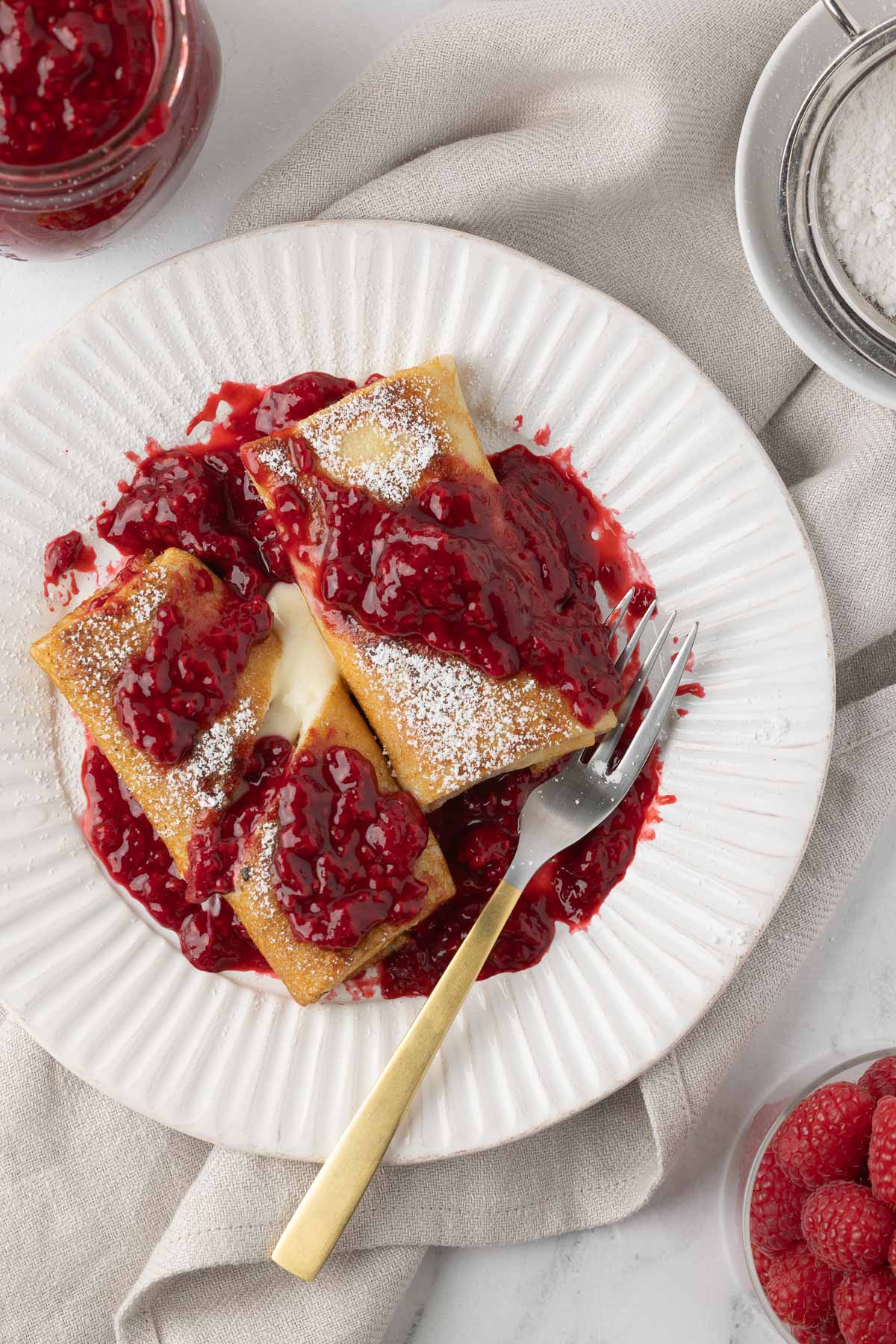
      Notes

      Store leftovers in an airtight container in the fridge for up to 4 days, be sure to label and date.
      Reheat gently in a non-stick skillet or microwave until heated through on lower power, or enjoy cold in salads or wraps. We use them chopped in tacos!
      Freeze: You can freeze grilled harissa chicken for up to 2 months. Let it cool completely, then wrap tightly and freeze in portions. Thaw overnight in the fridge before reheating.

      Nutrition

      Calories: 333kcalCarbohydrates: 4gProtein: 37gFat: 18gSaturated Fat: 3gPolyunsaturated Fat: 2gMonounsaturated Fat: 11gTrans Fat: 0.02gCholesterol: 109mgSodium: 496mgPotassium: 717mgFiber: 1gSugar: 2gVitamin A: 504IUVitamin C: 7mgCalcium: 24mgIron: 1mg
      Tried this recipe?Let us know how it was with a comment and leave a star rating!

      • « Previous Page
      • 1
      • 2
      • 3
      • 4
      • 5
      • …
      • 10
      • Next Page »
      Chef Sally Cameron of aFoodcentricLife.com in her kitchen.

      Welcome! I'm Sally, a professionally trained chef, former personal chef and caterer, lover of fresh healthy food, and sharing it with others.

      More about me →

      Memorial Day Recipe Inspiration

      • Sliced of golden pound cake with strawberries and a small bowl of whipped cream.
        Gluten Free Pound Cake with Cream Cheese
      • A glass jar of deep red homemade bbq sauce.
        Gluten-Free BBQ Sauce Recipe
      • BBQ glazed smoked pork tenderloin sliced on a gray platter for serving.
        Smoked Pork Tenderloin (pellet grill)
      • A bowl of slow cooker pinto beans topped with jalapeno slices, cilantro, and chopped white onion.
        Crock Pot Pinto Beans

      More Recipe Ideas

      • Grilled chicken kabobs glazed with hoisin sauce on a baking sheet.
        Grilled Hoisin Chicken Skewers
      • Broccoli bacon salad
        Crunchy Broccoli Salad with Bacon
      • Gluten-free pasta salad with tomatoes, cucumber, pine nuts, herbs, and more.
        Lemony Mediterranean Pasta Salad Recipe
      • Sliced flank steak on a cutting board with flank steak marinade in a small bowl.
        Carne Asada Marinade (for Grilled Steak)

      Memorial Day Recipes Page -->

      Footer

      as seen on

      Logos of Featured Publications

      About

      • Privacy Policy
      • Disclaimer
      • Terms & Conditions
      • Accessibility policy

      Newsletter

      • Sign Up! for emails and recipes.

      Menu

      • Home
      • About
      • Contact
      • Facebook
      • Instagram
      • Pinterest

      As an Amazon Associate I earn from qualifying purchases.

      Copyright © 2026 aFoodcentricLife.com

      Rate This Recipe

      Your vote:


      A rating is required
      A name is required
      An email is required